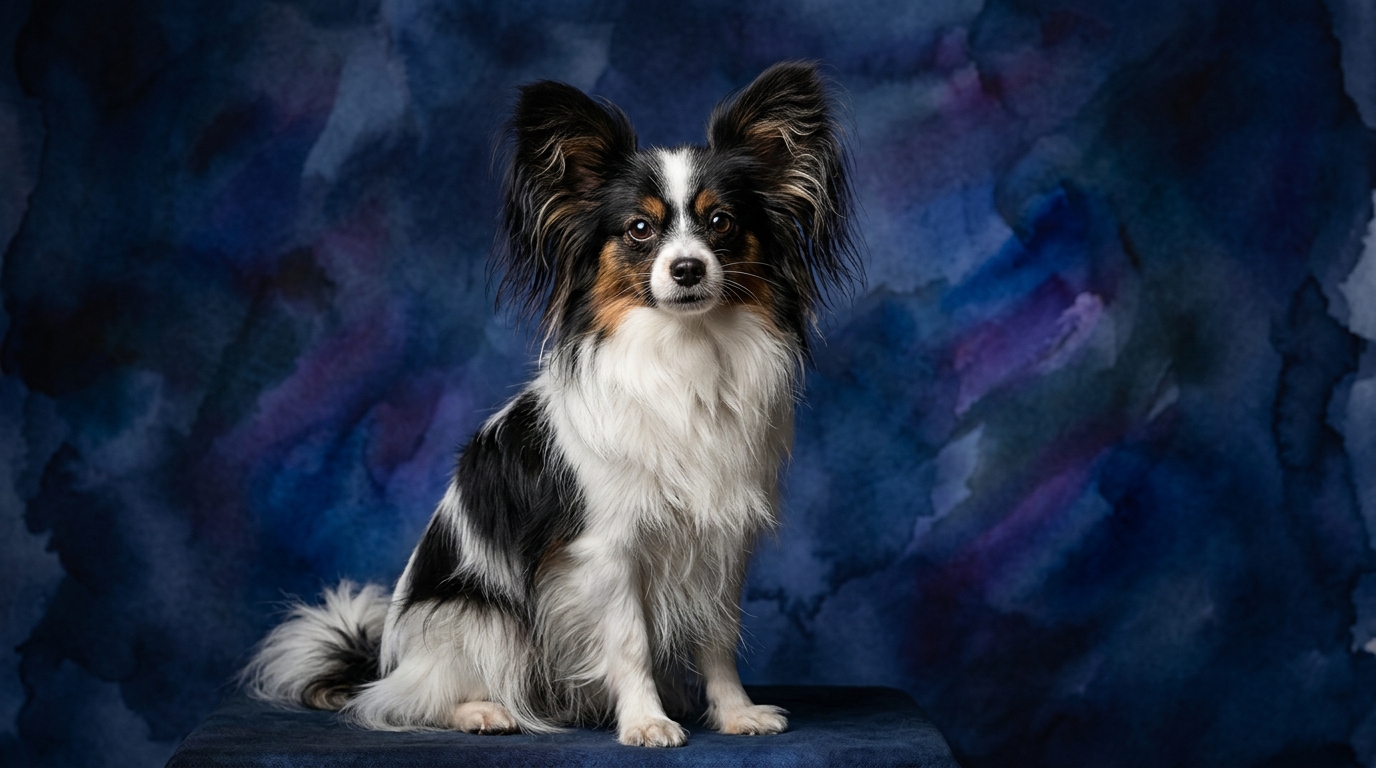

Side-by-Side Cognitive Profiles: Papillon vs. Old English Sheepdog
Our Pet IQ Lab scores offer a granular view into each breed's cognitive makeup, moving beyond general perceptions to specific strengths. The Papillon, a Toy breed with a Coren rank of #8, demonstrates a remarkable aptitude for rapid learning and problem-solving, indicative of its long history as a companion animal requiring quick adaptability to human environments. In contrast, the Old English Sheepdog, a Herding breed ranked #44 by Coren, presents a different cognitive profile, reflecting its heritage of independent decision-making and steadfastness in livestock management.
For the Papillon, problem Solving earns a perfect 5/5, suggesting an exceptional capacity to navigate novel situations and figure out complex tasks. Their training Speed also hits 5/5, indicating an eagerness and ability to grasp new commands and routines with minimal repetition. Social Intelligence is rated 4/5, showing a strong capacity for understanding human cues and intentions, making them highly attuned companions. An instinctive Drive of 3/5 means they possess some innate behaviors, but these are generally manageable and less dominant than in some working breeds. Finally, their memory stands at 5/5, ensuring they retain learned information and experiences over time.
The Old English Sheepdog's scores paint a picture of a more deliberate, yet still capable, mind. Their problem Solving is 3/5, suggesting they can tackle challenges but might require more guidance or trial-and-error than their Toy counterpart. Training Speed also sits at 3/5, meaning they are trainable but may need more consistent reinforcement and patience during initial learning phases. Social Intelligence is 3/5, indicating a solid understanding of their social environment, though perhaps less nuanced than the Papillon's. Their instinctive Drive is 3/5, reflecting their herding instincts that, while present, are not overwhelming. Notably, their memory is a strong 4/5, implying excellent long-term retention of commands and experiences once learned.
Where the Papillon's Mind Shines Brightest
The Papillon's cognitive strengths lie in their exceptional mental agility and rapid processing. With a 5/5 in both problem Solving and training Speed, they are extraordinarily quick studies. This means a Papillon can often learn a new trick or command in just a few repetitions, quickly associating actions with rewards. They excel at deciphering complex puzzle toys, often figuring out multi-step mechanisms to retrieve a treat, or even observing and mimicking human actions to achieve a desired outcome, like opening a door or a treat container. Their high memory score of 5/5 means these learned behaviors are not fleeting; they stick, allowing for a vast repertoire of commands and routines.
Furthermore, their 4/5 social Intelligence allows them to pick up on subtle human emotional states and intentions, making them remarkably responsive and empathetic companions. A Papillon might anticipate a walk by observing you reach for the leash or understand when you're feeling down and offer comfort. This combined with their strong problem-solving skills makes them highly adaptable to various living situations and quick to understand household rules, often requiring less explicit instruction than breeds with lower scores in these areas. They thrive on mental stimulation, readily engaging in games that challenge their intellect, like advanced obedience or agility courses, where their speed of thought and recall are distinct advantages.
The Steadfast Strengths of the Old English Sheepdog's Cognition
While the Old English Sheepdog may not match the Papillon's lightning-fast acquisition of new skills, its cognitive profile reveals a different kind of strength, particularly in its memory and practical application of its instinctive drive. With a memory score of 4/5, the Old English Sheepdog demonstrates a robust capacity for long-term retention. Once a behavior or command is thoroughly learned and solidified, it tends to be deeply ingrained, leading to reliable performance over time. This makes them excellent candidates for tasks requiring consistent, repeatable actions, such as advanced obedience or therapy work, where established routines are key.
Their 3/5 instinctive Drive, while not as pronounced as in some herding breeds, is still a significant cognitive component, often manifesting as a protective instinct or a desire to keep their 'flock' (family) together. This drive, combined with their adequate problem-solving skills, means they can make sound, independent judgments in familiar situations, a trait valuable in their historical role. While they might take longer to process and internalize new information (3/5 training Speed), their strong memory ensures that the effort invested in training yields lasting results. Their social intelligence of 3/5 means they are capable of forming strong bonds and understanding social cues within their family unit, though they may be less inclined to engage with strangers without a clear purpose.
Ease of Training: A Tale of Two Learning Styles
When it comes to ease of training, the Papillon generally presents a more straightforward experience due to its exceptional training Speed (5/5) and problem Solving (5/5). They are eager to please and quickly make connections between commands, actions, and rewards. This means a Papillon can often master basic obedience commands, and even complex tricks, in a fraction of the time it might take other breeds. Their high memory (5/5) ensures these lessons are retained, and their social intelligence (4/5) helps them readily tune into their handler's instructions and body language. However, their quick wit also means they can become bored if not adequately challenged, sometimes leading to self-directed problem-solving that might not align with owner expectations, such as figuring out how to open treat jars.
The Old English Sheepdog, with its 3/5 training Speed and 3/5 problem Solving, requires a more patient and consistent approach. They are not slow to learn, but they process information more deliberately and may need more repetitions to fully grasp a new concept. Their strong memory (4/5) is a significant asset here; once a lesson is learned, it is usually learned for good. This means that while initial training might take longer, the results are often very dependable. Real behavioral differences include the OES sometimes exhibiting a 'stubborn' streak, which is often just a need for more consistent motivation and clearer communication rather than actual defiance. They benefit from positive reinforcement and a calm, reassuring training environment that builds trust, rather than high-pressure methods that can cause them to shut down.
Matching Canine Minds to Lifestyles: Active vs. Relaxed Owners
The cognitive profiles of these two breeds naturally align with different owner lifestyles. The Papillon, with its high problem Solving and training Speed, is an excellent match for active owners who relish mental engagement and consistent interaction. They thrive in environments where they are regularly challenged with new tricks, puzzle games, agility courses, or even canine freestyle. Owners who enjoy teaching complex sequences and appreciate a dog that is always 'on' and eager to participate will find the Papillon a delightful companion. Their social intelligence also means they enjoy being included in all family activities, making them ideal for owners who want a constant, interactive shadow.
The Old English Sheepdog, while certainly needing physical exercise, suits owners who appreciate a more relaxed, yet still dedicated, approach to companionship. Their strong memory means they will reliably follow established routines, making them suitable for owners who value predictability and a steady presence. While they can participate in dog sports, their cognitive strengths lean towards steadfastness rather than lightning-fast adaptability. Owners who enjoy long, consistent walks, a calm home environment, and are prepared for a dog that learns at a more measured pace but retains lessons exceptionally well, will find the Old English Sheepdog a loyal and comforting presence. They are well-suited for families seeking a dependable, gentle giant who becomes a deeply ingrained part of the household fabric, rather than a constant mental challenger.
The Verdict
Choose the Papillon if you seek a highly interactive, mentally agile companion eager to learn new things rapidly and participate actively in varied mental challenges.
Opt for the Old English Sheepdog if you prefer a steady, loyal companion who, with consistent training, will reliably retain lessons and offer a calm, dependable presence in your home.
🧠 Find Your Pet's IQ Score
Our Pet IQ Lab assessment covers 25+ tests across 5 cognitive dimensions — personalized to your breed.
Take the Full IQ Test →Frequently Asked Questions
Do Papillons get bored easily if not mentally stimulated?
Yes, with their 5/5 problem-solving and training speed, Papillons require consistent mental engagement. Without it, they can become bored and might invent their own (sometimes mischievous) ways to entertain themselves, like exploring forbidden areas or vocalizing excessively.
Is an Old English Sheepdog difficult to train due to its lower training speed score?
Not difficult, but different. Their 3/5 training speed means they require more repetition and patience than a Papillon, but their 4/5 memory ensures that once a lesson is thoroughly learned, it tends to stick. Consistency and positive reinforcement are key for their success.
Which breed is better for first-time dog owners interested in dog sports?
For first-time owners keen on dog sports, the Papillon might be a more encouraging start. Their high training speed and problem-solving make them quick learners in disciplines like agility or obedience, offering rapid progress and boosting a novice handler's confidence.