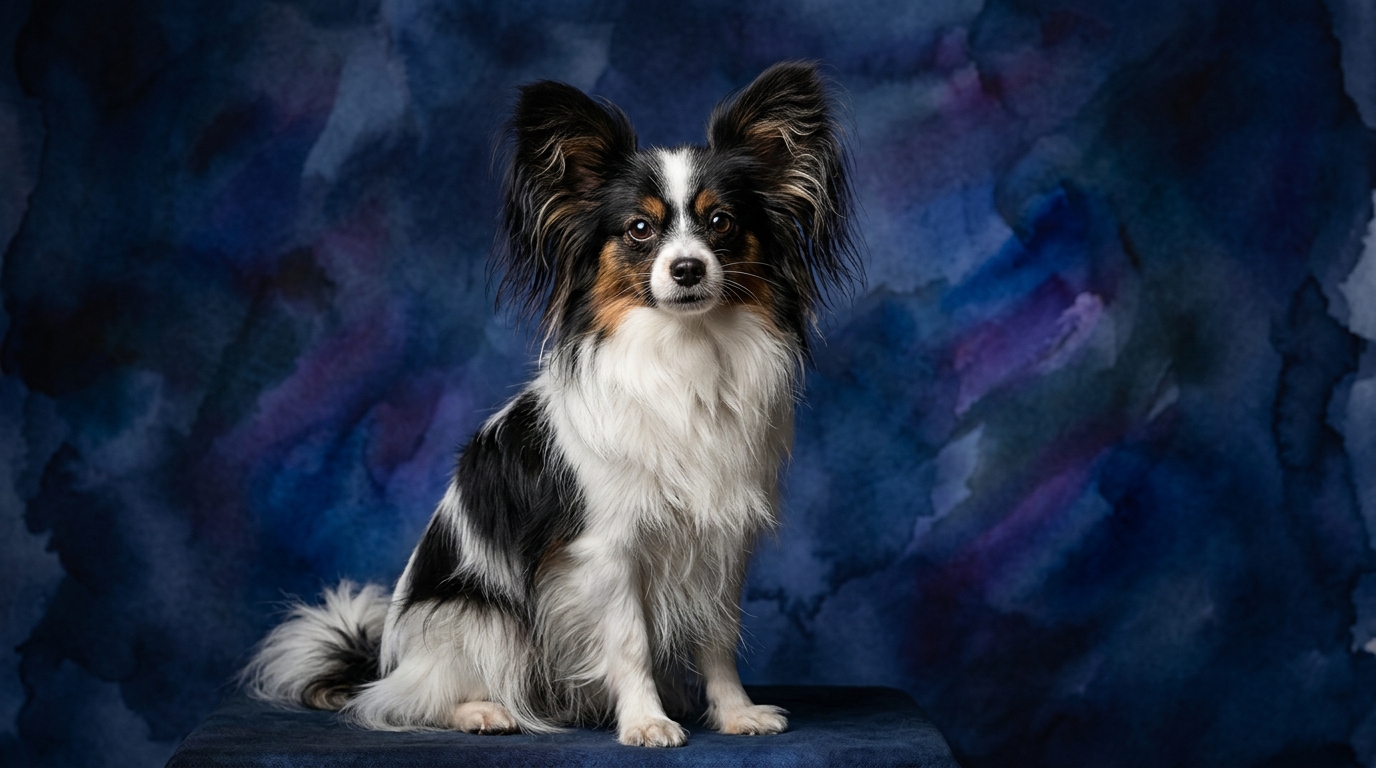
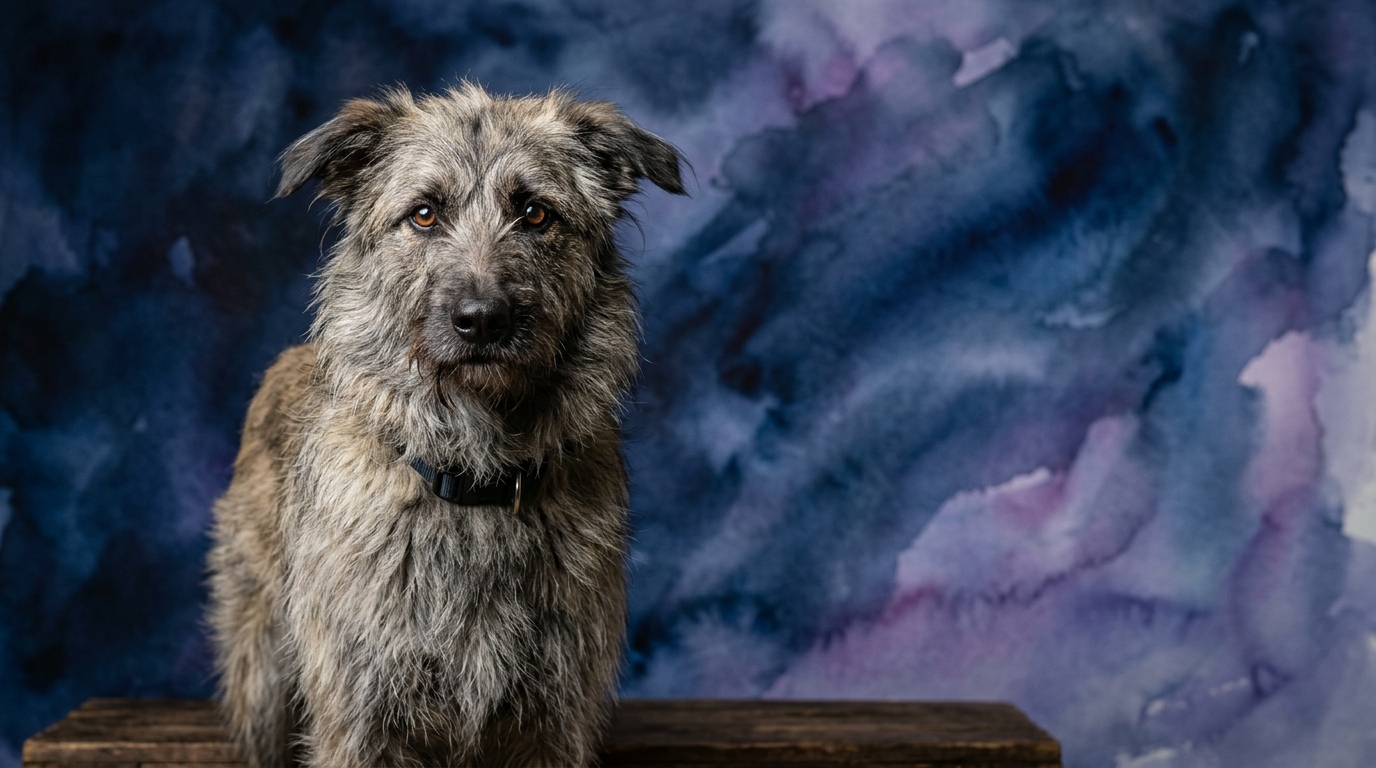
Side-by-Side IQ Profile: Papillon vs. Pyrenean Shepherd
The Cosmic Pet Pet IQ Lab evaluates canine intelligence across five key dimensions, revealing distinct cognitive landscapes for each breed. For the Papillon, a breed ranked #8 by Stanley Coren for working and obedience intelligence, their profile paints a picture of exceptional mental agility. Their Problem Solving score is a perfect 5 out of 5, indicating an outstanding capacity to navigate novel situations and figure out complex puzzles or tasks independently. Training Speed also hits a 5 out of 5, meaning Papillons typically grasp new commands and routines with remarkable swiftness, often requiring very few repetitions. Their Social Intelligence is rated 4 out of 5, reflecting a keen awareness of human moods, intentions, and social cues, allowing them to communicate effectively within a family structure. An Instinctive Drive of 3 out of 5 suggests moderate natural urges, perhaps some chasing or curiosity, but typically not overwhelming. Finally, their Memory is a stellar 5 out of 5, demonstrating an outstanding ability to recall learned tasks, people, and places, retaining information over long periods with remarkable fidelity.
In contrast, the Pyrenean Shepherd, a spirited Herding breed not ranked on Coren's list, presents a different cognitive blueprint, one suited to its historical role. Its Problem Solving score is 3 out of 5, indicating competence in addressing familiar challenges but potentially requiring more guidance or trial-and-error for truly novel or abstract problems. Training Speed also stands at 3 out of 5, meaning these dogs learn at a steady pace, benefiting significantly from consistent reinforcement and patient instruction rather than rapid absorption. Their Social Intelligence is likewise 3 out of 5; while observant of their immediate social group, they might express their understanding more independently or reservedly compared to the effusive Papillon. An Instinctive Drive of 3 out of 5 is characteristic of a herding breed, focused on managing a 'flock' or family unit, though not to an extreme degree. Their Memory score is 3 out of 5, suggesting they are capable of remembering routines and commands, but perhaps less inclined to retain complex, intricate details or vast repertoires of tricks over extended periods compared to a breed with a higher memory score.
Where the Papillon Excels Cognitively
The Papillon’s cognitive strengths truly shine in areas demanding rapid mental processing and adaptable learning. Their perfect 5/5 Problem Solving score means they connect cause and effect with remarkable speed, whether it’s figuring out how to open a treat puzzle or navigating an unfamiliar environment to reach a desired object. This isn't just about simple tasks; it extends to understanding multi-step sequences and adapting strategies when initial attempts fail. Complementing this is their 5/5 Training Speed, which allows them to master complex obedience commands or intricate agility sequences after just a few repetitions. They don't just mimic actions; they internalize the underlying concepts, making them exceptionally responsive partners in learning new skills.
Furthermore, the Papillon's 5/5 Memory contributes significantly to their cognitive advantage. They retain a vast repertoire of learned behaviors, cues, and even names of objects and people over their entire lifespan, making long-term training highly effective. This superior recall means skills don't degrade quickly, and they can pick up old tricks with minimal refreshers. Their 4/5 Social Intelligence also gives them an edge in human-dog interaction, as they are adept at reading subtle shifts in human tone, body language, and emotional states. This perceptiveness allows them to anticipate needs, offer comfort, or even manipulate situations to their advantage, fostering a deeply interactive and responsive companionship.
Where the Pyrenean Shepherd Shows Unique Cognitive Strengths
While the Pyrenean Shepherd’s cognitive scores are generally more moderate, their strengths lie in a different, equally valuable domain: a resilient, focused, and persistent application of their innate abilities. Their 3/5 Problem Solving, combined with their 3/5 Instinctive Drive, points to a practical intelligence honed for purpose-driven tasks rather than abstract puzzles. These dogs excel in real-world scenarios requiring sustained attention and the ability to work independently, making sound judgments within their sphere of influence, such as managing livestock or patrolling a property. They may not solve novel brain games as quickly, but they demonstrate a robust capacity for consistent, reliable performance in their intended roles, often showing impressive stamina for mentally demanding, repetitive tasks.
The Pyrenean Shepherd’s 3/5 Social Intelligence, while not as outwardly expressive as the Papillon’s, often translates into a deep, unwavering loyalty and a quiet understanding of their immediate family or 'flock'. They are discerning observers, forming strong bonds and demonstrating a protective vigilance. Their cognitive profile prioritizes resilience and self-reliance, traits essential for a herding dog expected to operate without constant human instruction in varied, sometimes challenging, environments. This means they are less prone to anxiety or over-stimulation in demanding situations, instead relying on their steady memory and consistent problem-solving approach to navigate their world with tenacity.
Training Dynamics: Which is Easier and Why?
When it comes to ease of training, the Papillon holds a clear advantage due to its exceptional Training Speed (5/5), Problem Solving (5/5), and Memory (5/5). These dogs grasp new concepts with astonishing rapidity, often requiring only a handful of repetitions to solidify a command. This translates into faster progress in basic obedience, advanced trick training, and dog sports like agility or rally obedience. Their keen social intelligence (4/5) also makes them eager to please and highly attuned to their trainer's feedback, motivating them to engage enthusiastically. They thrive on mental challenge and positive reinforcement, making training sessions enjoyable and productive, often leading to a vast repertoire of learned behaviors.
The Pyrenean Shepherd, with its 3/5 scores across Problem Solving, Training Speed, and Memory, presents a different training journey. These dogs require a more patient, consistent, and structured approach. They will learn, but it takes more repetitions and a clear, unambiguous method. Their herding background means they possess a strong independent streak and are less inherently driven to perform for the sake of it; training needs to be purposeful and engaging, often leveraging their natural work ethic. While capable of learning complex tasks, trainers must be prepared for a slower acquisition rate and ensure that training methods are consistent to embed behaviors effectively. Behavioral differences might include a tendency for the Papillon to offer solutions more readily when faced with a new command, while the Pyrenean Shepherd might require more guidance to understand the desired outcome, eventually mastering it through persistent practice.
Matching Lifestyles: Active vs. Relaxed Owners
For owners seeking an active, engaging canine partner, both breeds can certainly participate in dog sports, but their inherent needs differ. The Pyrenean Shepherd, with its herding heritage and balanced instinctive drive (3/5), typically thrives with active owners who can provide consistent physical exercise and structured mental engagement. These dogs benefit immensely from having a 'job,' whether it's herding, long hikes, competitive dog sports like agility or flyball, or even extensive scent work. Their resilience and endurance mean they are well-suited to adventurous lifestyles and can become frustrated or destructive if their physical and mental energy isn't adequately channeled. They are not content to be couch potatoes without proper outlets for their working drive.
The Papillon, while surprisingly athletic and often excelling in agility, is generally more adaptable to a broader range of lifestyles, making them suitable for both moderately active and more relaxed owners. Their smaller size and high social intelligence mean they can be content with companionship, indoor games, and less rigorous daily exercise, provided their significant mental stimulation needs are met. For relaxed owners, the Papillon's desire for interaction and mental puzzles can be fulfilled through interactive toys, short training sessions, and plenty of quality time. They are excellent companions for apartment living or for individuals who enjoy a mentally stimulating but perhaps less physically demanding relationship with their pet, as long as their sharp minds are kept busy.
The Verdict
Choose the Papillon if you seek a highly responsive, mentally agile companion eager to master complex tasks, excel in dog sports, and thrive on close social interaction and varied mental challenges.
Opt for the Pyrenean Shepherd if you are an experienced owner who appreciates a resilient, independent, and persistent working partner, values consistency in training, and can provide ample opportunities for physical exertion and purposeful activities that engage its natural herding instincts.
🧠 Find Your Pet's IQ Score
Our Pet IQ Lab assessment covers 25+ tests across 5 cognitive dimensions — personalized to your breed.
Take the Full IQ Test →Frequently Asked Questions
Are Papillons always better at problem-solving than Pyrenean Shepherds?
Based on our IQ scores, Papillons demonstrate a higher capacity for novel problem-solving (5/5) compared to Pyrenean Shepherds (3/5). This means Papillons are generally quicker to figure out new challenges and adapt strategies independently, while Pyrenean Shepherds might rely more on familiar approaches or require more guidance for truly unique problems.
How does the 'Instinctive Drive' score impact daily life for these breeds?
Both breeds have an Instinctive Drive score of 3/5, indicating moderate natural urges. For the Papillon, this might manifest as curiosity or a desire to chase small objects, easily managed. For the Pyrenean Shepherd, it points to a focused herding instinct, which, if not channeled through appropriate activities, could lead to attempts to 'herd' family members or other pets, requiring consistent management and training.
Can a Pyrenean Shepherd learn complex tricks like a Papillon?
A Pyrenean Shepherd can certainly learn complex tricks, but it will typically take more time and consistent effort due to their 3/5 Training Speed and Memory scores compared to the Papillon's 5/5. Their learning style benefits from clear, repetitive instruction and a sense of purpose, rather than rapid, abstract learning. With dedication, they can achieve impressive feats, but the journey will differ.