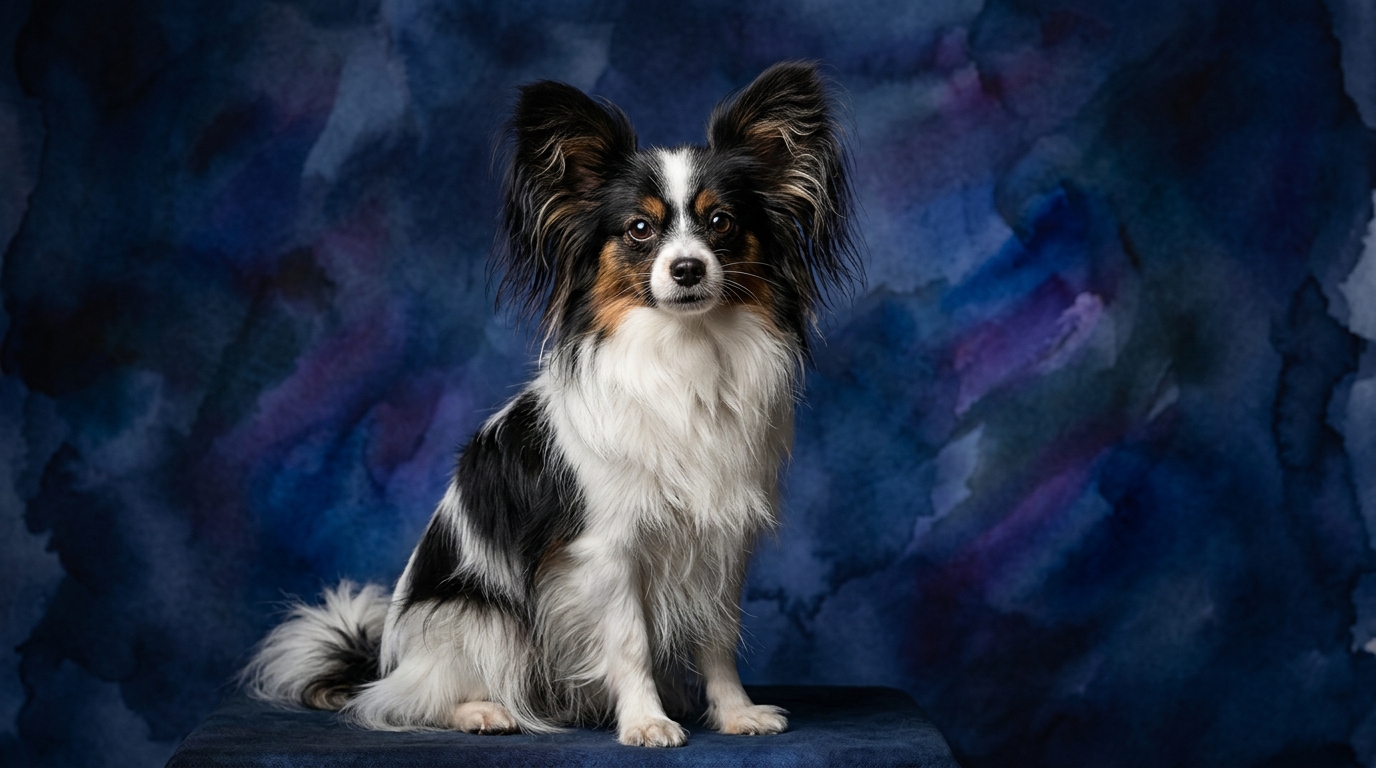

A Tale of Two Minds: Side-by-Side IQ Profiles
**Papillon:**
**Problem Solving (5/5):** Papillons rapidly decipher puzzles and multi-step commands. Their small stature hides a keen ability to strategize and adapt to novel situations, making them adept at intricate tricks or agility sequences.
**Training Speed (5/5):** They absorb new information with impressive rapidity, often grasping commands in just a few repetitions. Their eagerness and focus contribute to a swift learning curve, allowing for advanced training disciplines.
**Social Intelligence (4/5):** Papillons understand human emotions and social cues, forming deep family bonds. They are sensitive to mood, responding appropriately, though strong attachment can lead to reservedness with strangers.
**Instinctive Drive (3/5):** Possessing a manageable prey drive from vermin control, it manifests more as curiosity for small, fast-moving objects. This drive is less dominant in their overall cognitive profile than their problem-solving skills.
**Memory (5/5):** Their recall abilities are outstanding, retaining vast repertoires of commands, routines, and experiences. This strong memory underpins rapid training and allows reliable performance of complex sequences.
**Rhodesian Ridgeback:**
**Problem Solving (3/5):** Ridgebacks approach problems deliberately and independently. While capable, their thought process is less analytical than the Papillon's, sometimes relying on physical prowess or established routines over innovative mental navigation.
**Training Speed (3/5):** Learning new commands takes moderate repetition. They are capable learners but require consistent, patient instruction and clear motivation to integrate behaviors reliably, reflecting their independent nature.
**Social Intelligence (3/5):** Reserved with strangers, they form strong, loyal bonds with family, displaying protective instincts. Their social understanding focuses on recognizing threats and maintaining pack hierarchy within their trusted circle.
**Instinctive Drive (3/5):** Their lion-hunting history imbues them with notable prey and guarding drives. This significantly influences their vigilance and pursuit tendency, though it is typically controlled with proper training and direction.
**Memory (3/5):** Ridgebacks possess functional memory for commands and routines, performing trained behaviors consistently. However, their recall might not be as instantaneous or extensive, requiring more frequent reinforcement.
Where the Papillon's Mind Shines Brightest
The Papillon excels in abstract cognitive domains, particularly problem-solving and training speed. Their capacity to quickly grasp intricate tasks like agility courses or multi-step trick sequences sets them apart. They rapidly process new information and apply learned concepts to novel situations, a hallmark of their Coren rank #8 standing. Exceptional memory ensures concepts are retained with impressive fidelity, making advanced obedience highly achievable for engaged owners.
The Rhodesian Ridgeback's Unique Cognitive Strengths
While scores appear lower, the Rhodesian Ridgeback's cognitive strengths stem from a different evolutionary purpose: resilience and independent decision-making. Their problem-solving, though slower, is practical and persistent, geared towards real-world challenges like navigating complex terrain or assessing threats. Their instinctive drive is a nuanced strength, fostering focused determination when required, such as tracking. This breed demonstrates robust mental fortitude, remaining composed and purposeful in demanding environments, crucial for their historical roles.
Training Dynamics: Papillon's Eagerness vs. Ridgeback's Deliberation
Training a Papillon is often a faster, more straightforward experience due to their 5/5 training speed. Their eagerness to engage and quick comprehension means new commands are integrated rapidly, thriving on positive reinforcement and mental stimulation. The Rhodesian Ridgeback's 3/5 training speed requires patience and consistency. Their independent nature means they need to understand the 'why' or feel genuinely motivated, preferring thoughtful engagement over rote learning, demanding a clear, fair, and engaging owner.
Lifestyle Match: Active Engagement vs. Thoughtful Companionship
The Papillon, with high mental agility and moderate physical needs, suits owners enjoying active mental pursuits like dog sports or complex trick training. Their energy is best channeled through intellectual challenges, making them ideal for individuals seeking a highly interactive companion. Conversely, the Rhodesian Ridgeback, requiring vigorous exercise, thrives with owners appreciating a thoughtful, independent companion. They are excellent for outdoor enthusiasts providing structured activities like hiking or scent work, valuing a dog that makes considered decisions after sufficient exercise.
The Verdict
Choose a Papillon if you seek a highly trainable, mentally agile companion eager for complex challenges and interactive learning, thriving on deep engagement and quick problem-solving. They are perfect for owners passionate about dog sports or advanced trick training, offering a responsive and memorable partnership.
Opt for a Rhodesian Ridgeback if you desire a resilient, independent, and loyal companion who excels in structured outdoor activities and values a thoughtful approach to life. They suit active owners who appreciate a dog with strong instincts and a protective nature, willing to invest in consistent, patient training.
🧠 Find Your Pet's IQ Score
Our Pet IQ Lab assessment covers 25+ tests across 5 cognitive dimensions — personalized to your breed.
Take the Full IQ Test →Frequently Asked Questions
Are Papillons difficult to socialize given their social intelligence score?
Papillons generally possess good social intelligence, forming deep bonds with their families. While they might be reserved with strangers, early and consistent positive socialization experiences can help them develop confidence and comfort in various social settings, preventing shyness from becoming an issue.
Does the Rhodesian Ridgeback's instinctive drive make them difficult to live with?
The Rhodesian Ridgeback's instinctive drive, a legacy of their hunting background, requires appropriate management. With consistent training, early socialization, and outlets for their natural behaviors like scent work or secure off-leash exercise, this drive can be channeled positively, leading to a well-adjusted companion rather than a challenging one.
Which breed is better for a first-time dog owner?
For a first-time owner, the Papillon's eagerness to please and rapid training speed often makes them a more forgiving and rewarding choice to begin with, assuming the owner can provide ample mental stimulation. The Rhodesian Ridgeback, while loyal, requires a more experienced and confident owner due to their independent nature and strong physical requirements.