
Side-by-Side Cognitive Profiles: Papillon vs. Russian Toy
To truly understand the mental landscape of these two breeds, we turn to The Cosmic Pet Pet IQ Lab’s five cognitive dimensions. These metrics offer a granular view beyond general perceptions, detailing specific strengths and tendencies for each breed.
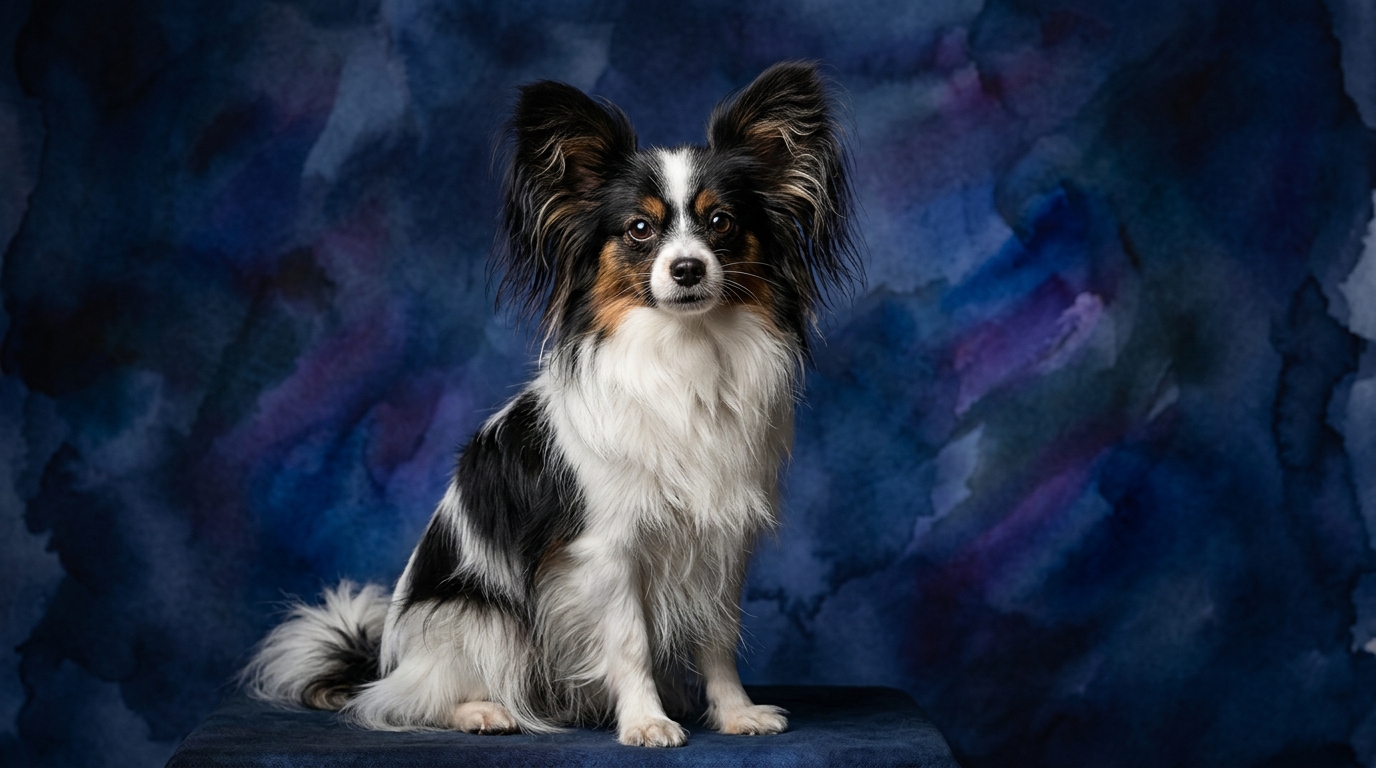
The Papillon, a breed recognized for its mental agility, showcases a profile of robust cognitive capabilities. Its Problem Solving score stands at an exceptional 5/5, indicating a remarkable capacity for independent thought and figuring out complex situations. Training Speed also receives a perfect 5/5, suggesting these dogs absorb new commands and routines with impressive swiftness. Social Intelligence is rated 4/5, pointing to a strong ability to interpret human cues and form deep, nuanced bonds. Instinctive Drive, a measure of inherent behavioral patterns like chasing or guarding, is a moderate 3/5. Finally, Memory, crucial for learning and retention, is also an outstanding 5/5.
In contrast, the Russian Toy presents a more uniformly balanced, though less intense, cognitive profile. Its Problem Solving ability is rated 3/5, signifying a capable but less independent approach to mental challenges. Training Speed aligns with this at 3/5, meaning they learn at a steady, average pace. Social Intelligence also scores 3/5, suggesting they form affectionate bonds and read basic human emotions, but perhaps with less intricate understanding than their Papillon counterparts. Instinctive Drive mirrors the Papillon at 3/5, indicating a similar moderate level of innate behaviors. Memory for the Russian Toy is also 3/5, demonstrating adequate retention for daily life but perhaps not for highly complex sequences over long periods.
Where the Papillon's Mind Shines Brightest
The Papillon's cognitive architecture positions it as a highly responsive and adaptable companion, particularly in environments that demand mental engagement. Their 5/5 Problem Solving aptitude means they are adept at navigating novel situations, whether it's figuring out how to retrieve a dropped toy from an awkward spot or understanding the steps required for a new trick. This isn't just about physical dexterity; it's about processing information and strategizing.
Their perfect 5/5 Training Speed is a testament to their rapid comprehension. A Papillon often grasps a new command after only a few repetitions, translating to efficient training sessions and quick mastery of complex routines. This speed is further amplified by their 5/5 Memory, ensuring that once a lesson is learned, it's retained for the long term. Owners frequently report that Papillons recall commands and even intricate sequences from months or years prior with minimal refreshers. This robust memory also contributes to their ability to build on prior knowledge, making progressive training an exciting journey.
Furthermore, the Papillon's 4/5 Social Intelligence allows them to pick up on subtle human emotional states and intentions. They often seem to anticipate their owner's moods or desires, making them incredibly intuitive companions. This heightened social awareness can foster a deeper connection, as they actively engage with and respond to the nuances of human interaction.
The Unique Cognitive Strengths of the Russian Toy
While the Russian Toy's individual cognitive scores may not reach the same peaks as the Papillon's, their consistent 3/5 across most dimensions highlights a unique and often desirable set of mental attributes. This balanced cognitive profile means they are less prone to the intense mental demands that can sometimes accompany higher-scoring breeds. Their 3/5 in Problem Solving indicates they are capable of learning and adapting, but they generally approach challenges in a more straightforward manner, often preferring guidance rather than independent, complex strategizing. This can be a significant advantage for owners who prefer a dog that doesn't constantly seek to outwit them or independently explore boundaries.
The Russian Toy's 3/5 Training Speed and 3/5 Memory suggest a learning curve that is steady and predictable, rather than lightning-fast. They will learn new commands and routines, but patience and consistent repetition yield the best results. This moderate pace means that training is often a more collaborative process, building a strong bond through consistent interaction without the pressure of needing to introduce advanced concepts rapidly. They are less likely to become bored or frustrated by repetition, which can be beneficial for foundational training.
Their 3/5 Social Intelligence points to an affectionate and connected nature, forming strong bonds with their family. While perhaps not as acutely attuned to every subtle human emotion as a Papillon, they are perfectly capable of understanding basic cues and deriving joy from companionship. This level of social awareness often translates to a dog that is content and adaptable within a loving home environment, without necessarily demanding constant, intricate social engagement or interpretation.
Training Dynamics: Which Breed Learns with More Ease?
When it comes to ease of training, the Papillon holds a distinct advantage, primarily due to its 5/5 Training Speed and 5/5 Memory. These dogs are often described as sponges, soaking up new information quickly and retaining it with impressive fidelity. A Papillon can learn a new command or trick in very few repetitions, making them ideal candidates for advanced obedience, agility, or even complex trick training. Their high problem-solving skills (5/5) also mean they often understand the 'why' behind a command more readily, making them less likely to require rote memorization and more likely to generalize learned behaviors to new contexts. This breed thrives on mental challenges and sees training as an engaging game, often eager to please and quick to offer desired behaviors.
The Russian Toy, with its 3/5 Training Speed and 3/5 Memory, requires a different approach. They are certainly trainable and capable of learning a wide array of commands, but the process will naturally be more gradual. Owners should be prepared for more repetitions and a slower progression through training stages. Their moderate problem-solving skills (3/5) mean they might not connect the dots as quickly as a Papillon, necessitating clearer, more consistent instruction broken down into smaller, manageable steps. While they are affectionate and want to please, their learning style is more deliberate, emphasizing patience and positive reinforcement over speed. This doesn't make them 'difficult' to train, but rather requires an understanding of their more measured cognitive pace.
Matching Lifestyles: Active Minds vs. Content Companions
The cognitive profiles of the Papillon and Russian Toy lend themselves to different owner lifestyles, particularly concerning the level of mental engagement required. The Papillon is an ideal match for active owners who are prepared to provide consistent and varied mental stimulation. Their exceptional problem-solving, rapid training speed, and impressive memory mean they thrive when their minds are actively challenged. These are dogs that excel in dog sports like agility, rally obedience, or even advanced trick training, needing outlets for their cognitive energy beyond just physical exercise. An owner who enjoys teaching new things, engaging in puzzle toys, and exploring complex tasks will find a highly rewarding partnership with a Papillon. Without sufficient mental engagement, their sharp minds can sometimes lead to boredom-driven behaviors, making an active owner crucial.
Conversely, the Russian Toy is often a better fit for more relaxed owners or those seeking a companion with a more straightforward mental profile. Their consistent 3/5 scores across the board indicate a dog that is content with routine and moderate mental stimulation. While they certainly enjoy interactive play and learning new things, they don't possess the same intense drive for constant cognitive challenge as the Papillon. They are happy with daily walks, regular play sessions, and basic obedience training, without necessarily needing to master complex sequences or solve intricate puzzles daily. This makes them adaptable to quieter homes and less demanding schedules, offering affectionate companionship without the need for constant, high-level mental engagement to prevent boredom.
The Verdict
Choose a Papillon if you seek a highly interactive, mentally agile companion who thrives on learning and problem-solving, and you are prepared to provide consistent mental challenges and advanced training.
Opt for a Russian Toy if you appreciate a charming, affectionate dog with a more straightforward cognitive profile, content with routine and moderate mental engagement, and less prone to outthinking their owner.
🧠 Find Your Pet's IQ Score
Our Pet IQ Lab assessment covers 25+ tests across 5 cognitive dimensions — personalized to your breed.
Take the Full IQ Test →Frequently Asked Questions
Are Papillons good for first-time dog owners?
Yes, their eagerness to please and quick learning make them responsive to training, which can be a plus for new owners. However, first-time owners must be ready for their significant mental stimulation needs to prevent boredom and ensure a well-adjusted companion.
Do Russian Toys need a lot of exercise?
While active and playful, Russian Toys have moderate exercise needs, enjoying daily walks and indoor play sessions. Their mental stimulation requirements are generally less intense than some other breeds, making them suitable for various living situations.
Can Russian Toys participate in dog sports?
Absolutely, Russian Toys can enjoy and excel in sports like obedience, agility, or rally, though their learning pace might be steadier. Consistent, patient training can help them achieve high levels of performance, making it a rewarding experience for both dog and owner.