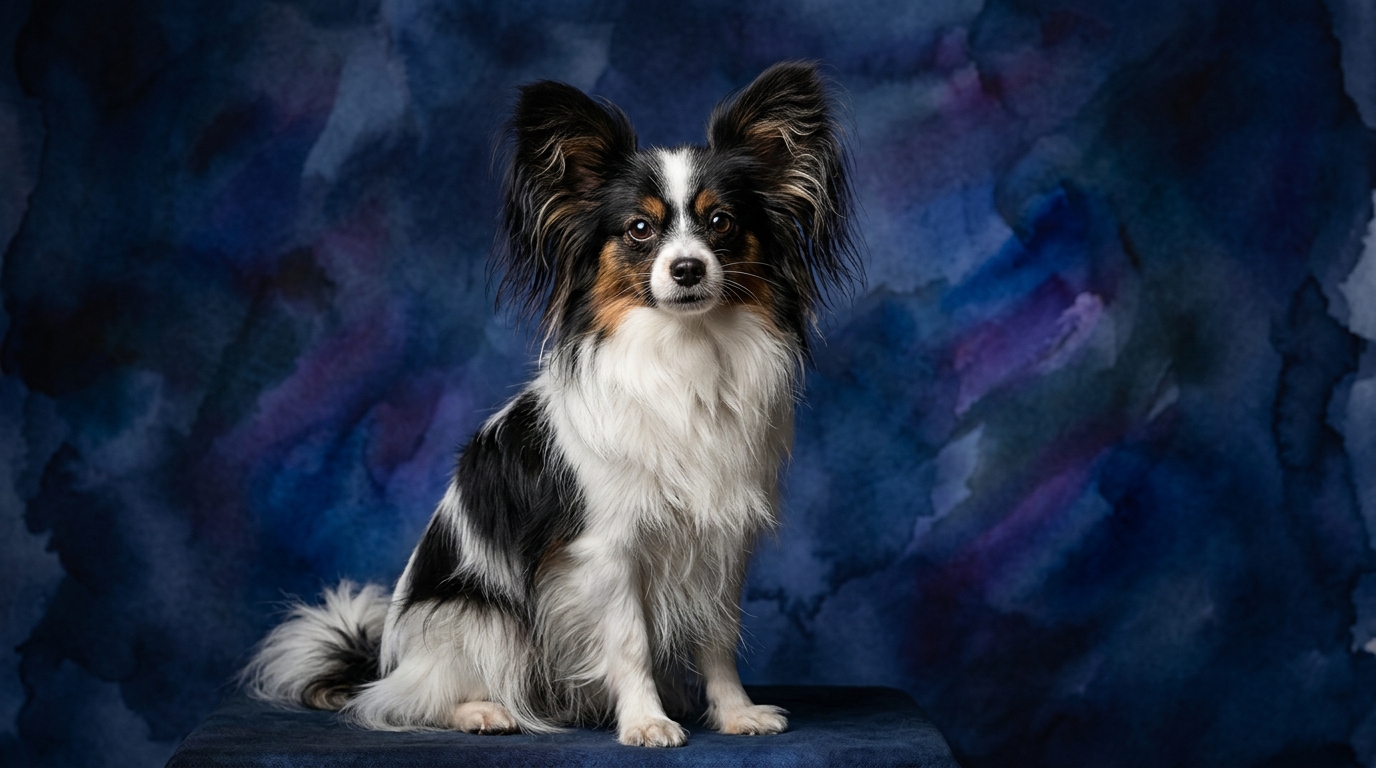
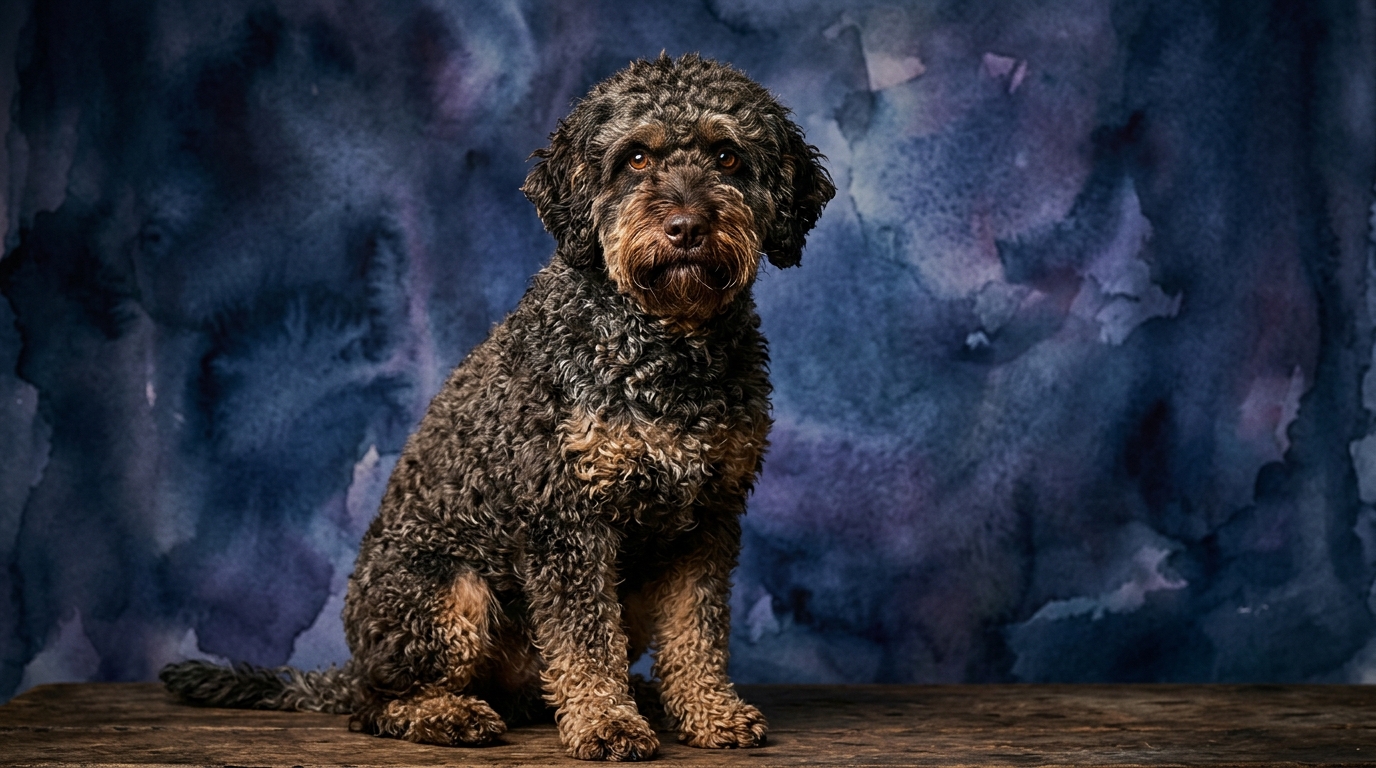
Side-by-side IQ profile
The Papillon, a breed celebrated for its mental alacrity, scores exceptionally well across several key cognitive dimensions. Its Problem Solving ability is rated at a remarkable 5/5, indicating a dog that can quickly assess novel situations and devise effective solutions, often showing ingenuity in navigating complex environments or tasks. Training Speed also sits at a perfect 5/5, reflecting an eagerness to learn and retain commands with minimal repetition, making them highly responsive to instruction. Social Intelligence is strong at 4/5, suggesting a keen awareness of human cues and emotions, fostering deep bonds and intuitive interactions. While its Instinctive Drive is moderate at 3/5, its Memory is outstanding at 5/5, allowing for excellent recall of learned behaviors and past experiences.
In contrast, the Spanish Water Dog presents a more balanced, uniform cognitive profile, reflecting its practical working heritage. Its Problem Solving capacity is rated 3/5, indicating a competent ability to handle challenges, though perhaps with less spontaneous innovation than the Papillon. Training Speed is also 3/5, meaning they are trainable but may require more consistent effort and patient repetition to master new skills. Social Intelligence stands at 3/5, suggesting they connect well within their family unit but might be more reserved or less overtly expressive with strangers compared to more socially oriented breeds. Their Instinctive Drive is 3/5, aligning with their herding and retrieving background, providing a practical, task-oriented focus. Memory, like several other categories, is rated 3/5, indicating reliable recall for essential commands and routines, though perhaps not the same depth of detail as the Papillon.
Where Papillon wins cognitively
The Papillon's cognitive profile showcases several clear advantages, primarily in areas demanding rapid learning, mental flexibility, and detailed recall. With a Problem Solving score of 5/5, Papillons often excel at intricate puzzle toys, quickly figuring out mechanisms to access treats or understanding complex sequences of actions. This superior problem-solving translates into a dog that can adapt rapidly to new environments or routines, and even learn to manipulate objects or situations to their advantage, such as opening cabinets or creatively signaling their needs. Their perfect 5/5 Training Speed means they absorb new commands and tricks with remarkable swiftness, often picking up concepts in just a few repetitions. This makes them exceptional candidates for advanced obedience, agility, and even trick training, where precision and quick execution are paramount. Furthermore, their 5/5 Memory score ensures that once a lesson is learned, it is deeply ingrained, requiring minimal refreshers even after long periods. This robust memory also contributes to their ability to navigate complex courses in dog sports or recall an extensive vocabulary of commands. The combination of high problem-solving, rapid training speed, and excellent memory gives the Papillon a distinct edge in activities that require sustained mental engagement and the acquisition of a broad repertoire of skills.
Where Spanish Water Dog wins cognitively
While the Spanish Water Dog's individual cognitive scores may not reach the Papillon's peaks, its balanced 3/5 across all categories signifies a robust, practical intelligence perfectly suited to its working origins. The Spanish Water Dog's cognitive strengths lie in its consistency and its application of intelligence to real-world tasks rather than abstract problem-solving. Its Instinctive Drive, rated 3/5, is specifically tailored for tasks like herding livestock or retrieving objects from water, demanding sustained focus, physical endurance, and a practical understanding of its environment. This drive is not about complex trick learning but about applying a reliable, persistent intelligence to a job. For instance, a Spanish Water Dog might not solve a new puzzle toy as quickly as a Papillon, but its herding drive allows it to intuitively understand flock dynamics and respond appropriately, a complex task in itself that requires situational awareness and decision-making under pressure. Their moderate Problem Solving and Training Speed scores, combined with their strong physical capabilities, mean they excel at learning and executing functional tasks that require both mental and physical effort, like navigating rugged terrain during a search and rescue operation or managing a flock. This breed's cognitive "win" is in its holistic, pragmatic intelligence, which enables it to be a resilient, adaptable working companion, capable of making independent decisions within its working context, relying on its instincts and learned experiences to perform its duties effectively and consistently.
Which is easier to train and why
Based on the Pet IQ Lab's metrics, the Papillon is demonstrably easier to train than the Spanish Water Dog. The Papillon's Training Speed is rated a perfect 5/5, indicating an exceptional aptitude for learning new commands and behaviors with minimal repetition. Their eagerness to please, coupled with their sharp memory (5/5), allows them to grasp concepts almost immediately and retain them for extended periods. This means a Papillon owner can teach a new trick or command in just a few short sessions, often seeing reliable execution within days. For example, teaching a Papillon to "stay" might involve only a handful of brief practice sessions before the dog consistently holds the position.
In contrast, the Spanish Water Dog's Training Speed is 3/5. While certainly trainable, they typically require more patience, consistency, and repetition to solidify new behaviors. Their independent nature, a trait often seen in herding breeds, means they might test boundaries or require more motivation to engage fully in training sessions. Teaching a Spanish Water Dog the same "stay" command might take several weeks of consistent, daily practice to achieve the same level of reliability. Real behavioral differences include the Papillon's inherent desire for mental stimulation and interaction, making them highly receptive to training as a form of engagement. The Spanish Water Dog, while also desiring engagement, often approaches training with a more business-like attitude, focused on the utility of the task rather than the sheer joy of learning for learning's sake, sometimes leading to a slower uptake for abstract commands.
Which suits active owners vs relaxed owners
The choice between a Papillon and a Spanish Water Dog largely depends on an owner's lifestyle and their capacity for providing mental and physical engagement. The Papillon, despite its small size, is an energetic and mentally agile companion that suits moderately active owners who appreciate mental stimulation and interactive play. Their high Problem Solving and Training Speed mean they thrive on learning new tricks, participating in dog sports like agility or obedience, and engaging in regular brain games. A Papillon requires daily walks and playtime, but its primary need is for consistent mental challenges to prevent boredom, making them suitable for owners who enjoy teaching and interacting with their dog in a mentally stimulating way. They can adapt to apartment living if their mental and physical needs are met through structured activities.
The Spanish Water Dog, with its robust build and working background, is best suited for highly active owners who can provide ample physical exercise and opportunities for their inherent drives to be channeled. Their Instinctive Drive of 3/5, combined with their physical stamina, means they excel in activities like hiking, swimming, retrieving, and dog sports that demand endurance and problem-solving in a practical context, such as herding or dock diving. They are not content with short strolls; they need vigorous, extended periods of activity to be truly fulfilled. This breed thrives in homes where they can be a true working partner, whether on a farm or participating in demanding canine sports. A relaxed owner who cannot commit to significant daily exercise and mental challenges related to their working drive would likely find a Spanish Water Dog challenging to manage, as unfulfilled energy and instincts can lead to undesirable behaviors.
The Verdict
When seeking a companion that excels in rapid learning, intricate problem-solving, and a vast memory for commands, the Papillon is the clear choice for owners who delight in teaching and engaging in mentally stimulating activities.
For those desiring a robust, physically capable partner with a balanced, practical intelligence suitable for demanding outdoor activities and a strong working drive, the Spanish Water Dog will be an exceptionally rewarding companion.
🧠 Find Your Pet's IQ Score
Our Pet IQ Lab assessment covers 25+ tests across 5 cognitive dimensions — personalized to your breed.
Take the Full IQ Test →Frequently Asked Questions
Are Papillons good for first-time dog owners due to their training speed?
Yes, Papillons can be excellent for first-time dog owners because their 5/5 Training Speed makes them very responsive and relatively easy to teach basic obedience, building confidence for new handlers. However, their need for mental stimulation means owners must be prepared to engage them actively beyond simple commands.
Can a Spanish Water Dog live in an apartment?
A Spanish Water Dog can technically live in an apartment, but it's not ideal for their temperament and energy levels. They require significant daily exercise and mental engagement to prevent boredom and destructive behaviors, making a home with a yard or an owner committed to extensive outdoor activities more suitable.
Do Papillons and Spanish Water Dogs get along with children?
Both breeds can get along well with children, but their interactions differ. Papillons, with their 4/5 Social Intelligence, are often affectionate and playful with respectful children, though their delicate size means supervision is crucial. Spanish Water Dogs, with 3/5 Social Intelligence, can be devoted to family children but may be more reserved with strangers and require proper socialization to ensure positive interactions.