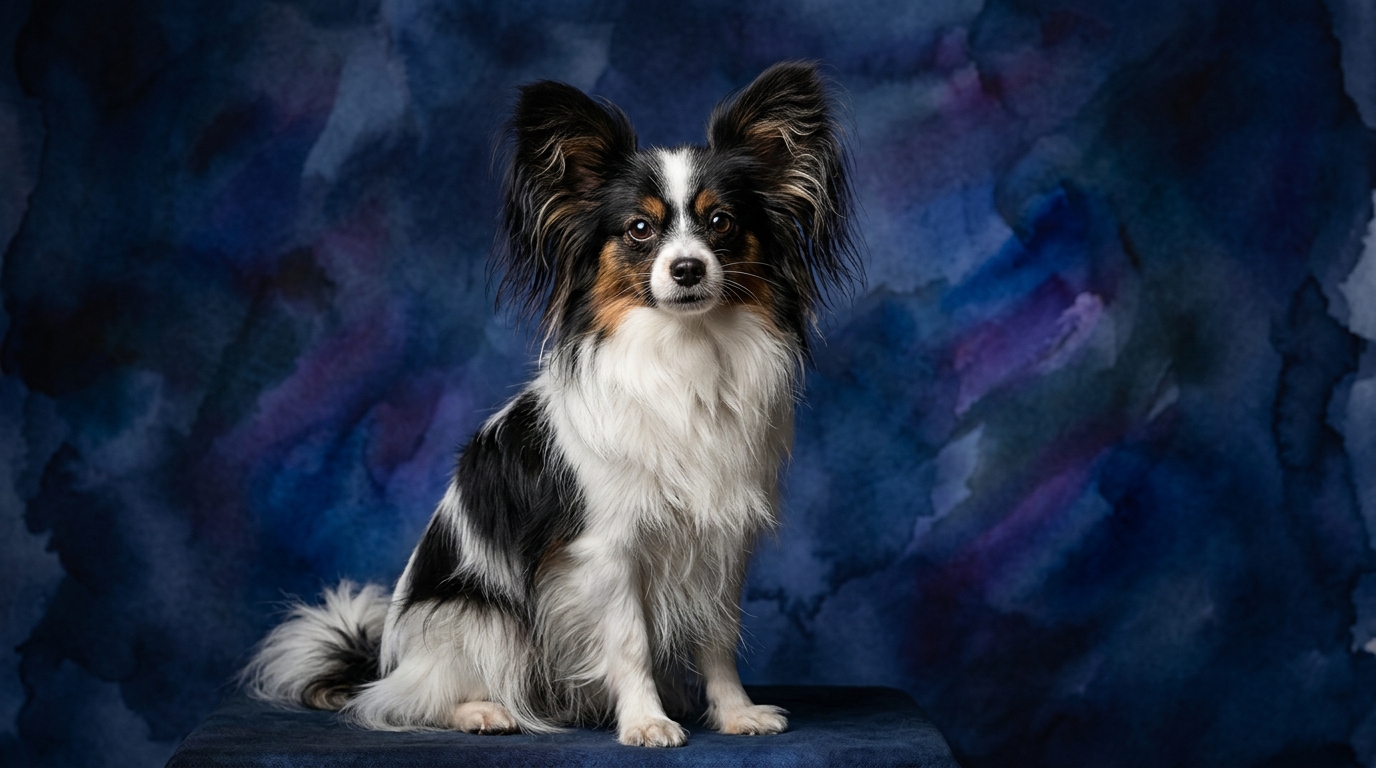

Side-by-Side IQ Profile: Papillon vs. Staffordshire Bull Terrier
The Cosmic Pet Pet IQ Lab employs a five-dimensional framework to assess canine intelligence, offering a nuanced view beyond simplistic rankings. For the Papillon, a toy breed with a Coren rank of #8, its cognitive profile showcases exceptional mental agility. Their Problem Solving is rated 5/5, indicating a strong capacity to strategize and navigate novel challenges. Training Speed also scores 5/5, reflecting their rapid grasp of new commands and concepts. Social Intelligence stands at 4/5, suggesting a keen ability to interpret human cues and adapt interactions. Instinctive Drive is moderate at 3/5, pointing to a balanced motivation that can be channeled effectively. Finally, their Memory is an impressive 5/5, highlighting their excellent retention of learned behaviors and experiences.
In contrast, the Staffordshire Bull Terrier, a terrier breed not traditionally Coren-ranked, presents a consistent and balanced cognitive profile. Across all five dimensions – Problem Solving, Training Speed, Social Intelligence, Instinctive Drive, and Memory – the Staffordshire Bull Terrier scores 3/5. This uniform rating indicates a practical, steady approach to cognition. Their problem-solving leans towards persistence and learned experience rather than immediate insight. Training speed suggests a need for consistent, clear instruction, with lessons solidifying over time. Social intelligence at 3/5 implies a loyal and reliable understanding of their familiar human companions. A 3/5 instinctive drive signifies a manageable, adaptable motivation, while memory at 3/5 means they retain information reliably with appropriate reinforcement.
Where the Papillon's Cognition Shines
The Papillon's cognitive strengths are particularly evident in its remarkable capacity for complex learning and recall. With a 5/5 in Problem Solving, these dogs excel at tasks requiring analytical thought, such as quickly deciphering intricate puzzle toys or navigating multi-step obstacle courses with minimal guidance. Their high score here signifies an ability to not just follow commands, but to understand the underlying logic of a task and apply creative solutions. This often manifests as a dog that can 'figure things out' independently, sometimes to their owner's surprise.
Complementing their problem-solving prowess is an equally impressive 5/5 in Training Speed. Papillons are renowned for their rapid acquisition of new behaviors, often needing only a few repetitions to grasp a command. This makes them exceptionally rewarding for owners who enjoy teaching advanced tricks, participating in dog sports like agility or obedience, or even learning complex routines. Their 5/5 Memory further solidifies this advantage, ensuring that once a lesson is learned, it is retained over long periods, making their training durable and reliable. Their 4/5 Social Intelligence also allows them to pick up on subtle changes in human tone and body language, enabling highly responsive and nuanced interactions, making them adept at mirroring their owner's mood and intentions.
Unpacking the Staffordshire Bull Terrier's Cognitive Strengths
While the Staffordshire Bull Terrier's scores are consistently at 3/5 across the board, this indicates a practical, resilient form of intelligence rather than a lack of cognitive ability. Their 3/5 in Problem Solving points to a tenacious approach; a Staffy might not solve a puzzle instantly, but they will apply persistent effort until they succeed. This tenacity translates into a dog that is not easily deterred and learns through consistent application, often displaying a robust mental fortitude that is highly valuable in day-to-day life.
The Staffy's 3/5 in Training Speed suggests that while they may not pick up new commands with the immediate flash of a Papillon, they are highly capable learners who, with patient and consistent instruction, reliably embed new behaviors. This means that once a Staffordshire Bull Terrier has learned something, it is often deeply ingrained and performed with steadfast reliability, making them incredibly dependable companions. Their 3/5 Social Intelligence manifests as unwavering loyalty and a consistent ability to read the familiar cues and moods of their family members, fostering a deep, stable bond. The balanced 3/5 Instinctive Drive ensures they are motivated but not overly impulsive, making them focused and present without extreme behavioral tendencies.
Training Trajectories: Ease and Approach
The distinct IQ profiles of the Papillon and Staffordshire Bull Terrier lead to differing, yet equally rewarding, training experiences. For the Papillon, with its 5/5 Training Speed and Problem Solving, training often feels like a rapid-fire exchange of ideas. They thrive on variety, quickly mastering new commands and eagerly seeking the next mental challenge. Owners can introduce complex sequences, chaining multiple behaviors together, and expect a swift understanding. However, this mental quickness also means Papillons can become bored if training is repetitive or lacks novelty, potentially leading them to invent their own, less desirable, forms of entertainment if not adequately stimulated.
In contrast, training a Staffordshire Bull Terrier, with its consistent 3/5 scores, requires a more patient and methodical approach. Repetition is a key component, allowing concepts to fully integrate. While they may take more sessions to grasp a new command initially, once learned, the behavior is often performed with great reliability and enthusiasm. Staffies respond exceptionally well to positive reinforcement, particularly food rewards and engaging play, and benefit from clear, consistent communication. Their robust and focused nature means they are less likely to be distracted by external stimuli once engaged in a training task, making them dependable trainees for owners committed to a structured, encouraging approach.
Lifestyle Match: Active vs. Relaxed Owners
Matching a dog's cognitive needs to an owner's lifestyle is crucial for harmonious cohabitation. The Papillon, with its high scores in Problem Solving, Training Speed, and Memory, requires owners who are prepared to provide consistent and varied mental stimulation. This goes beyond just physical exercise; it involves regular training sessions, puzzle toys, interactive games, and exposure to new environments and challenges. An owner who enjoys teaching new tricks, participating in dog sports, or simply engaging their dog's mind daily will find the Papillon an incredibly fulfilling and adaptable companion. Without sufficient mental engagement, a Papillon might develop behaviors born of boredom, such as excessive barking or destructive chewing.
The Staffordshire Bull Terrier, with its balanced 3/5 scores, thrives with owners who offer clear structure, consistent routines, and positive social interaction. While they certainly enjoy mental engagement and benefit from training, their primary needs often revolve around consistent physical activity, opportunities for appropriate play, and feeling like a valued member of the family unit. They are adaptable to various activities, from brisk walks to structured play sessions, and appreciate owners who provide a sense of purpose and leadership through patient, consistent guidance. A 'relaxed' owner for a Staffy means someone who is calm and consistent, not necessarily someone who avoids all mental engagement, as all dogs benefit from learning and interaction.
The Verdict
Choose the Papillon if you seek a highly adaptable, quick-learning companion eager for complex mental challenges and advanced training pursuits.
Opt for the Staffordshire Bull Terrier if you value steadfast loyalty, robust resilience, and a dog that thrives on consistent routines and practical, patient engagement.
🧠 Find Your Pet's IQ Score
Our Pet IQ Lab assessment covers 25+ tests across 5 cognitive dimensions — personalized to your breed.
Take the Full IQ Test →Frequently Asked Questions
Are Papillons difficult to live with due to their high intelligence?
No, their high cognitive capacity makes them highly trainable and adaptable, but it also means they require consistent mental stimulation. Owners who provide engaging activities will find them eager companions, while under-stimulated Papillons might invent their own, less desirable, games to occupy their minds.
Does a Staffordshire Bull Terrier's average IQ score mean they are hard to train?
A 3/5 IQ score for a Staffordshire Bull Terrier indicates a balanced learning pace, not difficulty. They are highly trainable with patience, consistency, and positive reinforcement. Their robust and focused nature means once a lesson is learned, it's typically well-retained and reliably performed.
Which breed is better for a first-time dog owner concerning intelligence?
For a first-time owner, the choice depends on their commitment to training style. A Papillon can be excellent if the owner is prepared for rapid learning and mental enrichment, while a Staffordshire Bull Terrier is suitable if the owner prioritizes consistency, clear communication, and a patient, positive training approach.