
Side-by-Side IQ Profile
The Cosmic Pet Pet IQ Lab employs a five-dimensional framework to assess canine cognitive abilities, providing a granular view of how different breeds process information and interact with their world. Let's delve into the specific profiles of the Papillon and the Wire Fox Terrier.
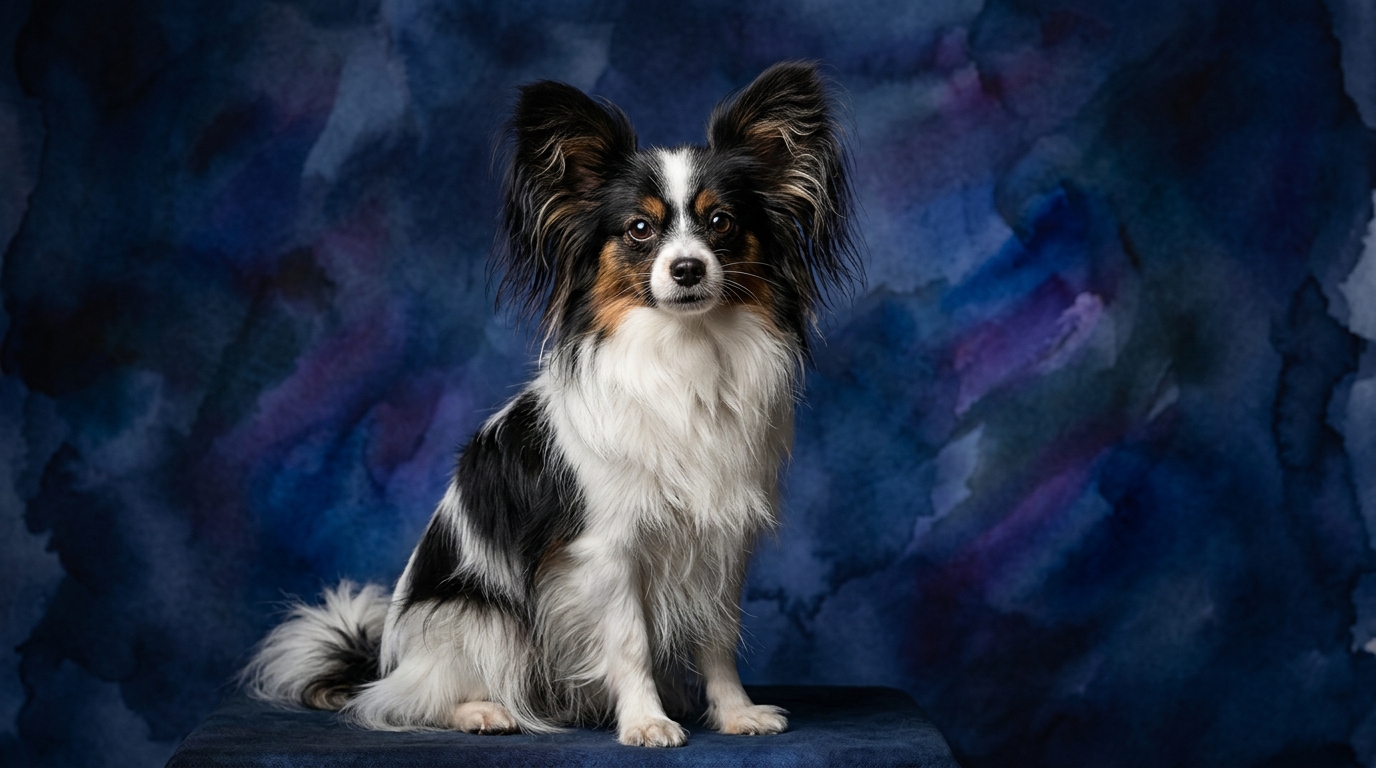
The Papillon, a breed often celebrated for its elegant appearance, consistently demonstrates a top-tier cognitive capacity. Their Problem Solving is rated 5/5, indicating an exceptional ability to navigate novel situations, devise strategies, and manipulate objects to achieve desired outcomes. Training Speed also scores 5/5, signifying that these dogs grasp new commands and routines with remarkable swiftness, often requiring minimal repetition. In terms of Social Intelligence, the Papillon achieves a 4/5, reflecting a keen understanding of human emotions and social cues, allowing for deep, responsive bonds. Their Instinctive Drive is a moderate 3/5, meaning while they possess natural curiosities and playful urges, these are generally manageable and easily channeled. Finally, their Memory is an impressive 5/5, ensuring long-term retention of learned behaviors, routines, and specific environmental details.
The Wire Fox Terrier, a robust and spirited member of the terrier group, presents a different cognitive landscape. Their Problem Solving is rated 3/5, indicating a practical, often persistent approach to challenges, typically involving direct action rather than intricate planning. Training Speed also stands at 3/5, meaning they are capable learners but often require more consistent repetition and highly motivating rewards to maintain focus and solidify new commands. For Social Intelligence, they score 3/5, suggesting a responsiveness to their human companions but with a more independent interpretation of social dynamics. Their Instinctive Drive is also 3/5, a defining characteristic that manifests as a strong urge for chasing, digging, and exploring, true to their working heritage. Lastly, their Memory is rated 3/5, enabling them to retain frequently used commands and routines, though less-practiced information might require more frequent refreshers.
Where Papillon Wins Cognitively
The Papillon's cognitive strengths offer a clear advantage in several areas, making them exceptional partners for various activities that demand mental agility. Their Problem Solving score of 5/5 means they are quick to grasp abstract concepts and can independently work through novel challenges, such as figuring out how to open a treat puzzle or navigating an agility course with minimal guidance. This contrasts sharply with the Wire Fox Terrier's more direct, often trial-and-error approach. Papillons often demonstrate foresight, anticipating outcomes and adjusting their actions accordingly, a testament to their advanced cognitive processing.
Coupled with a Training Speed of 5/5, Papillons absorb new commands and complex sequences almost effortlessly, making them shining stars in competitive obedience, rally, and trick training. They often anticipate their handler's next move, demonstrating a proactive engagement that stems from their rapid information processing and eagerness to engage. Furthermore, their superior Memory (5/5) ensures that once a lesson is learned, it is retained for the long term, reducing the need for constant re-training. This reliable recall extends beyond commands to routines and even specific environmental cues, allowing them to adapt smoothly to established household rhythms. Their Social Intelligence (4/5) also provides a cognitive edge in interpersonal dynamics, enabling them to finely tune into human emotions and react with a sensitivity that fosters deep, empathetic bonds, often adjusting their own behavior to match the mood of their companions.
Where Wire Fox Terrier's Unique Cognitive Strengths Shine
While the Wire Fox Terrier's numerical scores are lower across the board, their cognitive profile is perfectly adapted for their ancestral purpose and offers a distinct set of strengths, particularly in areas requiring tenacity and independence. Their Problem Solving at 3/5, combined with their Instinctive Drive at 3/5, translates into a determined, relentless pursuit of goals, especially those involving scent work or retrieving. They might not solve a puzzle box with the same strategic flair as a Papillon, but they will apply unwavering focus and physical tenacity until the perceived "quarry" is unearthed or retrieved.
This persistence is a cognitive advantage in tasks requiring sustained effort and independence, where a dog needs to work without constant human direction. Their Training Speed and Memory, both at 3/5, mean they are capable learners, particularly when the training taps into their natural drives. For instance, a Wire Fox Terrier will quickly learn a command that leads to a chase game or a digging opportunity, retaining that association effectively. Their social intelligence, while 3/5, fosters a relationship built on mutual respect and clear boundaries, rather than overt emotional mirroring, which can be appealing to owners who appreciate a dog with a strong, independent character. These traits make them formidable partners in earthdog trials or any activity that demands grit, determination, and a focused, independent work ethic.
Which Is Easier to Train and Why
Based on their respective IQ profiles, the Papillon is unequivocally the easier breed to train. Their 5/5 Training Speed means they absorb new information rapidly, often understanding a new command after just a few repetitions. This is largely due to their profound eagerness to please and their focus on their human companions, which is a hallmark of their high Social Intelligence. Papillons thrive on positive reinforcement and will actively seek to understand what is being asked of them, making the training process feel like a collaborative effort. They are quick to generalize learned behaviors to different environments and cues, demonstrating a flexible cognitive approach.
In contrast, the Wire Fox Terrier, with a 3/5 Training Speed, requires a more patient, consistent, and creative approach. While capable of learning, their independent nature and strong instinctive drives mean they can be easily distracted by environmental stimuli, such as scents or movement. Training a Wire Fox Terrier often involves channeling their innate tenacity and prey drive into acceptable outlets, and making the training highly rewarding to maintain their attention. They are not inherently "stubborn" but rather possess a self-sufficient mindset, meaning they are less inclined to perform simply to please and more motivated by what benefits them directly, requiring trainers to be engaging and innovative to hold their focus.
Which Suits Active Owners vs. Relaxed Owners
The choice between a Papillon and a Wire Fox Terrier largely depends on an owner's lifestyle and energy levels. Papillons, while adaptable, generally suit owners who appreciate an engaged and interactive companion but might not require intense physical exertion every day. Their high Problem Solving and Memory scores mean they thrive on mental stimulation through puzzle toys, trick training, and dog sports like agility or rally, which can be done in smaller spaces. They enjoy walks and playtime but are equally content snuggling on a lap, making them suitable for individuals or families who desire a mentally stimulating yet physically moderate companion. They fit well with owners who enjoy teaching new things and spending quality, interactive time indoors and out.
The Wire Fox Terrier, on the other hand, is ideally suited for highly active owners who can meet their significant physical and mental exercise requirements. Their 3/5 Instinctive Drive manifests as a need for regular, vigorous activity, including long walks, runs, secure off-leash play, and engaging games that mimic hunting behaviors. Their problem-solving, though not numerically superior, is geared towards persistent action, meaning they need outlets for their energy and determination to prevent boredom and destructive behaviors. Owners who enjoy hiking, jogging, or participating in dog sports like earthdog trials, agility, or flyball will find a dedicated and enthusiastic partner in a Wire Fox Terrier. They require an owner who understands and respects their terrier temperament, providing consistent training and ample opportunities to burn off their boundless energy.
The Verdict
Choose the Papillon if you seek a highly trainable, socially perceptive companion who excels in rapid learning, remembers commands effortlessly, and thrives on mental engagement within a flexible activity schedule.
Opt for the Wire Fox Terrier if you are an active individual or family prepared to channel a tenacious, independent spirit into consistent training and vigorous daily exercise, appreciating a dog whose determination and focused drive are central to its charm.
🧠 Find Your Pet's IQ Score
Our Pet IQ Lab assessment covers 25+ tests across 5 cognitive dimensions — personalized to your breed.
Take the Full IQ Test →Frequently Asked Questions
Are Papillons good for first-time dog owners?
Yes, Papillons can be excellent for first-time owners due to their high training speed and eager-to-please nature. Their quick learning and social intelligence make them relatively straightforward to teach basic commands and house rules, provided owners are consistent with positive reinforcement.
Do Wire Fox Terriers get along with other pets?
Wire Fox Terriers can coexist with other pets, especially if socialized from a young age. However, their strong instinctive drive means supervision is crucial with smaller animals, and their independent nature might make them less inclined towards constant group play than some other breeds.
How much mental stimulation does a Papillon need?
Papillons require significant mental stimulation daily to keep their keen minds engaged. This can include puzzle toys, learning new tricks, participating in dog sports, or engaging in interactive games, leveraging their high problem-solving and memory abilities.