Side-by-Side IQ Profile: A Closer Look at the 3/5s
At first glance, the identical 3/5 scores across the board for both the Parson Russell Terrier and the Harrier might suggest similar cognitive experiences, yet their breed types – Terrier versus Hound – dictate profoundly different manifestations of these abilities. Understanding these nuanced distinctions is key to appreciating their individual brilliance.
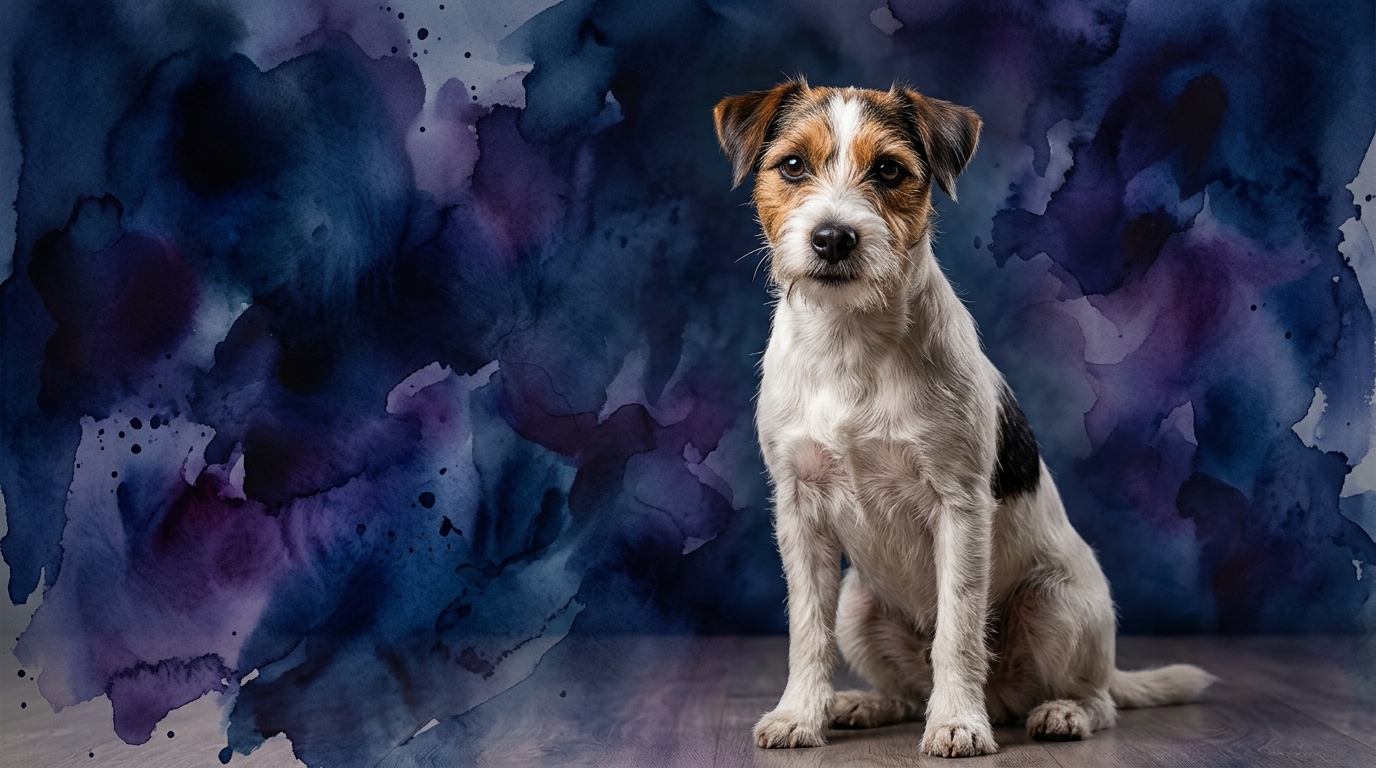
For the **Parson Russell Terrier**, a score of 3/5 in **Problem Solving** signifies a cleverness rooted in their history of independent vermin control. This isn't about complex abstract thought, but rather resourceful, often physical, solutions: figuring out how to get to a perceived quarry, navigating obstacles in a chase, or finding a way to access a forbidden treat. Their 3/5 **Training Speed** reflects an ability to grasp concepts quickly, but often with a caveat; their independent spirit means they learn fast when motivated, but might just as quickly decide their own agenda is more pressing than a repeated command. Their **Social Intelligence** at 3/5 indicates they are certainly capable of forming strong bonds and reading human cues, yet they can be assertive and opinionated, prioritizing their own perceived needs or desires within the family unit. The 3/5 for **Instinctive Drive** is a powerful engine of prey drive, digging, and barking, deeply ingrained and readily expressed. Finally, their **Memory** at 3/5 means they retain commands, routines, and experiences effectively, but also remember every squirrel path and past success in outwitting their humans.
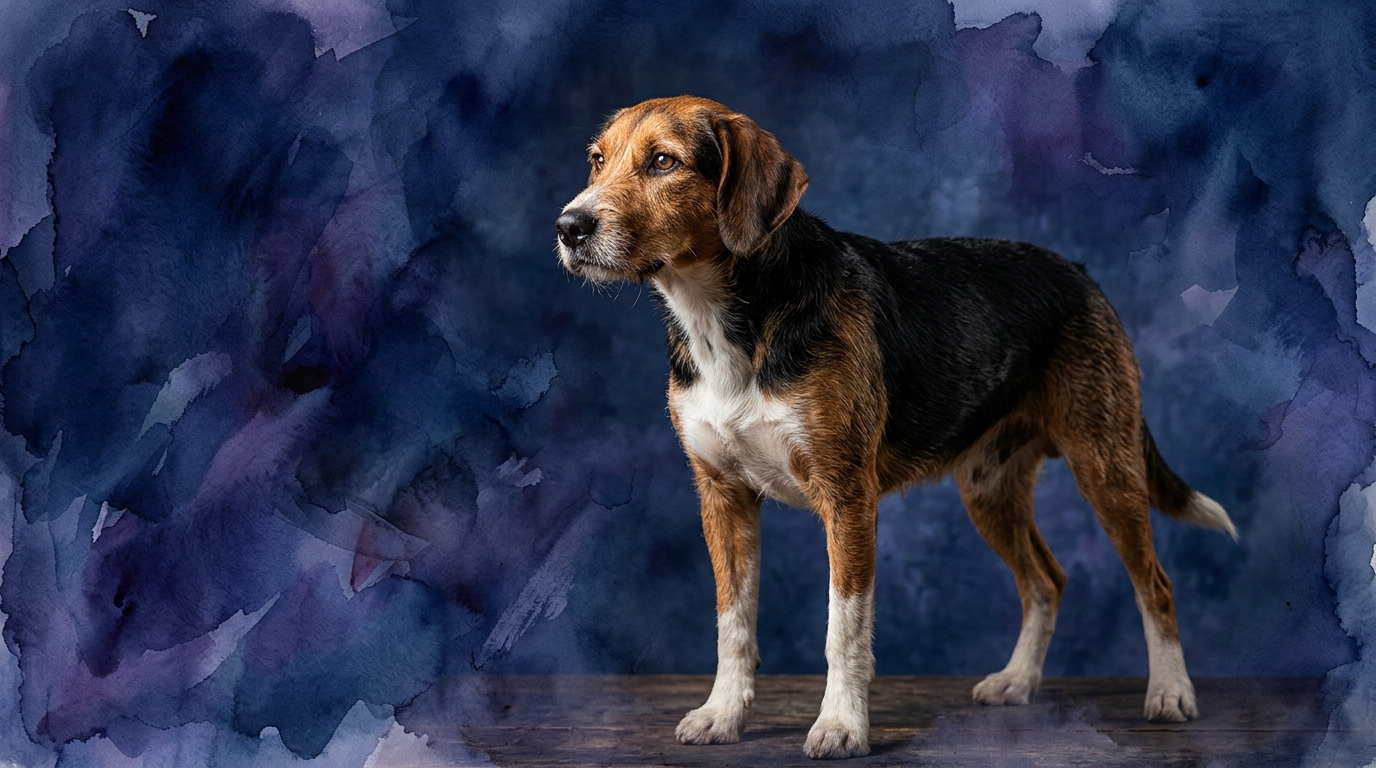
The **Harrier**, with identical 3/5 scores, presents a different cognitive landscape shaped by its pack-hunting heritage. Their 3/5 **Problem Solving** is less about individual cunning and more about sustained, methodical, scent-driven deduction. This means expertly unravelling complex scent trails, navigating varied terrain with purpose, and collaborating (if in a pack) to achieve a shared goal, rather than outsmarting a single opponent. A 3/5 in **Training Speed** for a Harrier means they can learn commands and routines, particularly when linked to positive reinforcement and their natural drives, but their focus can be easily overridden by a compelling scent. Patience and consistency are paramount. Their **Social Intelligence** at 3/5 speaks to their amiable pack nature; they generally get along well with other dogs and are affable with people, reading group dynamics effectively. The 3/5 in **Instinctive Drive** is a dominant force, manifesting as an insatiable desire to track, a remarkable endurance, and a characteristic vocalization (baying). Their **Memory** at 3/5 is exceptionally strong for scent profiles and routes, remembering intricate trails over long periods, though specific human commands might take a backseat when a potent scent demands their full attention.
Where the Parson Russell Terrier's Cognition Shines
The Parson Russell Terrier’s cognitive strengths lie in their dynamic, often impulsive, problem-solving and their remarkable adaptability to various, rapidly changing situations. While their score is 3/5, their intelligence is expressed through a quick-witted resourcefulness that allows them to make split-second decisions in novel environments. For instance, if a toy rolls under an inaccessible piece of furniture, a Parson Russell Terrier is likely to quickly experiment with different angles, pawing techniques, or even digging strategies to retrieve it, demonstrating a tenacious, trial-and-error approach rather than waiting for human intervention. Their 3/5 problem-solving is about finding immediate, practical solutions to immediate, often physical, challenges.
Furthermore, their independent streak, a hallmark of their terrier lineage, means they are adept at operating without constant human direction. This isn't a lack of desire to please, but rather an ingrained capacity for self-directed activity. This cognitive independence allows them to process information and act decisively on their own initiative, which, while sometimes challenging for owners, is a testament to their keen observational skills and ability to adapt their tactics based on immediate feedback from their environment. They possess a distinctive form of street smarts, always assessing their surroundings for opportunities or challenges.
Where the Harrier's Cognition Excels
The Harrier's cognitive prowess, also rated 3/5, is a testament to sustained, methodical, and sensory-driven intelligence, primarily manifested through their exceptional olfactory capabilities. Unlike the Parson Russell Terrier's quick, visual problem-solving, a Harrier excels at the intricate, drawn-out puzzle of a scent trail. Their ability to discriminate between countless odors, follow a fading trail over diverse terrains, and maintain focus for extended periods is a complex cognitive feat. This involves memory of specific scents, an understanding of wind currents and ground conditions, and an unwavering determination to complete the task.
Their social intelligence, while rated 3/5, is distinctly geared towards pack dynamics. Harriers are generally more attuned to cooperative efforts and group cohesion than individualistic pursuits. This means they often thrive in multi-dog households or social settings, demonstrating an inherent understanding of canine communication and hierarchy. Their problem-solving in a hunting context historically involved working seamlessly with other hounds and human hunters, showcasing a different kind of collaborative intelligence that prioritizes collective success over individual glory. Their endurance isn't just physical; it's a mental fortitude to persevere in a task, driven by instinct and a deep connection to their sensory world.
Training Dynamics: A Tale of Two Motivations
When it comes to training, both breeds score 3/5 in Training Speed, yet their underlying motivations and challenges diverge significantly. A Parson Russell Terrier’s training journey is often characterized by bursts of rapid learning interspersed with moments of stubborn independence. They grasp commands quickly because they are observant and eager to engage, but their attention can wane if tasks become repetitive or if something more stimulating captures their interest. Their 3/5 training speed means they respond best to varied, engaging sessions, positive reinforcement, and a trainer who can consistently demonstrate clear leadership. They may offer alternative behaviors if bored or if they perceive an opportunity to take charge, making consistency and creativity vital.
The Harrier, while equally capable of learning with a 3/5 training speed, presents a different set of considerations. Their primary challenge is their all-consuming scent drive. A Harrier can be incredibly biddable and responsive in a controlled environment, especially when training incorporates their love for scent work or food rewards. However, once a compelling scent hits their nose, their focus can become singularly devoted to tracking it, often overriding any previously learned commands, especially recall. Training a Harrier requires immense patience, understanding of their hound nature, and a commitment to making training more rewarding than any potential environmental distraction. Their social intelligence also means they often respond well to training methods that foster a sense of partnership rather than strict dominance, although their independent spirit still requires clear boundaries.
Lifestyle Match: Active Owners vs. Relaxed Owners
Matching a dog's cognitive and physical needs to an owner's lifestyle is crucial for a harmonious relationship, and here, the Parson Russell Terrier and Harrier present distinct demands, despite their similar IQ scores. The Parson Russell Terrier, with its 3/5 instinctive drive and problem-solving, is unequivocally suited for highly active owners. They require intense, varied physical exercise that goes beyond simple walks; think agility, earthdog trials, extensive fetch sessions, or long runs. Their mental faculties also demand constant engagement through puzzle toys, trick training, and interactive games. A relaxed owner who cannot provide this level of stimulation will likely find their Parson Russell Terrier becoming destructive, excessively vocal, or developing other unwanted behaviors out of boredom and pent-up energy. Their compact size belies an enormous need for activity.
Similarly, the Harrier is not a breed for relaxed owners. Their 3/5 instinctive drive, particularly their endurance and scenting ability, dictates a need for substantial, sustained physical activity. They thrive on long hikes, jogging alongside their owner, or extensive free-running in securely fenced areas where they can indulge their nose without risk. A quick stroll around the block will barely scratch the surface of their exercise requirements. While they can be calm indoors after sufficient activity, consistent, ample outdoor time is non-negotiable. Owners who appreciate long, purposeful walks and outdoor exploration, perhaps even engaging in scent work or tracking sports, will find the Harrier a rewarding companion. Both breeds, despite their identical IQ ratings, demand owners who are prepared for a significant commitment to their physical and mental well-being.
The Verdict: When to Choose Each
The Verdict
Choose a Parson Russell Terrier if you seek a compact, tenacious companion for varied, high-intensity activities and enjoy engaging a clever, independent thinker with consistent, firm guidance.
Opt for a Harrier if you desire a friendly, robust partner for long, sustained outdoor adventures, particularly scent-based activities, and appreciate a dog driven by its nose and social pack instincts.
🧠 Find Your Pet's IQ Score
Our Pet IQ Lab assessment covers 25+ tests across 5 cognitive dimensions — personalized to your breed.
Take the Full IQ Test →Frequently Asked Questions
Are Parson Russell Terriers good with other pets?
Their strong prey drive (Instinctive Drive 3/5) means they may not be ideal with small, non-canine pets unless introduced very carefully from a young age. They can generally coexist with other dogs, but their assertive nature sometimes requires careful management.
How much exercise does a Harrier truly need?
Harriers possess considerable endurance (Instinctive Drive 3/5) and require at least an hour or two of vigorous activity daily, ideally off-leash in a secure area or involving scent work. Casual walks won't suffice; they need to run and explore with their noses.
Can a Harrier live in an apartment?
While adaptable, a Harrier's need for extensive exercise and their potential for vocalization (baying) due to their hound nature makes apartment living challenging. They thrive best in homes with securely fenced yards and owners committed to fulfilling their substantial activity requirements.