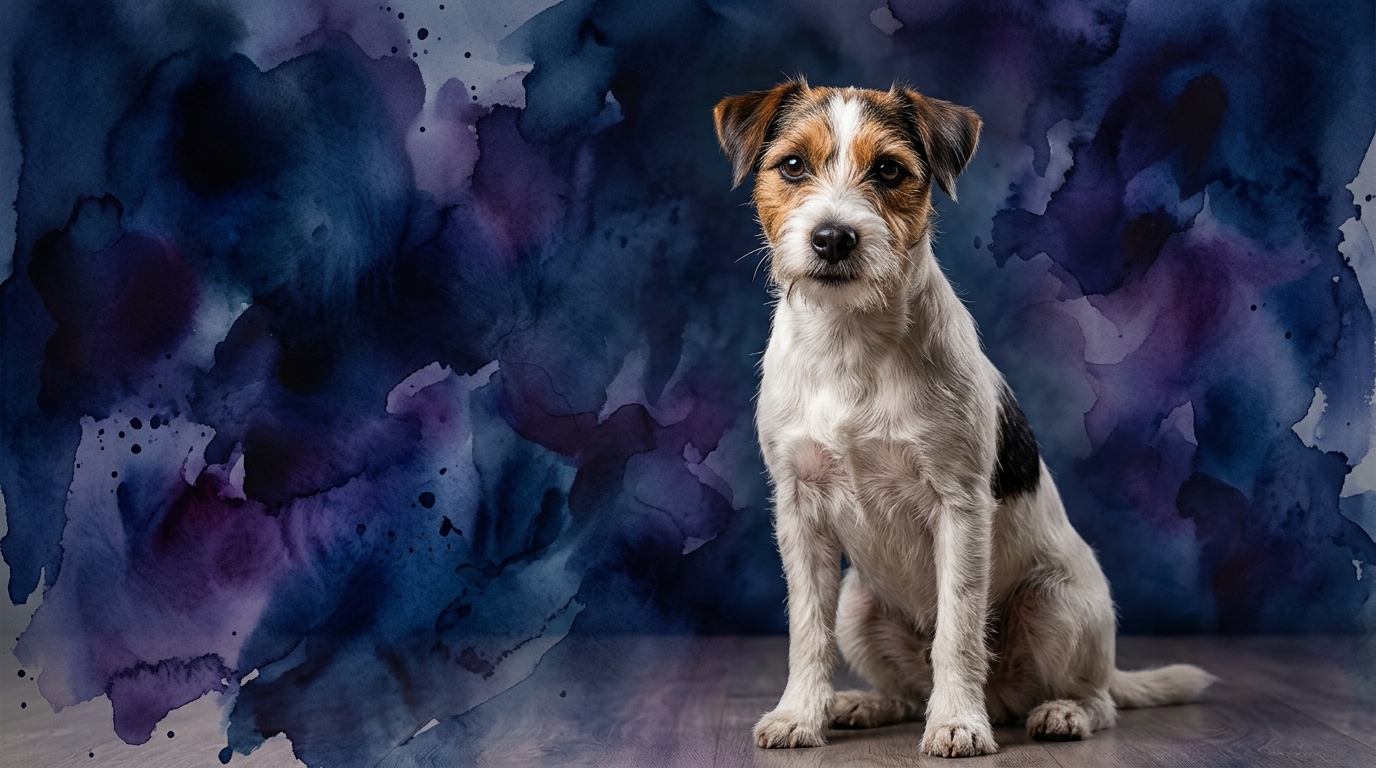
Side-by-Side IQ Profile: Parson Russell Terrier
The Parson Russell Terrier (PRT) is a bundle of energetic curiosity, reflected in its cognitive profile. For Problem Solving (3/5), these dogs exhibit a clever resourcefulness, often employing observational learning and quick thinking to navigate obstacles or secure desired objects. Their solutions tend to be nimble and opportunistic, reflecting their heritage as agile hunters who outsmart quarry. In terms of Training Speed (3/5), Parson Russells absorb new information at a moderate pace, but their independent spirit and tendency to question directives mean that consistent, engaging training methods are crucial. They thrive on variety and can become bored with repetitive drills. Their Social Intelligence (3/5) shows them generally attuned to human moods and social dynamics within their household, often using their understanding to solicit attention or initiate play. They can be quite discerning about whom they interact with, showing a preference for familiar faces. The PRT's Instinctive Drive (3/5) manifests as an intense interest in small, moving objects and a persistent inclination to dig; this inherent motivation fuels their exploratory nature and can be harnessed in activities like scent work or earthdog trials. Finally, their Memory (3/5) contributes to their ability to learn complex sequences, as they possess a good recall for both positive and negative experiences, remembering commands, routes, and individuals.
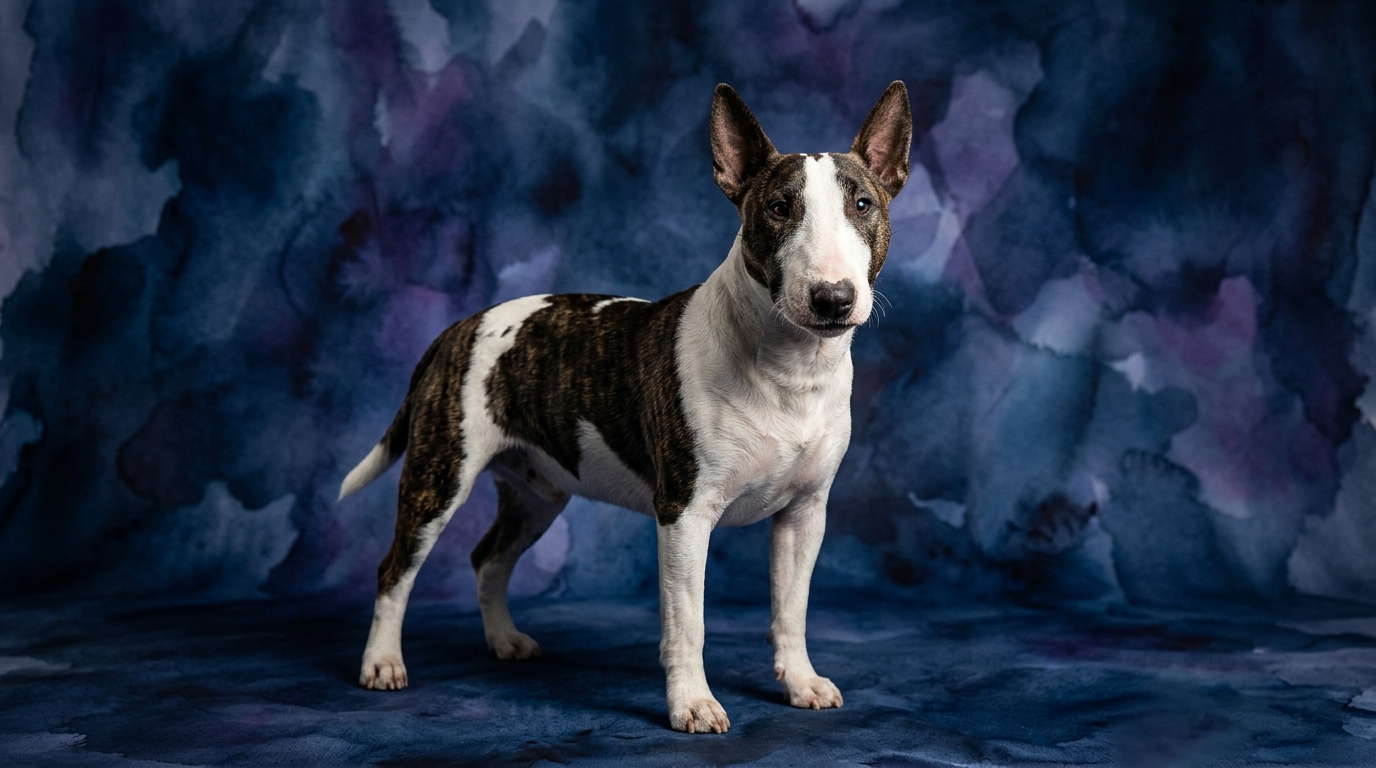
Side-by-Side IQ Profile: Miniature Bull Terrier
The Miniature Bull Terrier (MBT) presents a distinct cognitive style, marked by determination and a unique personality. When it comes to Problem Solving (3/5), Miniature Bull Terriers approach challenges with a blend of determination and creative, sometimes unconventional, thinking. They are often persistent in their attempts, using their physical prowess and a 'never give up' attitude to overcome obstacles, even if it means trying the same thing multiple times with slight variations. For Training Speed (3/5), learning new commands takes a moderate number of repetitions for the Miniature Bull Terrier, but their training can be characterized by bursts of understanding interspersed with periods of charming stubbornness. Patience and highly motivating rewards are essential to maintain their focus. Their Social Intelligence (3/5) suggests that while affectionate with their chosen people, MBTs can sometimes appear oblivious to subtle social cues when deeply engrossed in an activity or focused on a particular person. They are generally good-natured but may require careful introductions to new social situations to ensure harmonious interactions. The MBT's Instinctive Drive (3/5) is evident in their robust prey drive, seen in their powerful pursuit of toys and their focused intensity during play; they also possess a strong desire to explore and investigate, often using their nose and mouth to interact with their environment. Their Memory (3/5) is solid, as Miniature Bull Terriers have a good recall for routines, commands, and the people they interact with, remembering past training sessions, both successful and unsuccessful, and recalling specific locations or individuals even after long absences.
Where the Parson Russell Terrier Wins Cognitively
The Parson Russell Terrier often demonstrates an edge in tasks requiring rapid environmental assessment and agile physical execution. Their quicker reflexes and inherent nimbleness translate into a cognitive advantage when faced with puzzles demanding swift adjustments or intricate manipulation. For instance, a PRT might more readily decipher how to open a complex latch that requires multiple precise steps, using their paws and nose with a refined dexterity. Their observational learning skills also appear more prominent, allowing them to mimic behaviors after just a few demonstrations, particularly when the task involves spatial reasoning or navigating tight spaces. This quick processing and physical adaptability make them adept at navigating agility courses or complex scent trails where speed and precision are paramount.
Where the Miniature Bull Terrier Wins Cognitively
Conversely, the Miniature Bull Terrier often excels in cognitive challenges that demand sustained effort and a robust, almost unyielding, focus. Their determination, a hallmark of the breed, translates into a significant cognitive asset when confronting problems that might discourage a less persistent dog. For example, an MBT might spend considerably longer attempting to retrieve a deeply embedded toy or solve a puzzle feeder that requires repeated, forceful interaction, simply refusing to give up. This tenacious problem-solving is coupled with a strong capacity for focused attention on a single task, making them particularly effective in scenarios where a 'bull-headed' approach eventually yields results. Their physical strength and resilience are often integrated into their cognitive strategies, allowing them to leverage their body effectively to achieve goals that might be physically demanding for other breeds.
Which is Easier to Train and Why
Both breeds present a moderate challenge in training, reflected by their 3/5 training speed, but their specific hurdles differ. The Parson Russell Terrier, with its inquisitive nature and high prey drive, can be easily distracted. Their problem-solving abilities, while admirable, can sometimes manifest as finding creative ways to circumvent commands or push boundaries, requiring an owner to be consistently one step ahead and make training highly engaging to prevent boredom. A PRT might learn a new trick quickly, but maintaining its precision requires novelty and reinforcement to overcome its independent streak and desire for self-directed activity. The Miniature Bull Terrier, on the other hand, often presents a different kind of training challenge rooted in their renowned stubbornness and single-minded focus. If an MBT decides a task isn't worth their effort or if the motivation isn't compelling enough, they can simply refuse to comply, making progress slow and requiring immense patience. Their persistence can be a double-edged sword; once they understand and commit to a command, they perform it reliably, but getting them to that point demands consistent, positive reinforcement and a strong, trusting relationship. Therefore, while both demand dedication, the PRT might be perceived as marginally 'easier' for owners who enjoy varied, fast-paced training and can leverage their dog's curiosity, whereas the MBT requires an owner committed to methodical, patient repetition and finding their dog's ultimate motivator.
Which Suits Active Owners vs. Relaxed Owners
Neither the Parson Russell Terrier nor the Miniature Bull Terrier are suitable companions for truly relaxed, sedentary owners; both breeds demand significant engagement. The Parson Russell Terrier thrives with an active lifestyle that caters to its boundless energy and sharp mind. They need ample opportunities for vigorous exercise, such as long runs, challenging hikes, and structured mental stimulation through dog sports like agility, earthdog trials, or scent work. Their perpetual curiosity means that if not adequately exercised and mentally engaged, they can become restless and invent their own, potentially destructive, entertainment. The Miniature Bull Terrier also requires robust physical activity and mental outlets for its substantial drive. They enjoy spirited play sessions, long walks, and opportunities to expend their energy. While they possess a playful, sometimes clownish, side and can be content to cuddle on the sofa after a good romp, their powerful build and tenacity mean that their exercise needs are non-negotiable. Owners must be prepared to provide consistent, engaging activity to prevent boredom and channel their strong instincts constructively. In summary, both breeds are best suited for active individuals or families committed to integrating their canine companion into a dynamic lifestyle.
The Verdict
Choose the Parson Russell Terrier if you seek an agile, quick-witted partner for dog sports, scent work, or a dynamic companion who thrives on varied mental challenges and can adapt swiftly to new situations.
Opt for the Miniature Bull Terrier if you appreciate a tenacious, robust companion with a unique, sometimes comical, personality, and are prepared to invest in patient, consistent training to channel their powerful drive.
🧠 Find Your Pet's IQ Score
Our Pet IQ Lab assessment covers 25+ tests across 5 cognitive dimensions — personalized to your breed.
Take the Full IQ Test →Frequently Asked Questions
Are Parson Russell Terriers prone to digging?
Yes, Parson Russell Terriers possess a strong instinctive drive (3/5) for digging, a remnant of their history as fox hunters. Owners should provide appropriate outlets for this behavior, such as a designated digging pit, to protect gardens.
Do Miniature Bull Terriers get along with other dogs?
Miniature Bull Terriers can get along with other dogs, but their social intelligence (3/5) suggests that early, consistent socialization is crucial. Their robust play style and occasional obliviousness to subtle cues mean careful introductions are often best.
What kind of mental stimulation do these breeds need?
Both breeds benefit from mental stimulation that challenges their problem-solving (3/5) and instinctive drives (3/5). Puzzle toys, obedience training, scent games, and dog sports like agility or barn hunt are excellent choices to keep their minds engaged.