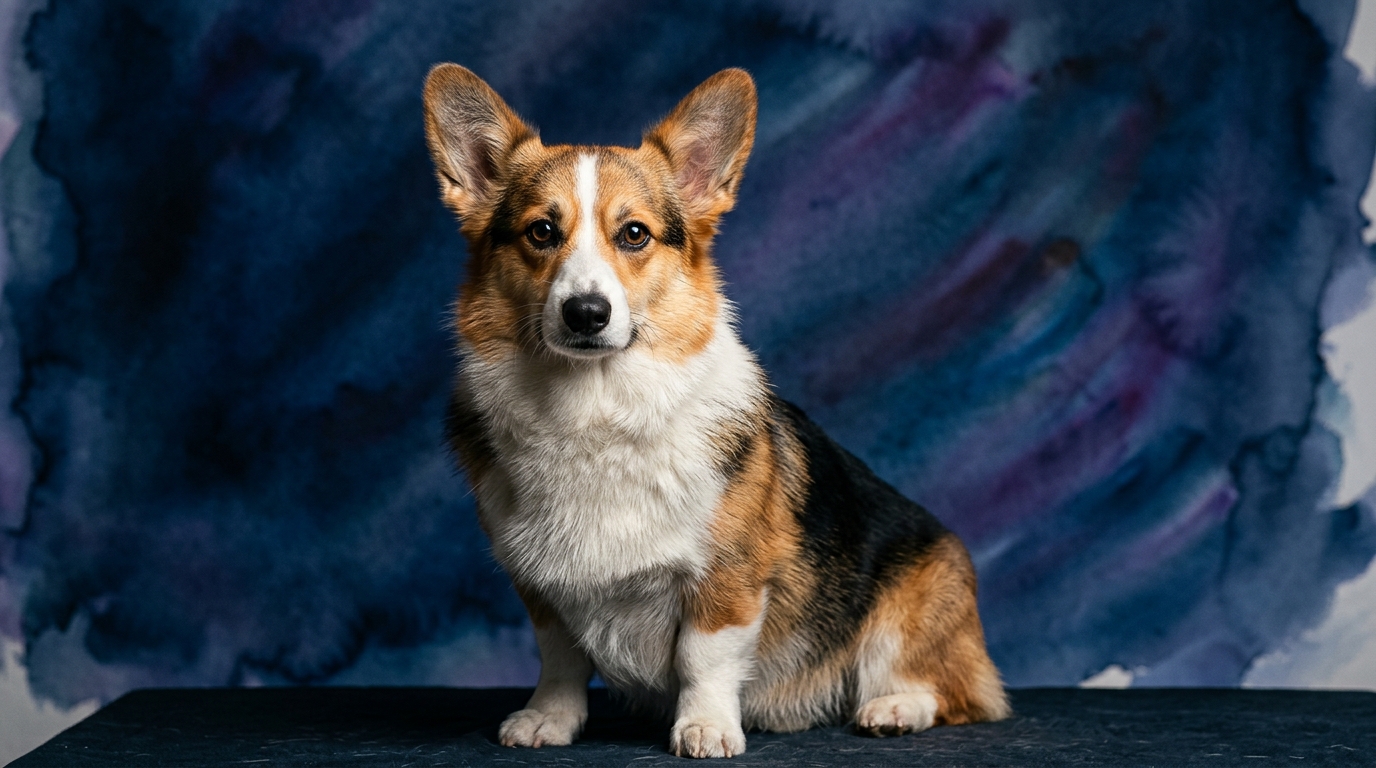
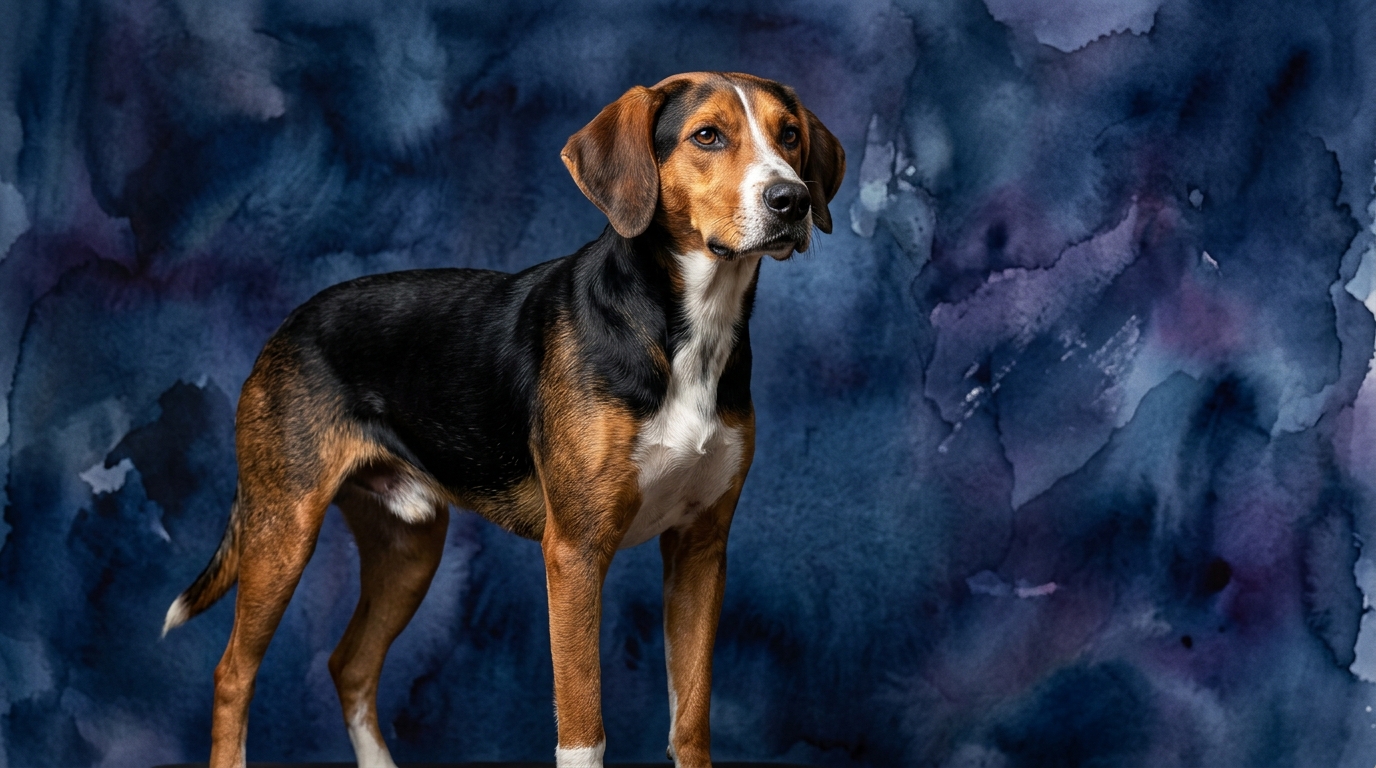
Side-by-Side IQ Profile: Pembroke Welsh Corgi vs. American Foxhound
The Cosmic Pet Pet IQ Lab provides a detailed breakdown of cognitive strengths, offering a unique lens through which to understand these two distinct breeds.
For the **Pembroke Welsh Corgi**:
**Problem Solving (4/5)**: These dogs often demonstrate a strong capacity for navigating novel situations and figuring out how to achieve desired outcomes, whether it's opening a gate or devising a strategy to move livestock. Their herding lineage demands quick, on-the-spot decisions.
**Training Speed (5/5)**: The Corgi's eagerness to engage and their ability to quickly grasp new commands and routines make them remarkably responsive in training settings. They form associations rapidly and retain information efficiently.
**Social Intelligence (4/5)**: Corgis typically exhibit an astute understanding of human cues and social dynamics within their family unit. They can read intentions and adapt their behavior to fit social contexts, often seeking interaction and cooperation.
**Instinctive Drive (5/5)**: Their herding instinct is profound, manifesting as a strong urge to gather, control, and direct. This drive is a complex cognitive program involving spatial reasoning, anticipation, and sustained focus on a task.
**Memory (4/5)**: Corgis possess a robust memory, recalling commands, routines, and even specific locations or events with notable accuracy over time. This aids in their consistent performance and adaptability.
For the **American Foxhound**:
**Problem Solving (3/5)**: Foxhounds generally approach problems with persistence rather than immediate strategic insight. Their strength lies in methodical, sustained effort, particularly when following a scent, rather than quickly deciphering abstract puzzles.
**Training Speed (3/5)**: While capable of learning, Foxhounds may require more repetition and patience in training compared to breeds that are inherently more handler-focused. Their independent nature means they process information differently, often prioritizing their environment.
**Social Intelligence (3/5)**: These hounds are generally amiable but often less attuned to subtle human social cues than breeds bred for close partnership. Their social focus is often directed more towards their canine pack or the pursuit itself.
**Instinctive Drive (3/5)**: The Foxhound's drive is overwhelmingly focused on scent and pursuit, a singular, powerful instinct that can override other impulses. While intense, it's a specialized drive rather than a broad, adaptable one like a herder's.
**Memory (3/5)**: Foxhounds effectively remember scent trails and hunting patterns, demonstrating a specific type of memory. However, their recall for arbitrary commands or complex sequences might not be as sharp or consistently reliable as breeds with higher overall memory scores.
Where the Pembroke Welsh Corgi Wins Cognitively
The Pembroke Welsh Corgi's cognitive profile generally outpaces the American Foxhound in adaptability and handler-centric cooperation. Their problem-solving score of 4/5 illustrates a capacity for creative solutions, whether it's figuring out how to bypass an obstacle to move sheep or strategically maneuvering around household furniture to get to a favorite toy. This contrasts with the Foxhound's more direct, less nuanced approach to novel challenges.
Furthermore, the Corgi's training speed, rated 5/5, signifies an exceptional ability to absorb and apply new information quickly. This reflects an intrinsic motivation to engage with their human companions and a rapid understanding of cause-and-effect in training contexts. A Corgi often needs fewer repetitions to master a new trick or command, exhibiting a keenness to learn that makes structured lessons highly productive.
Their social intelligence (4/5) allows them to pick up on subtle human emotions and intentions, making them highly responsive companions who can adjust their behavior based on their owner's mood or instructions. This strong social bond and understanding contribute significantly to their trainability and their role as integrated family members, a trait less pronounced in the more independently-minded Foxhound.
The Corgi's instinctive drive (5/5), while rooted in herding, translates into a broader capacity for directed work and focus. This drive isn't just about instinctual action; it involves strategic thinking, spatial awareness, and anticipating movement, all complex cognitive processes. Their memory (4/5) further supports these strengths, ensuring that learned behaviors and environmental layouts are retained, contributing to their consistent performance and adaptability in diverse environments. In essence, the Corgi's cognitive architecture is built for dynamic interaction and rapid learning within a structured social context.
Where the American Foxhound's Unique Cognition Shines
While the American Foxhound's general IQ scores might appear lower across the board, their unique cognitive architecture is exquisitely refined for their specialized purpose, representing a distinct form of intellectual strength. Their primary cognitive advantage lies in their unparalleled olfactory processing and persistent pursuit drive. Although their `instinctive Drive` is rated 3/5, this score may not fully capture the profound intensity of their specialized scent-driven focus. For a Foxhound, this drive translates into an almost unwavering commitment to a scent trail, requiring immense cognitive stamina and the ability to filter out countless environmental distractions. This is a highly specialized form of problem-solving: unraveling a complex olfactory puzzle over vast distances and varied terrain.
Their memory (3/5), while not as broad as a Corgi's for general commands, is exceptionally tuned for recalling scent patterns and geographical layouts related to their hunting grounds. They can retrace complex routes and remember specific scent signatures, a vital cognitive asset for their work. This persistent, single-minded focus is a cognitive strength that allows them to perform demanding tasks over extended periods, an endurance not just physical but mental.
The Foxhound's social intelligence (3/5), though less attuned to subtle human nuances, is robust within the context of a working pack. They possess an innate understanding of pack dynamics and cooperation during a hunt, demonstrating a different, but equally valid, form of social cognition. This ability to work collaboratively with other hounds, maintaining focus on a shared objective, is a testament to their specialized social processing.
In essence, the Foxhound's cognitive strengths are not about quick, adaptable problem-solving for human-centric tasks, but rather about an extraordinary ability to process and act upon sensory information (primarily scent) with incredible persistence and endurance, making them exceptional at their ancestral job. Their cognitive profile is a testament to deep specialization, where a relatively lower score in general problem-solving or training speed does not diminish their specific genius in the field.
Which Is Easier to Train and Why
Based on The Cosmic Pet Pet IQ Lab's metrics, the Pembroke Welsh Corgi is demonstrably easier to train than the American Foxhound. The Corgi's training speed of 5/5 directly indicates their rapid comprehension and eagerness to learn new commands and routines. This is further supported by their problem-solving score of 4/5, meaning they can figure out what is expected of them and adapt their behavior to achieve desired outcomes quickly. For example, a Corgi will often generalize a command learned in one context to another with minimal additional instruction. Their social intelligence (4/5) also plays a crucial role; Corgis are generally more attuned to human cues and motivated by interaction, making them highly responsive to verbal and non-verbal commands. They thrive on collaborative learning and often seek to please their handlers.
In contrast, the American Foxhound's training speed of 3/5 suggests a more deliberate learning pace, often requiring more repetition and patience. Their problem-solving at 3/5 indicates they are less inclined to spontaneously figure out novel commands or situations, preferring to rely on established routines or their strong innate drives. A Foxhound might struggle more with abstract commands or tasks that don't directly relate to their primary instinctual motivators. Their social intelligence (3/5) means they are often less focused on human direction, especially when a compelling scent is present. Their independent nature, honed for solitary or pack hunting over vast distances, means they are less inherently wired for constant handler engagement. This difference in intrinsic motivation and cognitive processing makes the Corgi a more straightforward and rewarding subject for general obedience and trick training.
Matching Cognitive Profiles to Owner Lifestyles
The cognitive profiles and inherent drives of these two breeds offer distinct matches for varying owner lifestyles. The Pembroke Welsh Corgi, with its instinctive drive of 5/5 rooted in herding, requires regular mental and physical engagement. This drive, combined with their problem-solving (4/5) and training speed (5/5), means they thrive when given 'jobs' or consistent training challenges. They are an excellent fit for active owners who enjoy structured activities like obedience, agility, trick training, or even urban herding. Their robust memory and social intelligence mean they enjoy learning and interacting, making them ideal for owners who want a canine partner deeply involved in daily activities and intellectual games. While their short legs don't suggest marathon running, their stamina and need for mental stimulation make them unsuitable for purely sedentary households.
Conversely, the American Foxhound, while possessing immense physical endurance, fits a different kind of 'active' lifestyle. Their instinctive drive (3/5) is singularly focused on scent, which translates into a powerful need to explore and follow their nose. This means they are best suited for owners who can provide ample opportunities for off-leash exploration in secure areas, long walks, or participation in scent work and tracking. Their lower scores in training speed and problem-solving, coupled with their independent nature, mean they are less suited for owners seeking a highly biddable companion for complex obedience routines or constant indoor engagement. An owner expecting a low-maintenance, couch-potato dog will find the Foxhound's persistent need to pursue scents challenging. They are for owners who appreciate a dog's natural instincts and can integrate those instincts into an active, outdoor-oriented life, rather than trying to suppress them for a more 'relaxed' domestic existence.
The Verdict
Choose the Pembroke Welsh Corgi if you seek a highly trainable, socially astute companion eager to engage in diverse activities and mental challenges, thriving on a close partnership and quick learning.
Opt for the American Foxhound if you are an owner who appreciates independence and a powerful, specialized scent drive, ready to provide extensive outdoor opportunities for exploration and tracking, valuing persistence over immediate biddability.
🧠 Find Your Pet's IQ Score
Our Pet IQ Lab assessment covers 25+ tests across 5 cognitive dimensions — personalized to your breed.
Take the Full IQ Test →Frequently Asked Questions
Is a Pembroke Welsh Corgi a good choice for a first-time dog owner?
Yes, a Corgi's high training speed and social intelligence can make them a rewarding choice for first-time owners who are committed to consistent training and providing ample mental stimulation. Their eagerness to please and quick learning builds confidence in new handlers.
Can an American Foxhound be a good family pet despite its independent nature?
An American Foxhound can be a good family pet, particularly for active families who understand their need for extensive exercise and scent work. They are generally amiable but may not be as overtly cuddly or constantly engaged with family members as some other breeds, preferring their own space at times.
Do Corgis bark a lot due to their herding instincts?
Yes, Corgis can be prone to barking, often using their voice to 'herd' people or express alertness. This vocal tendency stems from their herding lineage, where barking was used to direct livestock. Consistent training from a young age can help manage this behavior.