
Side-by-side IQ profile
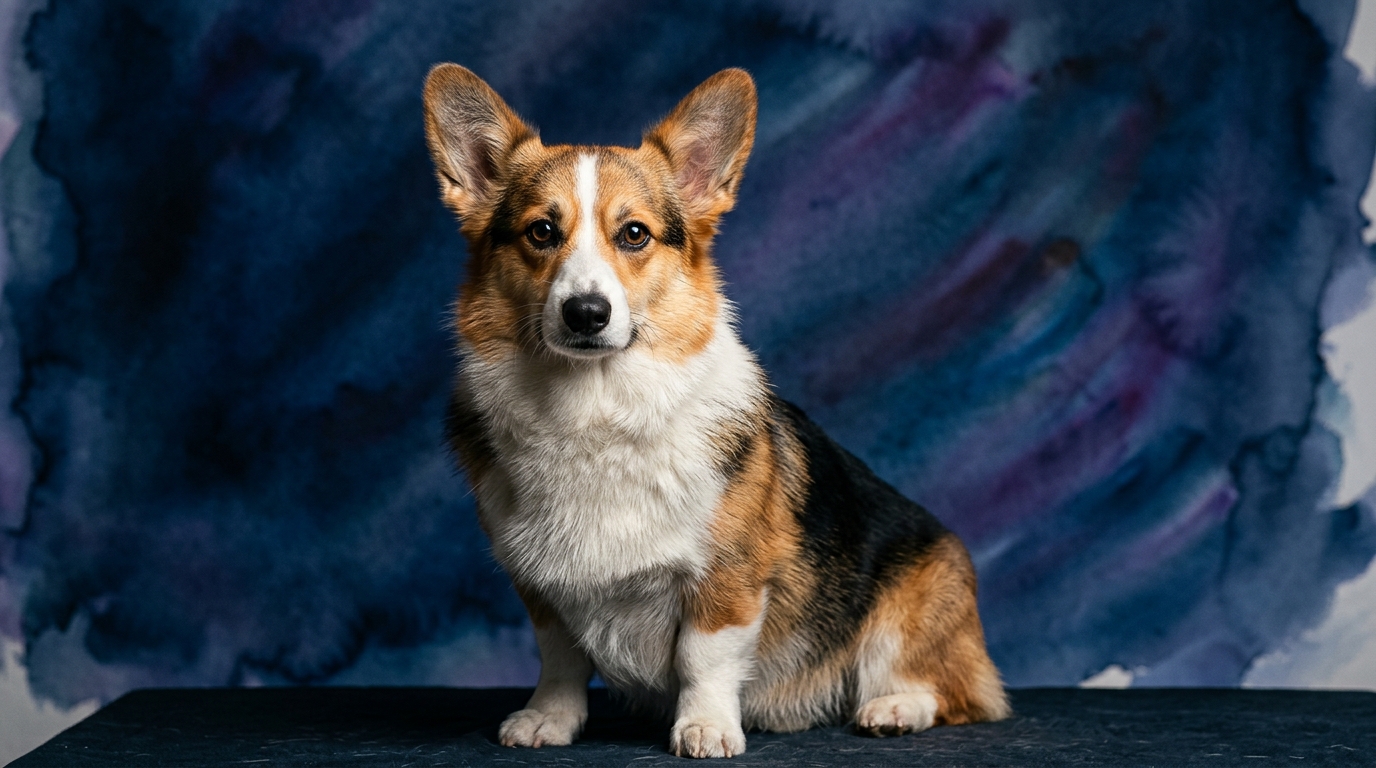
Ranked #11 by Dr. Stanley Coren, the Pembroke Welsh Corgi demonstrates a well-rounded cognitive toolkit. Their Problem Solving is rated 4/5, indicating an ability to navigate complex situations and figure out solutions independently, which aligns with their historical role of working cattle by nipping at their heels. Training Speed is exceptional at 5/5, suggesting a rapid grasp of new commands and routines, making them highly responsive to instruction. Social Intelligence, at 4/5, reflects a strong capacity to interpret human intentions and emotions, fostering close bonds and cooperative interactions. An Instinctive Drive of 5/5 highlights their potent herding instincts, manifesting as a persistent desire to gather and manage, even in a home environment. Their Memory, also 4/5, enables them to retain learned behaviors and past experiences effectively, contributing to their consistent performance.
The Briard, positioned at #30 in Coren's rankings, presents a different cognitive emphasis, though still robust. Their Problem Solving mirrors the Corgi at 4/5, showing a similar capacity for analytical thought and independent decision-making, crucial for their historical role as flock guardians and drovers. Training Speed is a commendable 4/5, meaning they learn quickly, albeit perhaps requiring slightly more repetition or motivation than a Corgi. Social Intelligence stands at 3/5, suggesting they are capable of forming strong bonds and understanding human cues, but might be less overtly eager to please or interpret subtle social signals compared to some breeds. Their Instinctive Drive, rated 3/5, indicates a present but perhaps less intense herding or guarding impulse than the Corgi, often channeling into protective instincts rather than constant gathering. Memory for the Briard is 4/5, ensuring they hold onto lessons and experiences with good retention, crucial for their working heritage.
Where Pembroke Welsh Corgi wins cognitively
The Corgi's primary cognitive advantage lies in its superior Training Speed (5/5) and more pronounced Instinctive Drive (5/5). Their rapid acquisition of new commands means fewer repetitions are needed during training sessions, translating into faster learning curves for basic obedience and advanced tasks alike. This swift processing of new information makes them exceptionally rewarding for owners who enjoy teaching complex tricks or participating in dog sports where precision and speed are valued. The intense Instinctive Drive, while sometimes needing management, also means they possess an innate motivation to engage in activities that mimic their ancestral herding duties, making them natural candidates for structured activities like herding trials or agility courses where their drive can be channeled productively.
Furthermore, their slightly higher Social Intelligence (4/5 vs 3/5) suggests Corgis are often more attuned to human emotional states and subtle non-verbal cues. This can lead to a more intuitive understanding of their owner's wishes and a greater eagerness for cooperative interaction. This sensitivity aids in training by making them more receptive to positive reinforcement and less prone to misunderstandings, fostering a more harmonious partnership. Their compact size combined with this cognitive profile makes them highly adaptable companions for various living situations, provided their mental and physical needs are met.
Where Briard wins cognitively
While the Corgi excels in rapid training, the Briard's cognitive profile emphasizes a different kind of strength: a balanced Problem Solving (4/5) coupled with a more moderate Instinctive Drive (3/5) that often translates into thoughtful independence rather than intense drive. Their historical role as guardians meant they often had to make decisions without direct human intervention, fostering a self-reliant problem-solving approach. This can manifest as a deliberate, methodical way of approaching new situations, taking time to assess before acting, which can be a distinct advantage in scenarios requiring calm, measured responses rather than immediate action.
The Briard’s slightly lower Social Intelligence (3/5) and Instinctive Drive (3/5) can, counterintuitively, be a cognitive win for owners seeking a companion with a degree of reserved autonomy. They are less likely to be constantly seeking direction or validation, instead offering a loyal companionship built on mutual respect. This independence means they are less prone to separation anxiety in some cases, and their decision-making process, while perhaps slower to train for specific tasks, results in a dog that thinks through problems rather than impulsively reacting. Their memory (4/5) ensures that once a lesson is learned or a boundary established, it is retained, allowing for consistent behavior in the long term, even if initial training takes a bit longer.
Which is easier to train and why
The Pembroke Welsh Corgi generally presents as the easier breed to train due to its exceptional Training Speed (5/5) and strong Instinctive Drive (5/5). Their quick uptake of commands means they require fewer repetitions to solidify a behavior, making sessions more efficient and rewarding for both dog and owner. This rapid learning is often coupled with a strong desire to please, driving them to actively participate in training. For instance, teaching a Corgi to "stay" might involve only a few short sessions before they grasp the concept, responding reliably to the cue almost immediately. Their high instinctive drive also means they often find structured activities, especially those involving movement and control, inherently reinforcing.
The Briard, with a Training Speed of 4/5 and Instinctive Drive of 3/5, is still highly trainable but may require a more patient and consistent approach. They possess a thoughtful nature, which means they might take a moment to process a command, not out of stubbornness, but out of an independent assessment of the situation. For example, while a Corgi might instantly drop a toy on command, a Briard might pause, consider, and then comply. This requires an owner who understands and respects their deliberative nature, using positive reinforcement and clear, consistent cues. While they may not pick up new tricks as quickly as a Corgi, once a Briard learns something, their good memory (4/5) ensures it's deeply ingrained, leading to reliable long-term retention.
Which suits active owners vs relaxed owners
For active owners seeking a highly engaged partner, the Pembroke Welsh Corgi’s cognitive profile aligns perfectly. Their intense Instinctive Drive (5/5) means they thrive on purpose-driven activities, whether it's agility, herding, or fast-paced games of fetch. Owners who enjoy frequent, stimulating outings and structured training sessions will find the Corgi's enthusiasm and quick learning (Training Speed 5/5) incredibly rewarding. Their moderate size makes them suitable for various active pursuits, from hiking shorter trails to participating in dog sports, without the physical demands of a larger breed. They genuinely enjoy being involved in their owner's activities and possess the stamina for consistent engagement.
Briards, while certainly capable of activity and possessing a working heritage, might be better suited for owners who appreciate a more measured pace and a companion with a thoughtful, independent streak. Their Instinctive Drive (3/5) is present but less overwhelming than the Corgi’s, meaning they still need regular exercise and mental stimulation but might not demand constant high-intensity engagement. Owners who enjoy long, purposeful walks, perhaps with a focus on scent work or exploring new environments, will find a Briard a willing and steady companion. Their moderate Social Intelligence (3/5) means they form deep bonds but may not constantly seek attention, making them suitable for owners who appreciate a dog that can also relax calmly indoors after their exercise needs are met. They are not a "relaxed" dog in the sense of being a couch potato, but rather possess a calm, observant demeanor once their physical and mental stimulation needs are met, making them suitable for owners who prefer quality engagement over high-volume, frenetic activity.
The Verdict
Opt for a Pembroke Welsh Corgi if you seek a highly trainable, quick-witted companion eager to engage in structured activities and responsive to subtle cues, thriving on consistent interaction and mental challenges.
Select a Briard if you appreciate a thoughtful, independent partner with strong problem-solving skills and a protective instinct, valuing a companion who offers deep loyalty and enjoys purposeful, consistent engagement over constant high-energy demands.
🧠 Find Your Pet's IQ Score
Our Pet IQ Lab assessment covers 25+ tests across 5 cognitive dimensions — personalized to your breed.
Take the Full IQ Test →Frequently Asked Questions
Are Pembroke Welsh Corgis good for first-time dog owners?
Corgis can be good for first-time owners who are prepared for their significant training needs and strong herding instincts. Their high training speed makes them responsive, but their drive requires consistent guidance and mental stimulation to prevent unwanted behaviors.
Do Briards require extensive grooming?
Yes, Briards have a long, shaggy double coat that requires regular, thorough grooming to prevent matting and maintain skin health. Owners should be prepared for daily brushing and occasional professional grooming to manage their distinctive coat.
Which breed is better with children, Corgi or Briard?
Both breeds can be good with children with proper socialization and training, but their approaches differ. Corgis, with their herding instincts, might playfully nip at heels, requiring supervision. Briards are often protective and gentle with their family but can be wary of strangers, so early socialization is key for both.