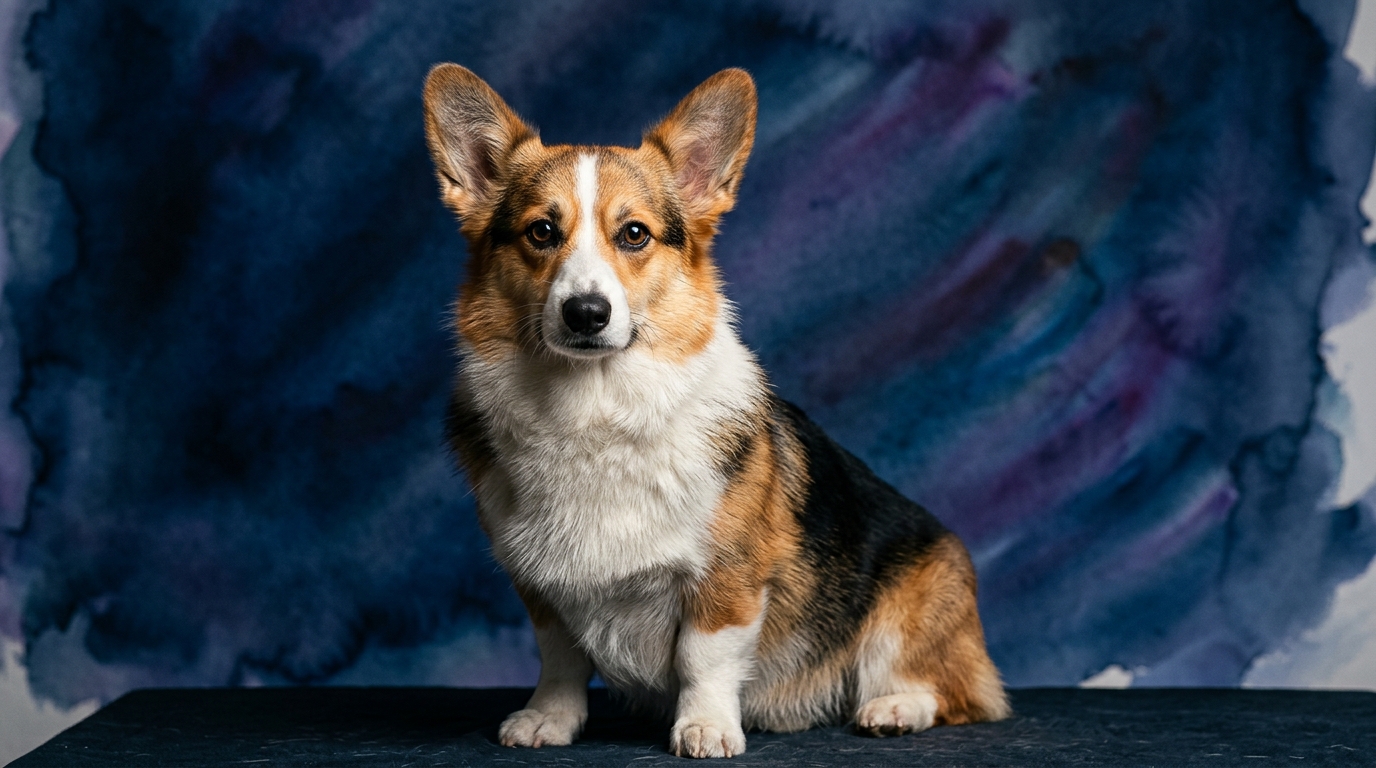
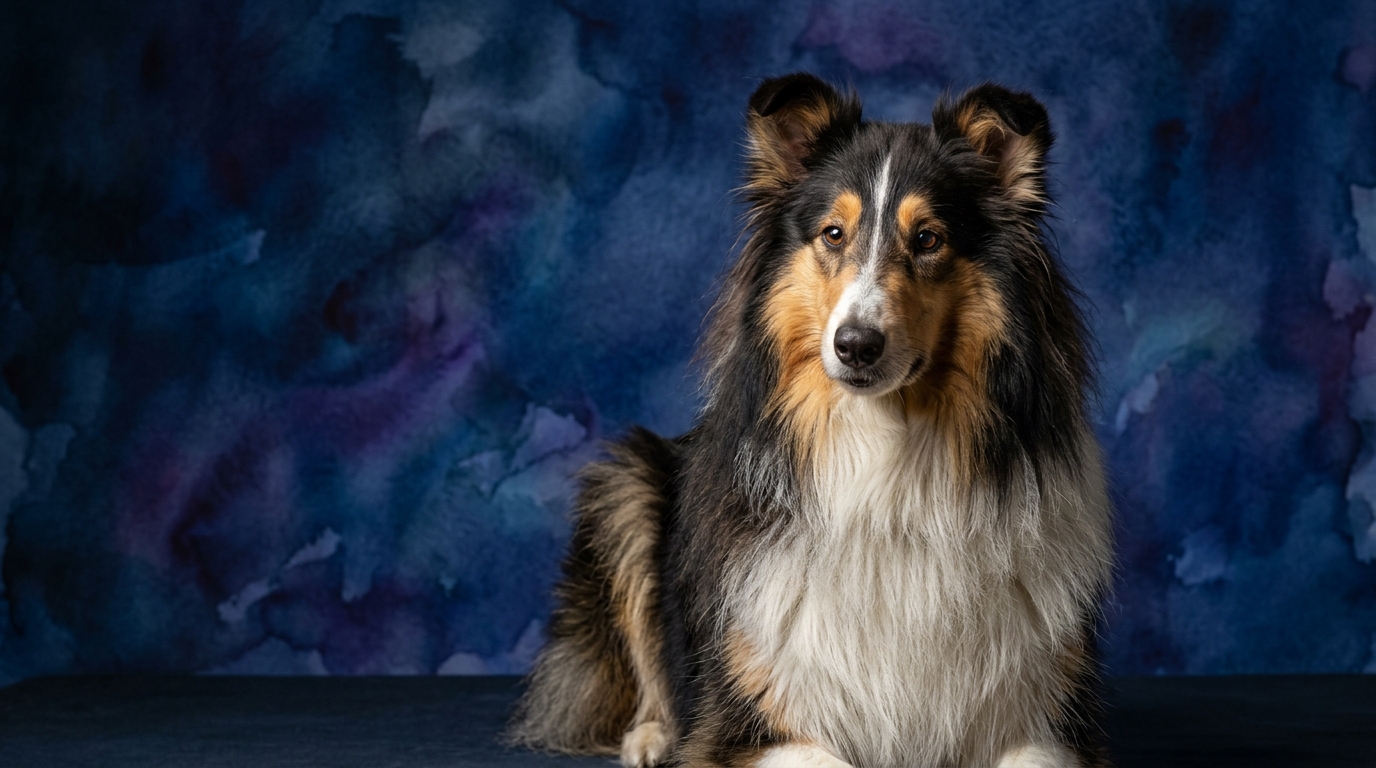
Side-by-Side Cognitive Profiles: Corgi vs. Collie
At The Cosmic Pet Pet IQ Lab, we evaluate canine cognition across five key dimensions, providing a granular view of each breed's mental aptitudes. For the Pembroke Welsh Corgi, ranked #11 in Coren's hierarchy, their profile paints a picture of quick engagement and robust drive. They demonstrate a problem-solving ability rated at 4/5, indicating a capacity for navigating novel challenges effectively. Their training speed is exceptional at 5/5, suggesting a rapid grasp of new commands and concepts. Social intelligence stands at 4/5, reflecting a keen awareness of human cues and emotional states, while their instinctive drive, particularly for herding, is a powerful 5/5. Finally, their memory is a strong 4/5, allowing for reliable retention of learned behaviors.
The Rough Collie, holding Coren's #16 rank, presents a slightly different, yet equally compelling, cognitive blueprint. Their problem-solving capability mirrors the Corgi at 4/5, indicating a similar capacity for logical reasoning and adapting to new situations. Their training speed is a commendable 4/5, meaning they learn efficiently, though perhaps not with the Corgi's instantaneous uptake. Social intelligence is rated at 3/5, suggesting they possess a good understanding of social dynamics but might be less overtly expressive or reactive to subtle human emotions than the Corgi. Their instinctive drive registers at 3/5, present but often less intense than their Corgi counterparts. Where the Rough Collie truly shines is in memory, scoring an impressive 5/5, signifying an outstanding ability to recall information and experiences over extended periods.
Where the Pembroke Welsh Corgi Excels Cognitively
The Pembroke Welsh Corgi’s cognitive profile shows distinct advantages in several areas. Their training speed, a perfect 5/5, means they grasp new commands and routines with remarkable rapidity. Owners often report that Corgis seem to anticipate what is expected of them, making initial training phases exceptionally smooth and rewarding. This quick uptake stems from an eagerness to engage and a sharp ability to connect actions with consequences.
Furthermore, the Corgi’s social intelligence, rated at 4/5, allows them to navigate human interactions with considerable finesse. They often exhibit a nuanced understanding of household dynamics, reading body language and vocal tones to adapt their behavior. This makes them highly attuned companions, capable of forming deep, responsive bonds and even offering comfort or companionship precisely when needed.
Their instinctive drive, a powerful 5/5, is another area where Corgis demonstrate a particular cognitive strength. While rooted in their herding heritage, this drive translates into a focused work ethic and a persistent approach to tasks. When channeled through structured activities like agility, obedience trials, or even complex trick training, this innate drive fuels their engagement and provides a consistent motivation for learning and performance. They are not merely learning; they are fulfilling an intrinsic purpose.
Where the Rough Collie Excels Cognitively
The Rough Collie’s standout cognitive strength lies unequivocally in their memory, scoring a perfect 5/5. This superior recall means that once a command, a routine, or even a specific location is learned, it is deeply ingrained and reliably remembered, often for their entire lives. This translates into remarkable consistency in behavior once training is established, making them dependable companions who adhere faithfully to learned rules and expectations.
While their problem-solving score is equal to the Corgi’s at 4/5, the Rough Collie’s exceptional memory often enhances their approach to challenges. They are adept at recalling past successful strategies and applying them to new, similar situations. This means they are less likely to repeat mistakes and can often find efficient solutions by drawing upon their extensive mental library of experiences. Their problem-solving might be characterized by a thoughtful, reflective application of prior knowledge rather than purely novel trial-and-error.
Training Dynamics: Corgi's Zest vs. Collie's Steadfastness
When considering ease of training, the Pembroke Welsh Corgi generally presents a quicker initial learning curve. Their 5/5 training speed means they pick up new commands and behaviors almost instantaneously, often responding to a few repetitions. Their 4/5 social intelligence also contributes, as they are adept at understanding human expectations and are often eager to please, making them highly receptive to positive reinforcement. This combination makes them enthusiastic participants in training sessions, thriving on the mental engagement and interaction.
The Rough Collie, with a 4/5 training speed, learns efficiently but might require slightly more consistent repetition to solidify new concepts compared to the Corgi. However, their 5/5 memory means that once a behavior is learned, it is retained with exceptional reliability, leading to long-term consistency. Owners might find that while the initial learning phase takes a bit more patience, the results are remarkably durable. Their lower social intelligence (3/5) and instinctive drive (3/5) suggest they might not always display the same overt enthusiasm for every training task, requiring a consistent, calm, and positive approach to maintain engagement. They might not be as quick to intuit what you want, but once they get it, they remember it.
Matching Canine Cognition to Lifestyle: Active vs. Relaxed Owners
For owners seeking an active and highly engaged companion, the Pembroke Welsh Corgi is often an excellent fit. Their robust instinctive drive (5/5) and rapid training speed (5/5) make them ideal for participation in dog sports like agility, herding trials, or advanced obedience. They thrive on consistent mental stimulation and physical activity, requiring owners who are prepared to channel their considerable energy and sharp wit into structured tasks. A Corgi with an active owner will find ample outlets for their problem-solving skills and enjoy the dynamic interaction that comes with frequent training and play.
Conversely, the Rough Collie, with its exceptional memory (5/5) and slightly less intense instinctive drive (3/5), often suits owners looking for a companion that values routine and consistency. While they certainly require regular exercise and mental engagement, their demeanor can be more composed once their needs are met. Owners who appreciate a dog that reliably adheres to established routines and recalls learned behaviors with precision will find the Rough Collie a steadfast companion. Their social intelligence (3/5) suggests they are content with a stable household dynamic, offering a calmer presence without demanding constant high-energy interaction, making them suitable for a more relaxed, yet still attentive, owner.
The Verdict: When to Choose Each Breed
Choosing between a Pembroke Welsh Corgi and a Rough Collie hinges on the specific cognitive traits you prioritize and how they align with your lifestyle. Both offer deep companionship, but their mental landscapes present different strengths for owners to appreciate.
The Verdict
Choose the Pembroke Welsh Corgi if you seek a quick-witted, highly engaged companion eager to learn new tasks rapidly and participate in dynamic, interactive activities. Their energetic drive and social acumen make them responsive and lively partners.
Opt for the Rough Collie if you value consistent recall, a strong memory for routines, and a companion that, once trained, reliably adheres to learned behaviors over time. Their thoughtful nature and dependable retention make them steadfast, loyal partners.
🧠 Find Your Pet's IQ Score
Our Pet IQ Lab assessment covers 25+ tests across 5 cognitive dimensions — personalized to your breed.
Take the Full IQ Test →Frequently Asked Questions
Are Corgis better at agility than Collies?
Corgis often excel in agility due to their high training speed (5/5), strong instinctive drive (5/5), and compact, agile build, allowing them to navigate courses with quick precision and enthusiasm. While Collies can perform well, their typically larger size and slightly less intense drive (3/5) might mean a different style of performance.
Do Rough Collies get bored easily if not constantly stimulated?
Rough Collies have a good problem-solving ability (4/5) and excellent memory (5/5), meaning they do require mental engagement to prevent boredom, but their instinctive drive (3/5) is generally less intense than a Corgi's. They thrive on consistent routines and can be content with moderate, regular mental stimulation rather than constant, high-energy challenges.
How do their herding instincts differ in a home environment?
The Pembroke Welsh Corgi's strong instinctive drive (5/5) often manifests as a desire to 'herd' family members, children, or other pets, sometimes nipping at heels, which requires consistent redirection. The Rough Collie's instinctive drive (3/5) is generally less pronounced in a home setting, often appearing as a watchful nature rather than an active urge to gather or direct.