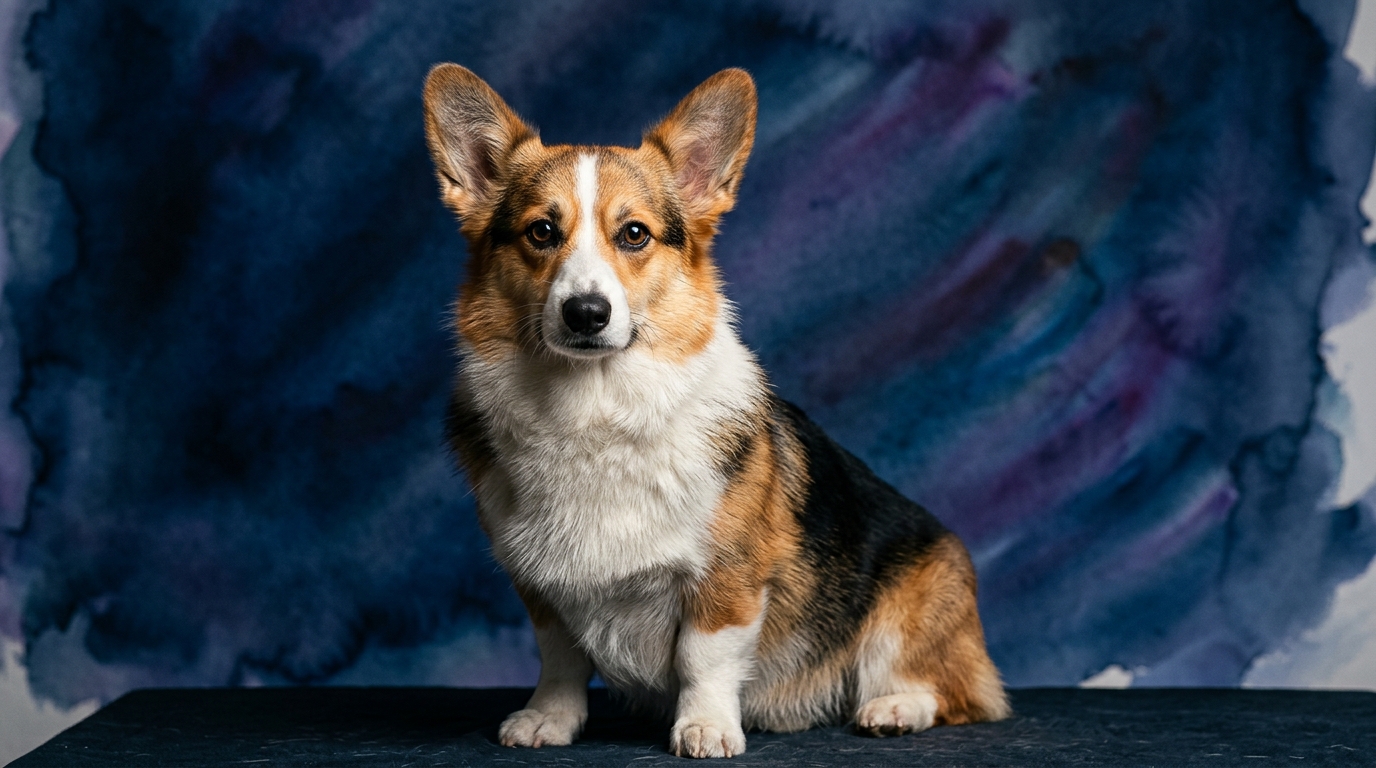
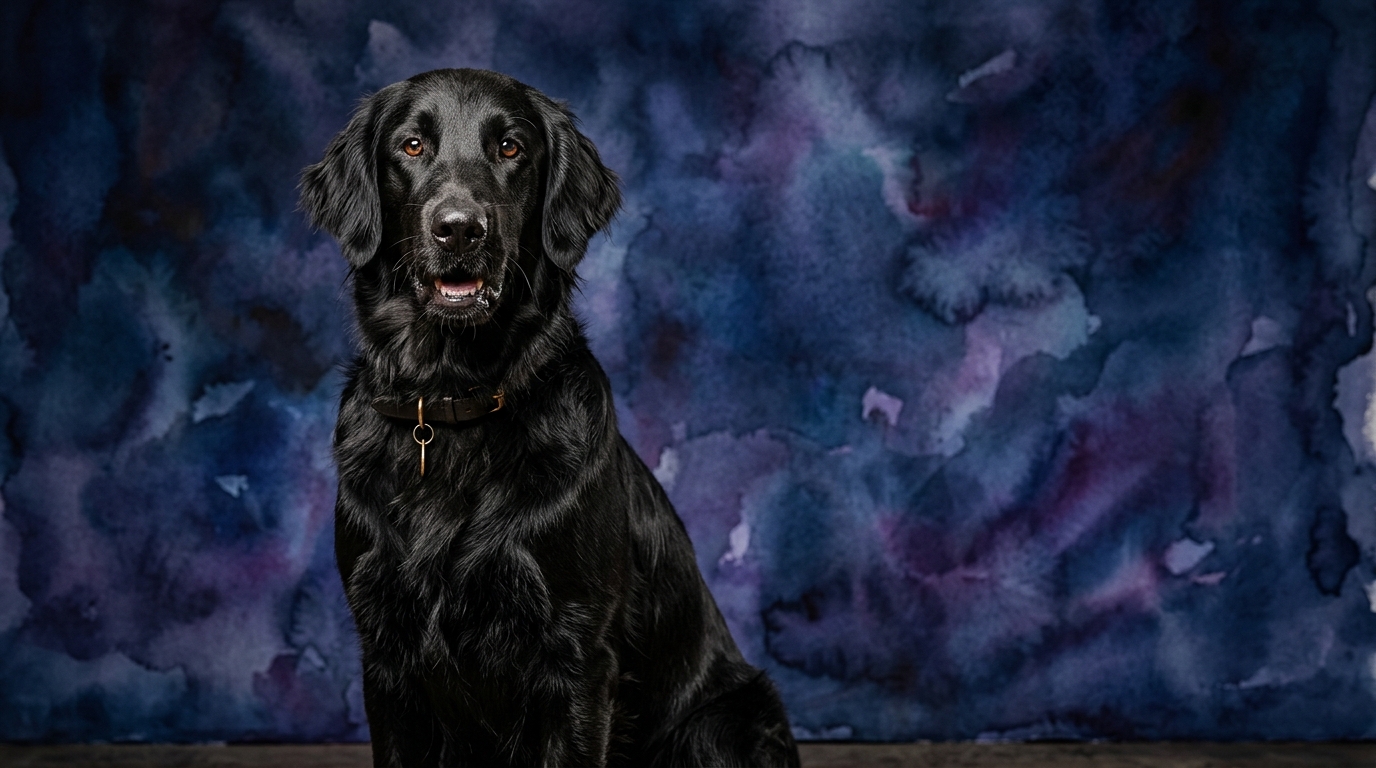
Side-by-Side Cognitive Profile: Corgi vs. Flat-Coat
At The Cosmic Pet Pet IQ Lab, we delve into five key dimensions of canine cognition. The Pembroke Welsh Corgi, a Herding breed, ranks #11 on the Coren scale, indicating a strong aptitude for working obedience. Their Problem Solving is rated 4/5, showing an ability to navigate challenges, often using creative angles due to their low stature. Training Speed is a remarkable 5/5, reflecting their eagerness to learn and respond to direction. Social Intelligence stands at 4/5, meaning they are generally good at interpreting human cues, though their herding instincts can make them assertive with other animals. Instinctive Drive is a potent 5/5, manifesting in a strong desire to gather and control, while their Memory is a solid 4/5 for retaining routines and commands.
The Flat-Coated Retriever, a Sporting breed, holds the #17 position on the Coren scale, demonstrating a robust capacity for complex tasks. Their Problem Solving is also 4/5, typically applied to environmental challenges like finding hidden objects or navigating varied terrain during retrieving. Training Speed is 4/5; they learn well but their joyful, sometimes easily distracted nature requires engaging methods. Social Intelligence is 3/5, indicating a generally friendly demeanor but perhaps less sensitivity to subtle human emotional shifts. Instinctive Drive is 3/5, focused on retrieving and carrying items rather than herding. However, their Memory is an impressive 5/5, allowing them to recall locations, scent trails, and learned routes with exceptional accuracy.
Where the Pembroke Welsh Corgi Excels Cognitively
The Pembroke Welsh Corgi demonstrates clear cognitive advantages in areas stemming from their historical role. Their Training Speed rating of 5/5 surpasses the Flat-Coated Retriever's 4/5, meaning Corgis often grasp new commands and routines with greater rapidity. This makes them exceptionally rewarding for owners who enjoy rapid-fire trick training or advanced obedience work, as they pick up concepts quickly and eagerly. Their potent Instinctive Drive (5/5 vs. 3/5 for the Flat-Coat) translates into a strong desire for purpose and direction, which, when channeled appropriately, makes them highly motivated participants in structured activities like herding trials, agility, or even complex scent work.
Furthermore, the Corgi's Social Intelligence, rated 4/5 compared to the Flat-Coat's 3/5, suggests a more nuanced ability to interpret human body language and emotional states. This can foster a deeply intuitive bond, where the Corgi seems to anticipate their owner's wishes or react appropriately to subtle shifts in mood. While their herding drive might require careful management in social settings, their underlying ability to read and respond to their human partners gives them an edge in seamless daily interaction and understanding complex social cues.
Where the Flat-Coated Retriever Shines Cognitively
The Flat-Coated Retriever's cognitive strengths are deeply rooted in their sporting heritage, particularly evident in their superior Memory, rated 5/5 compared to the Corgi's 4/5. This exceptional recall makes them masters of remembering complex sequences, specific locations of hidden objects, and intricate scent trails – invaluable traits for a retriever expected to find game over varied distances and terrains. This memory prowess extends beyond the field, making them excellent at remembering where toys are stashed or navigating familiar, yet complex, environments.
While both breeds share a 4/5 rating for Problem Solving, the Flat-Coat's application of this skill often manifests in a more expansive and persistent manner, especially when faced with environmental challenges. They excel at sustained problem-solving that requires navigating obstacles, utilizing scent, and maintaining focus on a distant objective. This persistence, combined with their memory, allows them to methodically work through multi-step retrieving tasks, demonstrating a different kind of mental fortitude than the Corgi's often more immediate, tactical problem-solving for shorter-range tasks. Their ability to remain focused on a goal despite distractions, leveraging their senses and physical stamina, is a distinct cognitive advantage.
Training Dynamics: Which is Easier to Train?
When considering ease of training, the Pembroke Welsh Corgi generally presents a quicker initial learning curve. Their 5/5 Training Speed means they absorb new commands rapidly, often showing a keen desire to please and a quick response to consistent positive reinforcement. This swift uptake, combined with their 4/5 Social Intelligence, allows them to attune to their trainer's intentions and signals with greater precision, making foundational obedience and trick training particularly smooth. Their strong Instinctive Drive, while needing direction, provides a powerful underlying motivation for engagement.
The Flat-Coated Retriever, with a 4/5 Training Speed, learns effectively but their exuberance and tendency towards distraction can mean a slightly longer road to initial mastery. While they retain information exceptionally well due to their 5/5 Memory once a behavior is learned, getting them to that point often requires more patience, highly engaging methods, and a trainer who can maintain their focus amidst their joyful, sometimes boisterous nature. Owners must be prepared to make training sessions fun and varied to keep a Flat-Coat's attention, leveraging their love for retrieving and play to reinforce desired behaviors. So, while the Corgi might pick up a command faster, the Flat-Coat, once it clicks, often demonstrates remarkable long-term retention.
Matching Canine Cognition to Lifestyle: Active vs. Relaxed Owners
For owners seeking a companion that fits a more relaxed yet mentally engaged lifestyle, the Pembroke Welsh Corgi can be an excellent choice. While they possess a high Instinctive Drive and require consistent mental stimulation to prevent boredom and manage their herding tendencies, their physical exercise needs are moderate. They thrive on puzzle toys, short training sessions, and structured play that challenges their problem-solving and social intelligence, making them adaptable to apartment living or homes with smaller yards, provided their minds are kept busy. Owners who enjoy teaching tricks, participating in obedience classes, or engaging in brief but frequent mental games will find the Corgi's quick learning and observant nature highly rewarding.
Conversely, the Flat-Coated Retriever is ideally suited for highly active owners who embrace an outdoor, adventurous lifestyle. Their sporting background necessitates significant daily physical exercise, including long walks, running, swimming, and vigorous retrieving games. A Flat-Coat will thrive with owners who can dedicate substantial time to outdoor activities, providing ample opportunities to engage their excellent memory and problem-solving skills in expansive environments. They are less suitable for truly sedentary households; their exuberance and need for physical exertion can lead to frustration and destructive behaviors if unmet. Owners who love hiking, trail running, or field work will find a Flat-Coat to be an enthusiastic and tireless companion.
The Verdict
Choose the Pembroke Welsh Corgi if you seek a quick-learning, socially astute companion who thrives on structured mental challenges and can adapt to varied living situations with consistent engagement.
Opt for the Flat-Coated Retriever if you are a highly active, outdoorsy owner who can provide extensive physical exercise and appreciates a joyful, persistent retriever with remarkable memory for complex tasks.
🧠 Find Your Pet's IQ Score
Our Pet IQ Lab assessment covers 25+ tests across 5 cognitive dimensions — personalized to your breed.
Take the Full IQ Test →Frequently Asked Questions
Are Pembroke Welsh Corgis prone to nipping?
Yes, their strong herding instinct can lead to nipping at heels, especially in puppyhood. Early socialization and redirection to appropriate chew toys are crucial for managing this natural behavior and teaching them impulse control.
Do Flat-Coated Retrievers require extensive grooming?
Flat-Coats have a medium-length coat that sheds moderately and requires regular brushing, typically 2-3 times a week, to prevent mats and keep it healthy. They also benefit from occasional professional grooming to maintain their feathering and overall coat condition.
Which breed is generally better with children?
Both breeds can be good with children, but their temperaments differ; Corgis need supervision to prevent herding nips, while Flat-Coats are generally boisterous and might accidentally knock over small children due to their enthusiasm, requiring careful introduction and training to ensure safe interactions.