
Side-by-Side Cognitive Profiles: Corgi vs. Leonberger
The Cosmic Pet Pet IQ Lab employs a five-dimensional framework to assess canine intelligence, offering a granular view of each breed's mental strengths. Let's examine how the Pembroke Welsh Corgi, a compact herding specialist, stacks up against the grand Leonberger, a devoted working dog.
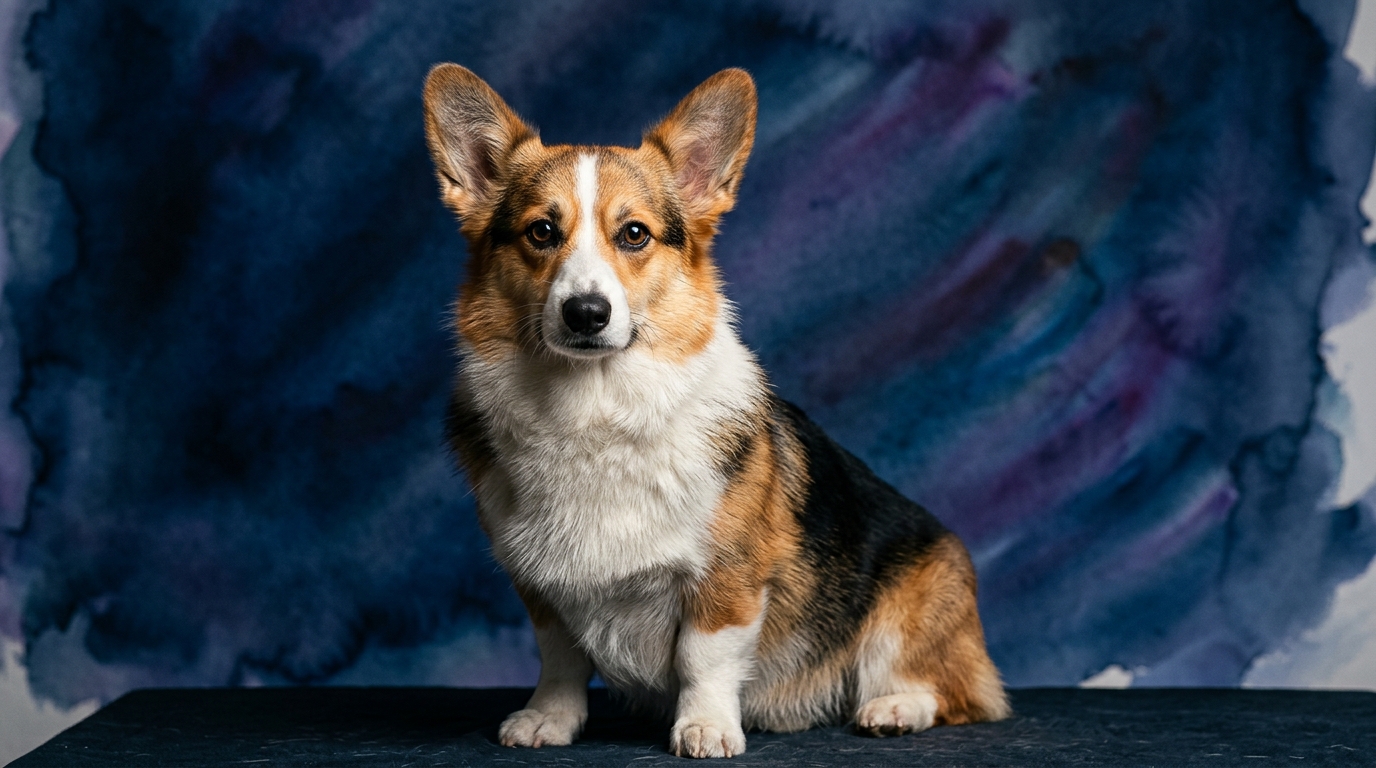
The Pembroke Welsh Corgi, a dog from the Herding group, registers an impressive Coren rank of #11, indicating a high capacity for obedience and working intelligence. Its individual cognitive dimensions are notable: Problem Solving is rated 4/5, reflecting an aptitude for navigating complex situations and devising solutions. Training Speed stands at a perfect 5/5, showcasing their remarkable quickness in grasping new commands and routines. Social Intelligence is strong at 4/5, demonstrating a keen awareness of human cues and intricate social dynamics. An Instinctive Drive of 5/5 highlights their potent, persistent herding instincts that translate into focused engagement. Finally, Memory is rated 4/5, indicating excellent retention of learned behaviors and environmental information.
In contrast, the Leonberger, a magnificent dog from the Working group, is not Coren-ranked, suggesting a different cognitive profile shaped by its distinct historical roles. Across the board, its IQ dimensions are rated at 3/5. Problem Solving at 3/5 indicates a capability for straightforward challenges but less inclination for complex, abstract solutions. Training Speed at 3/5 suggests a moderate pace of learning, requiring consistent, patient repetition. Social Intelligence at 3/5 points to a generally good-natured and perceptive disposition within its family unit, though perhaps less nuanced in interpreting subtle human emotions than some breeds. An Instinctive Drive of 3/5 reflects a steady, protective inclination rather than an active, task-oriented drive. Memory at 3/5 signifies reasonable retention of training and experiences, though perhaps not as robust as breeds excelling in rapid-fire command sequences.
Where the Pembroke Welsh Corgi Shines Cognitively
The Pembroke Welsh Corgi's cognitive prowess is deeply rooted in its heritage as a cattle herder, demanding quick wit and adaptability. Their 4/5 Problem Solving score allows them to excel in navigating intricate environments, whether it's outmaneuvering livestock or figuring out how to open a stubborn cabinet. This translates into a dog that enjoys mental puzzles and can independently work through challenges. Their exceptional 5/5 Training Speed means they absorb new information with remarkable alacrity, making them prime candidates for advanced obedience, agility, and competitive dog sports where complex sequences of commands are required. A Corgi's capacity to learn and execute multiple cues in rapid succession, often with precision, sets them apart.
Furthermore, their 4/5 Social Intelligence makes them incredibly perceptive companions, often anticipating their owner's moods or intentions. This social acumen, combined with their 5/5 Instinctive Drive, means they are not just capable of learning but are also highly motivated to engage and 'work' alongside their human partners. This drive, while manifesting as herding, can be effectively channeled into focused attention and a strong desire to participate in structured activities. They thrive on having a 'job,' even if that job is mastering a new trick or completing an agility course with flair, demonstrating a robust mental agility that keeps them engaged and responsive.
Where the Leonberger Excels Cognitively
While the Leonberger's cognitive scores are generally moderate compared to the Corgi's, their strengths lie in different, equally valuable domains, reflecting their purpose as guardians and companions. Their 3/5 in Problem Solving and Instinctive Drive translates into a more measured, steady approach to the world. Instead of quick, agile problem-solving, Leonbergers demonstrate a calm, deliberate assessment of situations. This manifests as an innate ability to discern genuine threats from everyday occurrences, making them reliable and trustworthy family protectors without being overly reactive.
The Leonberger's cognitive strengths are particularly evident in roles requiring composure and a steady presence, such as therapy work or search and rescue (SAR) where their sheer size and gentle demeanor are assets. Their moderate Social Intelligence (3/5) allows them to form deep, empathetic bonds with their human families, providing a comforting and stable presence. They excel not in intricate, rapid-fire tasks but in sustained efforts that demand endurance and reliability. Their memory (3/5) is sufficient for retaining crucial information relevant to their family and territory, ensuring consistent behavior in their protective and companion roles without the need for constant mental gymnastics. This makes them exceptional at being a steadfast, unwavering presence in their owner's life.
Training Dynamics: Which Breed is Easier and Why?
When it comes to ease of training, the Pembroke Welsh Corgi generally presents a more straightforward path for dedicated owners. Their 5/5 Training Speed is a significant advantage; Corgis grasp new commands quickly, often with just a few repetitions. This rapid learning curve, coupled with their 4/5 Problem Solving and 4/5 Memory, means they not only pick up instructions fast but also retain them exceptionally well. Their high 5/5 Instinctive Drive, though rooted in herding, translates into a natural eagerness to engage and a strong desire to please, making them highly motivated students. This drive can be channeled into positive reinforcement training, where they thrive on mental stimulation and the satisfaction of mastering tasks. However, their intelligence also means they can become bored or mischievous if not adequately challenged, sometimes using their problem-solving skills to outsmart their owners.
The Leonberger, with its 3/5 rating across all cognitive dimensions, requires a different approach to training. While capable of learning, their Training Speed is more moderate, necessitating patience and consistent repetition from their owners. They are not as quick to pick up nuances and may require more time to solidify new behaviors. Their Instinctive Drive, while present, is less about active task engagement and more about a calm, watchful presence, meaning they may not possess the same inherent drive for complex obedience work as a Corgi. Leonbergers can also exhibit an independent streak typical of many working breeds, which some might perceive as stubbornness. Successful training with a Leonberger relies on positive reinforcement, clear communication, and understanding that their pace is more measured. They excel when tasks are practical and make sense to them, rather than purely abstract commands, making them reliable partners for specific, well-defined roles after consistent, patient instruction.
Active vs. Relaxed Owners: Matching Cognitive Needs
For owners with an active lifestyle and a desire for a highly interactive companion, the Pembroke Welsh Corgi is often an ideal match. Their robust 4/5 Problem Solving and 5/5 Instinctive Drive mean they thrive on mental and physical engagement. Corgis are not content to be couch potatoes; they need regular activities that challenge their quick minds and channel their inherent herding drive. Owners interested in dog sports like agility, obedience trials, or even urban herding activities will find a willing and enthusiastic partner in a Corgi. Their quick training speed (5/5) means they can rapidly progress through various disciplines, making them a rewarding choice for those who enjoy teaching complex sequences and seeing their dog master new skills. Without sufficient stimulation, a Corgi might invent their own 'jobs,' which could manifest as undesirable behaviors.
Conversely, the Leonberger is better suited for owners who appreciate a more relaxed, yet still engaged, companionship. While large and requiring moderate daily exercise like walks, their 3/5 ratings across cognitive dimensions indicate a dog that is less demanding for constant, intricate mental challenges. Leonbergers are content with being a calm, devoted family member and a watchful presence. Their joy often comes from simply being near their people, enjoying a steady routine, and engaging in low-key play. They possess a quiet dignity and a gentle nature that makes them excellent companions for those seeking a large, affectionate dog without the intense mental energy or drive for constant 'work' that a Corgi exhibits. They require owners who can provide a stable, loving environment and appreciate a patient approach to training and daily life.
The Verdict: When to Choose Each Breed
The choice between a Pembroke Welsh Corgi and a Leonberger ultimately hinges on an owner's lifestyle, expectations, and willingness to engage with their dog's unique cognitive profile. There is no universally 'better' breed, only a better fit.
The Pembroke Welsh Corgi is an excellent choice for owners seeking a highly interactive, mentally agile companion eager for complex training, competitive dog sports, or a 'big dog in a small package' with a strong personality and a desire to be constantly involved. They thrive with consistent mental challenges and physical activity.
The Leonberger is ideal for owners who appreciate a gentle giant, a calm and protective family member, willing to invest patience in training, and looking for a steady, affectionate presence rather than a dog seeking constant mental puzzles. They offer unwavering loyalty and a composed demeanor.
Understanding these distinct cognitive strengths and needs, as illuminated by The Cosmic Pet Pet IQ Lab, ensures you can select a companion whose intelligence aligns perfectly with your lifestyle and expectations, leading to a harmonious and fulfilling relationship for both you and your canine partner.
The Verdict
Choose the Pembroke Welsh Corgi if you seek a highly interactive, mentally agile companion eager for complex training, competitive dog sports, or a 'big dog in a small package' with a strong personality.
Choose the Leonberger if you appreciate a gentle giant, a calm and protective family member, willing to invest patience in training, and looking for a steady, affectionate presence rather than a dog seeking constant mental puzzles.
🧠 Find Your Pet's IQ Score
Our Pet IQ Lab assessment covers 25+ tests across 5 cognitive dimensions — personalized to your breed.
Take the Full IQ Test →Frequently Asked Questions
Are Corgis good family dogs?
Yes, Corgis can be excellent family dogs, forming strong bonds and often displaying a playful, affectionate nature. However, their herding instincts mean they might try to 'herd' children or other pets, requiring consistent training and supervision to manage this behavior.
Do Leonbergers require a lot of exercise?
Leonbergers require moderate, consistent exercise to maintain their health and well-being, typically enjoying daily walks and playtime. While not as intensely energetic as some breeds, they benefit from activities that engage their large bodies without overexertion, especially as puppies, to support healthy growth.
Which breed is better for first-time dog owners?
The Pembroke Welsh Corgi, with its quicker training speed and enthusiasm for learning, can be a rewarding choice for dedicated first-time owners willing to commit to consistent mental and physical stimulation. The Leonberger, while good-natured, requires an owner comfortable with its large size and moderate training pace, making it potentially more challenging for a novice without prior large breed experience.