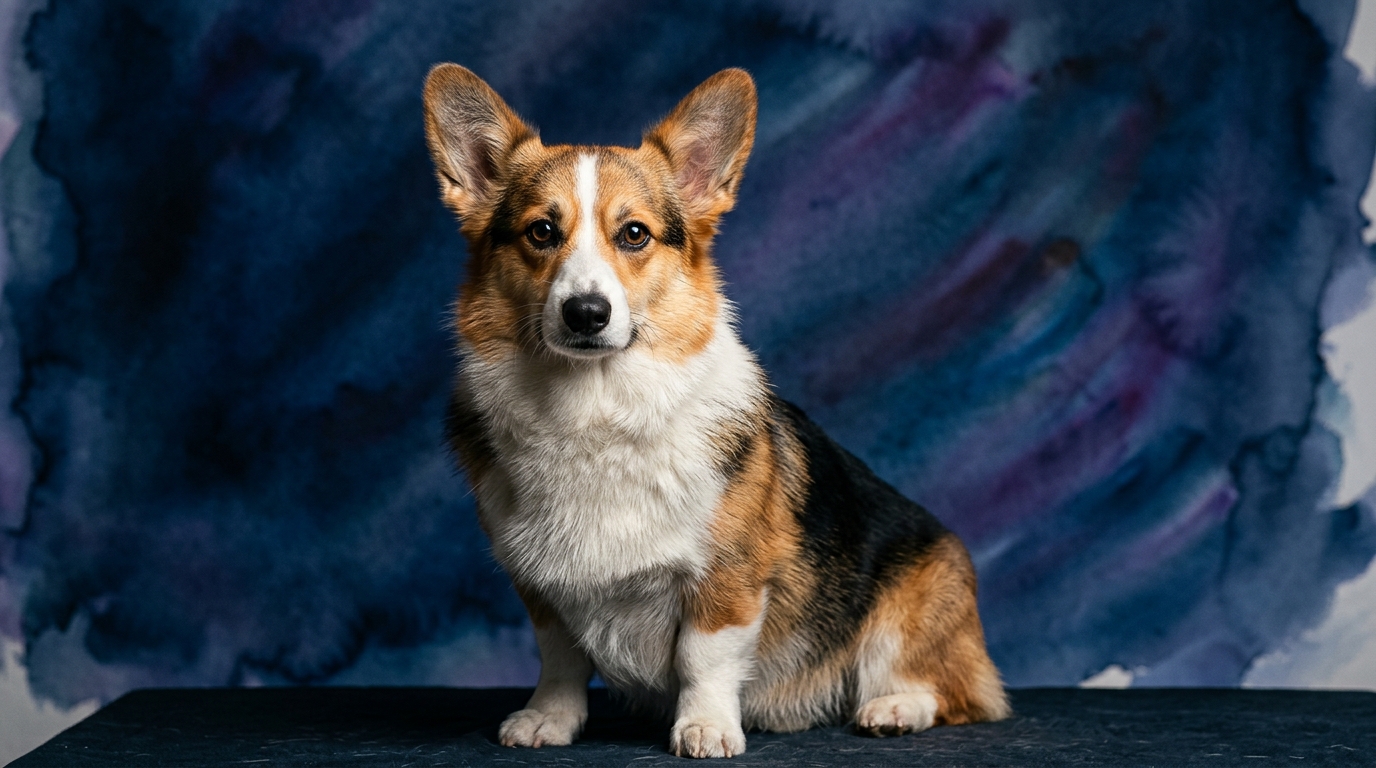

Side-by-Side IQ Profile: Corgi vs. Manchester Terrier
The Cosmic Pet Pet IQ Lab employs a five-dimensional model to assess canine cognition, offering a granular view beyond general perceptions. For the Pembroke Welsh Corgi, a breed with a notable Coren rank of #11, its profile reveals significant strengths: a Problem Solving score of 4 out of 5 indicates a capacity for navigating complex situations, while its Training Speed of 5 out of 5 underscores an impressive ability to assimilate new commands and routines swiftly. Social Intelligence, at 4 out of 5, reflects its adeptness at understanding human cues and interacting appropriately within a social structure, vital for a historical herder. An Instinctive Drive of 5 out of 5 speaks to its strong, inherent working motivations, particularly its herding legacy, and its Memory, at 4 out of 5, ensures it retains learned behaviors and experiences effectively. This combination paints a picture of a dog that is not only quick to learn but also possesses a robust understanding of its environment and social roles.
In contrast, the Manchester Terrier, a breed from the Terrier group and not listed on the Coren ranking, presents a more balanced, albeit generally lower, cognitive profile across the board. Its Problem Solving score stands at 3 out of 5, suggesting a moderate ability to figure out novel challenges, often with a characteristic terrier independence rather than a collaborative approach. Training Speed, also 3 out of 5, indicates that while trainable, it may require more repetition and patience compared to breeds with higher scores. Social Intelligence, at 3 out of 5, implies a moderate ability to interpret social signals, often prioritizing its own interests or exhibiting a more reserved demeanor. The Instinctive Drive of 3 out of 5 reflects its terrier heritage, focused on prey drive and independent action rather than group coordination, and its Memory, also 3 out of 5, suggests a solid but not exceptional retention of information. This profile suggests a dog that is competent and capable, but perhaps less inclined towards rapid, complex learning or highly cooperative tasks than its Corgi counterpart.
Where Pembroke Welsh Corgi Excels Cognitively
The Pembroke Welsh Corgi's cognitive strengths are particularly evident in its capacity for structured learning and its deep understanding of social dynamics. Its 5/5 Training Speed is a standout feature, making it exceptionally receptive to obedience training, advanced tricks, and even competitive dog sports. This speed isn't just about rote memorization; coupled with its 4/5 Problem Solving, Corgis often demonstrate an aptitude for understanding the *why* behind commands, allowing them to adapt learned behaviors to new contexts. Their Herding group background is intrinsically linked to their 5/5 Instinctive Drive, which manifests not just as a desire to gather, but as a proactive engagement with tasks that require direction and control. This drive, combined with 4/5 Social Intelligence, means they are often attuned to their owner's intentions and emotional states, making them highly responsive partners in activities that demand close cooperation. For instance, a Corgi might quickly learn a complex agility course, not just by memorizing the sequence, but by anticipating the handler's next move and adjusting its pace accordingly.
Where Manchester Terrier's Cognitive Profile Shines
While the Manchester Terrier's scores might appear lower across the board, their cognitive profile is uniquely suited for specific roles and owner expectations, reflecting their distinct Terrier group heritage. Their 3/5 Problem Solving, though moderate, often manifests as a tenacious and independent approach to challenges. Unlike a herding dog that seeks guidance, a Manchester Terrier might prefer to figure things out on its own, driven by its 3/5 Instinctive Drive which is primarily focused on pursuit and investigation. This makes them adept at tasks requiring self-reliance, such as finding hidden objects or exploring new environments without constant human direction. Their 3/5 Social Intelligence, while not as overtly cooperative as a Corgi's, can translate into a charming, self-possessed demeanor, forming strong, often singular, bonds. They possess a focused determination that, when channeled appropriately, can make them persistent and effective in tasks that align with their innate drives, like scent work or barn hunt, where their independent problem-solving and moderate memory (3/5) are assets for sustained engagement.
Training Dynamics: Corgi's Eagerness vs. Manchester's Tenacity
Comparing the ease of training between these two breeds highlights their fundamental behavioral differences. The Pembroke Welsh Corgi, with its exceptional 5/5 Training Speed and 4/5 Social Intelligence, typically approaches training with enthusiasm and a strong desire to please and understand. Their herding background predisposes them to respond to direction and work collaboratively, making them quick studies in obedience, house-training, and even complex behavioral modifications. They thrive on positive reinforcement and clear communication, often picking up new commands after just a few repetitions. Their robust memory further solidifies learned behaviors, leading to reliable responses over time. This means owners can often progress rapidly through training stages, tackling more advanced skills sooner.
In contrast, the Manchester Terrier's 3/5 Training Speed suggests that while capable, they require more patience and consistency. Their 3/5 Instinctive Drive, rooted in independent hunting rather than cooperative herding, means they might be less inherently inclined to follow every command without question. Their problem-solving approach often involves figuring out what works best for *them*, which can sometimes manifest as stubbornness if not managed effectively. Training a Manchester Terrier often involves making tasks engaging and rewarding, leveraging their tenacity and prey drive in a constructive manner. Owners should be prepared for a slower progression, focusing on short, frequent sessions to maintain engagement and prevent boredom, which can lead to independent, less desirable behaviors. Success with a Manchester often comes from understanding and channeling their independent spirit, rather than trying to override it.
Matching Breeds to Owner Lifestyles
The differing cognitive profiles of the Pembroke Welsh Corgi and Manchester Terrier naturally align with distinct owner lifestyles. The Corgi, with its 5/5 Instinctive Drive and 4/5 Social Intelligence, thrives with active owners who enjoy engaging their dog in structured activities. Their herding heritage means they benefit from having a 'job,' whether it's obedience training, agility, herding trials, or even just daily 'rounds' of checking on family members. They appreciate consistent interaction and clear guidance, making them excellent companions for owners who are prepared to invest time in mental stimulation and cooperative play. Their moderate problem-solving and strong memory also mean they can handle complex routines and adapt well to varied environments, provided they receive adequate intellectual engagement. They are generally more suited for owners who enjoy a dog that is an active participant in family life and structured activities.
The Manchester Terrier, with its 3/5 Instinctive Drive and 3/5 Social Intelligence, may appeal more to owners who appreciate a dog with a more independent streak and a specific, focused energy. While they are certainly active and require regular exercise to satisfy their terrier drive for exploration and chasing, their cognitive profile suggests they may not constantly seek out human direction for every activity. They excel with owners who understand and respect their independent nature, providing outlets for their innate drives through activities like earthdog trials, lure coursing, or long walks where they can investigate. They can be content with relaxed owners who offer consistent routines and clear boundaries, but also allow them space to be themselves. Owners who prefer a dog that is self-reliant and enjoys focused, individual pursuits might find a strong connection with a Manchester Terrier, appreciating their sharp wit and determined spirit.
The Verdict
Choose the Pembroke Welsh Corgi if you seek a highly trainable, socially attuned companion eager for cooperative tasks and structured activities like obedience or agility.
Opt for the Manchester Terrier if you appreciate an independent, tenacious companion with a focused drive, excelling in self-reliant activities and enjoying a clear, consistent routine.
🧠 Find Your Pet's IQ Score
Our Pet IQ Lab assessment covers 25+ tests across 5 cognitive dimensions — personalized to your breed.
Take the Full IQ Test →Frequently Asked Questions
Are Corgis better at learning tricks than Manchester Terriers?
Yes, generally. The Pembroke Welsh Corgi's 5/5 Training Speed and 4/5 Problem Solving mean they typically grasp new tricks and commands very quickly and with greater enthusiasm. Manchester Terriers, with 3/5 in both areas, can learn tricks but may require more patience and repetition to master them.
Which breed is more likely to develop behavioral issues if not mentally stimulated?
Both breeds require mental stimulation, but their manifestations of boredom differ. The Corgi's high instinctive drive (5/5) and social intelligence (4/5) mean they can become vocal or 'herdy' with family members if under-stimulated. The Manchester Terrier's independent nature and moderate drive (3/5) might lead to destructive chewing or digging if their exploratory and prey instincts are not appropriately channeled.
How do their social intelligence scores impact living with other pets?
The Corgi's 4/5 social intelligence typically means they adapt well to other pets, often seeking to 'manage' or herd them playfully. The Manchester Terrier's 3/5 social intelligence, combined with its terrier prey drive, might require more careful introductions and supervision with smaller pets, though they can coexist peacefully with proper socialization and management.