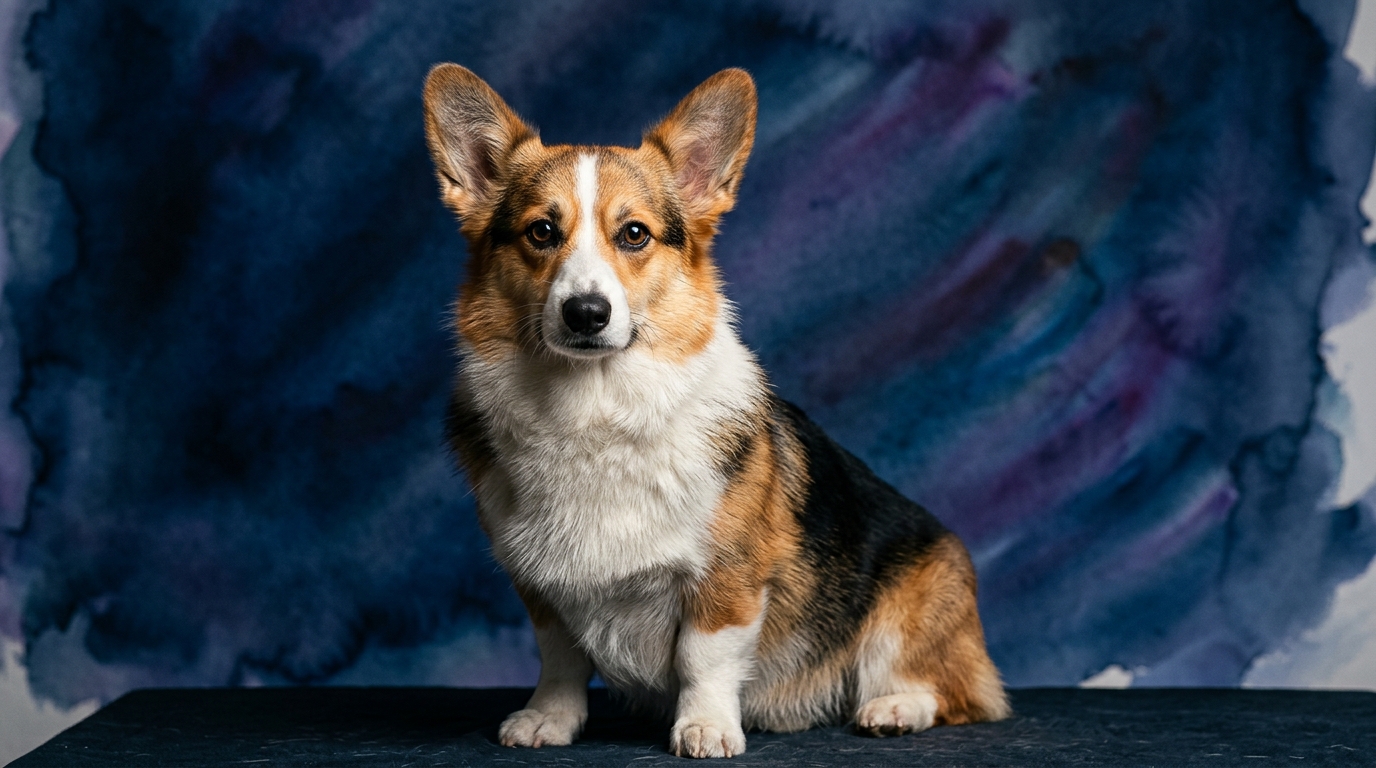

Side-by-Side IQ Profile: Corgi Agility vs. Mastiff Deliberation
The Cosmic Pet Pet IQ Lab employs a five-dimensional framework to assess canine cognition, offering a granular view beyond general perceptions. For the Pembroke Welsh Corgi, a breed with a deep history in herding, their Coren rank of #11 positions them among breeds adept at understanding and executing human commands. Their Problem Solving is rated at 4/5, indicating a strong capacity for navigating novel situations and figuring out puzzles. Training Speed stands at an impressive 5/5, reflecting their eagerness to learn and retain new behaviors quickly. Social Intelligence, at 4/5, suggests a keen awareness of human cues and emotional states, fostering strong communication. Their Instinctive Drive is a robust 5/5, directly linked to their inherent herding behaviors and a focused work ethic. Finally, Memory scores 4/5, demonstrating their ability to recall commands and routines over time.
In contrast, the Neapolitan Mastiff, a breed rooted in protection and guardianship, does not feature on the Coren ranking, suggesting a different cognitive emphasis rather than a deficit. Their IQ scores paint a picture of deliberate thought and independent action. Problem Solving is rated 3/5; while capable, their approach tends to be more considered and less hurried than a Corgi's. Training Speed is also 3/5, indicating that they learn effectively, but require more repetition and patience, preferring to process information at their own pace. Social Intelligence, at 3/5, points to a strong bond and understanding within their immediate family, though perhaps less outward engagement with strangers or complex social nuances. Instinctive Drive, also 3/5, is primarily focused on their protective instincts rather than a broad range of tasks, and Memory, at 3/5, means they will learn and recall information, but might benefit from consistent reinforcement.
Comparing these profiles reveals a fundamental difference in cognitive speed and application. The Corgi's scores reflect a breed engineered for rapid, agile responses and close cooperation with humans in a dynamic environment. The Mastiff's scores, however, describe a dog whose mental processes are geared towards observation, patient assessment, and independent decision-making, particularly concerning the safety of their domain and family.
Where the Pembroke Welsh Corgi Excels Cognitively
The Pembroke Welsh Corgi's cognitive strengths are deeply intertwined with their herding heritage. Their 4/5 Problem Solving score means they frequently display resourcefulness, whether it's figuring out how to retrieve a toy from under furniture or navigating complex agility courses. This isn't just about physical agility; it's about mental mapping and strategy. Their 5/5 Training Speed is a standout attribute, enabling them to grasp new commands and tricks with remarkable alacrity. They are highly responsive to positive reinforcement, quickly associating actions with rewards, making them a joy for owners who enjoy teaching intricate sequences.
Furthermore, the Corgi's 4/5 Social Intelligence allows them to pick up on subtle human cues, making them highly attuned companions. They often anticipate their owner's next move or mood, fostering a close communicative bond. Their 5/5 Instinctive Drive, while historically applied to livestock, translates into a breed that thrives on having a 'job,' whether it's herding household members or participating in dog sports. This inherent drive provides a strong motivational foundation for learning and engagement, ensuring they remain mentally stimulated and content. Their memory, also 4/5, reinforces their ability to build upon past learning, allowing for an expanding repertoire of behaviors and routines.
Where the Neapolitan Mastiff Shows Unique Cognitive Strengths
While the Neapolitan Mastiff's cognitive scores may appear modest compared to the Corgi's, they reflect a different, equally valuable set of mental aptitudes. Their 3/5 Problem Solving isn't about speed, but often about thoroughness and independent assessment. A Mastiff might take longer to 'solve' a situation, such as determining if a new visitor poses a threat, but their conclusion is often well-considered and steadfast. This deliberate processing is crucial for a guardian breed, prioritizing careful evaluation over impulsive reaction.
The Mastiff's 3/5 Social Intelligence, while not indicating broad gregariousness, points to a profound and discerning understanding of their immediate family. They are often exceptionally sensitive to the nuances of their owner's emotions and household dynamics, forming deep, loyal bonds. This isn't about performing tricks for attention, but about a quiet, watchful presence and an inherent understanding of their role within the family unit. Their 3/5 Instinctive Drive is singularly focused on protection, manifesting as a calm vigilance and an unwavering commitment to their loved ones' safety, rather than a drive for diverse tasks. This specific, deep-seated instinct shapes their cognitive focus, making them highly effective in their primary role as guardians.
Training Dynamics: Corgi's Eagerness vs. Mastiff's Deliberation
When it comes to training, the disparity in Training Speed and Instinctive Drive between these two breeds creates markedly different experiences. The Pembroke Welsh Corgi, with its 5/5 Training Speed and 5/5 Instinctive Drive, is generally much easier to train for a wide array of commands and activities. Their herding background means they are predisposed to working closely with humans and responding quickly to direction. They thrive on mental challenges and positive reinforcement, often picking up new cues after only a few repetitions. Their natural desire to participate and their strong recall memory (4/5) make them excellent candidates for obedience, agility, and even complex trick training, provided owners keep sessions engaging and varied.
The Neapolitan Mastiff, with a 3/5 Training Speed and 3/5 Instinctive Drive, presents a different training journey. They are not 'stubborn' in the sense of unwillingness, but rather process information more slowly and prefer to make their own decisions. Training a Mastiff requires immense patience, consistency, and understanding of their independent nature. Repetition is key, and motivations must be strong and consistent. Their instinct is less about performing tasks on command and more about assessing situations for protection. Therefore, training should focus on foundational obedience, socialization, and impulse control, building trust and respect rather than expecting rapid-fire responses. Owners must appreciate their deliberate pace and celebrate incremental progress, understanding that a Mastiff's learning is often deep-seated rather than superficial.
Matching Canine Cognition to Owner Lifestyles
The cognitive profiles of the Pembroke Welsh Corgi and Neapolitan Mastiff naturally align with distinct owner lifestyles. For active owners who relish daily engagement, structured training sessions, and a companion eager to participate in various activities, the Pembroke Welsh Corgi is an excellent fit. Their high problem-solving capacity and vigorous instinctive drive mean they require consistent mental stimulation beyond just physical exercise. Owners who enjoy teaching new behaviors, participating in dog sports like agility or herding trials, or simply having a highly responsive and communicative companion will find the Corgi's cognitive makeup incredibly rewarding. They thrive in environments where their quick wits and social intelligence are regularly challenged and appreciated, making them ideal for dynamic households.
Conversely, for more relaxed owners who appreciate a calm, watchful presence and are prepared for a deliberate training approach, the Neapolitan Mastiff is a suitable choice. Their lower scores in training speed and instinctive drive mean they do not demand constant mental tasks or high-energy activities, though consistent socialization and foundational training are crucial. Owners who value quiet companionship, a strong protective instinct, and a dog that processes the world at a measured pace will find the Mastiff's temperament appealing. They do best in stable, predictable environments where they can observe and protect their family with a calm demeanor. Their cognitive strength lies in their steadfastness and discerning social intelligence within their immediate circle, making them perfect for owners who seek a loyal, thoughtful, and independent guardian.
The Verdict: Choosing Your Canine Companion
The Verdict
Choose a Pembroke Welsh Corgi if you seek an agile, quick-witted companion eager for training and mental challenges, thriving on consistent interaction and diverse activities. They are ideal for active households that appreciate a highly responsive and communicative dog.
Opt for a Neapolitan Mastiff if you desire a calm, watchful guardian with a deliberate nature, valuing profound loyalty and a strong protective instinct over rapid learning or high-energy demands. They suit patient owners who can provide a stable, predictable environment and appreciate a thoughtful, independent presence.
🧠 Find Your Pet's IQ Score
Our Pet IQ Lab assessment covers 25+ tests across 5 cognitive dimensions — personalized to your breed.
Take the Full IQ Test →Frequently Asked Questions
Do Pembroke Welsh Corgis require a lot of mental stimulation?
Yes, with a 4/5 problem-solving and 5/5 instinctive drive, Corgis thrive on mental challenges. Without engaging activities like puzzle toys, training sessions, or interactive games, they can become bored and potentially develop undesirable behaviors.
How does a Neapolitan Mastiff's problem-solving ability manifest in daily life?
A Neapolitan Mastiff's 3/5 problem-solving ability typically manifests as a deliberate, observational approach to new situations. Rather than quick reactions, they tend to assess their environment and new stimuli carefully before deciding on a course of action, often related to their protective instincts.
Is the Neapolitan Mastiff suitable for first-time dog owners given its training speed?
The Neapolitan Mastiff, with a 3/5 training speed, can be challenging for first-time owners due to their independent nature and requirement for consistent, patient training. They benefit greatly from experienced owners who understand their need for a calm, firm approach and appreciate their deliberate learning style.