Side-by-Side Cognitive Profiles: Corgi vs. Saluki
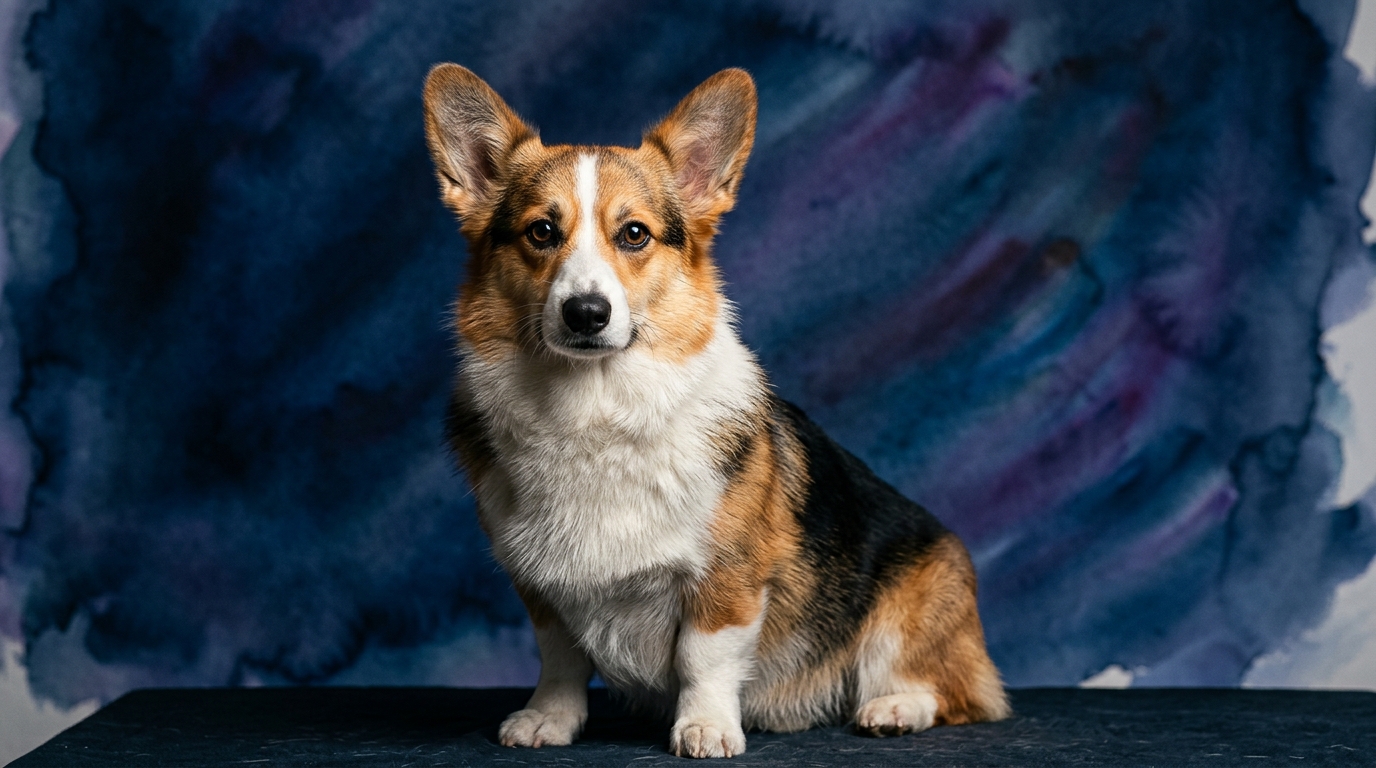
The Pembroke Welsh Corgi, a breed with a Coren rank of #11, consistently demonstrates a strong aptitude for various cognitive tasks. Our Lab's assessment places their Problem Solving at 4/5, indicating an adeptness at navigating novel challenges and figuring out solutions. Their Training Speed is exceptional at 5/5, suggesting a rapid grasp of new commands and routines. Social Intelligence for the Corgi scores 4/5, reflecting their ability to read human cues and integrate into social structures effectively. Instictive Drive, anchored in their herding heritage, is a robust 5/5, manifesting as a strong motivation for purpose-driven tasks. Finally, their Memory is rated 4/5, allowing for efficient retention of learned behaviors and experiences.
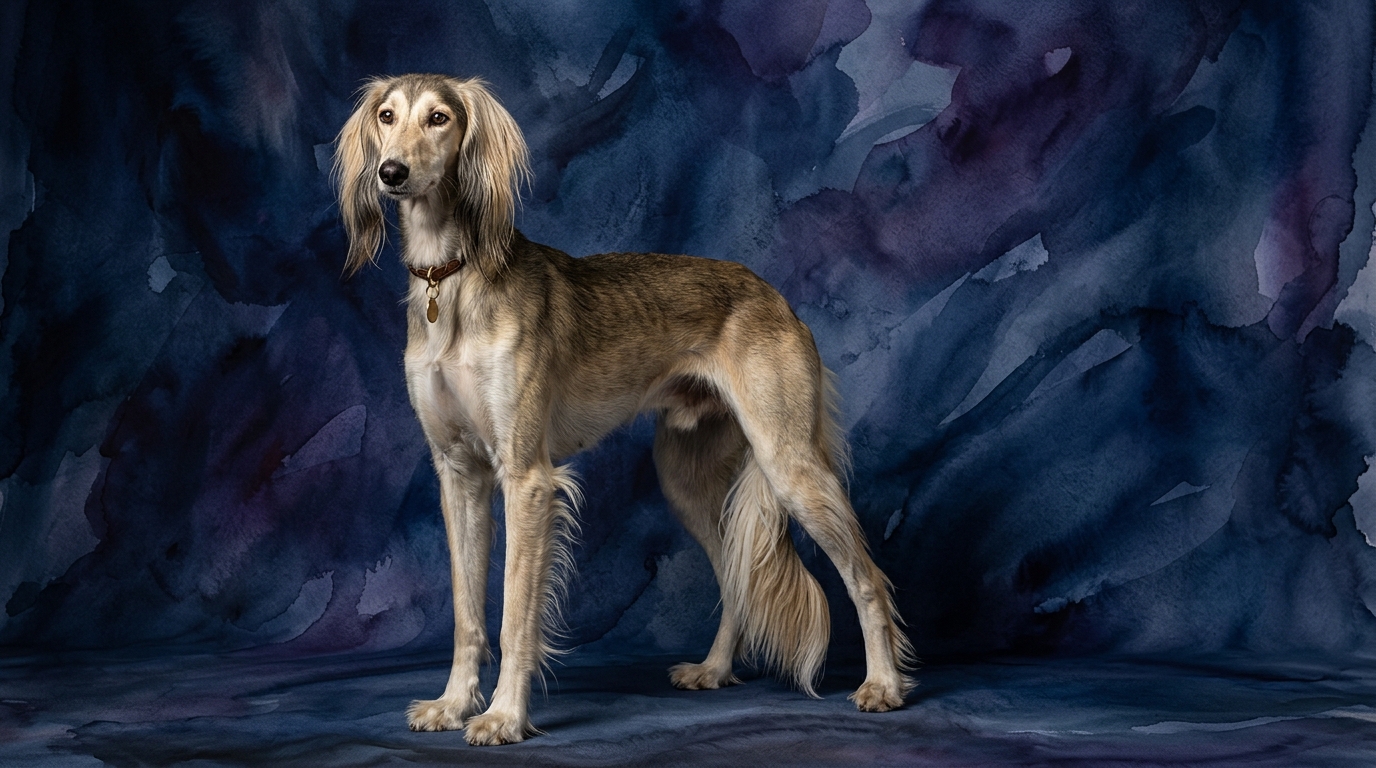
In contrast, the Saluki, a breed not ranked on Coren's list, presents a different cognitive landscape tailored to its ancient role as a sighthound. Across all five dimensions, the Saluki consistently scores 3/5. Their Problem Solving ability at 3/5 means they can certainly tackle puzzles, but perhaps with less persistent trial-and-error for tasks not directly tied to their core instincts. Training Speed at 3/5 suggests they learn at a moderate pace, often requiring more repetition and creative motivation due to their independent streak. Social Intelligence, also 3/5, indicates they form bonds and understand social cues, but might be more reserved or less overtly seeking human direction in complex social scenarios. Their Instinctive Drive, while powerful for hunting, scores 3/5 in the context of general human-directed tasks, as it's less about cooperative work and more about autonomous pursuit. Memory at 3/5 implies they retain information, but might require more consistent reinforcement for complex sequences or less salient experiences than a Corgi.
Where the Pembroke Welsh Corgi Excels Cognitively
The Pembroke Welsh Corgi's cognitive strengths are deeply rooted in its pastoral origins, where working alongside humans to manage livestock demanded a specific set of mental faculties. Their superior Training Speed (5/5) is a direct reflection of their eagerness to engage and cooperate, making them remarkably receptive to structured learning environments. This isn't merely about obedience; it's about a quick uptake of complex sequences and an intrinsic motivation to perform tasks for their human companions.
Furthermore, the Corgi's high Problem Solving (4/5) and Instinctive Drive (5/5) scores combine to create a dog that thrives on mental engagement. They are adept at navigating complex obstacles, figuring out how to retrieve objects, or understanding the mechanics of puzzle toys. Their herding drive, while often manifesting as nipping at heels, is essentially a sophisticated system of control and manipulation, requiring spatial reasoning and an understanding of cause and effect that translates well into various forms of directed cognitive work. This makes them particularly adept at dog sports like agility or obedience, where quick thinking and rapid learning are paramount.
Where the Saluki Shines Cognitively
The Saluki's cognitive profile, while scoring lower in generalized 'task' intelligence by our metrics, is exquisitely specialized for its ancestral purpose: the pursuit of prey by sight across vast distances. Their lower scores in problem-solving and training speed, when viewed through the lens of a sighthound, aren't deficits but rather indicators of an independent, self-reliant cognitive style. A Saluki's 'problem-solving' often involves instantaneous decisions during a high-speed chase – calculating trajectories, anticipating prey movement, and reacting with split-second precision, rather than pondering a puzzle box.
Their Instinctive Drive (3/5), while not as broadly applicable to human-directed tasks as a Corgi's, is intensely focused on visual hunting. This drive demands exceptional visual acuity, spatial awareness over long distances, and the ability to make autonomous decisions without constant human input. A Saluki's 'social intelligence' (3/5) might translate to a more discerning and less overtly demonstrative bond, valuing companionship but maintaining a degree of dignified independence. Their memory (3/5) is likely highly efficient for recalling hunting grounds, scent trails, and visual cues crucial for their specialized role, even if it appears less focused on remembering a long list of human commands.
Training Dynamics: Which Breed is Easier?
Considering their respective IQ profiles, the Pembroke Welsh Corgi is unequivocally easier to train for a typical companion dog role. Their Training Speed of 5/5, coupled with a Social Intelligence of 4/5, means they are highly motivated to please and quick to understand what is being asked of them. A Corgi often thrives on positive reinforcement, seeing training as a collaborative game where their efforts lead to rewarding interactions with their human. Their strong instinctive drive for purposeful work makes them excellent candidates for advanced obedience, trick training, and even competitive dog sports.
The Saluki, with a Training Speed of 3/5 and Social Intelligence of 3/5, presents a different training challenge. Their independent nature, a hallmark of sighthounds bred to hunt autonomously, means they require more patience, consistency, and creative motivation. A Saluki may understand a command but choose not to execute it if they don't perceive immediate value or if a more compelling sensory input (like a distant squirrel) captures their attention. Training a Saluki often involves finding ways to make the desired behavior align with their innate drives, rather than solely relying on their desire to please. Owners must embrace their selective hearing and understand that their focus is often external, scanning for visual stimuli rather than always tuning into human instruction.
Suitability for Active vs. Relaxed Owners
For owners seeking an active, collaborative companion eager for structured activities, the Pembroke Welsh Corgi is an excellent match. Their high instinctive drive and problem-solving aptitude mean they require consistent mental stimulation through training, puzzle toys, and interactive games. While their physical exercise needs are moderate, their cognitive needs are substantial. Owners who enjoy teaching new tricks, participating in dog sports, or simply engaging in daily mental challenges will find the Corgi a willing and enthusiastic partner. Their social intelligence also means they generally thrive in households that enjoy frequent interaction and integrate them fully into family life.
The Saluki, conversely, is best suited for owners who appreciate an independent spirit and can provide specific outlets for their unique physical and mental needs, rather than expecting constant collaborative engagement. While they possess incredible bursts of speed and require secure spaces for vigorous running, their cognitive engagement is often self-directed towards scanning their environment and observing. A 'relaxed' owner for a Saluki isn't one who foregoes exercise, but one who understands and respects their dignified aloofness and their preference for periods of quiet observation over constant interaction. They thrive with owners who can provide safe, expansive areas for them to run freely and express their sighthound nature, combined with a calm, patient home environment.
The Verdict: When to Choose Each Breed
The Verdict
Choose a Pembroke Welsh Corgi if you desire a highly trainable, engaged, and cooperative companion eager to participate in structured activities, mental challenges, and collaborative family life. Their keen problem-solving and strong drive make them rewarding partners for active, hands-on owners.
Opt for a Saluki if you appreciate a noble, independent companion with a dignified presence, and you can provide ample, secure space for their bursts of speed and keen observation. They are ideal for patient owners who respect a less overtly demonstrative bond and understand their unique, instinct-driven cognitive focus.
🧠 Find Your Pet's IQ Score
Our Pet IQ Lab assessment covers 25+ tests across 5 cognitive dimensions — personalized to your breed.
Take the Full IQ Test →Frequently Asked Questions
Do Pembroke Welsh Corgis require a lot of mental stimulation?
Yes, Corgis, with their high problem-solving and instinctive drive, thrive on mental challenges. They need consistent training, puzzle toys, and interactive games to prevent boredom and channel their herding intelligence constructively.
Are Salukis difficult to train?
Salukis are not 'difficult' in the sense of being unintelligent, but their independence and lower training speed mean they require more patience, consistency, and creative motivation than breeds like the Corgi. Their training benefits from understanding their sighthound nature and making learning rewarding.
Which breed is better for apartment living?
A Pembroke Welsh Corgi can adapt well to apartment living if their significant mental and moderate physical exercise needs are consistently met. Salukis, despite being calm indoors, require large, secure outdoor spaces for regular, vigorous running, making apartment living more challenging without dedicated access to such areas.