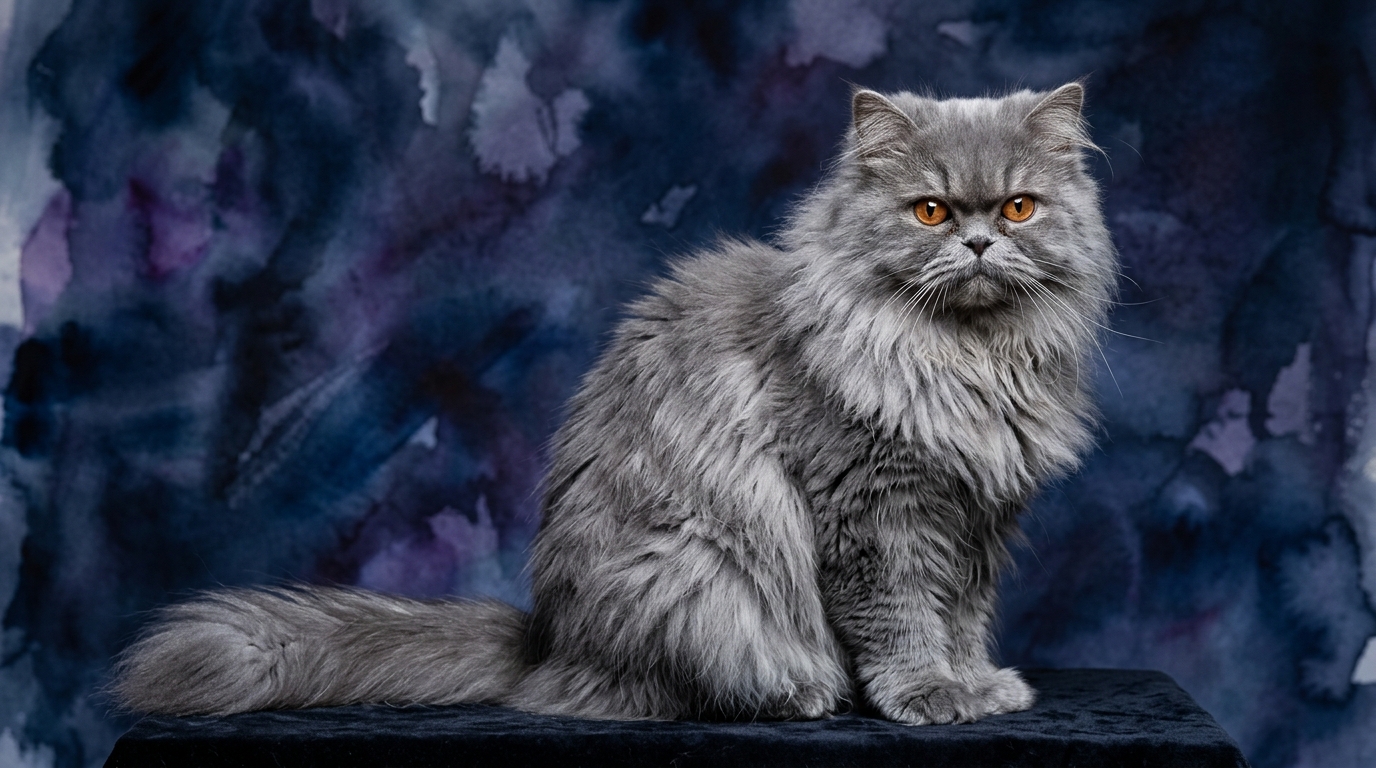
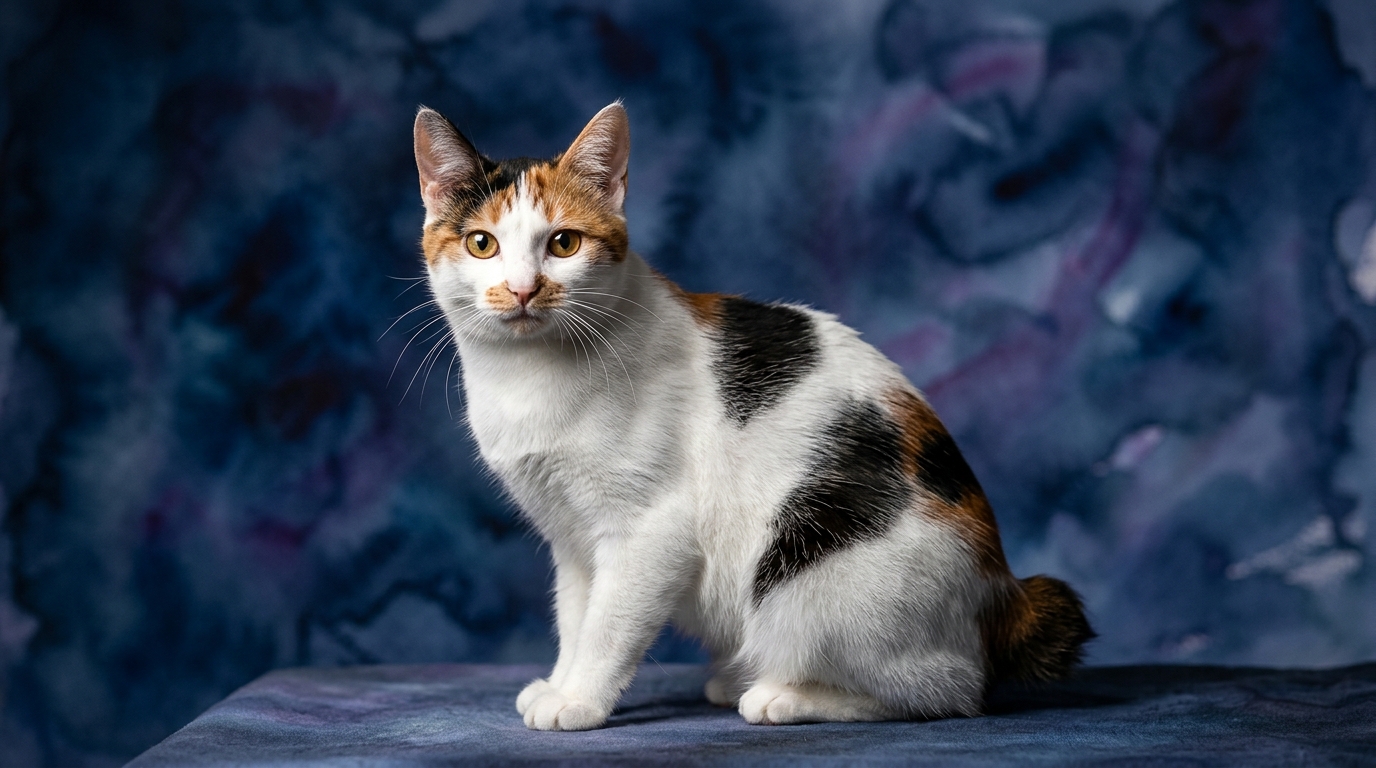
Side-by-Side IQ Profile: Persian vs. Japanese Bobtail
**Problem Solving:** The Persian scores a 2/5 in problem-solving, indicating a preference for established routines and less inclination to actively manipulate its environment to overcome obstacles or solve complex puzzles. In contrast, the Japanese Bobtail, with a score of 3/5, displays a more inquisitive mind, often demonstrating greater persistence and curiosity in figuring out how things work, whether it’s opening a cabinet or retrieving a hidden toy.
**Training Speed:** For training speed, the Persian’s 2/5 suggests a more deliberate learning pace, requiring consistent repetition and patience for new commands to take hold. The Japanese Bobtail, scoring 3/5, typically shows a quicker grasp of new behaviors and cues, often enjoying the mental engagement of training sessions and responding more readily to instruction.
**Social Intelligence:** Both breeds share a 3/5 score in social intelligence, though their expressions differ. The Persian’s social acumen often manifests as a deep, subtle attunement to human moods, offering quiet companionship and understanding social cues without overt demands. The Japanese Bobtail also understands social dynamics well, but often expresses this with more outward enthusiasm, actively seeking interaction and communicating clearly with their human companions.
**Instinctive Drive:** The Persian’s 2/5 instinctive drive points to a generally lower inclination for hunting, extensive exploration, or high-energy play, making them content with a calmer indoor existence. The Japanese Bobtail’s 3/5 score, however, reflects a more pronounced innate curiosity and playful hunting instinct, often driving them to engage in games of fetch, chase, and thorough exploration of their home environment.
**Memory:** Both breeds achieve a 3/5 in memory. The Persian effectively recalls routines, preferred resting spots, and familiar people, thriving on predictability and consistent positive interactions. The Japanese Bobtail’s memory also extends to recalling specific play patterns, training commands, and the locations of favored toys, often leveraging this recall to initiate interaction or perform learned tasks.
Where the Persian Wins Cognitively
While the Persian’s cognitive profile might suggest a less 'active' mind compared to some breeds, their strengths lie in areas that foster a profoundly peaceful companionship. Their 2/5 instinctive drive means they are generally less prone to destructive curiosity, preferring calm observation over vigorous exploration. This translates to a cat more content with established boundaries and less inclined to scaling curtains or investigating prohibited spaces. Their 3/5 social intelligence, coupled with their lower drive, allows them to be highly attuned to human emotional states without demanding constant, high-energy interaction. They excel at subtle communication, often conveying contentment or a need for affection through soft gazes and gentle nudges, demonstrating a nuanced understanding of social cues without overt displays. The Persian's 3/5 memory, particularly for routines, contributes to their stability; they thrive on predictability and remember the comforting rhythm of daily life, providing a consistent, reassuring presence. This aptitude for quiet recall means they rarely forget a kind hand or a favored nap spot, reinforcing their calm, dependable nature within the home.
Where the Japanese Bobtail Wins Cognitively
The Japanese Bobtail’s cognitive strengths manifest in a more dynamic and interactive way, making them particularly engaging companions. Their 3/5 problem-solving score indicates a cat that actively seeks solutions and enjoys mental stimulation, often figuring out how to access treats or manipulate objects to their advantage. This translates into a playful persistence when faced with a puzzle toy or a closed door, suggesting a curiosity that drives them to understand their environment. A 3/5 training speed is a clear advantage, allowing them to grasp new commands, tricks, or even leash training with relative ease, making them highly responsive to positive reinforcement. Their 3/5 instinctive drive fuels their playful nature, providing the motivation for games of fetch or hide-and-seek, engaging their natural hunting prowess in a domestic setting. This drive, combined with their problem-solving abilities, means they often invent their own games and find amusement in their surroundings. The Japanese Bobtail’s 3/5 memory supports their capacity for learning complex play patterns and remembering specific interactions, ensuring they recall favorite games and the people who play them, fostering an interactive bond built on shared experiences.
Which is Easier to Train and Why
Based on their respective IQ profiles, the Japanese Bobtail generally proves easier to train than the Persian. The Japanese Bobtail’s 3/5 training speed is complemented by their 3/5 problem-solving ability and 3/5 instinctive drive. This combination means they are not only quicker to pick up commands but also possess an inherent curiosity and motivation to engage with training as a form of mental and physical stimulation. They often perceive training as a game, readily responding to positive reinforcement and enjoying the interaction. For instance, a Japanese Bobtail might quickly learn to fetch a specific toy because their instinctive drive for 'prey' and problem-solving skill to retrieve it are engaged. In contrast, the Persian’s 2/5 training speed, coupled with a lower 2/5 instinctive drive and 2/5 problem-solving score, means they require more patience and repetition. While capable of learning, their motivation is often less about the challenge or the 'hunt' and more about the comfort of routine and social connection. They might learn to come when called due to their 3/5 social intelligence and memory of positive interactions, but are less likely to engage in complex trick training with the same enthusiasm or rapid uptake as a Bobtail. The Persian’s approach to learning is typically more deliberate and less driven by active exploration, making training a slower, gentler process focused on consistency and reward.
Which Suits Active Owners vs. Relaxed Owners
The cognitive profiles of these two breeds offer clear guidance for matching them with suitable owner lifestyles. The Japanese Bobtail, with its 3/5 problem-solving, 3/5 training speed, and 3/5 instinctive drive, is an ideal companion for active owners who relish interactive play and enjoy engaging their pet's mind. Owners who want to teach tricks, play fetch, or provide puzzle feeders will find the Bobtail's energetic curiosity and quick learning highly rewarding. Their higher drive means they thrive on regular stimulation and interaction, and an owner who can provide this will foster a happy, well-adjusted Bobtail. They are often playful and vocal, desiring to be part of household activities and even initiating games. Conversely, the Persian, characterized by its 2/5 problem-solving, 2/5 training speed, and 2/5 instinctive drive, is a perfect fit for relaxed owners seeking a calm, affectionate, and less demanding companion. These cats are content with a serene environment, preferring quiet companionship and comfortable lounging over boisterous play. While they appreciate gentle interaction and attention, their lower drive means they don't require constant stimulation or elaborate games. An owner who values a peaceful presence, predictable routines, and subtle expressions of affection will find the Persian’s temperament deeply satisfying, offering a tranquil and devoted bond without the need for high-energy engagement.
The Verdict
For those seeking an interactive, playful, and quick-to-learn feline companion that thrives on mental and physical engagement, the Japanese Bobtail is the clear choice.
If a tranquil, predictable presence and a deep, quiet bond are preferred, the Persian will provide immense satisfaction with its serene demeanor.
🧠 Find Your Pet's IQ Score
Our Pet IQ Lab assessment covers 25+ tests across 5 cognitive dimensions — personalized to your breed.
Take the Full IQ Test →Frequently Asked Questions
Are Persian cats difficult to train?
Persian cats are not difficult, but they learn at a more deliberate pace due to their 2/5 training speed and lower instinctive drive. Consistency, patience, and positive reinforcement focused on routine and comfort yield the best results for their 3/5 social intelligence and memory.
Do Japanese Bobtails need a lot of playtime?
Yes, Japanese Bobtails benefit greatly from regular interactive playtime. Their 3/5 instinctive drive and problem-solving abilities mean they enjoy games that simulate hunting, puzzle toys, and activities that challenge their quick minds and keep them engaged.
How do their social interactions differ?
Both breeds score 3/5 in social intelligence, but express it differently. Persians show social connection through calm presence and subtle cues, while Japanese Bobtails tend to be more outwardly expressive, vocal, and actively seek engaging interaction, often initiating play or conversation.