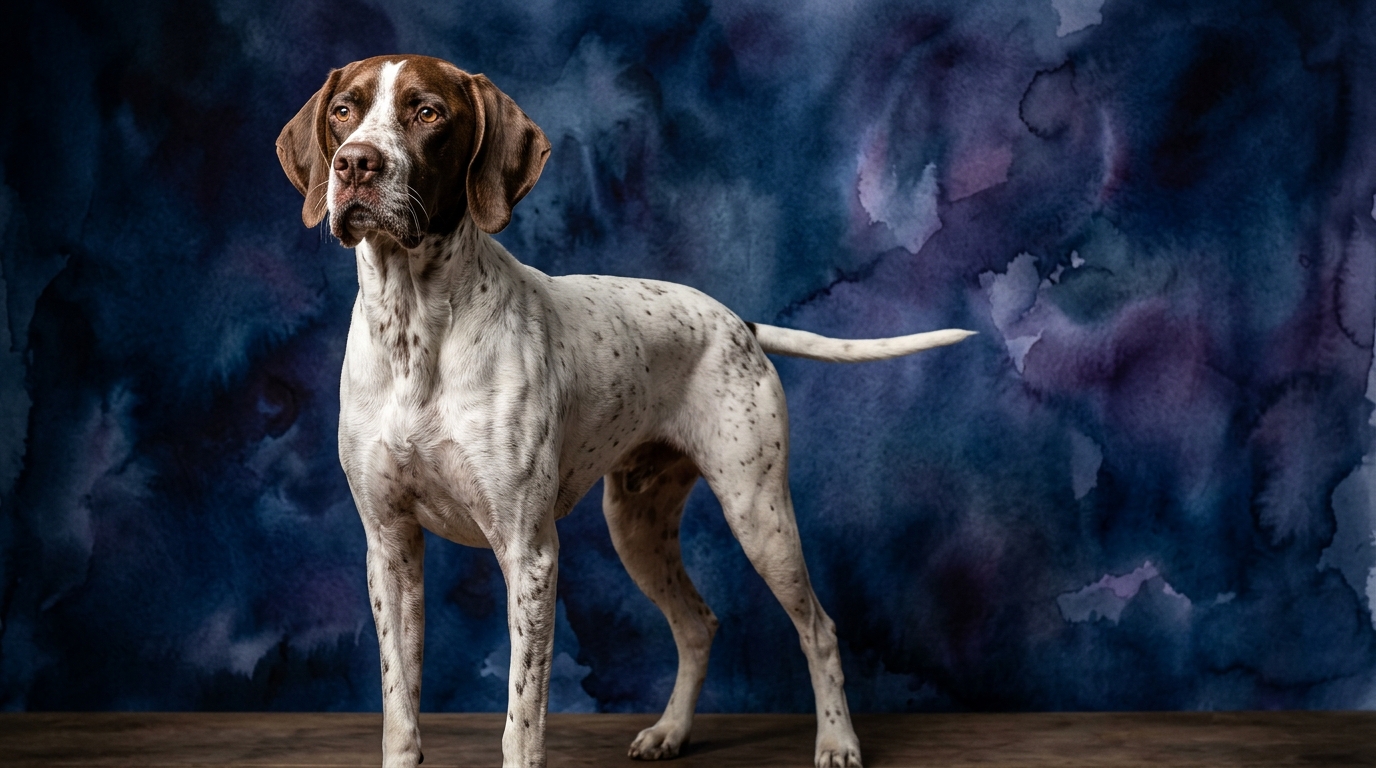
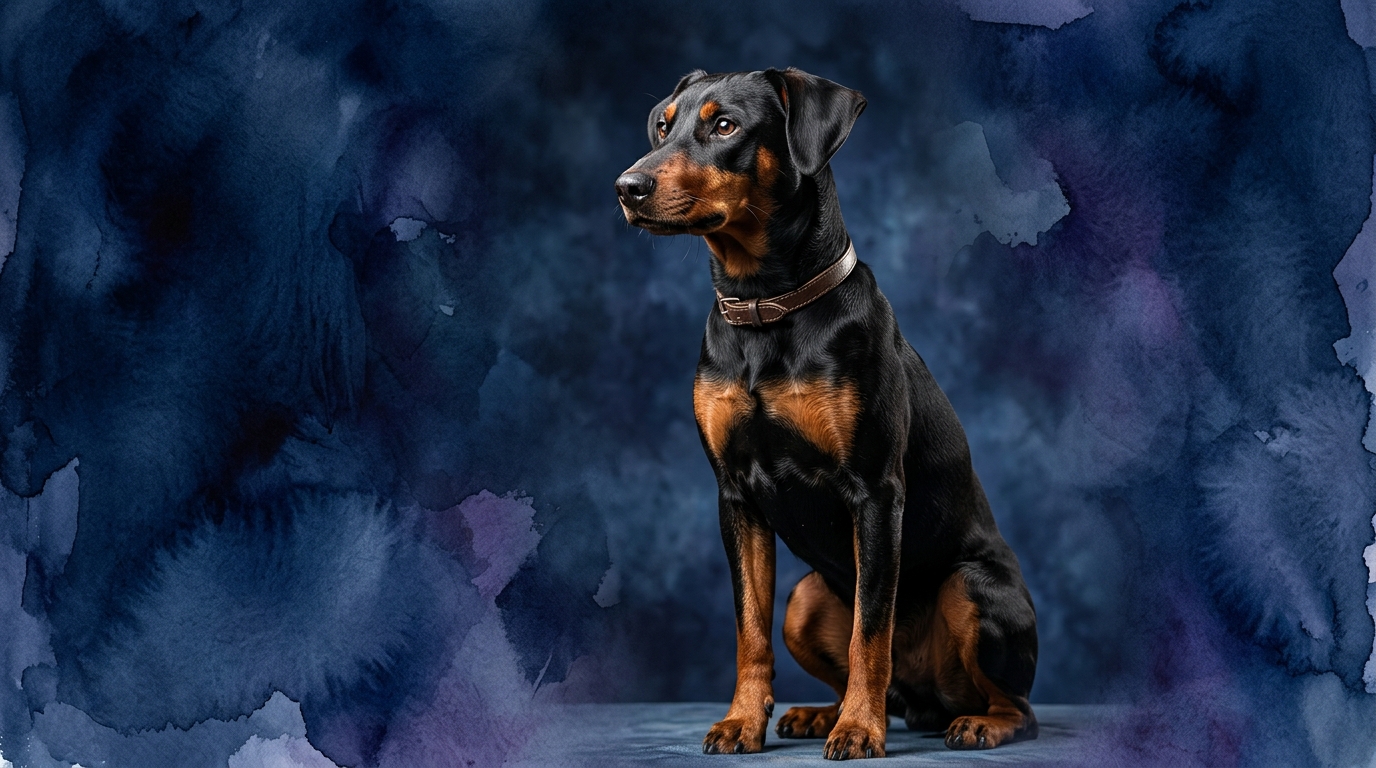
Side-by-Side IQ Profile: Understanding the Nuances
At The Cosmic Pet Pet IQ Lab, we assess canine intelligence across five critical dimensions. Both the Pointer and German Pinscher register a consistent 3/5 across the board, indicating a solid, capable intellect. However, a score of 3/5 manifests differently based on each breed's inherent purpose and temperament. Let's explore these dimensions specifically for each dog.
Problem Solving (3/5): The Pointer exhibits a practical problem-solving style, adept at navigating complex scent trails and adapting strategies in varied outdoor terrains to locate game. Their cognitive focus here is on environmental analysis and task completion within a hunting context. The German Pinscher, on the other hand, approaches problem-solving with resourcefulness, often devising clever ways to outwit small prey or navigate the intricacies of a home environment. Their intellect is geared towards vigilance and pragmatic solutions in their immediate surroundings.
Training Speed (3/5): For the Pointer, a 3/5 in training speed means they grasp new commands and routines at a moderate pace, particularly when training is consistent, positive, and related to their natural field work. They respond well to clear instruction and positive reinforcement, showing a focused willingness to learn specific tasks. The German Pinscher also learns at a steady pace, demonstrating good retention. However, their training often requires a more patient and consistent approach, especially when tapping into their protective instincts or desire for engagement, as they may exhibit a degree of independent thought.
Social Intelligence (3/5): A Pointer's social intelligence often revolves around their working partnership with a human, showing a moderate understanding of human cues and group dynamics within that specific context. They can be reserved with strangers but form deep bonds with their primary handlers. The German Pinscher displays a moderate ability to interpret family moods and social hierarchies, often acting as a watchful observer of their human companions. They are attuned to their family's needs and dynamics, though they can be wary of outsiders.
Instinctive Drive (3/5): The Pointer's 3/5 instinctive drive is profoundly expressed as a compelling urge to hunt, point, and retrieve, coupled with significant endurance for sustained activity. This drive is central to their being, demanding consistent outlets for expression. The German Pinscher possesses a strong instinctive drive for protection, territoriality, and vermin control. They exhibit an inherent alertness and a desire to be actively involved in family affairs, often "managing" their environment and ensuring its perceived security.
Memory (3/5): Pointers demonstrate good recall for trained commands and specific locations, particularly those associated with positive experiences or hunting scenarios. They effectively remember routines and learned behaviors relevant to their field work. The German Pinscher also exhibits a solid memory for past events, people, and routines, which significantly contributes to their consistent behavior and territorial awareness. They remember who belongs in their circle and who doesn't, reinforcing their protective nature.
Where Pointer Wins Cognitively
While both breeds share a 3/5 score across cognitive dimensions, the Pointer's specialized evolution gives it a distinct edge in specific areas. Their olfactory processing is exceptional; Pointers possess a superior ability to process complex scent information, making real-time, nuanced decisions based on subtle environmental cues. This cognitive skill allows them to efficiently locate game and navigate intricate scent trails over vast distances, a unique form of problem-solving that is deeply ingrained. Furthermore, their focus and endurance for sustained, repetitive tasks in varied outdoor environments are unparalleled, allowing them to maintain mental acuity and physical stamina for hours during field work. Their problem-solving (3/5) is uniquely geared towards independent decision-making in the field, making nuanced choices about cover, wind, and game movement without constant human direction.
Where German Pinscher Wins Cognitively
The German Pinscher's cognitive strengths, though numerically similar, are channeled into a different suite of abilities. They possess a keener ability to discern subtle changes in their immediate environment and react appropriately, demonstrating a watchful and adaptive intelligence crucial for their role as guardians. This includes quickly assessing new situations and identifying potential threats, a skill honed over generations of protecting homes and families. They also show a stronger capacity for adapting their protective and territorial instincts to diverse living situations, from rural to urban, making them versatile companions. Their social intelligence (3/5) is particularly adept at reading human intentions and potential threats, making them excellent, albeit sometimes discerning, family guardians who are highly attuned to their household's safety.
Which is Easier to Train and Why
Both breeds register a 3/5 in Training Speed, meaning they learn at a moderate pace, but the practical ease of training them can differ significantly due to their underlying drives and temperaments. The Pointer, with its strong desire to please and focus on a single, compelling task like hunting, can be perceived as easier to train for specific tasks such as obedience, recall, and field work. They are highly receptive to consistent, positive reinforcement, especially when it aligns with their natural instincts. However, their high energy levels and intense drive mean that without structured outlets and consistent mental engagement, their training can become challenging due to their propensity for restlessness and distraction.
The German Pinscher, while equally capable of learning, can present a greater challenge for the average owner due to their independent nature and strong protective instincts. They learn quickly but may question commands or attempt to assert their own will if they perceive a lack of consistent leadership. Training a German Pinscher requires a very firm yet fair hand, emphasizing consistency, clear boundaries, and early socialization to channel their innate drives constructively. They are not as inherently 'eager to please' in a traditional sense as a Pointer might be, often requiring motivation that appeals to their desire for engagement and purpose rather than simple compliance.
Which Suits Active Owners vs. Relaxed Owners
When considering an owner's lifestyle, both the Pointer and German Pinscher undeniably lean towards active individuals, though the nature of that activity differs. The Pointer is ideal for owners who enjoy extensive outdoor activities like hiking, running, or hunting. They thrive on vigorous physical exertion and mental engagement directly related to their sporting instincts, requiring significant daily exercise to be content and well-behaved. An under-exercised Pointer can quickly become restless and destructive, making them unsuitable for truly relaxed or sedentary owners.
The German Pinscher also suits active owners, but ones who appreciate a vigilant, engaged companion for activities like dog sports (agility, obedience), or frequent, varied walks in stimulating environments. They require consistent mental challenges to prevent boredom and channel their protective energies positively. While they might adapt to slightly less intense physical activity than a Pointer, they demand an owner who is consistently present, engaging, and capable of providing strong, clear leadership and setting boundaries. Neither breed is well-suited for a genuinely 'relaxed' owner who prefers minimal daily engagement or exercise, as both require substantial commitment to their physical and mental well-being.
The Verdict
Choose the Pointer if you're seeking a dedicated field companion or a running partner with a deep capacity for independent work and specialized scent tasks, thriving on extensive outdoor activity.
Choose the German Pinscher if you value a vigilant, intelligent guardian and an active family member who thrives on consistent guidance, mental engagement, and a clear leadership structure.
🧠 Find Your Pet's IQ Score
Our Pet IQ Lab assessment covers 25+ tests across 5 cognitive dimensions — personalized to your breed.
Take the Full IQ Test →Frequently Asked Questions
Are Pointers good family dogs?
Pointers can be wonderful family dogs, especially in active households that can meet their significant exercise needs. They are generally patient with children and form strong bonds, though their enthusiasm and size require supervision with very young kids.
Do German Pinschers bark a lot?
German Pinschers have a strong protective instinct and can be prone to barking at perceived threats or strangers entering their territory. Early training and consistent socialization are crucial to manage this behavior and teach them appropriate times to alert.
Which breed is better for apartment living?
Neither breed is ideal for small apartment living without significant daily exercise and mental stimulation, as both require ample space and activity. However, a well-exercised German Pinscher might adapt slightly better due to their smaller size, provided they have consistent outdoor access and training.