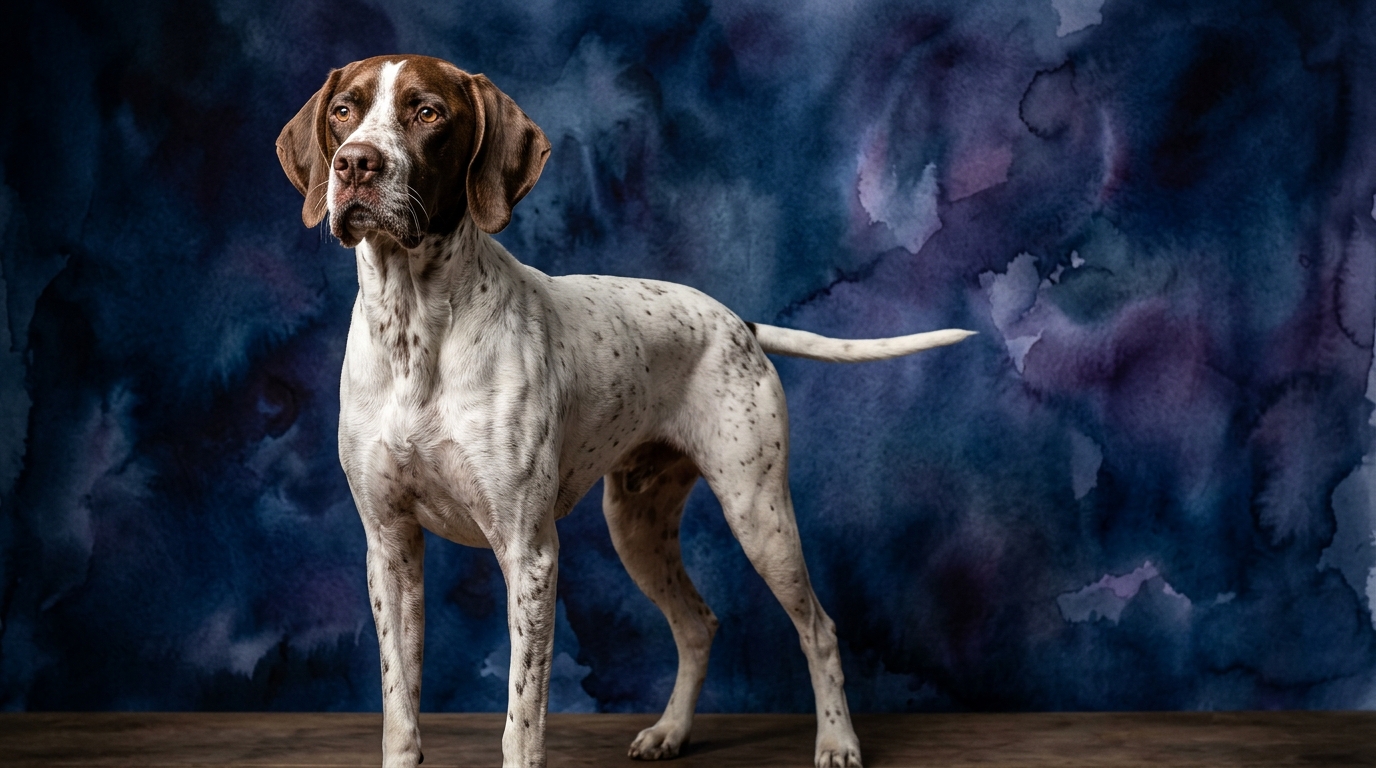

Side-by-Side IQ Profile: Unpacking Identical Scores
While both the Pointer and Rat Terrier register a 3/5 in every cognitive dimension, the manifestation of these scores is profoundly shaped by their breed groups and historical purposes. For the Pointer, a member of the Sporting group, their intelligence is typically geared towards cooperative hunting and expansive outdoor work. Their Problem Solving at 3/5 translates to efficiently navigating varied terrain, tracking complex scent trails, and understanding environmental cues to locate game; it's a practical, goal-oriented intellect focused on a specific task. Training Speed at 3/5 means they are generally receptive to learning commands, especially those pertinent to their work, thriving on clear direction and consistent positive reinforcement to build reliable field behaviors. Their Social Intelligence, also 3/5, is often expressed as a strong partnership with their human handler, understanding subtle cues during a hunt and working in tandem towards a shared objective, showing cooperative rather than purely independent social awareness. The Instinctive Drive at 3/5 is robust and focused on scenting, pointing, and retrieving, a powerful internal motivation that directs their cognitive efforts. Finally, their Memory at 3/5 allows them to retain intricate patterns of scent, recall specific commands over long periods, and remember the layout of hunting grounds, building on past experiences to improve future performance.
In contrast, the Rat Terrier, a tenacious member of the Terrier group, applies its identical 3/5 scores to a different set of challenges, typically involving independent vermin control and agile problem-solving in tighter spaces. Their Problem Solving at 3/5 shines in figuring out how to access small prey, navigating confined areas, and outmaneuvering rodents; this is an intelligence driven by immediate, often physical, objectives and requiring quick, adaptive thinking. Training Speed at 3/5 indicates they can learn rapidly, particularly when the task is engaging or aligns with their innate drives, though their independent streak means they might require more varied and stimulating methods to maintain focus compared to a Pointer. Their Social Intelligence, also 3/5, often manifests as keen alertness to their immediate environment and the dynamics within their human family, forming deep bonds with their primary caregivers while potentially being more discerning or reserved with strangers. The Instinctive Drive at 3/5 is a powerful engine for chasing, digging, and dispatching vermin, fueling their curiosity and persistence in overcoming obstacles. Their Memory at 3/5 is evident in their ability to recall the hiding spots of perceived threats, remember successful strategies for "hunting" games, and retain a wide array of tricks and routines, often with impressive long-term retention.
Where Pointer Wins Cognitively
While both breeds share the same IQ scores, the Pointer's cognitive strengths are particularly well-suited to tasks requiring sustained focus, vast environmental awareness, and cooperative partnership. Their 3/5 problem-solving excels in scenarios demanding methodical exploration and interpretation of complex sensory information over large areas, such as discerning faint scent trails amidst varied natural odors. This isn't about quick, independent solutions to immediate physical obstacles, but rather a deliberate, enduring process of deduction in an expansive outdoor setting, often in collaboration with a human. Furthermore, their 3/5 social intelligence is optimized for understanding and responding to subtle human direction over distances, allowing for seamless teamwork during hunting excursions. This breed demonstrates a cognitive advantage in tasks requiring long periods of concentration on a single, overarching objective, where endurance and a strong working relationship with a handler are paramount. Their memory, at 3/5, is particularly adept at recalling intricate sequences of field commands and the topography of hunting grounds, building a comprehensive mental map for future efficiency.
Where Rat Terrier Wins Cognitively
The Rat Terrier's cognitive profile, while scoring identically, finds its particular strengths in areas demanding independent ingenuity, rapid decision-making, and physical agility in confined or challenging spaces. Their 3/5 problem-solving is exceptional when faced with immediate, tangible obstacles, such as figuring out how to get to a perceived "prey" item or navigating a complex indoor puzzle. This intelligence thrives on finding creative, often physical, solutions to specific, pressing problems, demonstrating a tenacious trial-and-error approach. Their 3/5 training speed, when coupled with their independent spirit, means they can quickly adapt to new strategies for outsmarting targets, showing a quick uptake for tasks that align with their natural drives. The Rat Terrier's 3/5 instinctive drive translates into an intense, focused energy that fuels their cognitive exploration of their immediate environment, making them adept at identifying and exploiting vulnerabilities in their surroundings. Their memory, at 3/5, is highly effective for recalling specific tactics that led to success in previous "hunts" or problem-solving scenarios, allowing them to quickly apply learned behaviors to new, similar challenges.
Which is Easier to Train and Why
When considering ease of training, the Pointer generally presents a more straightforward experience for the average owner due to their inherent eagerness to please and cooperative nature, hallmarks of the Sporting group. Their 3/5 training speed benefits significantly from traditional, structured methods, where consistency and positive reinforcement yield predictable and reliable results. Pointers are typically motivated by the desire to work alongside their human, making them highly responsive to commands that facilitate this partnership. Their strong drive is channeled towards a clear objective, making it easier to direct their focus during training sessions. In contrast, while the Rat Terrier also scores 3/5 in training speed, their independent and tenacious terrier spirit can introduce more complexity. They are quick learners, but their motivation often stems from their own interests and prey drive rather than an inherent desire to simply please. Training a Rat Terrier requires more creativity, variety, and an understanding of how to make tasks engaging and rewarding from their perspective. They might test boundaries or become bored with repetitive drills, necessitating an owner who can adapt their methods and keep sessions stimulating. Therefore, while both are capable learners, the Pointer's disposition often makes them "easier" to train in a conventional sense, whereas the Rat Terrier demands a more nuanced and engaging approach.
Which Suits Active Owners vs Relaxed Owners
Both the Pointer and the Rat Terrier are breeds that thrive with active and engaged owners, though the *nature* of that activity differs. A Pointer, with its robust 3/5 instinctive drive and history as a field dog, absolutely requires significant outdoor exercise and mental stimulation that taps into its hunting instincts. This means long runs, extensive scent work, or participation in dog sports like field trials or obedience. A Pointer needs an owner who is not only active but also committed to providing structured "work" that allows them to use their cognitive and physical abilities in expansive environments. They are not suited for truly relaxed owners who prefer minimal outdoor activity, as their pent-up energy and unfulfilled drives can lead to frustration and undesirable behaviors.
The Rat Terrier, while smaller, is equally energetic and mentally keen. Their 3/5 instinctive drive and problem-solving skills mean they require consistent physical activity, such as brisk walks, runs, or agility training, but also substantial mental engagement within the home and yard. They excel in activities like earthdog trials, barn hunt, or complex puzzle toys that allow them to exercise their innate prey drive and sharp intellect. While they can be content to relax indoors after their needs are met, they are not suited for owners who are truly "relaxed" in the sense of providing minimal interaction or mental challenges. An engaged owner who enjoys interactive play, training, and providing varied mental enrichment will find the Rat Terrier a delightful companion, making them suitable for active owners who appreciate a clever and agile partner, even if their outdoor space is smaller than what a Pointer might demand.
The Verdict
Choose the Pointer if you desire a cooperative, enduring partner for expansive outdoor activities, valuing a dog whose intelligence is geared towards methodical field work and strong human-canine collaboration.
Choose the Rat Terrier if you prefer an agile, independent, and clever companion who thrives on quick problem-solving, mental challenges in varied environments, and a tenacious spirit.
🧠 Find Your Pet's IQ Score
Our Pet IQ Lab assessment covers 25+ tests across 5 cognitive dimensions — personalized to your breed.
Take the Full IQ Test →Frequently Asked Questions
Do Pointer and Rat Terrier IQ scores truly mean they are equally intelligent?
While both breeds score 3/5 across The Cosmic Pet Pet IQ Lab dimensions, these scores represent a balanced, capable intelligence rather than a specific ranking against all breeds. The key difference lies in *how* their intelligence manifests and what tasks it's best suited for, reflecting their distinct breed histories and natural aptitudes. Their cognitive strengths are applied to different types of challenges.
Which breed is better for a first-time dog owner given their similar IQs?
For a first-time owner, the Pointer might be slightly more manageable due to their generally more eager-to-please disposition and responsiveness to traditional training methods. The Rat Terrier, while intelligent, can be more independent and requires an owner prepared for creative, engaging training and managing a strong prey drive, which might be more challenging for a novice.
Can a Rat Terrier be trained for scent work like a Pointer?
Yes, a Rat Terrier can certainly be trained for scent work; their 3/5 instinctive drive and problem-solving skills mean they are keen to follow their nose and figure things out. However, their approach might be more focused on locating a specific "prey" item quickly in a confined area, whereas a Pointer's scent work is typically geared towards covering vast areas methodically and pointing out game to a handler.