
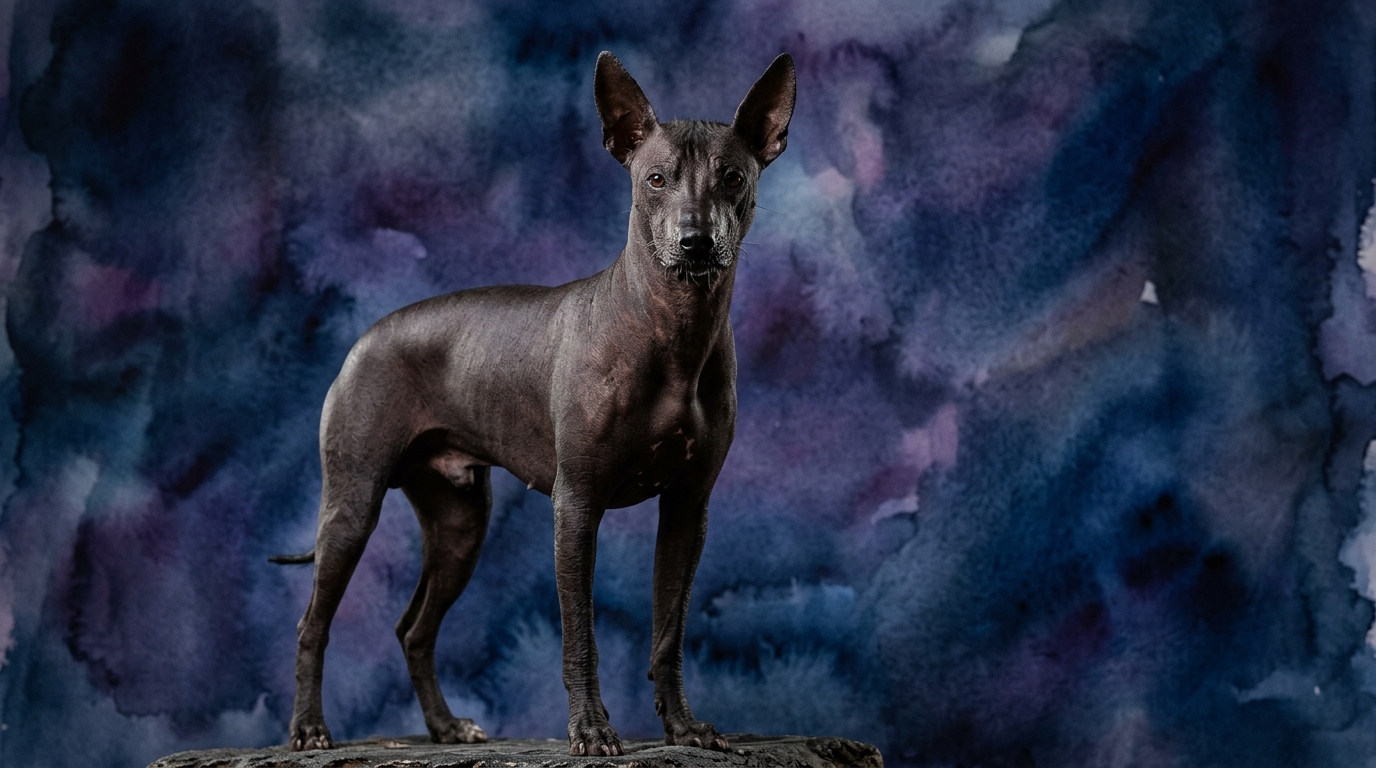
Side-by-Side IQ Profile: Interpreting Identical Scores
On paper, the Pointer and Xoloitzcuintli stand shoulder-to-shoulder with identical 3/5 scores across all five dimensions of our Pet IQ Lab assessment. This means both breeds possess a moderate, reliable capacity in each area, but the *application* and *expression* of these capacities are profoundly shaped by their breed-specific histories and inherent drives.
**Problem Solving (3/5):** Both breeds demonstrate a solid ability to navigate new situations and devise solutions to challenges. For the Pointer, this problem-solving is often applied in dynamic, expansive environments, figuring out how to locate hidden game, traverse varied terrain efficiently, or interpret subtle scent cues to achieve a goal. Their cognitive efforts are directed towards environmental mastery for a specific task. The Xoloitzcuintli, with its ancient role as a companion and guardian, typically applies its problem-solving within a more confined, social context. This might involve understanding complex household routines, discerning appropriate behavior in different social settings, or identifying secure vantage points within its perceived territory.
**Training Speed (3/5):** A 3/5 rating indicates that both breeds absorb and retain commands at a steady, consistent pace, rather than immediate mastery or prolonged difficulty. Pointers, with their inherent desire to work in partnership and their eager-to-please nature, typically learn new tasks effectively when those tasks align with their drive for activity and cooperation. Their enthusiasm often aids in the training process. The Xoloitzcuintli, while equally capable of learning, often approaches training with a more discerning or independent mindset. They learn best with consistent, positive reinforcement and when they perceive a clear purpose or benefit in the command, sometimes requiring more patience to overcome their reserved nature.
**Social Intelligence (3/5):** Both breeds exhibit a moderate capacity to interpret human cues, understand social hierarchies, and adapt their behavior to social contexts. The Pointer's social intelligence often revolves around effective communication and partnership with their handler during a shared activity, reading subtle body language and vocal commands for directional input or task completion. Their focus is often outward, on the shared objective. The Xolo's social acumen, by contrast, is often more internally focused, centered on their immediate family unit. They excel at discerning the moods and intentions of their trusted humans and are adept at identifying strangers or potential threats, exhibiting a watchful, discerning loyalty.
**Instinctive Drive (3/5):** This score reflects a moderate but purposeful innate motivation. For the Pointer, this drive is profoundly rooted in their heritage as a bird dog; it manifests as an intense desire to range, track scent, locate game, and 'point' with unwavering focus. This drive is a powerful engine for their physical and mental engagement. The Xoloitzcuintli's instinctive drive is quite different, stemming from its ancient role as a companion and guardian. It's expressed as a deep, unwavering loyalty to its family, a watchful and protective nature, and a strong desire for close physical proximity to its chosen humans.
**Memory (3/5):** A 3/5 memory suggests both breeds retain learned information, routines, and experiences adequately over time. Pointers demonstrate this by remembering complex field patterns, scent trails, specific commands for different situations, and the locations of previously encountered game. This recall is crucial for their working efficiency. Xolos, in turn, reliably recall household routines, boundaries, learned commands, and the social dynamics within their family and immediate environment, contributing to their consistent and predictable presence in the home.
Where the Pointer Wins Cognitively
Despite sharing the same raw IQ scores, the Pointer's cognitive strengths shine particularly bright in scenarios demanding sustained outdoor focus and cooperative effort. Their 3/5 problem-solving ability, when paired with their keen olfactory senses and athletic build, translates into a superior capacity for navigating complex, dynamic outdoor environments. A Pointer excels at interpreting a myriad of environmental data – wind direction, ground scent, visual cues – to pinpoint a specific target, often in expansive, unstructured spaces. This is not just instinct, but a cognitive process of data integration and decision-making.
Furthermore, their 3/5 social intelligence is uniquely optimized for a working partnership, allowing them to rapidly and accurately interpret the nuanced cues of a handler from a distance, adjusting their search patterns or pace based on a whistle, hand signal, or vocal command. This refined communication loop is a hallmark of their breed. Their 3/5 memory is particularly adept at recalling intricate scent patterns and the locations of previously 'hunted' areas, allowing them to work systematically and efficiently without redundant effort. The Pointer's cognitive edge lies in their specialized application of moderate intelligence for precise, task-oriented work in open areas, demonstrating a focused persistence that few can match in their specific domain.
Where the Xoloitzcuintli Wins Cognitively
The Xoloitzcuintli, while matching the Pointer in raw cognitive scores, demonstrates a distinct advantage in areas demanding astute social discernment and adaptability within a domestic setting. Their 3/5 problem-solving capability is often geared towards understanding the intricate social dynamics of a household, figuring out who is allowed where, when, and under what circumstances. They excel at establishing and remembering complex routines, adapting to changes in the family schedule, and even learning to manipulate certain situations to their advantage, such as coaxing extra attention or securing a preferred sleeping spot.
Their 3/5 social intelligence is particularly acute in reading human emotions and intentions within their trusted circle, often displaying an almost empathetic understanding of their family's moods. They possess a remarkable ability to discern friend from stranger, often with an initial reserve that speaks to a keen evaluative process rather than mere shyness. This discerning nature, combined with their 3/5 instinctive drive for guardianship, means their cognitive faculties are highly tuned to monitoring their immediate environment for anything perceived as a threat or anomaly. The Xolo's cognitive strength lies in their profound social awareness and their capacity for quiet, watchful observation, making them exceptionally perceptive companions within their home environment.
Which is Easier to Train and Why
Despite both breeds scoring a 3/5 in Training Speed, the Pointer is generally perceived as easier to train for a wider range of obedience and advanced commands due to behavioral differences that impact the training experience. Pointers possess an inherent eagerness to please and a strong cooperative drive; they thrive on working alongside their human partners and often find satisfaction in performing tasks. Their high energy and prey drive can be effectively channeled into structured training, making them highly responsive to positive reinforcement and clear directives.
The Xoloitzcuintli, while equally capable of learning new commands and routines, often approaches training with a more independent and discerning attitude. Their learning pace may be 3/5, but their willingness to *immediately* comply can vary. They may question the purpose of a command or require more patience and consistency to build trust and motivation. A Xolo's loyalty means they *will* learn for their family, but their independent streak means trainers need to be engaging, consistent, and understand that their compliance stems from respect and bond rather than an inherent desire to be biddable. Therefore, while both learn, the Pointer's temperament generally makes the training journey feel more fluid and less challenging for the average owner.
Which Suits Active Owners vs. Relaxed Owners
The Pointer is unequivocally suited for active, outdoors-oriented owners. Their robust 3/5 instinctive drive, combined with high energy levels, demands extensive daily physical exercise and mental stimulation that taps into their innate desire to range and explore. Owners who enjoy long runs, hiking, field sports, or structured dog sports like agility or scent work will find a compatible partner in a Pointer. They require an owner who can commit significant time to their physical and cognitive engagement, preventing boredom and potential destructive behaviors.
The Xoloitzcuintli, while still requiring regular exercise to maintain health and wellbeing, is a better fit for owners who appreciate a more relaxed pace but still prioritize consistent engagement. Their 3/5 instinctive drive is expressed through loyalty and watchful companionship, rather than incessant physical exertion. They enjoy daily walks and playtime but are also content to cuddle on the couch and be a quiet presence. Xolos thrive in a calm, consistent home environment and are well-suited to owners who seek a discerning, deeply bonded companion for whom quality time and mental stimulation through routines and social interaction are paramount, rather than endless miles of running.
The Verdict: When to Choose Each Breed
The Verdict
Choose the Pointer if you are an active, outdoorsy individual or family seeking a highly cooperative, task-oriented canine partner for adventures, field work, or structured training. Their enthusiasm and drive for shared activity will thrive in an engaging environment.
Opt for the Xoloitzcuintli if you desire a loyal, discerning, and protective companion who forms deep bonds with their family and values a consistent home environment. Their quiet perceptiveness and independent spirit suit owners who appreciate a dog with a strong, watchful presence.
🧠 Find Your Pet's IQ Score
Our Pet IQ Lab assessment covers 25+ tests across 5 cognitive dimensions — personalized to your breed.
Take the Full IQ Test →Frequently Asked Questions
Do their identical IQ scores mean they have the same personality?
No, identical IQ scores indicate similar cognitive *capacities*, but personality is shaped by breed temperament, genetics, and individual experiences. A Pointer's eagerness to please differs from a Xolo's reserved loyalty, even with similar problem-solving abilities.
How does a 3/5 Instinctive Drive manifest differently in these breeds?
For the Pointer, a 3/5 drive focuses on scent tracking, pointing, and ranging, a deep-seated desire to hunt. For the Xolo, it's expressed as a protective instinct towards its family and territory, alongside a strong bond with its human companions.
If both have 3/5 Training Speed, why is one often considered 'easier' to train?
While both breeds can learn at a moderate pace, the Pointer's inherent biddability and desire to work cooperatively often make training feel more straightforward. The Xolo's independent nature means training requires more patience and understanding of their motivation, even though they are equally capable of learning.