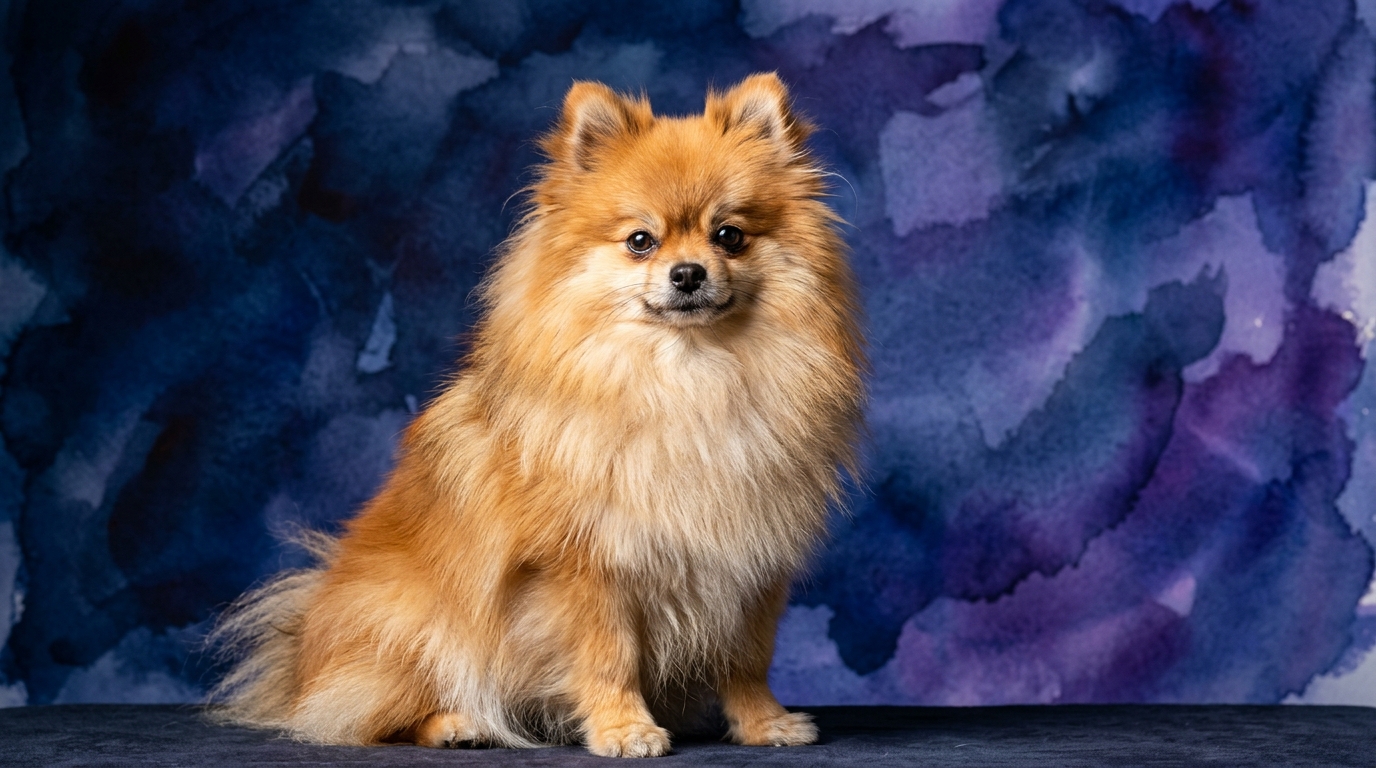

Side-by-Side IQ Profile: Pomeranian vs. Nova Scotia Duck Tolling Retriever
The Cosmic Pet Pet IQ Lab provides a nuanced look at canine intelligence, breaking it down into five key dimensions. For the Pomeranian, a toy breed ranked #23 by Coren, we observe a robust cognitive blueprint: problem-solving at 4/5, training speed at 4/5, social intelligence at 4/5, instinctive drive at 3/5, and memory at 4/5. This profile suggests a quick-thinking, highly adaptable companion with a strong capacity for learning and social engagement. Their moderate instinctive drive typically manifests as alertness and a desire for companionship rather than intense working tasks.
In contrast, the Nova Scotia Duck Tolling Retriever, a sporting breed, presents a consistent, purpose-driven cognitive profile across all metrics: problem-solving at 3/5, training speed at 3/5, social intelligence at 3/5, instinctive drive at 3/5, and memory at 3/5. While not Coren-ranked, these scores indicate a capable, focused intellect particularly well-suited for its specialized retrieving work. Their intelligence is practical and applied, geared towards tasks requiring endurance, cooperation, and a specific set of natural hunting behaviors rather than abstract cognitive challenges.
Where the Pomeranian Wins Cognitively
The Pomeranian's cognitive strengths truly shine in areas demanding adaptability, quick learning, and nuanced social engagement. With a problem-solving score of 4/5, Poms often display a remarkable ability to outwit their owners or navigate complex household environments, figuring out how to access forbidden treats or open doors with ingenuity. This suggests an intrinsic curiosity and a capacity for independent thought that belies their small stature.
Their 4/5 training speed means they pick up new commands and tricks with impressive alacrity, often making them stars in obedience or agility rings for their size, provided the training is engaging and positive. This swift comprehension allows for a broader repertoire of learned behaviors in a shorter timeframe, making them highly responsive pets. Furthermore, their superior social intelligence, also 4/5, enables them to read human moods and intentions with surprising accuracy, often anticipating needs or offering comfort without explicit cues. This makes them exceptionally attuned companions, capable of forming intricate communication patterns with their families. Their 4/5 memory ensures that once a lesson is learned or a routine established, it is retained effectively, making their training durable and their recall of past interactions sharp.
Where the Nova Scotia Duck Tolling Retriever Wins Cognitively
While the Toller's individual scores are consistently 3/5, their cognitive profile represents a finely honed intelligence geared towards specific, sustained tasks. Their instinctive drive, rated 3/5, is not just a general impulse but a highly specialized predisposition for “tolling” – a unique method of luring waterfowl by playing and disappearing along the shoreline. This drive is a specific cognitive advantage, combining curiosity, stealth, and controlled excitement, making them uniquely effective at their ancestral job.
Their problem-solving, though 3/5, excels in practical, real-world scenarios related to their retrieving duties; they are adept at navigating dense cover, locating fallen birds, and assessing the safest return path. This isn't abstract puzzle-solving, but an applied intelligence crucial for success in the field. Similarly, their social intelligence, at 3/5, is perfectly calibrated for cooperative work with a handler, focusing on partnership and understanding operational cues rather than broad emotional mirroring. Their training speed and memory, both 3/5, are more than sufficient for mastering complex retrieving sequences and maintaining them over long periods, demonstrating endurance in learning and application that is vital for a working dog. The Toller's cognitive “win” lies in the focused, purposeful application of their intelligence towards a demanding, specialized role, showcasing a robust mental stamina and a profound understanding of their working partnership.
Which is Easier to Train and Why
Based on their respective IQ profiles, the Pomeranian generally presents as the easier breed to train, primarily due to its higher training speed score of 4/5 compared to the Toller's 3/5. Poms tend to grasp new commands and concepts more quickly, often requiring fewer repetitions to solidify a behavior. Their social intelligence (4/5) also plays a significant role, as they are typically more attuned to human cues and eager to please, responding well to positive reinforcement and praise.
This combination makes them highly receptive students, capable of learning a wide array of tricks and obedience commands with relative ease, though their occasional stubborn streak demands consistency. The Nova Scotia Duck Tolling Retriever, while certainly trainable, requires a more patient and engaging approach. Their 3/5 training speed means they might take longer to master new skills, and their strong instinctive drive (3/5) can sometimes lead to distraction if training isn't stimulating or directly tied to their natural retrieving instincts. Tollers thrive on structured, reward-based training that leverages their love for activity and cooperation, but they may not offer the same quick uptake as the Pomeranian. Therefore, for an owner seeking a dog that picks up commands rapidly and enjoys diverse learning tasks, the Pomeranian often proves to be the more straightforward training partner.
Suitability for Active vs. Relaxed Owners
The cognitive and inherent drives of these two breeds naturally align with different owner lifestyles. The Nova Scotia Duck Tolling Retriever, with its sporting heritage and focused instinctive drive (3/5 for retrieving), is unequivocally suited for active owners. These dogs require substantial physical exercise and mental engagement to prevent boredom and destructive behaviors. Their problem-solving and memory, while not top-tier, are geared towards sustained, purposeful activity, meaning they thrive on tasks like agility, dock diving, hiking, or actual retrieving work. An owner who can provide daily vigorous exercise, structured training, and opportunities for their Toller to use its nose and mind will find a loyal and well-adjusted companion.
Conversely, the Pomeranian, with its moderate instinctive drive (3/5) and high social intelligence (4/5), is generally a better fit for more relaxed owners, though they are far from couch potatoes. While they enjoy walks and playtime, their exercise needs are modest compared to a Toller. Their cognitive strengths lean towards companionship, intricate social interaction, and mental stimulation through puzzles or learning tricks within the home environment. They excel in situations where they can be close to their human family, observing and participating in household activities, making them ideal for individuals or families who prefer indoor pursuits or shorter, frequent outings rather than demanding outdoor adventures.
The Verdict
Choose the Pomeranian if you seek a quick-witted, highly responsive companion that thrives on social interaction and enjoys learning a variety of tricks and commands within a less demanding physical routine.
Opt for the Nova Scotia Duck Tolling Retriever if you lead an active lifestyle, desire a dedicated working partner for outdoor adventures, and can provide consistent, engaging training that taps into their specialized retrieving instincts.
🧠 Find Your Pet's IQ Score
Our Pet IQ Lab assessment covers 25+ tests across 5 cognitive dimensions — personalized to your breed.
Take the Full IQ Test →Frequently Asked Questions
Is the Pomeranian truly smarter than the Nova Scotia Duck Tolling Retriever?
The Cosmic Pet Pet IQ Lab data suggests the Pomeranian generally exhibits higher scores in problem-solving, training speed, social intelligence, and memory compared to the Toller. However, the Toller's intelligence is specifically honed for its working role, demonstrating a different but equally valuable kind of cognitive aptitude in its specialized tasks.
Does a lower IQ score mean a dog is difficult to train?
Not necessarily. A lower training speed score, like the Toller's 3/5, indicates they might require more patience and consistency, but they are still highly trainable. Their motivation might be different, often tied to their innate drives or specific rewards, making the approach to training more critical than the raw score.
How does "instinctive drive" impact a dog's suitability for a family?
Instinctive drive reflects a dog's inherent inclination towards certain behaviors, such as herding, hunting, or guarding. A moderate drive, like both breeds' 3/5, means these instincts are present but manageable; for the Toller, it's retrieving, while for the Pom, it's often alertness. Understanding this helps match a dog to a family's lifestyle and ability to provide appropriate outlets for these natural tendencies.