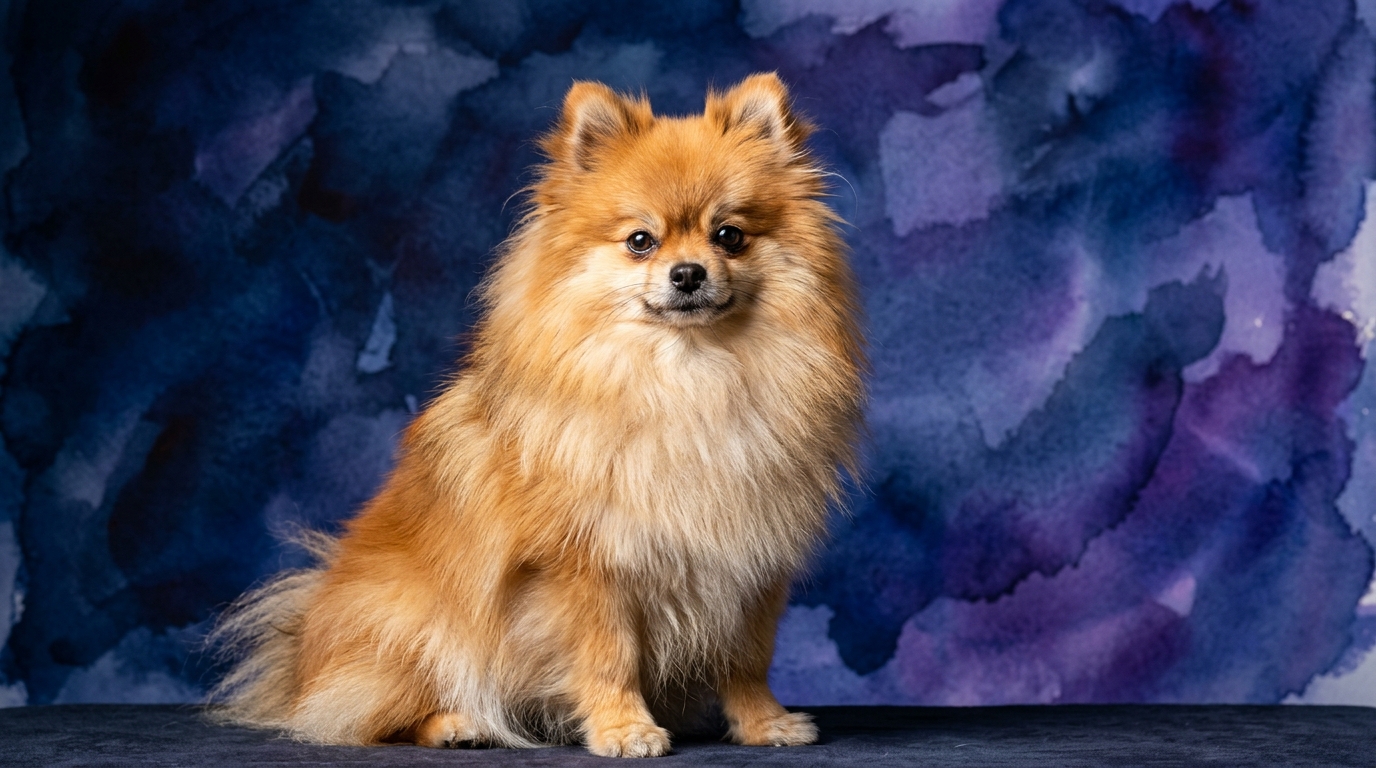
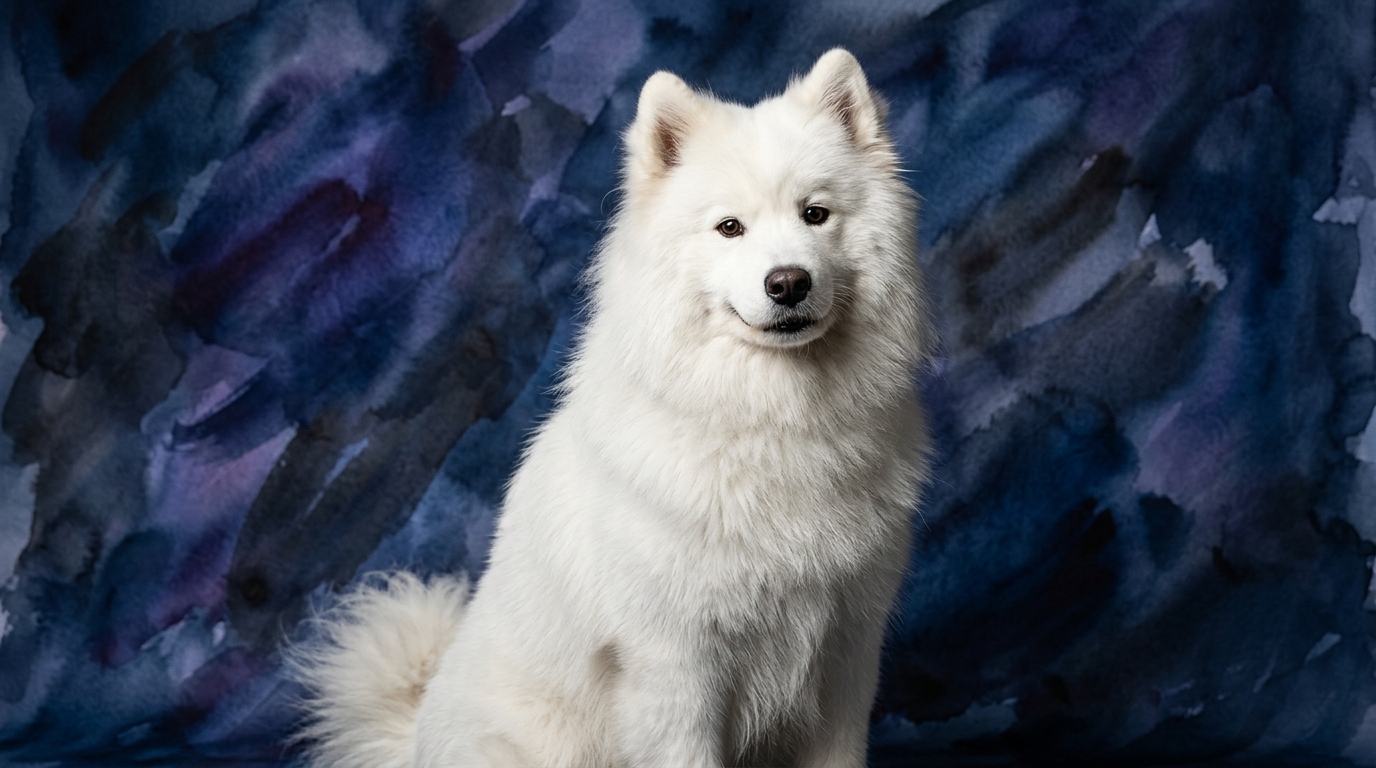
Side-by-Side IQ Profile: Pomeranian vs. Samoyed
The Cosmic Pet Pet IQ Lab employs a five-dimensional framework to assess canine intelligence, offering a granular view of each breed's cognitive strengths. Let's break down the scores for the Pomeranian and the Samoyed.
Pomeranian (Coren rank #23): These small but mighty dogs consistently demonstrate a sharp mental acuity. Their Problem Solving is rated at 4/5, indicating a strong capacity to quickly assess novel situations and devise effective solutions, such as figuring out how to retrieve a hidden toy or manipulate objects to their advantage. Training Speed also scores 4/5, reflecting their impressive ability to pick up new commands and routines with minimal repetition, making them responsive learners. Their Social Intelligence is 4/5, showing a refined awareness of human emotions and social cues, allowing them to form deeply responsive bonds. The Instinctive Drive is moderate at 3/5, present but not overwhelmingly dominant, meaning their natural predispositions like chasing or herding are manageable. Finally, their Memory is strong at 4/5, enabling them to retain learned behaviors and routines over extended periods.
Samoyed (Coren rank #33): Hailing from a working lineage, Samoyeds exhibit a different spectrum of cognitive strengths. Their Problem Solving stands at 3/5; they approach challenges with a practical, often persistent mindset, sometimes relying on physical prowess rather than immediate abstract reasoning, which can lead to creative but less direct solutions. Training Speed is 3/5, suggesting they learn new information at a more measured pace, requiring consistent and patient reinforcement to solidify commands. Where they truly shine is Social Intelligence, scoring an exceptional 5/5, indicating an unparalleled capacity for empathy and understanding of human emotions and social dynamics, fostering profound cooperative relationships. Their Instinctive Drive is robust at 4/5, reflecting their strong heritage for pulling, herding, and companionship, requiring outlets for these natural inclinations. Their Memory is 3/5, meaning they retain learned information, especially when linked to positive experiences and routine, though recall might be less instantaneous than some other breeds.
Where the Pomeranian Excels Cognitively
The Pomeranian's cognitive profile showcases a distinct advantage in aspects requiring quick mental processing and adaptability. With a Problem Solving score of 4/5, they are often quicker to analyze new situations and find solutions, whether it's navigating a complex puzzle toy or figuring out how to get attention from their owners. This translates into a nimble mind that can rapidly adjust to changing environments or novel stimuli, making them adept at learning new tricks or adapting to new household rules. Their Training Speed, also at 4/5, means they typically grasp new commands and concepts with fewer repetitions than many other breeds, making initial obedience training a comparatively swift and rewarding process. Furthermore, their Memory score of 4/5 ensures that once a behavior or rule is learned, it is retained effectively, contributing to their consistent performance over time. This combination of swift learning, sharp problem-solving, and solid retention allows Pomeranians to excel in tasks demanding rapid intellectual engagement and consistent recall of learned information, making them highly receptive to advanced training and mental games.
Where the Samoyed Excels Cognitively
The Samoyed's cognitive strengths lie profoundly in areas of social connection and inherent purpose. Scoring an impressive 5/5 in Social Intelligence, they exhibit an unparalleled capacity for empathy and understanding human emotions, often anticipating needs or reacting to subtle cues in a way that fosters deep, intuitive bonds. This exceptional social awareness makes them highly responsive companions who thrive on cooperative interaction and excel in family settings, often acting as sensitive barometers of household moods. Their Instinctive Drive, rated at 4/5, reflects their strong heritage as working dogs; this drive manifests as a natural inclination towards tasks, pulling, and being an integral part of a group, providing them with a clear sense of purpose and a willingness to engage in structured activities. While their problem-solving and training speed scores are more moderate, their social acumen and robust drive ensure they are highly motivated by interaction and teamwork, excelling in roles where cooperation and emotional understanding are paramount. This unique blend makes them superb partners for activities that leverage their natural inclinations for companionship and collective effort, such as therapy work or sledding.
Training Dynamics: Pomeranian vs. Samoyed
Based on their respective IQ profiles, the Pomeranian generally presents as an easier breed to train. Their 4/5 score in Training Speed indicates a quicker uptake of new commands and routines, meaning they require fewer repetitions to solidify learning. Coupled with their 4/5 in Problem Solving, Pomeranians often try to understand what is being asked of them and actively seek to comply. Their strong Memory (4/5) ensures that once a behavior is learned, it is retained consistently, leading to reliable responses. This makes them excellent candidates for advanced obedience, tricks, and even agility, where rapid learning and recall are crucial. They respond well to positive reinforcement and clear, concise instructions.
In contrast, the Samoyed's 3/5 Training Speed suggests a more deliberate learning pace, requiring greater patience and consistency from the trainer. While Samoyeds are incredibly social (5/5), their lower Problem Solving (3/5) and Memory (3/5) scores, combined with a strong Instinctive Drive (4/5), mean they might be more prone to independent thought or following their natural urges if not properly motivated. They can be persistent and sometimes appear stubborn if they don't see the immediate value in a command or if their strong drives are not channeled effectively. Training a Samoyed often benefits from tapping into their desire for companionship and their working drive, making it a more cooperative endeavor rather than a swift command-response sequence. Engaging them in activities that fulfill their natural instincts, like pulling a light cart or participating in scent work, can significantly enhance their training receptiveness and focus.
Lifestyle Match: Active vs. Relaxed Owners
For owners seeking a highly active companion, the Samoyed is often the more suitable choice. Their 4/5 Instinctive Drive, rooted in their working heritage, means they possess a significant need for physical and mental engagement, thriving on activities like long walks, hikes, dog sports, or even pulling carts. Their robust build and stamina are well-suited for owners who enjoy an active outdoor lifestyle and can provide consistent outlets for their energy and purpose. A relaxed owner might find their persistent need for activity challenging to manage, potentially leading to boredom-related behaviors if their stimulation needs are not met. They truly flourish when they have a job to do or a consistent exercise routine that taps into their innate drives.
Conversely, the Pomeranian, with its 3/5 Instinctive Drive, is better suited for owners who prefer a more relaxed pace. While they are energetic and enjoy play, their exercise requirements are typically met with shorter walks and indoor games, making them adaptable to apartment living. They are content with being close to their human companions and participating in less strenuous activities, making them an excellent fit for individuals or families with a more sedentary or indoor-centric lifestyle who can still provide regular mental stimulation through puzzle toys and interactive play. Their desire for companionship and moderate activity level makes them ideal lap dogs who are happy to be involved in daily routines without demanding extensive physical exertion.
The Verdict
Choose a Pomeranian if you value a quick-witted, agile learner who picks up commands swiftly and thrives on mental engagement within a more contained environment.
Opt for a Samoyed if you seek a deeply empathetic, cooperative companion with a strong working drive, ideal for an active lifestyle centered around shared outdoor adventures and purposeful tasks.
🧠 Find Your Pet's IQ Score
Our Pet IQ Lab assessment covers 25+ tests across 5 cognitive dimensions — personalized to your breed.
Take the Full IQ Test →Frequently Asked Questions
Are Pomeranians good at learning tricks?
Yes, with a Training Speed of 4/5 and strong Memory (4/5), Pomeranians are typically adept at learning a variety of tricks and enjoy the mental stimulation that comes with new challenges. Their problem-solving ability also helps them grasp complex sequences quickly.
Do Samoyeds require extensive mental stimulation?
Samoyeds benefit greatly from mental stimulation, especially activities that engage their strong instinctive drive (4/5) and social intelligence (5/5). While their training speed is moderate, consistent, positive reinforcement training and purposeful tasks keep their minds engaged and prevent boredom, channeling their natural working instincts.
Which breed is more independent?
While both breeds form strong bonds, the Samoyed's strong instinctive drive (4/5) can sometimes lead to more independent decision-making, particularly if not consistently guided or if their needs for purpose are unmet. Pomeranians, with their higher training speed and social intelligence (4/5), tend to be more inclined to defer to their owners and seek constant interaction.