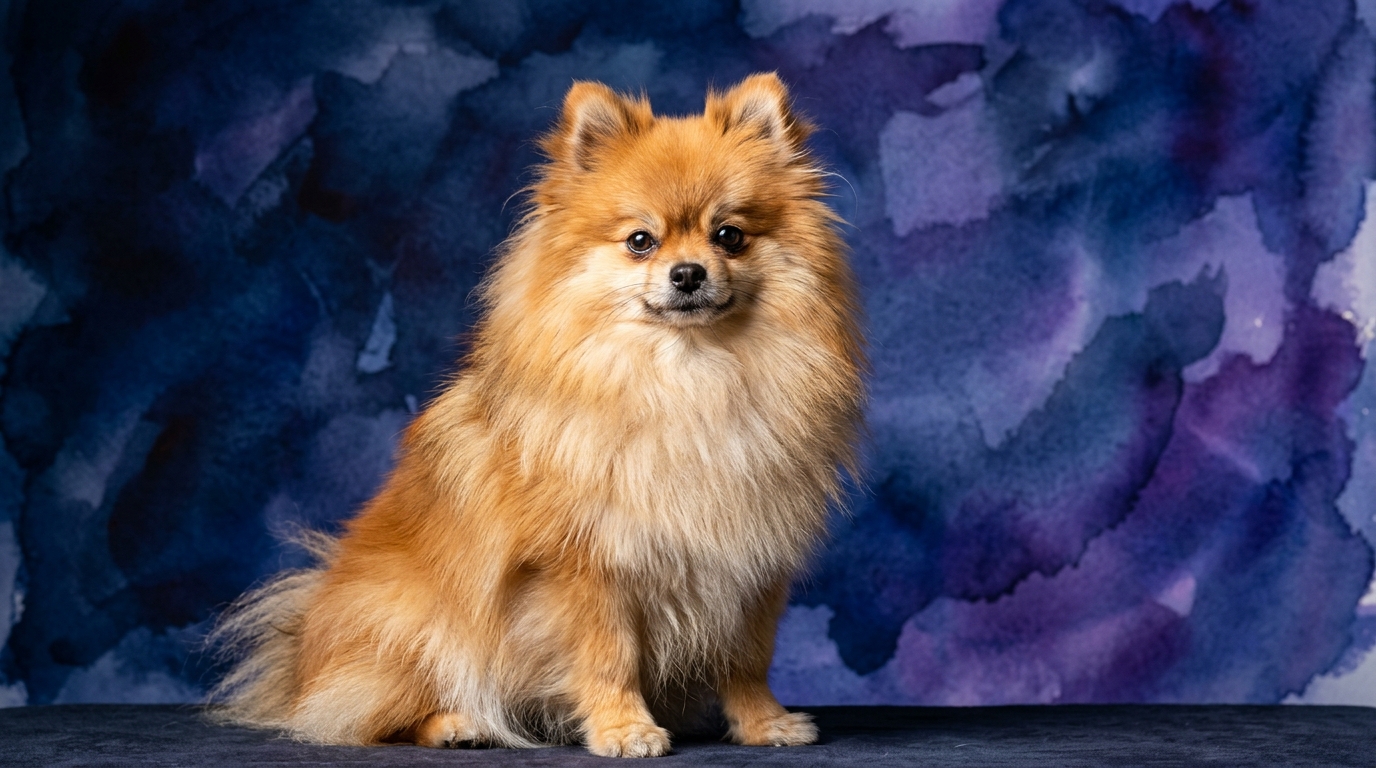
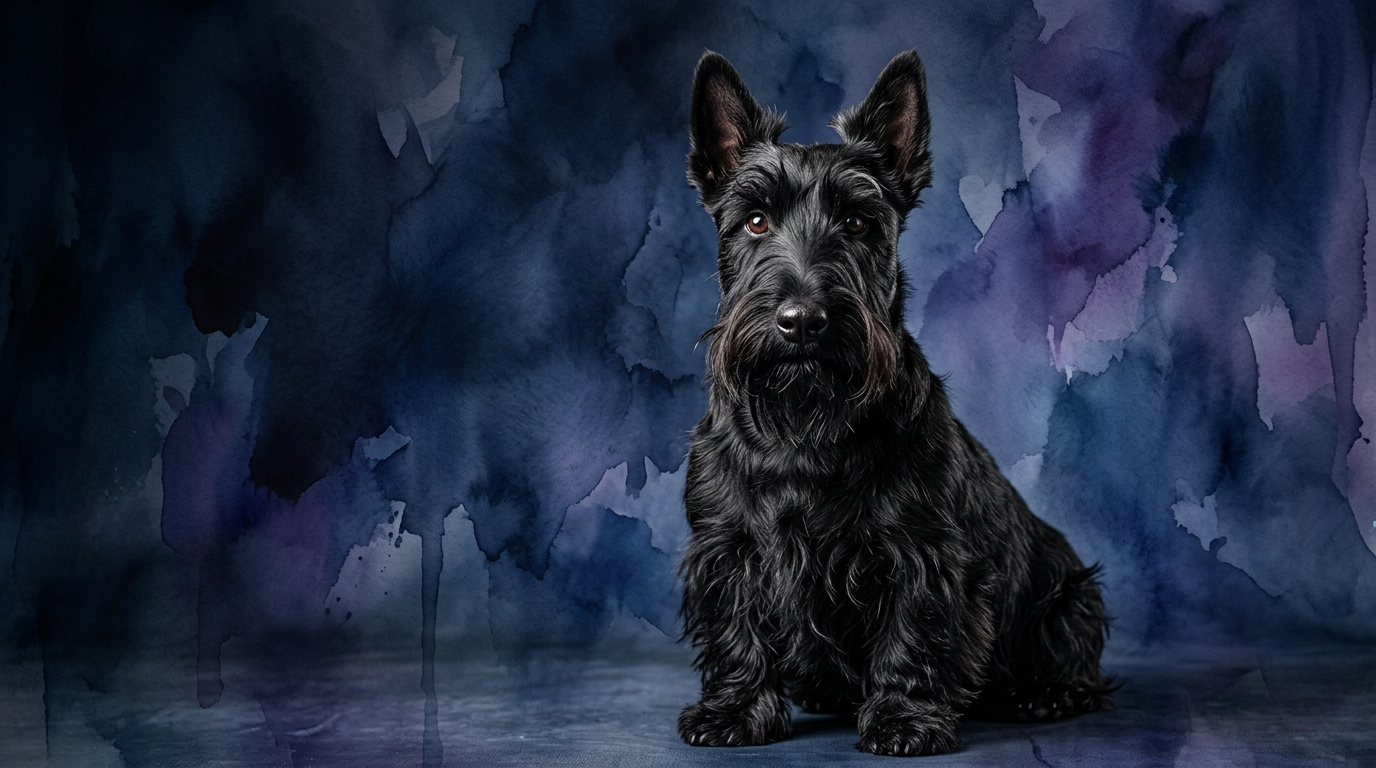
Side-by-Side IQ Profile: Pomeranian vs. Scottish Terrier
The Cosmic Pet Pet IQ Lab employs a multi-dimensional approach to evaluate canine intelligence, moving beyond single-score rankings to reveal a more nuanced cognitive portrait. For the Pomeranian, a toy breed with a Coren rank of #23, its cognitive profile is marked by strong general aptitude. Its Problem Solving score of 4/5 indicates a capacity for figuring out novel challenges and adapting to new situations with notable efficiency. Training Speed, also at 4/5, suggests a breed that picks up new commands and routines quickly, often with enthusiastic participation. Social Intelligence, another 4/5, highlights its adeptness at reading human cues, understanding social structures, and forming strong bonds, making it a highly responsive companion. Its Instinctive Drive stands at 3/5, reflecting a moderate level of inherent breed-specific behaviors, while its Memory, at 4/5, ensures it retains learned information and experiences effectively over time.
In contrast, the Scottish Terrier, a terrier breed holding a Coren rank of #65, presents a more uniform cognitive profile. Its Problem Solving score is 3/5, indicating a solid but not exceptional ability to navigate complex situations, often relying on persistence and a methodical approach. Training Speed also registers at 3/5, meaning they learn at a steady pace, though they may require more repetition or motivation than some other breeds. Their Social Intelligence is likewise 3/5, suggesting they understand social dynamics adequately but might not be as overtly demonstrative or keenly attuned to every subtle human emotion as some breeds. The Instinctive Drive for the Scottish Terrier is 3/5, reflecting the strong, independent hunting instincts typical of terriers. Finally, its Memory score is 3/5, indicating a reliable capacity to recall information, though perhaps not with the same breadth or detail as breeds scoring higher.
Where the Pomeranian Wins Cognitively
The Pomeranian's cognitive strengths are evident across multiple domains, offering a distinct advantage in various interactive scenarios. Its superior Problem Solving (4/5) means a Pomeranian is more likely to independently figure out how to open a treat puzzle or navigate an unfamiliar environment with less frustration. This ingenuity often translates into a dog that enjoys mental challenges and can adapt quickly to changes in routine. Furthermore, its higher Social Intelligence (4/5) allows the Pomeranian to excel in communication, often anticipating owner intentions and responding with nuanced expressions or actions. This makes them highly sensitive companions, capable of forming deep, intuitive connections. Their impressive Memory (4/5) ensures that positive training experiences and learned boundaries are retained, contributing to a consistently well-behaved companion once lessons are established. This combination of quick learning and strong recall minimizes the need for constant re-training, making the Pomeranian a very rewarding dog for those who enjoy teaching new tricks and behaviors.
Where the Scottish Terrier Wins Cognitively
While the Scottish Terrier's scores are generally consistent at 3/5, its unique cognitive profile, particularly its Instinctive Drive (3/5), provides distinct advantages in specific contexts. The Scottish Terrier's persistence and independent thinking, characteristic of its terrier heritage, can be a cognitive 'win' when tasks require tenacity and self-reliance. For instance, in scent work or tracking, where a dog must follow a trail regardless of distractions, the Scottish Terrier's focused drive and methodical problem-solving (3/5) allows it to maintain concentration where other breeds might give up. Their lower Social Intelligence (3/5) compared to the Pomeranian can be interpreted not as a deficit, but as a robust independence; they are less prone to separation anxiety and can be content with their own company for periods, making them suitable for owners who appreciate a dog that isn't constantly seeking interaction. This self-sufficiency, combined with a reliable memory (3/5) for established routines and boundaries, means a well-trained Scottish Terrier is a steadfast and dependable companion, particularly when its inherent drive is channeled into appropriate activities like earthdog trials or agility.
Training Ease: Pomeranian vs. Scottish Terrier
When it comes to ease of training, the Pomeranian generally presents a more straightforward experience due to its higher Training Speed (4/5) and Social Intelligence (4/5). Pomeranians are often eager to please and respond well to positive reinforcement, quickly grasping new commands and cues. Their ability to read human body language and vocal tones means they can anticipate expectations, making training sessions efficient and enjoyable. They thrive on interaction and mental stimulation, which further fuels their desire to learn. This responsiveness means owners can often achieve a wider repertoire of tricks and advanced obedience with a Pomeranian in less time.
The Scottish Terrier, with a Training Speed of 3/5, requires a more patient and consistent approach. While capable of learning, their inherent independence and terrier stubbornness mean they may not always see the immediate value in complying with a command, especially if it conflicts with their own strong instincts. Training a Scottish Terrier often involves making the learning process highly rewarding and engaging, often through play or high-value treats, to capture their attention and motivate them. They respond best to clear, firm, but fair guidance, and repetitive practice is often key to solidifying behaviors. Owners should be prepared for a dog that sometimes challenges boundaries and requires consistent follow-through to ensure learned behaviors stick.
Matching Canine Cognition to Owner Lifestyles
The distinct cognitive profiles of the Pomeranian and Scottish Terrier lend themselves to different owner lifestyles. The Pomeranian, with its high Social Intelligence, Problem Solving, and Training Speed, is an ideal companion for owners who desire an interactive, highly responsive, and trainable dog. They thrive in environments where they receive consistent attention, mental engagement through training and games, and opportunities to be involved in family activities. Their ability to adapt quickly makes them suitable for owners who might enjoy dog sports like obedience or agility, or simply want a companion that can learn a variety of commands and tricks. They are well-suited for relaxed owners who enjoy cuddles and companionship but also appreciate a dog that can be mentally stimulated with indoor games and short, engaging walks.
The Scottish Terrier, with its balanced cognitive scores and strong Instinctive Drive, is better suited for owners who appreciate an independent, resilient, and focused companion. They thrive with owners who understand and respect their terrier nature, providing outlets for their instinctive behaviors through structured activities like scent work, earthdog trials, or long, exploratory walks. While they enjoy companionship, they are often content to observe or engage in independent play, making them suitable for owners who might not want a dog constantly demanding attention. Active owners who enjoy consistent training and outdoor adventures, and who can provide clear leadership, will find a devoted and sturdy companion in the Scottish Terrier. Relaxed owners who appreciate a dog with a strong personality and aren't afraid of a bit of independent spirit will also find the Scottish Terrier a rewarding choice, provided they can commit to consistent training and appropriate mental engagement.
The Verdict
Choose a Pomeranian if you seek a highly interactive, quick-learning companion eager to engage in training and social activities, thriving on close human connection and mental games.
Opt for a Scottish Terrier if you appreciate an independent, persistent companion with a strong drive, valuing a dog that is self-reliant but devoted, requiring consistent guidance and outlets for its natural instincts.
🧠 Find Your Pet's IQ Score
Our Pet IQ Lab assessment covers 25+ tests across 5 cognitive dimensions — personalized to your breed.
Take the Full IQ Test →Frequently Asked Questions
Which breed is generally more adaptable to new environments?
The Pomeranian, with its 4/5 Problem Solving score, tends to adapt more readily to new surroundings and changes in routine. Its quick processing and social intelligence help it navigate unfamiliar situations with greater ease compared to the Scottish Terrier.
Do Pomeranians or Scottish Terriers require more mental stimulation?
Both breeds benefit from mental stimulation, but the Pomeranian's higher Problem Solving and Training Speed scores suggest it thrives on varied mental challenges and active learning. The Scottish Terrier's stimulation often comes from channeling its instinctive drive through consistent, purposeful activities.
Which breed is better for first-time dog owners?
For first-time owners, the Pomeranian's higher training speed and social intelligence generally make it an easier breed to manage and train. The Scottish Terrier's independent nature and strong drive may present more challenges for inexperienced owners.