
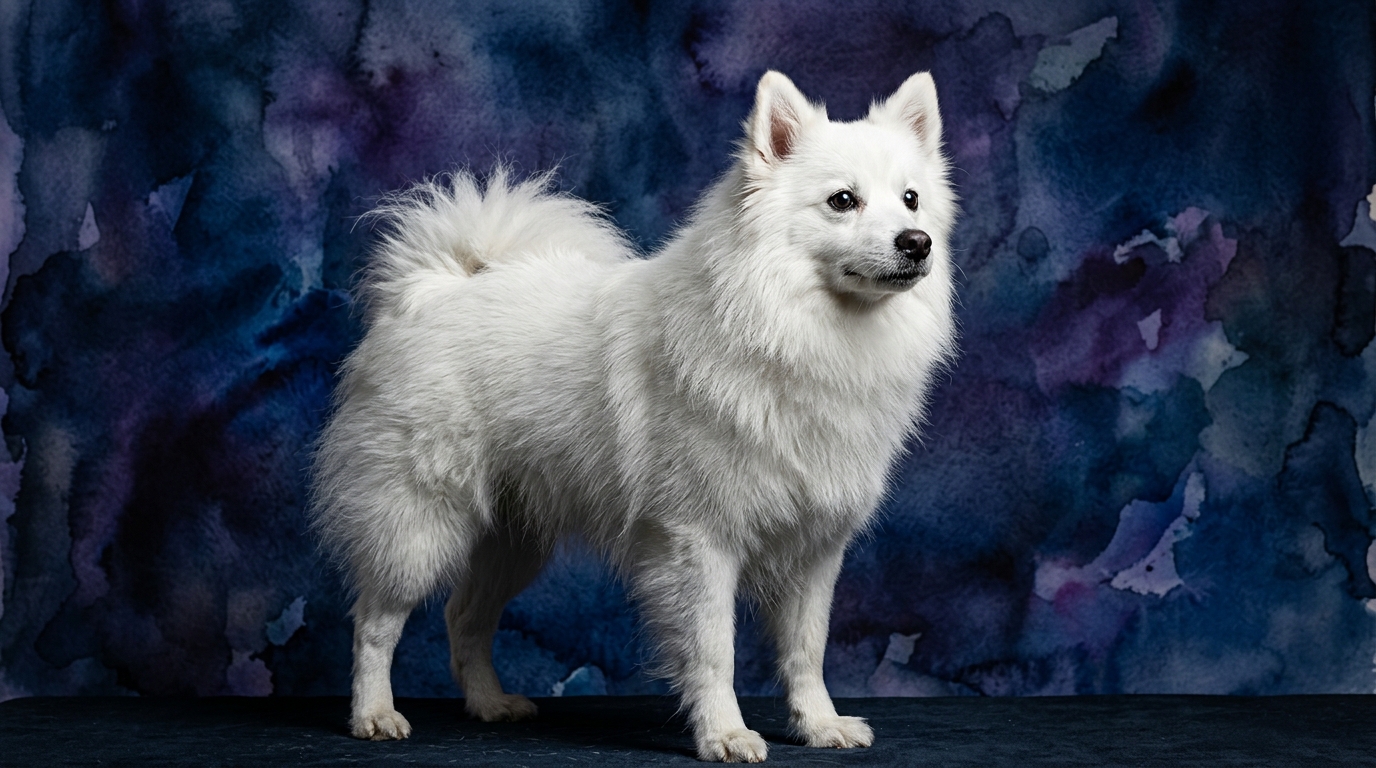
Side-by-Side Cognitive Profile
Despite sharing identical 3/5 scores across the board, the Portuguese Water Dog (PWD) and American Eskimo Dog (Eskie) demonstrate these cognitive traits through very different lenses, shaped by their distinct histories and purposes. Understanding these nuances is key to appreciating their individual mental strengths.
For the Portuguese Water Dog:
Problem Solving (3/5): PWDs exhibit practical problem-solving, intrinsically tied to their working heritage in dynamic water environments. This isn't abstract puzzle-solving, but rather an ability to independently assess situations like retrieving specific items from currents or untangling fishing gear. Their solutions are physical, goal-directed, and require quick, real-time tactical decisions.
Training Speed (3/5): They grasp commands at a moderate pace, learning most efficiently when training is framed as a purposeful activity or a 'job.' PWDs respond well to consistent, engaging methods that leverage their natural drive to work alongside their handler, thriving on varied and challenging tasks.
Social Intelligence (3/5): Their social intelligence shines within a working partnership, allowing them to anticipate a handler's next move based on subtle cues. They form strong, responsive bonds, effectively interpreting human intent for coordinated efforts in their historical roles.
Instinctive Drive (3/5): PWDs possess a robust instinctive drive for water work, retrieving, and unique 'fish herding' abilities. This complex set of inherited behavioral patterns provides powerful internal motivation, significantly influencing their engagement with tasks and the world.
Memory (3/5): They exhibit good retention for learned tasks, routines, and the sequences of actions required to complete a job. Their memory is practical and task-oriented, serving their working capabilities effectively for specific routes, locations, and command sequences.
For the American Eskimo Dog:
Problem Solving (3/5): Eskie problem-solving often engages with their human environment, involving figuring out how to gain attention, manipulate objects for play, or open a treat container. Their intelligence applies to social dynamics, learning to elicit desired responses from people or navigate a home environment for advantage or entertainment.
Training Speed (3/5): Eskies learn at a moderate speed, highly motivated by a strong desire to please and be the focus of attention. They respond exceptionally well to positive reinforcement, praise, and varied training methods that keep them mentally stimulated and prevent boredom.
Social Intelligence (3/5): Possessing refined social intelligence, Eskies are adept at reading human emotions, body language, and vocal tones. This allows them to adjust their behavior to maintain interaction and harmony, forming deep, responsive bonds within their family.
Instinctive Drive (3/5): While not a traditional working breed, the Eskie's instinctive drive manifests as vigilance, alerting their family to changes, and a desire to be part of the 'pack.' They also carry an innate zest for 'performance' or entertainment, a vestige of their circus dog heritage.
Memory (3/5): They exhibit good retention for commands, tricks, and routines that bring positive attention and interaction. Eskies remember people, places, and household norms, contributing to their adaptability and smooth integration into various social settings.
Where the Portuguese Water Dog Wins Cognitively
Despite identical scores, the PWD's cognitive strengths distinctly manifest in their capacity for independent, practical problem-solving within dynamic, often physical, environments. Their 3/5 in instinctive Drive combined with problem Solving allows them to excel at tasks requiring self-direction, such as navigating complex water currents to retrieve a specific item or figuring out how to bring a net to shore. This practical ingenuity, focused on achieving a tangible outcome through physical and environmental interaction, gives them an edge when a canine partner needs to make on-the-spot tactical decisions without constant human guidance in a task-oriented scenario. Their memory for the sequence of actions within a job further solidifies this practical advantage.
Where the American Eskimo Dog Wins Cognitively
The American Eskimo Dog's cognitive strengths, while also rated 3/5, shine in their highly developed social intelligence and their application of problem-solving to human interaction. Their social Intelligence allows them to master intricate social cues, enabling them to 'read' their human companions with remarkable accuracy and tailor their responses. This makes them exceptionally adept at communication and forming deep, intuitive bonds. Their problem Solving often involves figuring out how to manipulate situations for attention, engage in complex play, or master elaborate tricks, demonstrating a cognitive edge in social learning and performance-based tasks where human interaction is central. Their memory for these social engagements and learned performances is a key aspect of this advantage.
Training Dynamics: PWD vs. Eskie
Both breeds possess a Training Speed of 3/5, suggesting they grasp commands at a moderate pace, but their underlying motivations and behavioral tendencies dictate differing training experiences. The Portuguese Water Dog, driven by its instinctive Drive for purposeful work, often finds training easiest when it involves complex, multi-step tasks that mimic a 'job,' like advanced obedience, agility, or scent work. Their independence, a facet of their problem-solving, means they might challenge a command if they perceive a more efficient way, requiring a handler who appreciates and can channel this self-directed thinking.
Conversely, the American Eskimo Dog's social Intelligence and strong desire to please make them highly responsive to positive reinforcement and engaging, varied training sessions. They often excel in trick training and basic obedience when it’s presented as a fun, interactive game, as they thrive on being the center of attention and receiving praise. While both are trainable, the Eskie might feel 'easier' for owners seeking a companion that readily engages in lighthearted training and performs for affection, whereas the PWD thrives under a handler who can provide structured, goal-oriented challenges.
Lifestyle Match: Active vs. Relaxed Owners
For active owners seeking a true partner in adventure, the Portuguese Water Dog is an excellent match. Their 3/5 instinctive Drive for physical and mental engagement, rooted in their working heritage, means they require significant outlets for their energy beyond simple walks. They excel in activities like swimming, retrieving, hiking, and dog sports that tap into their robust problem-solving and stamina. Owners who enjoy spending hours outdoors, providing complex tasks, and fostering a working partnership will find the PWD's cognitive and physical needs align perfectly with an 'on-the-go' lifestyle.
Conversely, the American Eskimo Dog, while not a sedentary breed, is better suited for owners with a more relaxed lifestyle who still desire interactive companionship. Their social Intelligence means they thrive on being part of family activities, and their exercise needs can be met with daily walks, indoor games, and consistent mental stimulation through trick training or puzzle toys. They are content with being close to their people, enjoying a balance of moderate activity and engaging interaction, making them a fit for owners who prioritize companionship and indoor entertainment over strenuous outdoor pursuits.
The Verdict
Choose the Portuguese Water Dog if you seek a canine partner for dynamic, task-oriented activities, valuing a dog that applies its practical problem-solving and strong working drive to real-world challenges in varied environments.
Opt for the American Eskimo Dog if your lifestyle emphasizes interactive companionship, trick training, and a socially astute companion who thrives on engaging with its human family through play and close interaction.
🧠 Find Your Pet's IQ Score
Our Pet IQ Lab assessment covers 25+ tests across 5 cognitive dimensions — personalized to your breed.
Take the Full IQ Test →Frequently Asked Questions
Do Portuguese Water Dogs need to swim regularly?
While not strictly mandatory for survival, their strong instinctive drive for water work means they are happiest and most fulfilled when given regular opportunities to swim, retrieve from water, or engage in water-based activities. It deeply taps into their core cognitive and physical heritage, providing crucial mental and physical stimulation.
Are American Eskimo Dogs prone to barking?
Yes, American Eskimo Dogs are often quite vocal due to their instinctive drive to alert their family. They can be prone to barking at strangers, perceived threats, or simply to express excitement or boredom, making early training and consistent management essential to moderate this behavior.
How do their grooming needs compare?
Portuguese Water Dogs have a non-shedding, single coat that requires regular brushing and professional grooming every 6-8 weeks to prevent matting. American Eskimo Dogs have a dense double coat that sheds seasonally and requires frequent, often daily, brushing to manage loose hair, prevent matting, and maintain skin health.