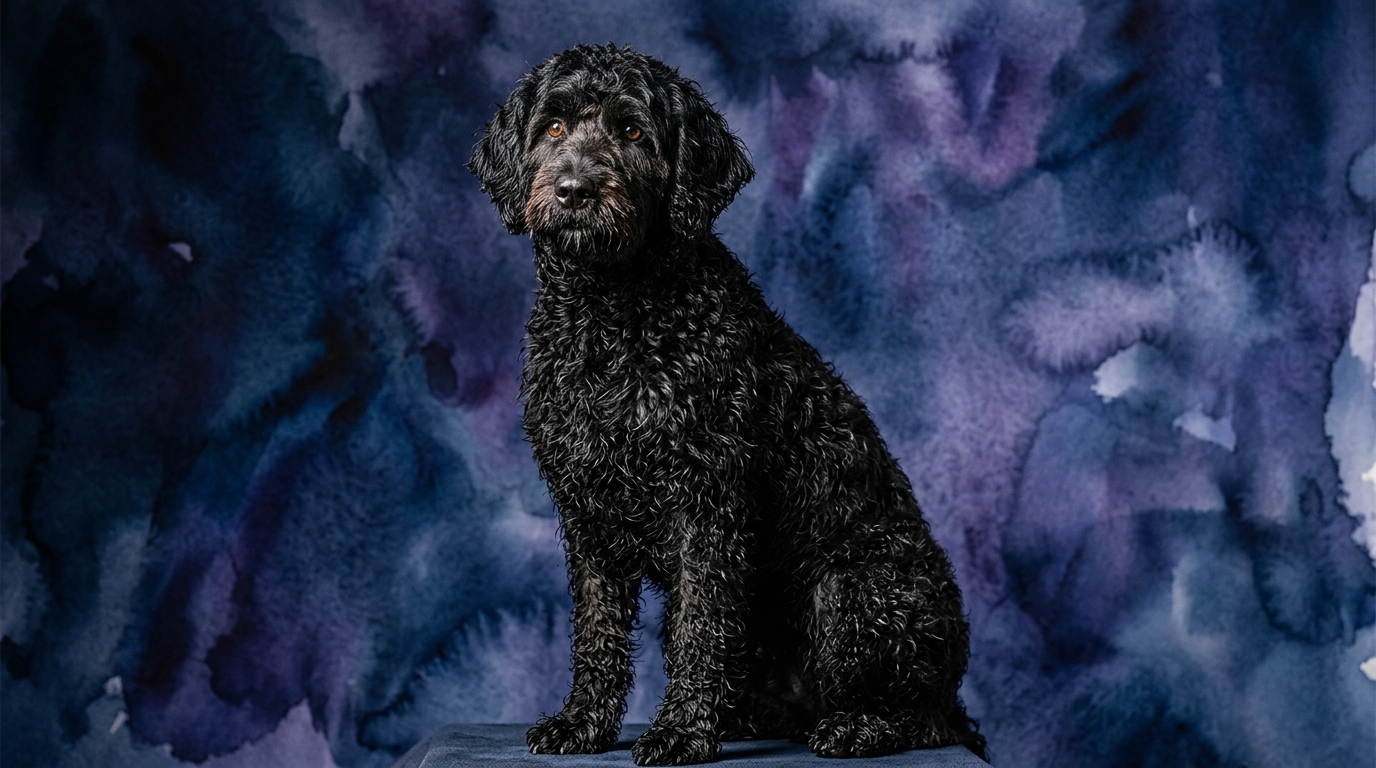
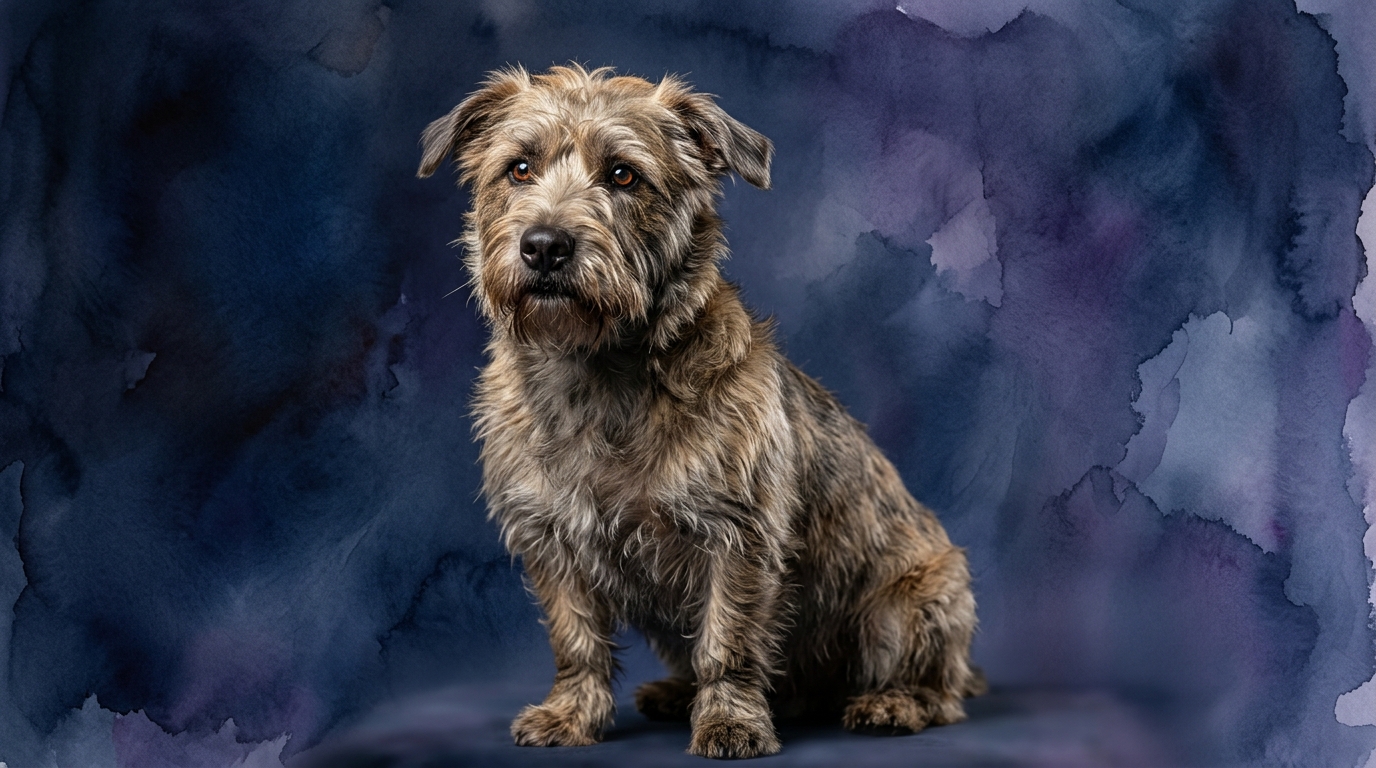
Side-by-Side Cognitive Profile: PWD vs. Glen
While both the Portuguese Water Dog (PWD) and the Glen of Imaal Terrier (GIT) register a 3/5 across all five dimensions of our Pet IQ Lab assessment, these identical scores belie significant qualitative differences in how their mental faculties manifest. Their breed histories, one as a cooperative aquatic worker and the other as an independent underground hunter, provide the lens through which to interpret these scores.
When we examine Problem Solving (3/5), the PWD’s cognitive approach is often rooted in its historical role of assisting fishermen. This means their problem-solving tends to involve environmental navigation, understanding sequential tasks, and adapting to changing conditions during collaborative work. They might figure out how to retrieve a specific item from a complex environment or understand the steps needed to complete a task given by a handler. The GIT, on the other hand, developed for tenacious badger and fox hunting, exhibits problem-solving through independent thought and persistence in confined spaces. Their cognitive strengths lie in strategic digging, overcoming physical obstacles to reach a goal, and demonstrating unwavering determination to solve a self-appointed 'puzzle' like getting to a hidden treat or navigating a tricky scent trail.
In Training Speed (3/5), the PWD generally demonstrates good responsiveness, eager to engage in activities that involve partnership and physical tasks. They pick up new commands efficiently, particularly when the training is varied and rewards involve activity or interaction, though they can become bored with excessive repetition. The GIT also possesses a good capacity for learning, but their terrier independence means their compliance can be influenced by their perception of the task's value. They might learn quickly but choose to comply on their own terms, requiring a handler to be particularly engaging and consistent to motivate their participation.
Social Intelligence (3/5) also presents distinct characteristics. PWDs are typically highly social, forming deep bonds with their human families and often displaying a keen perception of human emotions and intentions. They thrive on interaction and are adept at reading social cues within their pack, both canine and human, making them excellent family companions who integrate well into social dynamics. The GIT, while fiercely loyal and affectionate with their family, often exhibits a more reserved demeanor with strangers and other dogs until trust is firmly established. Their social intelligence is more about discerning trusted individuals and protecting their inner circle, making them astute at sensing discomfort or tension within their familiar environment.
Regarding Instinctive Drive (3/5), the PWD’s instincts are geared towards cooperative working tasks, with a strong natural inclination for water work, retrieving, and physical activity alongside a human partner. They possess a natural 'work ethic' and a drive to fulfill a role within a team. The GIT's instinctive drive is pronouncedly predatory, focusing on scent work, digging, and pursuit. Their instincts are deeply rooted in their hunting heritage, making them highly motivated by prey drive and independent exploration, often in a self-directed manner rather than in direct collaboration.
Finally, Memory (3/5) in PWDs is excellent for commands, routines, and the location of objects, especially those related to their work or play. They recall complex sequences and experiences well, making them reliable in consistent environments and capable of remembering intricate steps in a learned task. GITs also possess a strong memory, particularly for past experiences, preferred routes, and the locations of interesting scents or 'prey.' They are known to remember successful strategies for achieving their goals and can recall perceived injustices or slights, demonstrating a memory tied to their independent decision-making.
Where the Portuguese Water Dog Wins Cognitively
The Portuguese Water Dog's cognitive strengths truly shine in scenarios demanding cooperative problem-solving and adaptability within varied environments. Their history as a fisherman's companion fostered a capacity for understanding and executing complex, multi-stage tasks in direct partnership with a human. This means they excel at learning intricate sequences of commands, retrieving specific items under diverse conditions, and adjusting their approach based on subtle human cues, making them highly effective in dog sports like obedience, agility, or even service work. Their social intelligence, in particular, lends itself to anticipating human needs and responding to nuanced emotional states, which is a significant cognitive advantage in a family setting requiring teamwork and mutual understanding. This translates into a dog that not only learns what you want but often understands why, leading to a more harmonious and responsive partnership.
Where the Glen of Imaal Terrier Wins Cognitively
The Glen of Imaal Terrier's cognitive advantages are most evident in their tenacious, independent problem-solving and their intense focus on a singular goal. Their historical role required them to work alone underground, fostering a profound ability to navigate challenging physical spaces, decipher scent trails, and overcome obstacles through sheer determination. This breed excels at self-directed tasks, such as figuring out intricate puzzle toys or persistently working to access a hidden object, often employing unique and creative strategies. Their social intelligence, while less outwardly gregarious, makes them acutely perceptive of their immediate family's emotional states and potential threats, leading to a highly focused and protective instinct rooted in keen observation. This cognitive strength allows them to act decisively and independently when they perceive a need, demonstrating a self-reliant intelligence that is both practical and resilient.
Which is Easier to Train and Why?
Generally, the Portuguese Water Dog tends to be easier to train for a wider range of activities due to their inherent desire for partnership and their cooperative drive. Their social intelligence allows them to quickly grasp human expectations, and they respond well to positive reinforcement, especially when training incorporates activity-based rewards and novelty. PWDs thrive on engagement and variety, which helps prevent boredom, but their energy means training needs to be consistent and stimulating to channel their mental and physical vigor effectively.
The Glen of Imaal Terrier, while certainly capable of learning quickly, can present more of a challenge in training due to their independent, self-willed terrier nature. They possess the cognitive capacity to understand commands but may choose not to comply if their instincts pull them in another direction or if they don't perceive the immediate benefit. Training a GIT requires immense patience, unwavering consistency, and finding high-value motivators that appeal to their strong prey drive or their love for solving puzzles on their own terms. Early and thorough socialization is crucial for a GIT to help channel their protective instincts and independent decision-making into appropriate behaviors, ensuring they become well-adjusted companions despite their strong personalities.
Suited for Active vs. Relaxed Owners
For owners with an active lifestyle, the Portuguese Water Dog is an ideal match. Their cognitive abilities thrive when given ample physical and mental stimulation through diverse activities like dog sports, long hikes, swimming, or complex training sessions. Owners who enjoy an outdoor, adventurous lifestyle and seek a canine partner for these endeavors will find a PWD's cognitive and physical needs align perfectly, fostering a truly engaged companion.
The Glen of Imaal Terrier can suit owners who appreciate a more relaxed daily routine, but with significant caveats regarding mental engagement. While their physical exercise requirements are generally less intense than a PWD's, they are not content with being idle. They need daily walks and consistent mental enrichment through puzzle toys, scent games, and engaging training to prevent boredom and potential destructive behaviors stemming from their independent cognitive style. Therefore, a 'relaxed' owner for a GIT must be prepared for consistent, patient training and mental stimulation, appreciating a dog with a strong personality and independent streak, even if the physical demands are moderate.
The Verdict
Choose the Portuguese Water Dog if you seek an energetic, cooperative partner for diverse activities and enjoy a dog that thrives on collaborative tasks and social interaction within a busy family environment.
Opt for the Glen of Imaal Terrier if you appreciate an independent, tenacious companion with deep loyalty to its inner circle, and are prepared for consistent, engaging training that respects its self-willed nature and strong instincts.
🧠 Find Your Pet's IQ Score
Our Pet IQ Lab assessment covers 25+ tests across 5 cognitive dimensions — personalized to your breed.
Take the Full IQ Test →Frequently Asked Questions
Do Portuguese Water Dogs need a lot of mental stimulation?
Yes, PWDs require significant mental engagement. Their cognitive profile, particularly their problem-solving and memory, means they excel when given tasks, puzzles, and varied training exercises to keep their minds active and prevent boredom.
Are Glen of Imaal Terriers stubborn?
The term 'stubborn' often describes their strong independent drive. Glen of Imaal Terriers learn quickly but may choose to comply based on their own assessment, requiring patient, consistent training with high-value rewards to channel their natural tenacity.
How do their social intelligence scores of 3/5 manifest differently?
A PWD's 3/5 social intelligence often means they are highly attuned to their human family's needs and generally gregarious, thriving on interaction. A GIT's 3/5, conversely, typically reflects a deep loyalty and perceptiveness within their close family unit, often paired with a more reserved or discerning approach to strangers.