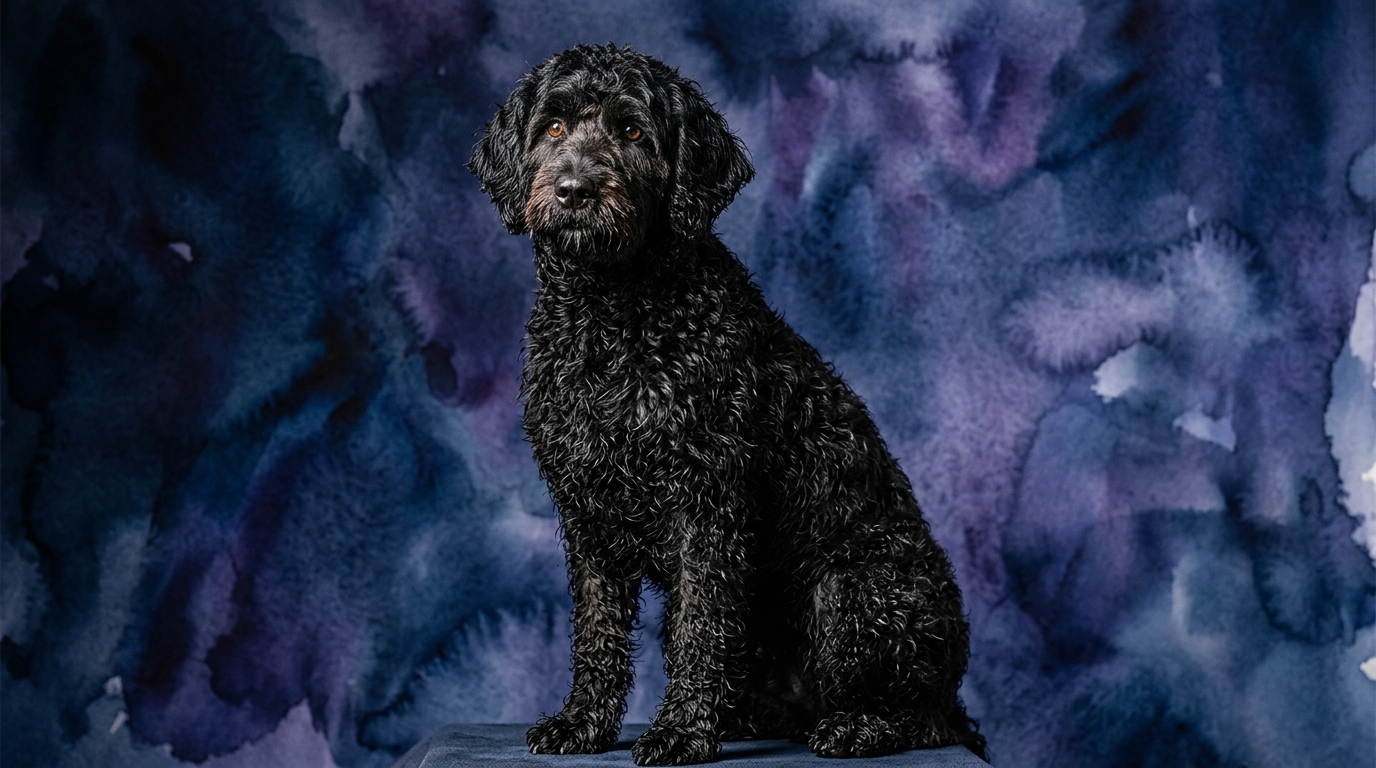
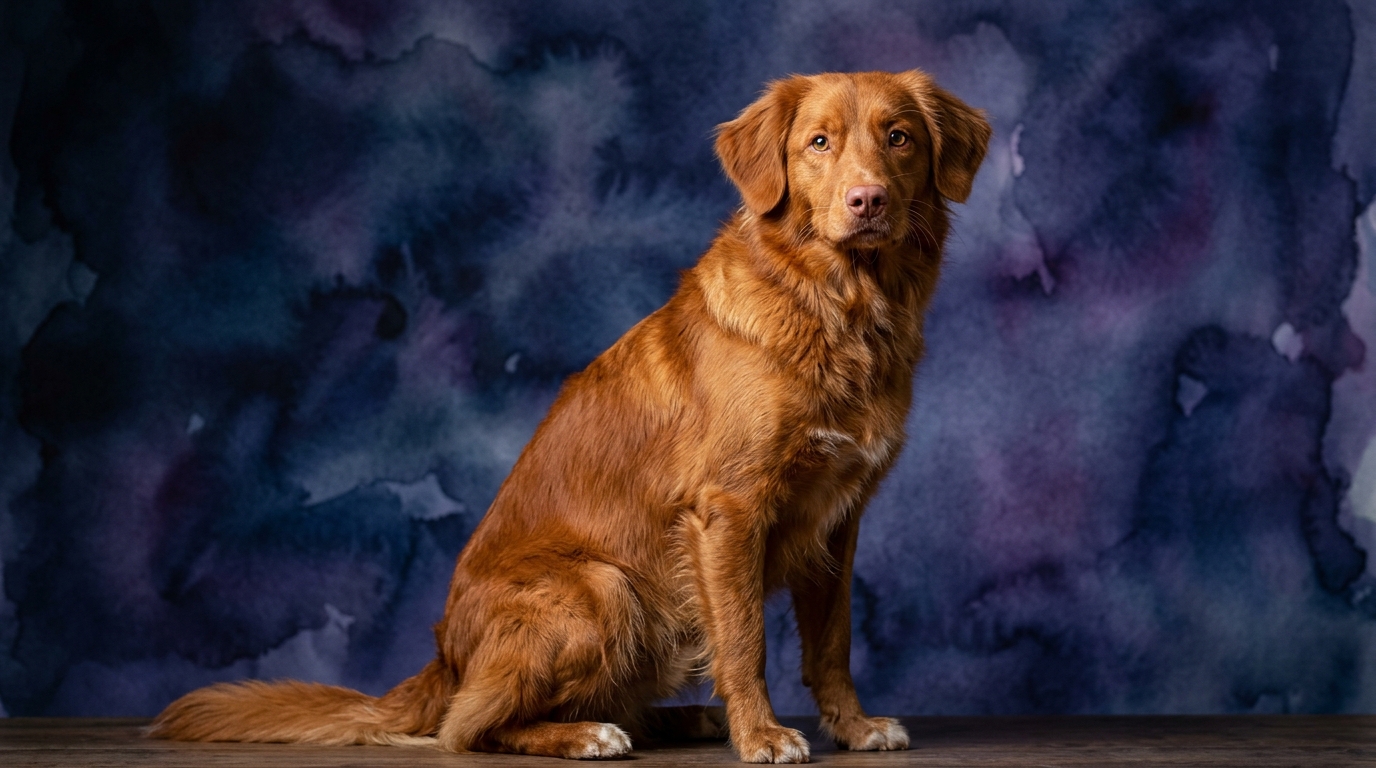
Side-by-Side Cognitive Profiles: PWD vs. Toller
The Cosmic Pet Pet IQ Lab assesses five core cognitive dimensions, and both the Portuguese Water Dog (PWD) and the Nova Scotia Duck Tolling Retriever (Toller) register identical scores across the board: Problem Solving 3/5, Training Speed 3/5, Social Intelligence 3/5, Instinctive Drive 3/5, and Memory 3/5. While these scores suggest a similar baseline of cognitive capacity, the practical manifestation of these traits is shaped by each breed’s unique historical purpose and behavioral tendencies.
For the Portuguese Water Dog, a 3/5 in Problem Solving often translates to an ability to navigate complex aquatic environments, figuring out how to retrieve items from challenging currents or finding lost fishing gear. Their historical role required independent thought and adaptability on boats, often without direct human instruction, leading to a resourceful approach to new situations.
The Nova Scotia Duck Tolling Retriever’s 3/5 in Problem Solving is typically observed in their methodical approach to retrieving, often assessing the quickest and most efficient path to game, or in the strategic execution of their unique 'tolling' behavior – luring ducks within range. This involves a keen understanding of cause and effect in a hunting context.
Training Speed at 3/5 for both indicates a moderate pace of learning new commands. PWDs, with their independent streak, might require more engaging and varied methods to maintain focus, while Tollers, often eager to please, can sometimes be sensitive to harsh corrections, necessitating a gentle but firm approach.
Social Intelligence at 3/5 for both means they are capable of understanding human cues and intentions, but neither is typically described as overly deferential or entirely indifferent. PWDs often form strong bonds with their primary handlers but can be reserved with strangers, while Tollers are generally amiable but retain a focused, sometimes intense, demeanor when 'on the job.'
Instinctive Drive at 3/5 for the PWD points to their strong desire to work alongside humans, particularly in tasks involving water, retrieving, and physical activity. Their drive is often broad, encompassing various working roles. For the Toller, this 3/5 score is acutely focused on their retrieving and luring instincts, manifesting as a powerful prey drive and an intense desire to perform their specific hunting tasks.
Finally, a 3/5 in Memory suggests both breeds have a solid capacity to recall learned commands and experiences over time. PWDs can remember complex multi-step routines or the locations of various objects, while Tollers demonstrate excellent recall for specific hunting scenarios, bird types, and the nuances of their 'tolling' routine.
Where the Portuguese Water Dog Exhibits Nuanced Cognitive Strengths
Despite identical scores, the Portuguese Water Dog often displays a cognitive edge in scenarios demanding broad adaptability and independent decision-making, stemming from their diverse working history. Their Problem Solving at 3/5 frequently manifests as resourcefulness in novel environments, particularly those involving water or varied terrain. They were historically tasked with retrieving lost gear, carrying messages between boats, and even herding fish into nets – roles that required initiative and the ability to interpret complex, unstructured situations without constant human direction.
This breed’s 3/5 Social Intelligence, when combined with their Problem Solving, allows for a nuanced understanding of their environment and the people within it. They can often assess a situation and act independently, making choices that benefit their human companions without explicit commands. This makes them particularly adept at tasks where handler communication might be intermittent or where they need to react to unforeseen circumstances, showcasing a practical, context-driven application of their cognitive abilities.
Where the Nova Scotia Duck Tolling Retriever Shows Distinct Cognitive Advantages
The Nova Scotia Duck Tolling Retriever, while also scoring 3/5 across cognitive dimensions, shines in areas requiring intense focus, precision, and a highly specialized application of their instincts. Their 3/5 Problem Solving is often channeled into the meticulous execution of their luring and retrieving tasks. This involves not just fetching, but understanding the subtle cues of wildfowl, the optimal movements to attract them, and the most efficient return paths.
Their 3/5 Instinctive Drive is particularly potent and refined for their specific purpose. This drive, combined with their Memory (3/5), allows them to recall intricate sequences of behavior necessary for 'tolling' and retrieving, perfecting their technique over time. They are masters of observation within their working domain, often noticing minute details in their surroundings that are pertinent to their task, demonstrating a sharp, specialized cognitive processing in their chosen field.
Training Dynamics: PWD vs. Toller Behavioral Differences
When considering ease of training, the identical 3/5 Training Speed scores for both breeds are just one piece of the puzzle; their inherent behavioral tendencies play a significant role. Portuguese Water Dogs, while eager to please their family, possess a strong independent streak. This means they can sometimes be perceived as stubborn or requiring more creative, varied training sessions to maintain engagement. Their active minds need constant stimulation, and repetitive drills might lead to boredom, making consistency and positive reinforcement crucial to harness their 3/5 memory effectively.
Nova Scotia Duck Tolling Retrievers, conversely, are often described as highly sensitive and can be easily discouraged by harsh training methods. While their desire to work and their focused instinctive drive (3/5) can make them quick learners for specific tasks, their sensitivity means a gentle, encouraging, and clear approach is paramount. They thrive on positive reinforcement and can become withdrawn if training is too forceful or inconsistent. Their 3/5 social intelligence means they are attuned to their handler's mood, which impacts their willingness to engage.
Therefore, neither breed is inherently 'easier' in a universal sense; rather, they demand different training approaches. The PWD benefits from engaging, varied tasks that challenge their problem-solving skills, while the Toller thrives on structured, positive reinforcement that nurtures their sensitive yet driven nature, leveraging their strong focus on specific tasks.
Ideal Lifestyles: Active Owners vs. Task-Oriented Companions
Neither the Portuguese Water Dog nor the Nova Scotia Duck Tolling Retriever are suited for truly relaxed owners; both require significant engagement and activity. The PWD, with its working dog background and balanced 3/5 scores across all cognitive dimensions, thrives with owners who can provide a diverse range of physical and mental activities. They excel in dog sports like agility, obedience, and especially water activities, needing outlets for their problem-solving abilities and broad instinctive drives. Owners who enjoy varied outdoor adventures, from hiking to paddleboarding, will find a PWD an enthusiastic companion.
The Toller, while equally active, often prefers a more task-oriented engagement, aligning with their specialized sporting heritage. Owners who are passionate about activities like retrieving, dock diving, scent work, or even actual hunting will find the Toller's focused instinctive drive (3/5) and keen observational skills truly shine. They enjoy structured 'work' that allows them to utilize their luring and retrieving aptitudes, often requiring a dedicated outlet for their strong prey drive and intense focus. While they enjoy general exercise, their fulfillment often comes from having a specific job to do.
The Verdict
Choose a Portuguese Water Dog if you seek a versatile, independent, and broadly adaptable companion for a wide array of active adventures and mental challenges, especially those involving water. Their resourcefulness and varied working drive make them suitable for owners who appreciate a dog that can think for itself in diverse scenarios.
Opt for a Nova Scotia Duck Tolling Retriever if you are a dedicated, patient owner who can provide structured, task-specific engagement that taps into their intense retrieving and luring instincts. Their sensitivity and focused drive make them exceptional partners for specific dog sports or hunting activities.
🧠 Find Your Pet's IQ Score
Our Pet IQ Lab assessment covers 25+ tests across 5 cognitive dimensions — personalized to your breed.
Take the Full IQ Test →Frequently Asked Questions
Do Portuguese Water Dogs and Tollers have similar intelligence levels?
Based on The Cosmic Pet Pet IQ Lab's assessment, both breeds register identical scores across all five cognitive dimensions (3/5). While their raw cognitive capacity appears similar, the practical application and manifestation of these traits are shaped by their distinct breed histories and inherent temperaments.
Which breed is better for first-time dog owners?
Neither breed is typically recommended for entirely novice owners due to their high energy levels and cognitive needs. However, a well-prepared first-time owner who is committed to consistent, positive training and ample mental/physical stimulation could succeed with either, provided they understand the specific nuances of each breed's temperament.
Are there significant differences in their trainability despite similar 'Training Speed' scores?
Yes, significant behavioral differences impact trainability. PWDs can be independent and may require varied, engaging training to prevent boredom, while Tollers are often sensitive and thrive with gentle, consistent, and positive reinforcement methods. Understanding these nuances is crucial for successful training with either breed.