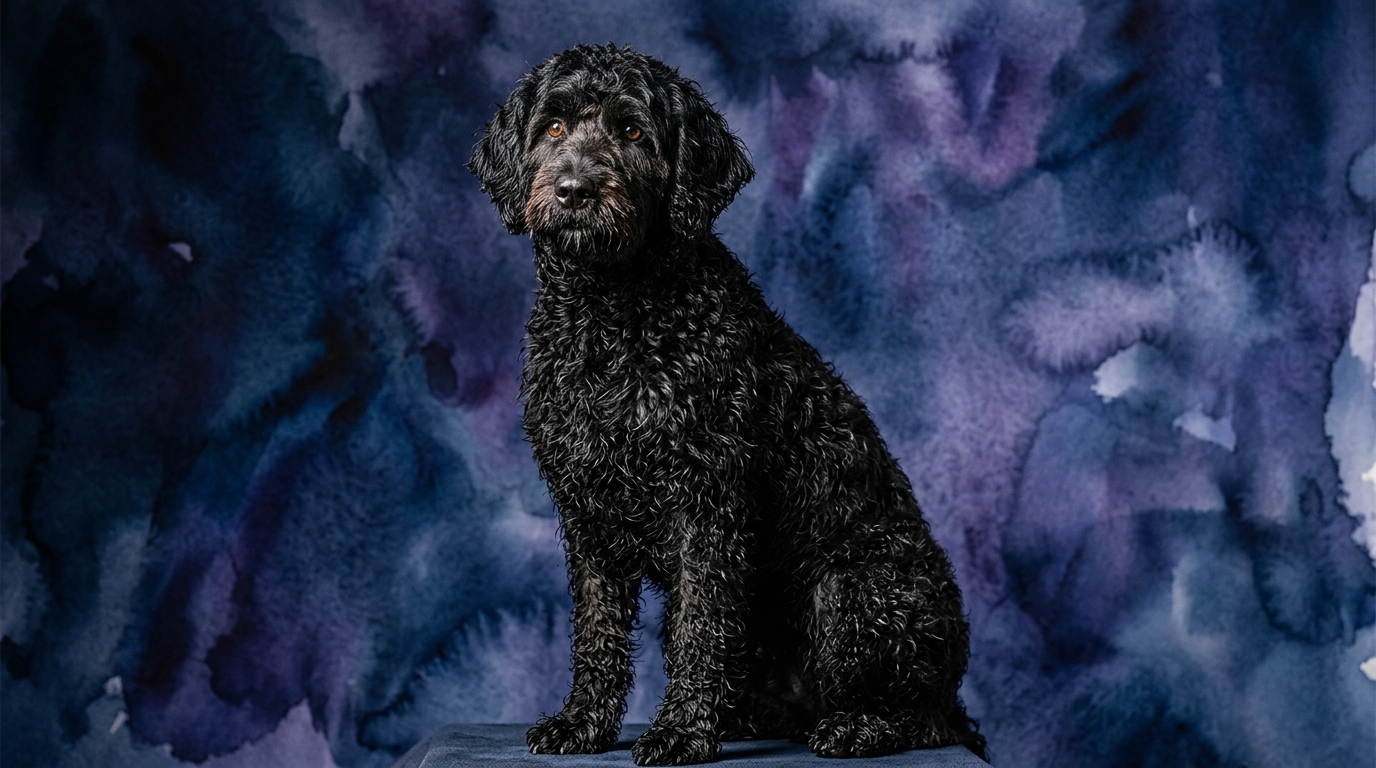
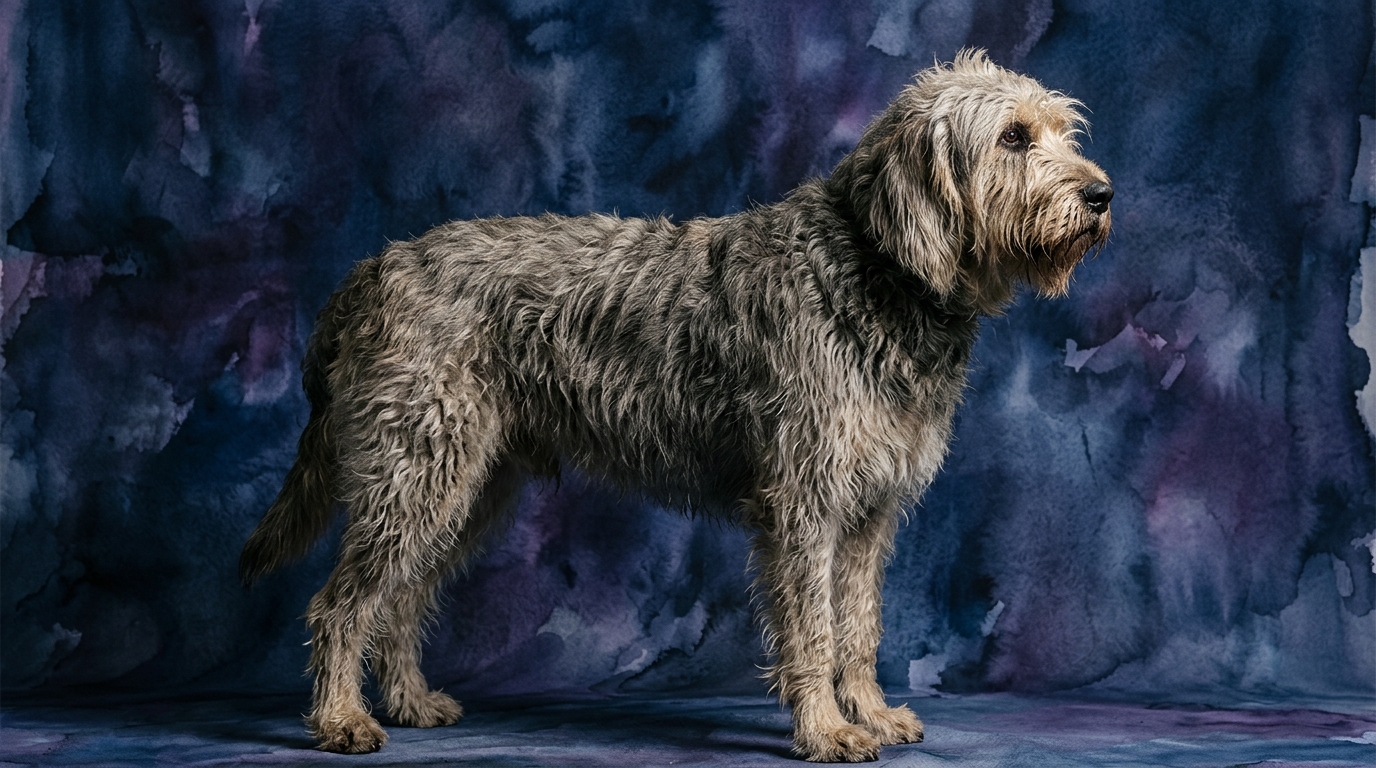
Side-by-Side IQ Profile: PWD vs. Otterhound
Both the Portuguese Water Dog (PWD) and the Otterhound register a solid 3 out of 5 across all five intelligence dimensions in The Cosmic Pet Pet IQ Lab, indicating capable and responsive cognitive abilities for each. A score of 3/5 signifies that these breeds are neither exceptionally quick nor particularly challenging learners, but rather possess a practical intelligence well-suited to their historical tasks and modern companionship.
Their Problem Solving score of 3/5 means both breeds are adept at navigating challenges and finding solutions, though the nature of these problems differs significantly based on their heritage. For the PWD, this often involves strategic thinking in dynamic aquatic environments, such as figuring out how to retrieve items from currents or herd fish. For the Otterhound, problem-solving is primarily focused on deciphering complex scent trails and overcoming obstacles in varied terrain to follow a quarry.
A Training Speed of 3/5 suggests that both breeds absorb new commands and routines with consistent effort and clear communication. The PWD, with its working dog background, tends to be eager to engage and respond to human direction, making training a collaborative process. The Otterhound, while capable of learning, may require more patience and highly motivating rewards to maintain focus, as its independent hound nature often prioritizes environmental stimuli, particularly scents, over handler commands.
Social Intelligence, also at 3/5, indicates that both breeds are capable of understanding and responding to human and canine social cues. The PWD's social cognition is often geared towards forming strong partnerships with its handler, interpreting subtle body language and vocalizations necessary for complex cooperative tasks. The Otterhound's social intelligence shines in its ability to integrate into a pack dynamic, whether canine or human, and communicate needs or intentions, though it may display a more independent social demeanor.
Instinctive Drive at 3/5 highlights strong, inherent behavioral patterns that motivate each breed. The PWD's drive manifests as a powerful urge to work, retrieve, and engage with water, reflecting its origins as a fisherman's assistant. This drive needs appropriate outlets to prevent boredom. The Otterhound's 3/5 instinctive drive is overwhelmingly centered on its nose—a relentless pursuit of scent, an enduring stamina for tracking, and an independent spirit rooted in its hunting heritage.
Finally, a Memory score of 3/5 means both breeds retain learned information and experiences effectively. The PWD's memory is crucial for remembering complex sequences of commands, the location of retrieved items, and routines associated with its working life. The Otterhound's memory is exceptional for scent patterns, geographical layouts encountered during hunts, and the intricate details of a trail, allowing it to pick up a lost scent or retrace steps with considerable accuracy.
Where the Portuguese Water Dog Wins Cognitively
The Portuguese Water Dog's cognitive strengths lie in its versatile adaptability and its capacity for intricate, handler-driven cooperation. While both breeds score 3/5 in problem-solving, the PWD's manifests in dynamic, multi-faceted scenarios. Their intelligence shines when faced with varied tasks that require quick assessment and flexible strategies, such as navigating changing water currents to retrieve an object, or learning a diverse repertoire of tricks and commands. Their 3/5 memory is particularly adept at recalling complex sequences of actions and visual cues from their human partners, making them excellent candidates for dog sports like obedience, agility, and dock diving where precision and recall are paramount. This breed's social intelligence, while also 3/5, is often expressed through a deep attentiveness to their owner's intentions, allowing for a more seamless, almost telepathic working relationship where they anticipate commands and respond with enthusiasm. They excel in environments where their cognitive skills are challenged through interactive games and training that simulates their historical roles, demanding both physical and mental engagement.
Where the Otterhound Wins Cognitively
The Otterhound's cognitive edge is firmly rooted in its specialized sensory processing and unwavering focus on scent work. Its 3/5 problem-solving ability is a masterclass in deduction and persistence, particularly when unraveling complex olfactory puzzles. An Otterhound's mind is uniquely wired to interpret a tapestry of scents, follow faint trails over challenging terrain, and maintain that focus for extended periods, far surpassing breeds not developed for such specific tasks. Their 3/5 memory is exceptionally strong for scent profiles and the geographical "maps" created during tracking, allowing them to effectively re-engage with a lost trail or remember scent patterns encountered days prior. This deep sensory intelligence allows them to make independent decisions in the field, relying on their internal map and nose rather than constant human direction. While their social intelligence is also 3/5, it often manifests as a strong bond within a structured 'pack' environment, valuing clear communication and consistency within that group, even if their nose can sometimes override other stimuli. For tasks requiring sustained, independent, and sensory-driven mental effort, the Otterhound demonstrates a unique cognitive prowess.
Which is Easier to Train and Why?
When considering ease of training, the Portuguese Water Dog generally presents a more straightforward experience for most owners. Their 3/5 training speed, combined with a strong desire to please their human partners, means they are typically receptive to learning new commands and routines with positive reinforcement. PWDs thrive on interaction and purposeful work, making training sessions engaging and productive. Their social intelligence fosters a collaborative spirit, where they actively seek to understand and comply with handler requests, often making them quick studies in obedience and trick training.
The Otterhound, while scoring the same 3/5 in training speed, can be more challenging due to its potent instinctive drive for scent and its independent hound nature. An Otterhound's primary motivation is often its nose, which can easily override human commands, especially in stimulating outdoor environments. Training an Otterhound requires immense patience, consistency, and a deep understanding of their breed-specific motivations. Owners must make training more rewarding than the allure of an interesting scent, often by incorporating scent-based games into their learning. While they are capable of learning, their independence means they may choose to follow their nose over a command if not properly motivated, necessitating creative and persistent training strategies that channel, rather than suppress, their natural instincts.
Which Suits Active Owners vs. Relaxed Owners?
For active owners seeking a highly engaged and versatile partner, the Portuguese Water Dog is an excellent match. Their 3/5 instinctive drive for work and water means they require significant mental and physical stimulation to thrive. They excel with owners who enjoy structured training, dog sports like agility, obedience, or dock diving, long hikes, and especially water-based activities. A PWD needs a 'job' to do, and an owner who can provide consistent engagement will find a devoted, energetic companion. They are not suited for owners seeking a purely decorative pet or those with a sedentary lifestyle, as their unfulfilled cognitive and physical needs can lead to boredom and destructive behaviors.
The Otterhound, while possessing a formidable 3/5 instinctive drive for tracking, can suit a slightly different type of active owner. They demand extensive outdoor exercise to satisfy their powerful urge to explore and follow scents, making them ideal for individuals who enjoy long, rambling walks, hiking, or participating in scent work and tracking sports. While they possess endurance for long outdoor excursions, their indoor demeanor can be surprisingly relaxed and calm, provided their outdoor needs are met. This makes them a potential fit for owners who are active outdoors but appreciate a more laid-back companion indoors, rather than a dog that constantly seeks interaction. They are not suitable for owners who cannot provide ample opportunities for their nose to lead them on adventures, as their powerful instincts must be channeled appropriately.
The Verdict: When to Choose Each
The Verdict
Choose the Portuguese Water Dog if you seek an interactive, versatile partner for complex training, dog sports, and water activities, valuing a highly engaged and cooperative companion.
Opt for the Otterhound if you're an owner who cherishes long outdoor adventures, can patiently channel their independent scent-driven instincts, and appreciates a calm companion indoors after ample exercise.
🧠 Find Your Pet's IQ Score
Our Pet IQ Lab assessment covers 25+ tests across 5 cognitive dimensions — personalized to your breed.
Take the Full IQ Test →Frequently Asked Questions
Do Portuguese Water Dogs and Otterhounds require a lot of mental stimulation?
Yes, both breeds require substantial mental stimulation to prevent boredom and destructive behaviors, though the type of stimulation differs. PWDs thrive on interactive training, problem-solving games, and complex tasks, while Otterhounds need outlets for their powerful scenting abilities through tracking or nose work activities.
How do their problem-solving abilities differ in practical terms?
A PWD's 3/5 problem-solving often involves strategic thinking for varied tasks, like figuring out how to retrieve an object from a challenging environment or learning a new agility course. An Otterhound's 3/5 problem-solving is primarily about persistent deduction in scent work, such as deciphering a complex trail over diverse terrain to locate a 'quarry'.
Are either of these breeds suitable for first-time dog owners?
Both breeds can be challenging for first-time owners due to their strong working or hunting drives and need for consistent, informed training. The PWD's intensity and need for a 'job' can be overwhelming, while the Otterhound's independence and powerful nose require a dedicated owner prepared to manage specific hound behaviors. Experienced owners are generally better suited for either breed.