
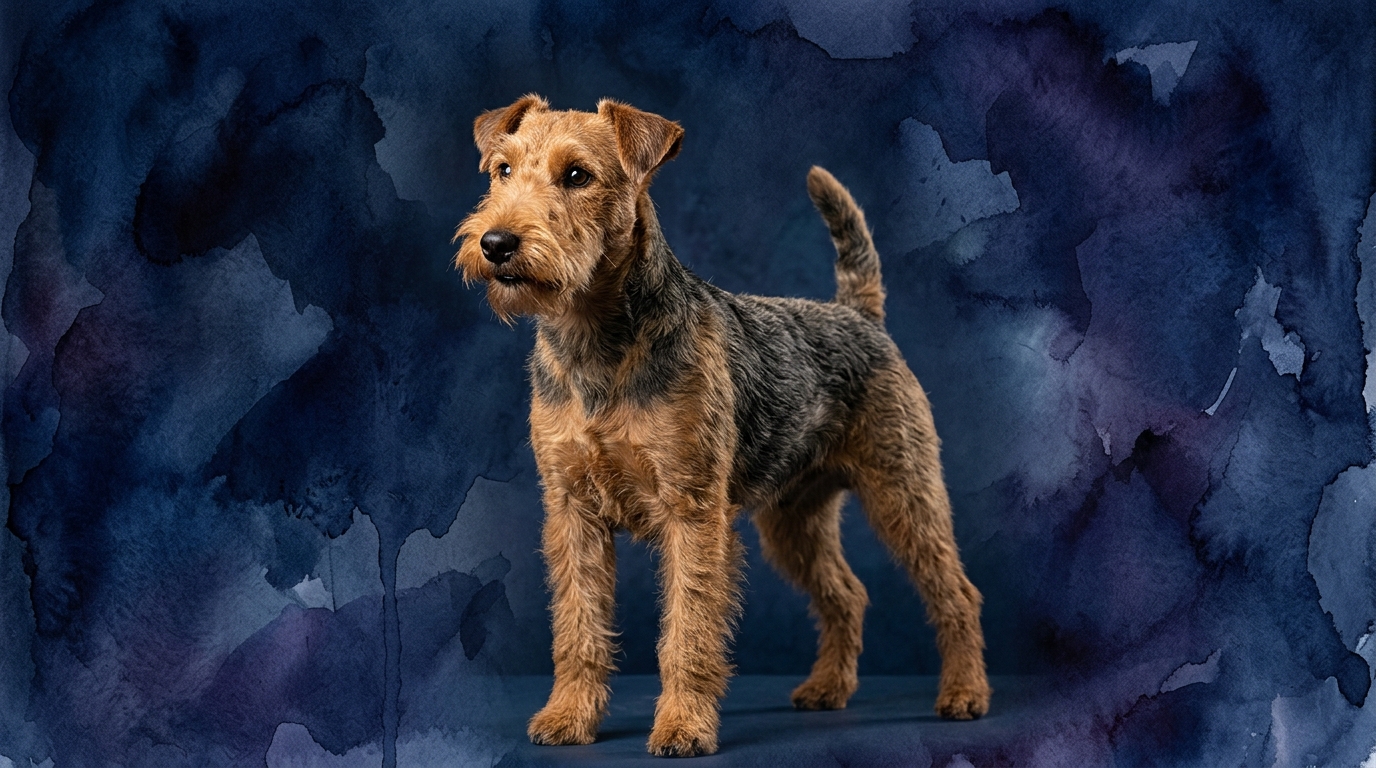
Side-by-Side Cognitive Profile: PWD vs. Welsh Terrier
Despite both breeds scoring a consistent 3 out of 5 across all five key cognitive dimensions, their historical roles and breed temperaments mean these scores manifest uniquely. Understanding these nuances requires looking at the specific behaviors each breed exhibits within these categories.
For the **Portuguese Water Dog**, a Working group breed, their Problem Solving score of 3/5 often translates into resourcefulness in water-based tasks, such as devising strategies to retrieve buoyant objects or navigating complex aquatic environments. They exhibit a methodical approach to overcoming obstacles, often evaluating options before acting. Their Training Speed, also 3/5, reflects an eagerness to engage in cooperative learning, picking up new commands and multi-step routines at a moderate pace, particularly when the tasks involve partnership and purpose. Social Intelligence at 3/5 indicates a good capacity for understanding human cues and intentions, making them attuned companions, though they require clear communication. Their Instinctive Drive of 3/5 is strongly tied to their heritage of herding fish and retrieving, manifesting as a persistent desire to work alongside their human, often with a focus on water and objects. Memory at 3/5 suggests they retain learned behaviors and past experiences well, aiding in consistent performance and recall.
The **Welsh Terrier**, a member of the Terrier group, applies its Problem Solving 3/5 differently, often excelling in independent strategizing, such as figuring out how to access a perceived burrow or outsmarting a small critter. Their solutions tend to be direct and persistent, driven by their innate terrier grit. Their Training Speed of 3/5 means they are capable learners, but their independent nature often requires more engaging and varied methods to maintain focus, as their attention can be diverted by environmental stimuli. Social Intelligence at 3/5 indicates they are perceptive of their immediate social environment, capable of forming strong bonds, but their interactions can sometimes be assertive, reflecting their self-assured temperament. Their Instinctive Drive of 3/5 is deeply rooted in hunting and pursuit, leading to a strong desire to dig, chase, and investigate, often with considerable focus. Memory at 3/5 ensures they remember their training and experiences, but also the locations of interesting scents or perceived prey, influencing their independent explorations.
Where the Portuguese Water Dog Excels Cognitively
While their raw scores are identical, the Portuguese Water Dog typically demonstrates a more sustained, cooperative application of its cognitive abilities, particularly in tasks involving human partnership. Their Problem Solving, rated 3/5, shines when the challenge is framed as a collaborative effort, such as learning a complex agility course that requires sequencing multiple commands and obstacles, or retrieving specific items from a varied collection. Their historical role as working partners on fishing boats instilled a drive to understand and anticipate human direction, making them adept at interpreting nuanced requests.
The PWD's Social Intelligence (3/5) often manifests as a strong desire to please and a sensitivity to human moods, which can translate into greater responsiveness in training and daily interactions. They are often more inclined to maintain eye contact and seek approval, using their cognitive capacity to strengthen the human-canine bond. This cooperative nature means they are generally more receptive to structured learning environments where feedback is consistent, leveraging their Memory (3/5) to build upon previous lessons and refine their performance in team-oriented activities. Their Instinctive Drive (3/5) is channeled into purposeful activities like retrieving, swimming, and even performing tricks, making them highly engaged participants in active, directed play and work.
Where the Welsh Terrier Excels Cognitively
The Welsh Terrier, with its 3/5 cognitive scores, truly comes into its own when tasks demand independent thought, tenacity, and quick, decisive action. Their Problem Solving (3/5) is often geared towards self-initiated challenges, such as figuring out how to access a perceived scent trail under a fence or extracting a hidden toy from a complex puzzle. They possess a remarkable ability to focus intensely on a self-assigned mission, often displaying a single-minded determination that can be both admirable and challenging. This independent streak means they are less reliant on human guidance for every step, preferring to work through issues on their own terms.
The Welsh Terrier's Instinctive Drive (3/5) is a powerful cognitive engine, fueling their persistence in activities like digging, chasing, and exploring. This drive, combined with their Problem Solving, allows them to navigate complex environments, track scents, and react swiftly to stimuli with impressive efficiency. Their Social Intelligence (3/5) is astute in assessing their environment and the intentions of others, making them excellent watchdogs who quickly discern unusual occurrences. While they form deep bonds, their cognitive strengths lean more towards self-reliance and asserting their presence, using their Memory (3/5) to recall past successful strategies for independent endeavors, whether it's finding the best digging spot or recalling a challenging route.
Which is Easier to Train and Why?
When considering ease of training, the Portuguese Water Dog generally presents a more straightforward path for the average owner. Their cooperative nature and strong desire to work alongside humans, reflected in their 3/5 Social Intelligence and Instinctive Drive, make them highly receptive to positive reinforcement methods. They typically enjoy the process of learning new commands and tricks, viewing it as a shared activity that strengthens their bond with their owner. Their 3/5 Training Speed means they absorb new information at a moderate pace, and their 3/5 Memory ensures good retention, allowing for consistent progress in obedience, agility, or water work. Their focus often remains on the handler, making them less prone to environmental distractions during training sessions.
The Welsh Terrier, while equally capable with a 3/5 Training Speed, often requires a more creative and patient approach due to their inherent independence and strong prey drive. Their Problem Solving (3/5) is often directed towards their own interests, making them prone to 'selective hearing' if a more compelling scent or activity presents itself. Training a Welsh Terrier means understanding their Terrier tenacity and channeling their powerful 3/5 Instinctive Drive into productive outlets, rather than trying to suppress it entirely. Owners must be prepared for shorter, highly engaging training sessions, using high-value rewards and making the learning process feel like a fun game rather than a chore. Consistency and firm, fair boundaries are crucial, as their intelligence can be used to test limits, but their 3/5 Memory ensures that once a behavior is truly learned and reinforced, it sticks.
Suitability for Active vs. Relaxed Owners
The **Portuguese Water Dog** is an ideal companion for active owners who relish structured activities and a true working partnership. Their 3/5 Instinctive Drive and Problem Solving capacity mean they thrive on having a job to do, whether it's participating in dog sports like agility, dock diving, or obedience, or simply accompanying their owners on long hikes, runs, or swims. They require significant mental stimulation that often involves human interaction and direction, making them a poor fit for owners seeking a purely independent outdoor companion. Their need for engagement means they are not content to be couch potatoes; they need regular, vigorous exercise and cognitive challenges to prevent boredom and channeling their energy into less desirable behaviors. Owners who enjoy teaching new skills and integrating their dog into an active lifestyle will find a highly rewarding partner in a PWD.
The **Welsh Terrier**, while also requiring substantial activity, suits a different kind of active owner – one who appreciates a spirited, independent companion and is prepared to manage a strong prey drive and investigative nature. Their 3/5 Instinctive Drive fuels a need for outlets such as scent work, earthdog trials, or long walks where they can explore and 'hunt' (safely, of course). They can be excellent companions for owners who enjoy exploring varied terrain, but their tendency to follow their nose or react to small animals means off-leash reliability in unsecured areas can be a significant challenge. While they enjoy play, their Problem Solving (3/5) and independence mean they might prefer to initiate games or explore on their own terms. Relaxed owners who prefer minimal interaction or structured activities would likely find the Welsh Terrier's energetic and self-directed nature overwhelming, as they need consistent engagement to satisfy their cognitive and physical needs, even if that engagement is often on their own terms.
The Verdict
Choose a Portuguese Water Dog if you seek a highly cooperative, active partner eager for structured learning and a strong, integrated bond in your active lifestyle.
Opt for a Welsh Terrier if you appreciate a spirited, independent, and tenacious companion who thrives on self-directed exploration and engaging mental challenges, and you are prepared for their strong inherent drives.
🧠 Find Your Pet's IQ Score
Our Pet IQ Lab assessment covers 25+ tests across 5 cognitive dimensions — personalized to your breed.
Take the Full IQ Test →Frequently Asked Questions
Do Portuguese Water Dogs get along well with other pets?
Portuguese Water Dogs typically possess a moderate social intelligence and can coexist peacefully with other pets, especially if introduced properly during puppyhood. Their cooperative nature means they often adapt well to multi-pet households, though their energetic play style might be too much for very small or timid animals.
Are Welsh Terriers good for first-time dog owners?
Welsh Terriers can be a handful for first-time owners due to their independent nature, strong prey drive, and need for consistent training and boundaries. While intelligent, their tenacity and self-assured temperament require an owner who can provide clear leadership and engaging mental stimulation.
What kind of mental stimulation do these breeds need daily?
Both breeds require daily mental stimulation, but its form differs. Portuguese Water Dogs benefit from puzzle toys, training sessions, and interactive games that involve their human, often centered around retrieving or problem-solving tasks. Welsh Terriers thrive on scent work, digging opportunities (e.g., a sandpit), and exploring new environments, which satisfies their investigative and hunting instincts.