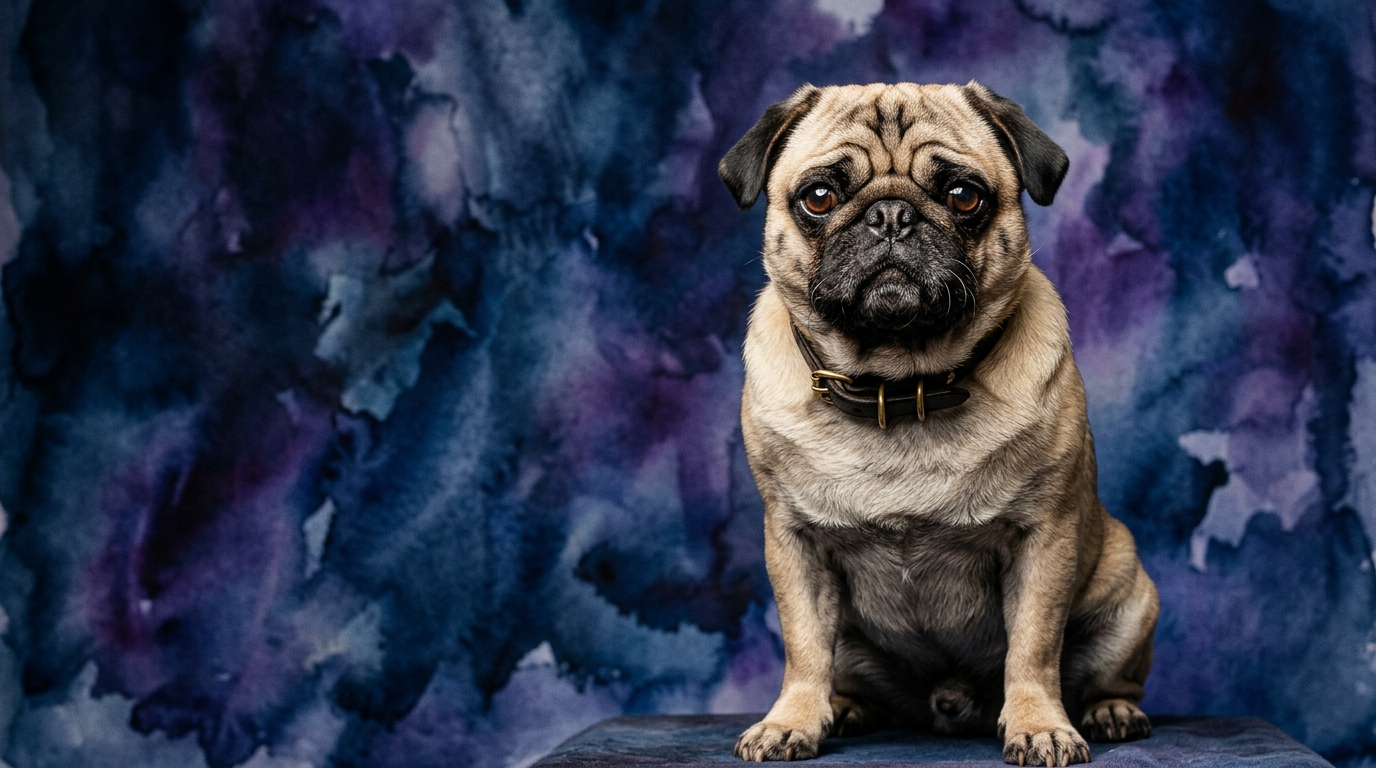
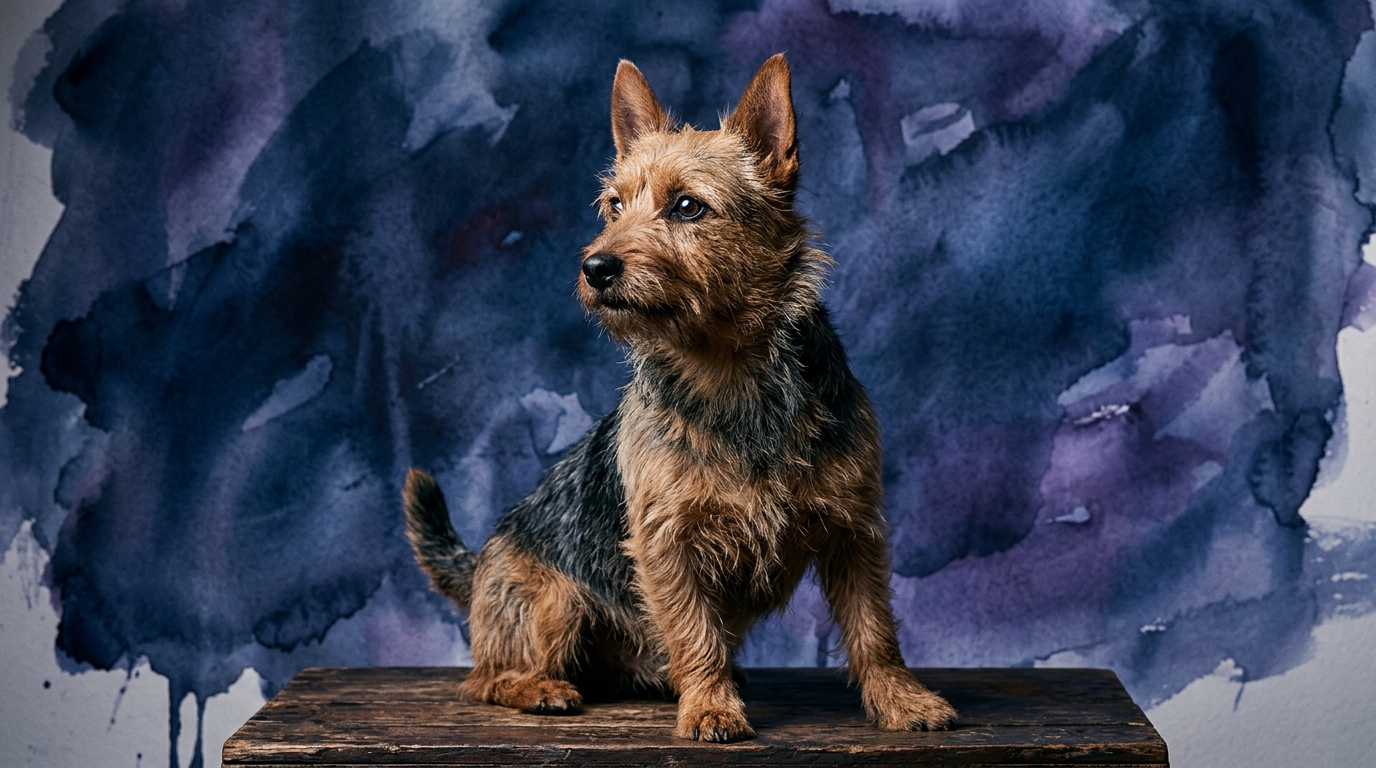
Side-by-Side Cognitive Profile: Pug vs. Australian Terrier
**Pug:** Coren Rank #57 places the Pug in the average category for working and obedience, requiring more repetition to master commands. Problem Solving 2/5 indicates a lesser ability to independently strategize or figure out complex tasks. Training Speed 2/5 reflects slower learning. However, the Pug shines with Social Intelligence 5/5, demonstrating an exceptional capacity to understand human emotions and social cues, making them highly attuned companions. Instinctive Drive 2/5 means a low innate drive for working tasks, preferring social interaction. Memory 3/5 suggests average retention of behaviors.
**Australian Terrier:** The Australian Terrier, while not Coren-ranked, belongs to the Terrier group, implying independence and working aptitude. Problem Solving 3/5 indicates a moderate ability to tackle novel situations or achieve desired outcomes independently. Training Speed 3/5 means they generally learn new commands at an average pace. Social Intelligence 3/5 signifies a moderate understanding of human social cues, capable of bonding but often self-reliant. Instinctive Drive 3/5 reflects their terrier heritage, showing a moderate inclination for chasing, digging, and exploring. Memory 3/5 is average, allowing reliable recall of commands and experiences.
Where the Pug Cognitively Excels
The Pug’s standout cognitive strength lies in its extraordinary Social Intelligence, scoring an impressive 5/5 compared to the Australian Terrier’s 3/5. This is a deep-seated ability to interpret human behavior, mood, and subtle shifts in tone. A Pug often senses an owner's upset or unwell state, offering comfort or altering its behavior to match the household's emotional climate. This superior social processing allows seamless integration into family life, understanding routines and expectations through an intuitive grasp of human social dynamics. They excel at forming robust emotional bonds, responding to positive reinforcement with eagerness born from a desire for social harmony, making them master communicators in companionship.
Where the Australian Terrier Cognitively Excels
Conversely, the Australian Terrier’s cognitive profile shows distinct advantages in independent thought and action. Their Problem Solving score of 3/5 surpasses the Pug’s 2/5, indicating a greater capacity for navigating challenges and devising solutions independently, like opening a cabinet or retrieving a hidden toy. Training Speed of 3/5 outpaces the Pug’s 2/5, suggesting quicker grasping of new commands in formal obedience. Coupled with a moderate Instinctive Drive of 3/5, Australian Terriers possess internal motivation for exploration and engagement, translating into a cognitive edge for tasks requiring persistence, curiosity, and self-directed activity, rather than solely relying on human social cues.
Training Aptitude: Which is Easier to Train and Why?
Determining which breed is 'easier' to train is nuanced. The Australian Terrier, with 3/5 Training Speed and 3/5 Problem Solving, generally picks up commands faster and connects actions to outcomes more readily. However, their 3/5 Instinctive Drive means they can be easily distracted by environmental stimuli like scents or small prey, requiring a trainer to maintain engagement. Their independent streak necessitates consistent, stimulating, reward-based training to prevent boredom. The Pug, despite lower 2/5 Training Speed, benefits immensely from its 5/5 Social Intelligence. While requiring more repetitions, their deep desire to please and sensitivity to human emotions make them highly responsive to positive reinforcement. Training a Pug often leverages this strong social bond, making sessions feel collaborative. Their lower 2/5 Instinctive Drive also means less likelihood of being sidetracked. So, while the Australian Terrier might learn *faster*, the Pug's *willingness* to engage socially can make the training journey equally rewarding, albeit slower. An Australian Terrier might learn a trick quicker, but a Pug works diligently for shared activity and a happy owner.
Matching Cognitive Profiles to Owner Lifestyles
The distinct cognitive profiles suit owners with differing lifestyles. An Australian Terrier, with moderate Problem Solving (3/5) and Instinctive Drive (3/5), thrives with active owners who enjoy mentally stimulating activities. They appreciate tasks challenging their intellect, like puzzle toys, scent work, or agility, tapping into natural curiosity. Their minds need occupation beyond physical exercise, making them excellent companions for owners enjoying consistent training, outdoor adventures, and structured play satisfying terrier instincts. Conversely, the Pug, with exceptional Social Intelligence (5/5) and lower Instinctive Drive (2/5), is ideal for relaxed owners prioritizing companionship and emotional connection. Pugs are content close to their people, understanding and responding to subtle cues. Their mental stimulation comes primarily from social interaction, cuddles, and being an integral part of family routines, rather than complex problems or strenuous activities. They flourish where their primary 'job' is to be a beloved, emotionally attuned presence.
The Verdict
Choose a Pug if you prioritize an exceptionally emotionally intelligent companion who thrives on social connection, offers profound emotional support, and prefers a relaxed, affectionate daily rhythm over complex tasks.
Opt for an Australian Terrier if you seek a moderately independent, task-oriented canine partner who enjoys mental challenges, requires consistent, engaging training, and thrives on exploring the world with purpose.
🧠 Find Your Pet's IQ Score
Our Pet IQ Lab assessment covers 25+ tests across 5 cognitive dimensions — personalized to your breed.
Take the Full IQ Test →Frequently Asked Questions
Are Pugs truly less intelligent than Australian Terriers?
"Intelligence" is multi-faceted. While Australian Terriers show a slight edge in problem-solving and training speed, Pugs possess superior social intelligence, excelling at understanding human emotions and cues. Their cognitive strengths lie in different areas, making direct comparisons complex.
Does a Pug's low instinctive drive mean it's lazy?
Not necessarily lazy, but their lower instinctive drive means they are less motivated by traditional working tasks like hunting or independent exploration. Pugs are driven by social connection and comfort, preferring to engage with their humans rather than pursuing solitary activities.
How does the "not Coren-ranked" status of the Australian Terrier impact its intelligence assessment?
Coren's ranking primarily assesses working and obedience intelligence. The Australian Terrier's absence from this list doesn't imply a lack of intelligence, but rather that its specific cognitive profile, particularly its independent terrier nature, might not align perfectly with the obedience-focused criteria used for the ranking.