Side-by-Side IQ Profile: Pug vs. Black Russian Terrier
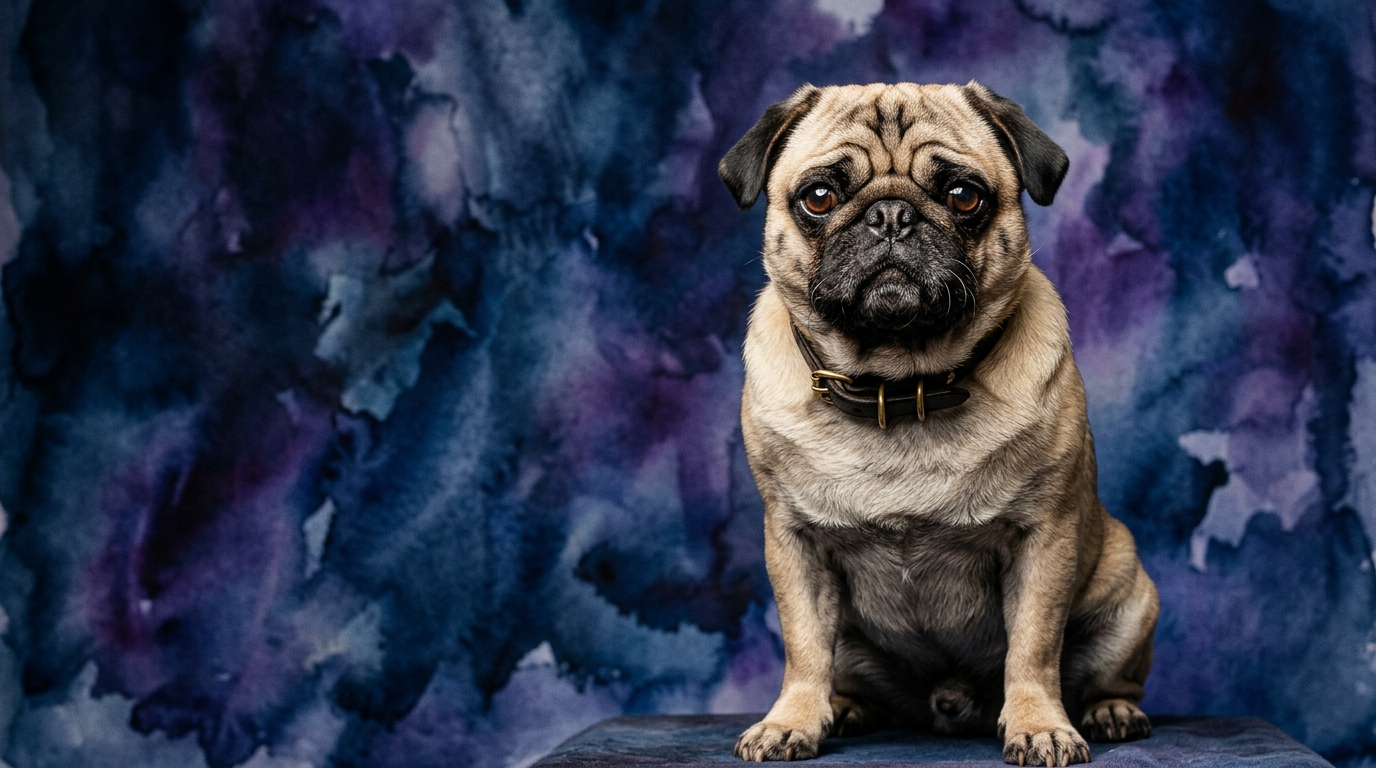
The Cosmic Pet Pet IQ Lab employs a five-dimensional framework to assess canine cognition, offering a granular view beyond simple 'smart or not' labels. For the Pug, a beloved Toy breed (Coren rank #57), their cognitive profile reveals a delightful specialization in companionship. Their Problem Solving is rated at 2 out of 5, indicating they often prefer human intervention for challenges. Similarly, their Training Speed, also 2 out of 5, suggests learning requires consistent, patient effort and high-value rewards. Where the Pug truly shines is in Social Intelligence, earning a perfect 5 out of 5; these dogs are masters at reading human emotions, anticipating needs, and fostering deep, intuitive bonds. Their Instinctive Drive is a modest 2 out of 5, reflecting their history as lap companions, with little inherent drive for complex tasks. Finally, their Memory sits at a solid 3 out of 5, allowing them to recall routines and familiar faces reliably.
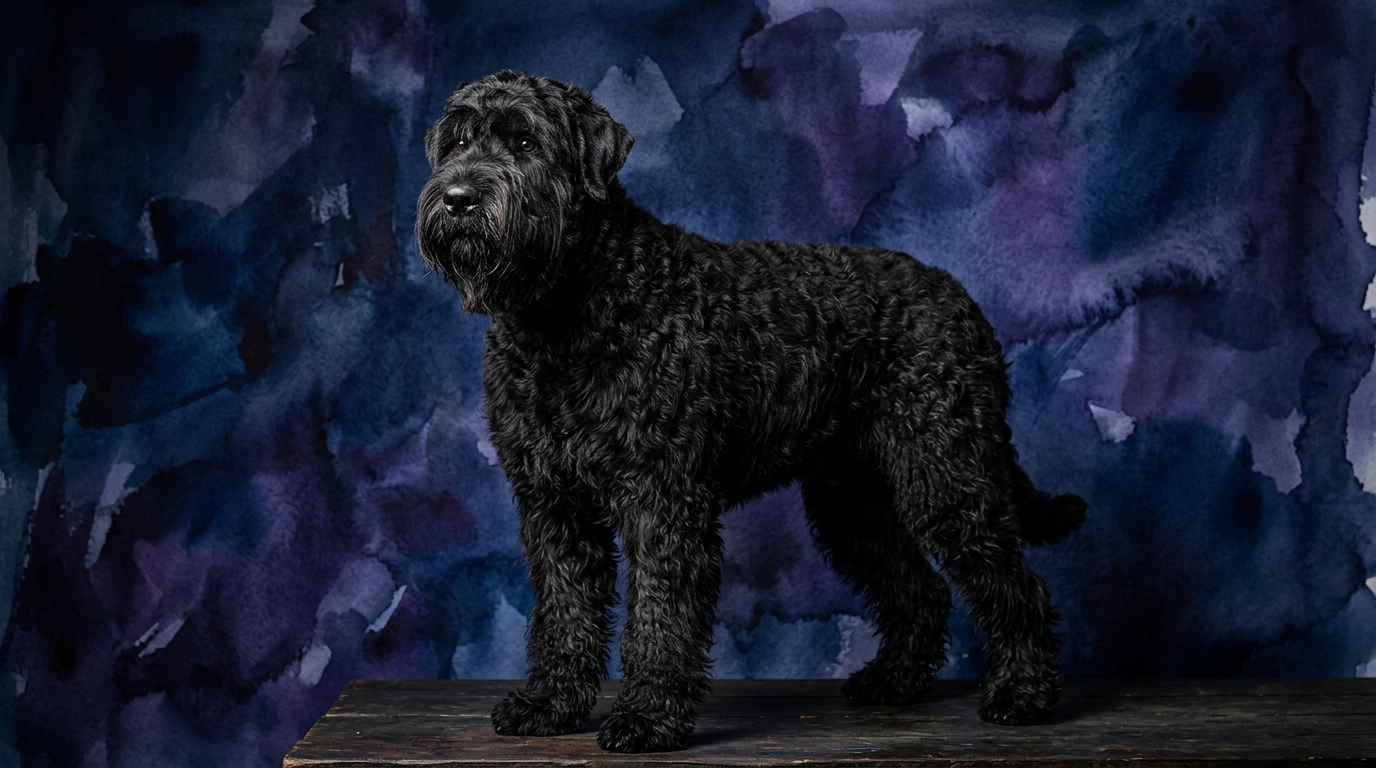
Contrasting this, the Black Russian Terrier, a powerful Working breed (not Coren-ranked), presents a distinctly different cognitive blueprint, forged for purpose and protection. Their Problem Solving ability is rated 3 out of 5, indicating a capacity to analyze situations and work through moderate challenges, reflecting their need for independent thought in original roles. Their Training Speed is also a 3 out of 5, suggesting they absorb new commands at a steady pace with structured instruction. While their Social Intelligence is a commendable 3 out of 5, they are more discerning and reserved, forming strong, protective bonds with their inner circle rather than seeking universal affection. The Black Russian Terrier’s Instinctive Drive, rated 3 out of 5, is notably higher than the Pug's, encompassing a robust guarding instinct and a desire for meaningful work. Like the Pug, their Memory is rated 3 out of 5, enabling them to retain training and remember past experiences effectively.
Where the Pug Wins Cognitively
Pugs excel in forming profound emotional connections, often intuiting their owner's moods and offering comfort without explicit instruction, a direct result of their perfect 5/5 Social Intelligence. This exceptional acumen means they are less likely to misinterpret subtle human signals in a domestic setting, leading to fewer misunderstandings compared to breeds with more independent social processing. Their low Instinctive Drive (2/5), particularly for activities like guarding or hunting, translates into a simpler behavioral landscape; owners rarely contend with strong prey drives or territorial aggression, which can be complex to manage in other breeds. This cognitive simplicity in terms of innate drives makes them remarkably adaptable to quiet, companion-focused lifestyles, where their primary 'job' is to be a loving, present family member.
Where the Black Russian Terrier Wins Cognitively
The Black Russian Terrier demonstrates a clear cognitive advantage in areas demanding independent thought and structured learning. Their Problem Solving score of 3 out of 5 means they are more adept at navigating novel situations or figuring out how to achieve a desired outcome, such as opening a gate or solving a complex puzzle toy. This capacity for analytical thinking makes them suitable for more intricate training regimens or even specific working roles where self-reliance is beneficial. Furthermore, their Training Speed, also rated 3 out of 5, indicates a more efficient learning curve; they generally grasp new commands and concepts with fewer repetitions than a Pug. Their Instinctive Drive, rated 3 out of 5, provides a robust foundation for purpose-driven activities, fueling their focus and willingness to participate in tasks requiring sustained mental and physical effort, showcasing a practical intelligence geared towards utility.
Which is Easier to Train and Why?
Determining which breed is 'easier' to train depends heavily on the owner's approach, but the IQ lab scores offer clear indicators. The Pug's Training Speed of 2 out of 5, coupled with a lower Problem Solving score, means that while they are eager to please their beloved humans (thanks to their high Social Intelligence), the actual acquisition of new commands can be a slow, deliberate process. They often require extensive repetition, patience, and creative use of high-value treats to maintain focus and motivation, as their attention span for rote learning can be short. Their occasional stubborn streak, often disguised as charming indifference, means owners must be consistent and make training feel like a fun interaction rather than a chore.
In contrast, the Black Russian Terrier, with a Training Speed of 3 out of 5 and a higher Problem Solving score, generally presents a more straightforward training experience for an experienced handler. They possess a greater capacity to understand and retain complex commands and sequences, thriving on structure and consistency. Their moderate Instinctive Drive can be a significant asset in training; when channeled appropriately, it provides a strong work ethic and a desire to engage in purposeful activities. While they may not have the Pug's inherent desire to universally please, they respect clear leadership and respond well to fair, firm, and consistent methods, making them receptive to sophisticated training protocols.
Active Owners vs. Relaxed Owners: A Cognitive Match
When considering lifestyle compatibility, the cognitive and drive profiles of these two breeds paint distinct pictures. The Pug, with its low Instinctive Drive (2/5) and a primary cognitive strength in Social Intelligence (5/5), is an ideal match for relaxed owners who prioritize companionship and a calm home environment. These dogs are generally content with moderate daily exercise, such as short walks or indoor play, and thrive on consistent human interaction rather than demanding strenuous physical activity or complex mental challenges. Their cognitive makeup means they are perfectly satisfied being a charming, affectionate presence by their owner's side, requiring minimal structured 'work' beyond basic manners, making them suited for individuals seeking a devoted, low-key companion.
The Black Russian Terrier, conversely, with its moderate Instinctive Drive (3/5) and higher Problem Solving (3/5) and Training Speed (3/5) scores, is unequivocally better suited for active owners prepared to provide substantial physical exercise and consistent mental stimulation. These are not dogs content to be couch potatoes; their working heritage means they possess an innate need for purpose and activity. Owners must be committed to daily vigorous exercise, which could include long walks, running, hiking, or participation in dog sports like obedience, agility, or protection work. Their cognitive capacity means they need their minds engaged through training, puzzle toys, and new experiences to prevent boredom and potential destructive behaviors, thriving with an owner who enjoys an active lifestyle.
The Verdict
For those seeking an unparalleled emotional bond and a low-maintenance companion who excels at intuitive connection, the Pug is the clear choice. They thrive in calm environments where their primary role is beloved family member, offering constant affection and social warmth.
Conversely, if you're an active individual or family prepared for a significant commitment to training, exercise, and mental stimulation, and desire a capable, protective, and purpose-driven companion, the Black Russian Terrier will be a rewarding addition. They excel when given a job and clear guidance.
🧠 Find Your Pet's IQ Score
Our Pet IQ Lab assessment covers 25+ tests across 5 cognitive dimensions — personalized to your breed.
Take the Full IQ Test →Frequently Asked Questions
Is a Pug difficult to train?
Pugs are not inherently difficult, but their Training Speed of 2/5 means they require significant patience, consistency, and motivation, often through high-value treats. Their charm helps, but owners should expect a slower learning curve for new commands.
Do Black Russian Terriers need a lot of mental stimulation?
Yes, Black Russian Terriers, with their 3/5 Problem Solving and Instinctive Drive, definitely need regular mental stimulation beyond just physical exercise. Engaging them in advanced training, puzzle toys, and purposeful activities helps prevent boredom and channel their working intelligence constructively.
Which breed is better with children, Pug or Black Russian Terrier?
The Pug's high Social Intelligence (5/5) generally makes them exceptionally tolerant and gentle with children, often enjoying being part of family activities. Black Russian Terriers can be good with respectful children in their own family, but their protective instincts and reserved nature (Social Intelligence 3/5) mean they require careful socialization and supervision, especially with unfamiliar children.