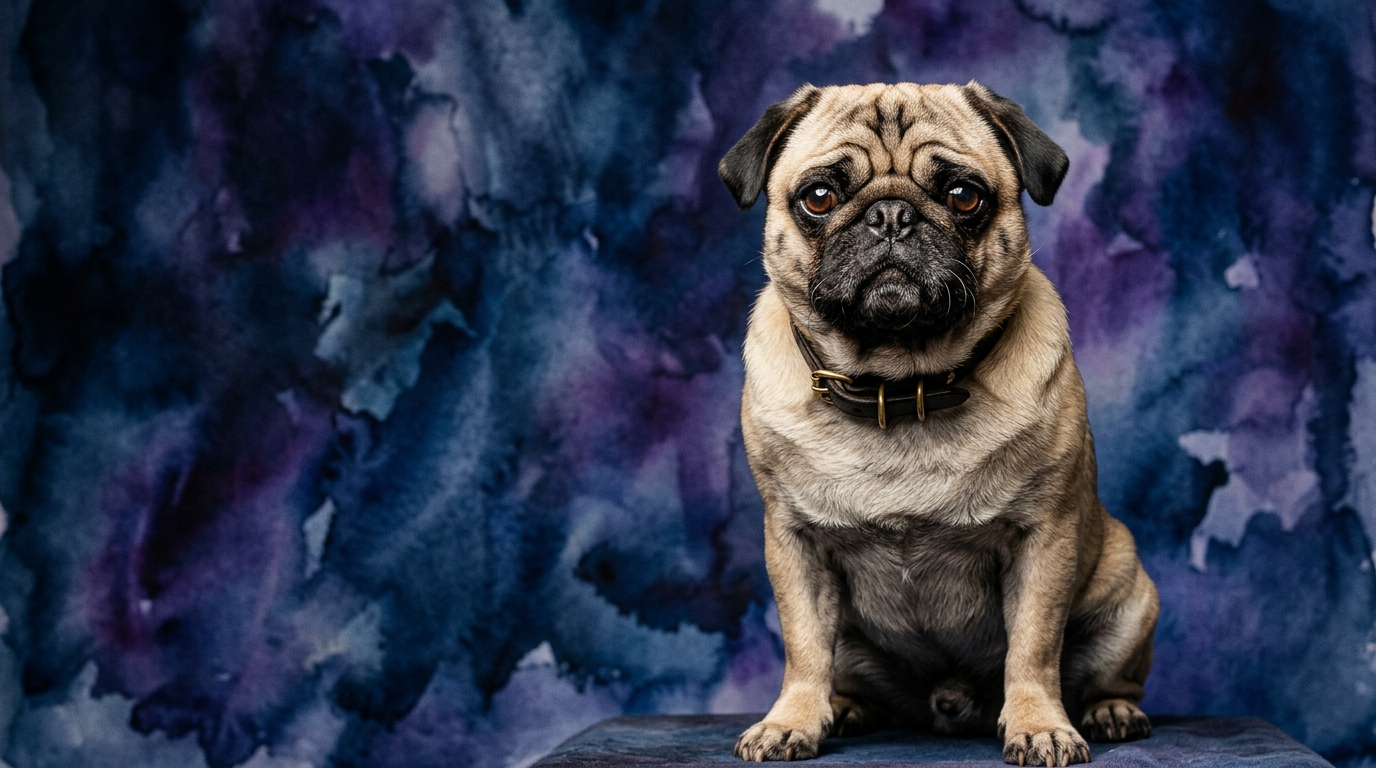
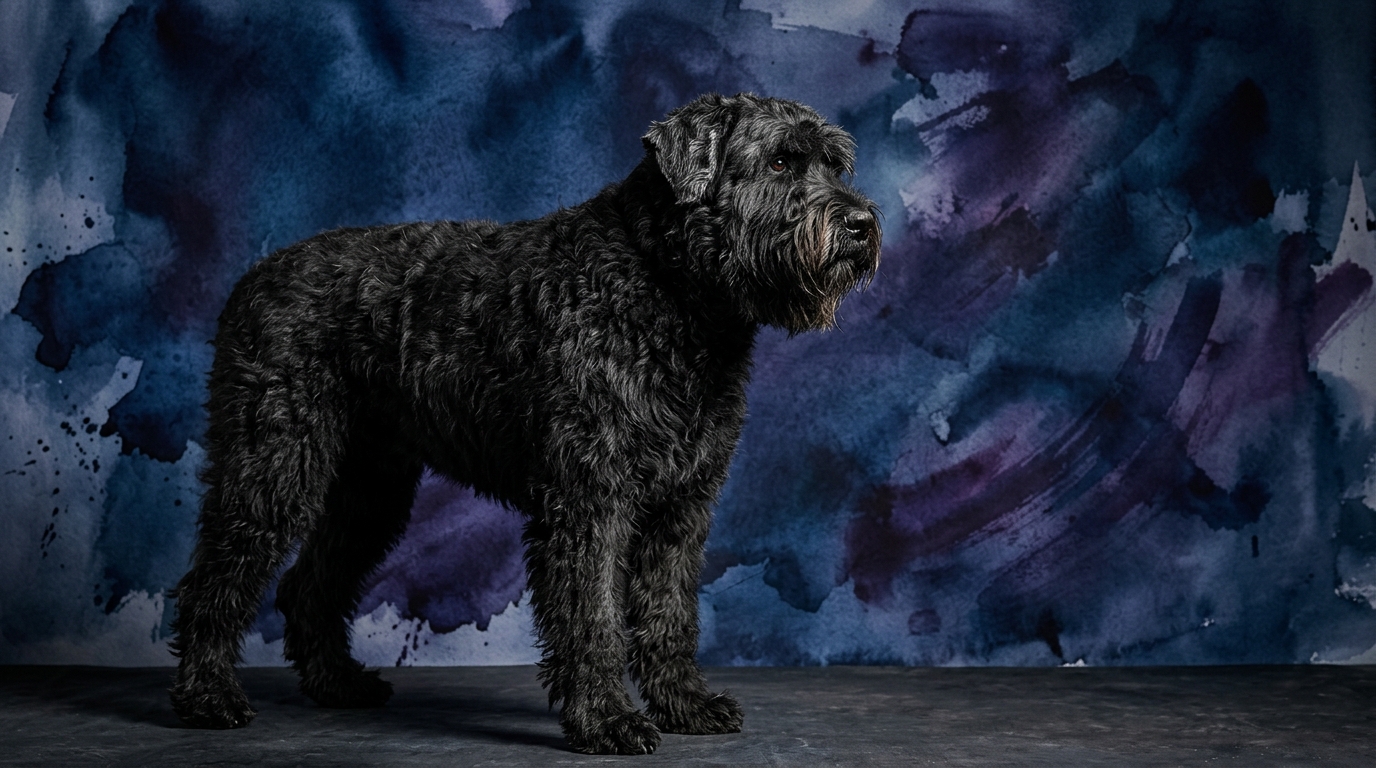
Side-by-Side Cognitive Profiles: Pug vs. Bouvier des Flandres
To understand the unique cognitive landscapes of the Pug and the Bouvier des Flandres, The Cosmic Pet Pet IQ Lab employs five core dimensions. These metrics offer a nuanced view of how each breed processes information, learns, and interacts with their environment. For the Pug, a Toy breed, its Coren rank is #57, indicating a moderate level of working and obedience intelligence among tested breeds. Its cognitive breakdown reveals a Problem Solving score of 2/5, suggesting it’s not typically inclined towards complex independent problem-solving. Training Speed also registers at 2/5, meaning it may require more patience and repetition during learning. However, its Social Intelligence shines with a perfect 5/5, highlighting its exceptional ability to connect with humans. Instinctive Drive is low at 2/5, reflecting its primary role as a companion, and Memory stands at a solid 3/5, indicating an average capacity for recall and retention.
The Bouvier des Flandres, a Herding breed, does not have a Coren rank, which doesn't diminish its cognitive capabilities but simply means it wasn't included in that specific ranking system. Its IQ profile, however, paints a picture of a more task-oriented mind. Problem Solving is rated 3/5, indicating a moderate ability to assess situations and find solutions, particularly in practical contexts. Training Speed also sits at 3/5, suggesting a reasonable pace of learning new commands and concepts. Social Intelligence is 3/5, demonstrating an awareness of human cues, though perhaps less overtly expressive than the Pug. Instinctive Drive is a moderate 3/5, reflecting its heritage as a working dog with inherent motivations for purpose and task. Lastly, Memory for the Bouvier des Flandres is 3/5, showing a good capacity for retaining information pertinent to its duties and training.
Where the Pug's Mind Excels
The Pug’s standout cognitive strength lies unequivocally in its Social Intelligence, scoring an impressive 5/5. This isn't just about being affectionate; it's a deep-seated ability to perceive and respond to human emotions, body language, and subtle social cues with remarkable precision. A Pug can often sense a shift in its owner's mood, offering comfort or initiating play at just the right moment. They are masters of emotional regulation within a household, often using their presence and gentle demeanor to defuse tension or solicit attention. Their knack for integrating seamlessly into family dynamics, becoming an intuitive and comforting presence, is a testament to this exceptional social processing. This cognitive advantage means they thrive in environments where close human interaction is paramount, making them unparalleled companions who understand the unspoken language of their people, far beyond mere obedience.
Bouvier des Flandres: A Cognitive Powerhouse for Purpose
The Bouvier des Flandres truly shines in areas demanding practical application of intellect, particularly through its Problem Solving (3/5) and Instinctive Drive (3/5). Unlike the Pug's social brilliance, the Bouvier's mind is geared towards understanding and executing tasks within its environment. This breed possesses a robust capacity for independent thought in practical situations, such as navigating a complex field, understanding the nuances of a herding task, or assessing a perceived threat. Their moderate Problem Solving score means they aren't just following commands; they are often figuring out how to achieve a goal, adapting their approach as needed. This is complemented by their Instinctive Drive, which provides an inherent motivation for purposeful activities. This drive translates into a cognitive advantage for sustained engagement in work or training, requiring more than just rote memorization and instead fostering a desire to master and apply their skills in a meaningful way.
Training Dynamics: Which Breed Learns with Greater Ease?
When it comes to ease of training, the Bouvier des Flandres generally presents a more straightforward path due to its 3/5 Training Speed and moderate Instinctive Drive. This breed often exhibits a strong desire to please and a natural inclination towards work, making them quite receptive to consistent, firm-but-fair instruction. Their problem-solving capabilities mean they often grasp the 'why' behind a command, not just the 'what,' leading to a deeper understanding and more reliable execution. For example, a Bouvier tasked with retrieving might not just grab the item, but navigate obstacles to do so efficiently, demonstrating practical intelligence in action. This responsiveness, coupled with their inherent drive, makes them highly capable students for obedience, agility, or working roles, provided the owner offers clear leadership and mental engagement.
The Pug, with its 2/5 Training Speed, requires a different approach. While certainly trainable, Pugs can sometimes be perceived as stubborn or easily distracted, especially if the training isn't highly motivating or consistently engaging. Their primary motivation often stems from food rewards or the desire for close companionship, rather than an innate drive to perform complex tasks. For instance, a Pug might learn 'sit' quickly for a treat, but recalling it reliably in a distracting environment might take more repetitions than with a Bouvier. However, their exceptional Social Intelligence can be leveraged; they want to be close to their people, which can become a powerful motivator for learning if the training reinforces that bond. Their low instinctive drive means they are less likely to be sidetracked by external stimuli like prey, which can be an advantage in certain training scenarios, but their focus might still wander if the reward isn't immediate or compelling.
Matching Canine Intellect to Owner Lifestyles
The distinct cognitive profiles of the Pug and Bouvier des Flandres naturally align with different owner lifestyles. For individuals or families seeking a more relaxed pace, the Pug is an ideal companion. Its lower Instinctive Drive (2/5) and moderate energy levels mean it thrives on close human interaction and comfort rather than strenuous physical or mental challenges. Owners who prioritize a constant, affectionate presence and enjoy a dog whose primary joy comes from social connection will find the Pug’s high Social Intelligence (5/5) perfectly suited to their needs. They are content with shorter walks, cuddle sessions, and being an integral, though perhaps less demanding, part of daily life.
Conversely, the Bouvier des Flandres is best suited for active owners who are prepared to provide consistent mental stimulation and physical engagement. Its moderate Problem Solving (3/5), Training Speed (3/5), and Instinctive Drive (3/5) indicate a dog that needs purpose and structure. This breed excels in activities like advanced obedience, agility, tracking, or even as a working dog, requiring an owner who can channel its inherent drive and intelligence constructively. An active owner for a Bouvier is someone who enjoys training, exploring, and engaging their dog in activities that challenge both its mind and body, ensuring its natural capabilities are fulfilled and its protective instincts are appropriately managed through socialization and consistent guidance.
The Verdict
Choose the Pug if you prioritize an unparalleled emotional connection, a constant companion, and a dog whose primary joy stems from social interaction and comfort rather than complex tasks or strenuous activity. They integrate beautifully into quieter, affectionate households seeking a devoted, intuitive presence.
Choose the Bouvier des Flandres if you appreciate a dog with a strong sense of purpose, capable of learning complex tasks, and if you can provide consistent training, mental stimulation, and a structured environment. They are suited for active individuals or families seeking a loyal, protective, and intelligent working companion.
🧠 Find Your Pet's IQ Score
Our Pet IQ Lab assessment covers 25+ tests across 5 cognitive dimensions — personalized to your breed.
Take the Full IQ Test →Frequently Asked Questions
Can Pugs learn tricks beyond basic commands?
Yes, Pugs can certainly learn a variety of tricks beyond basic commands, especially when training is made fun and highly rewarding with treats or praise. Their social intelligence means they enjoy engaging with their people, and their memory allows them to retain these learned behaviors over time with consistent practice.
How does the Bouvier des Flandres' instinctive drive manifest in daily life?
The Bouvier's instinctive drive often translates into a desire for purpose and a watchful, protective nature, which can make them excellent guardians of their home and family. This drive means they benefit greatly from structured activities like obedience training, herding games, or even carrying items, which helps channel their natural inclinations constructively and prevents boredom.
Is a Bouvier des Flandres suitable for a first-time dog owner?
While intelligent and trainable, a Bouvier des Flandres might be challenging for a first-time dog owner due to their size, strength, and need for consistent, confident leadership. Their protective instincts and working drive require an owner committed to early socialization and ongoing training to ensure they develop into well-adjusted, manageable companions.