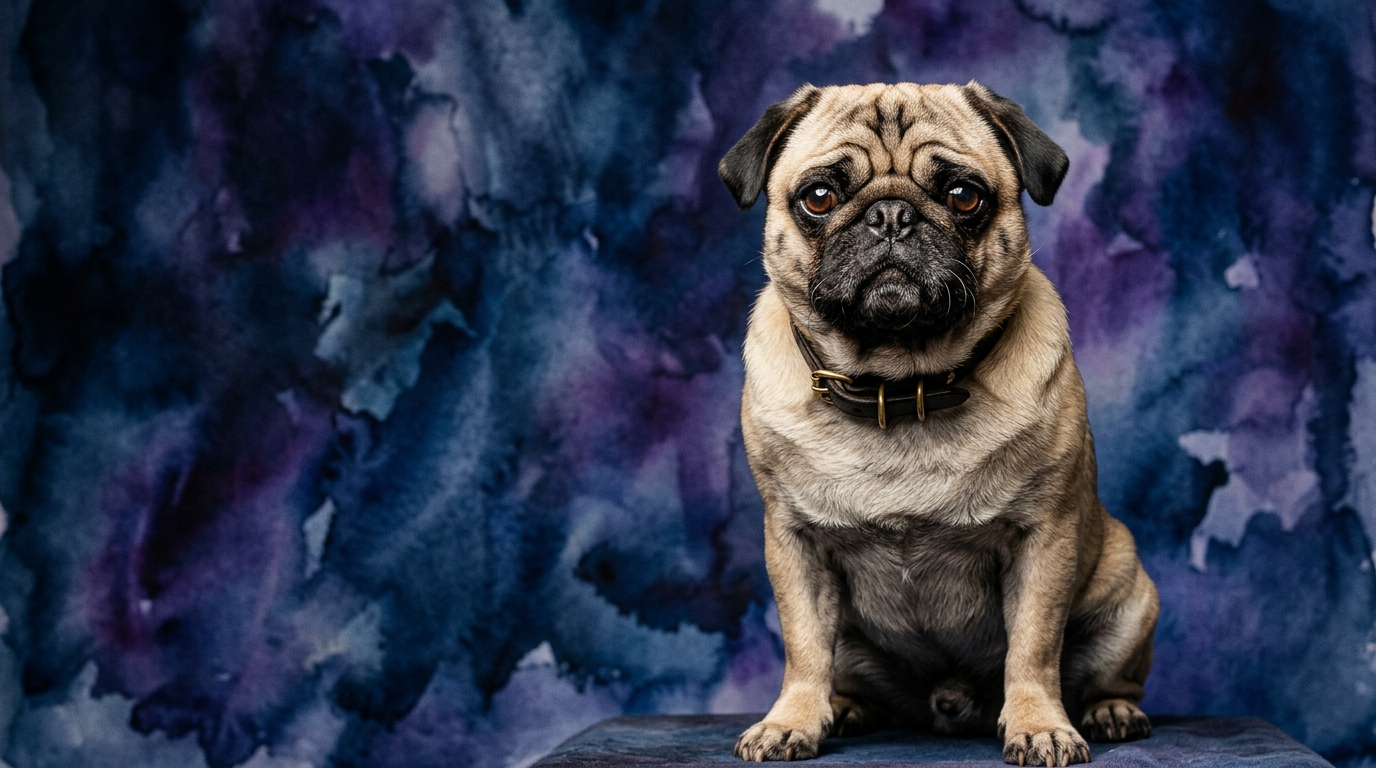
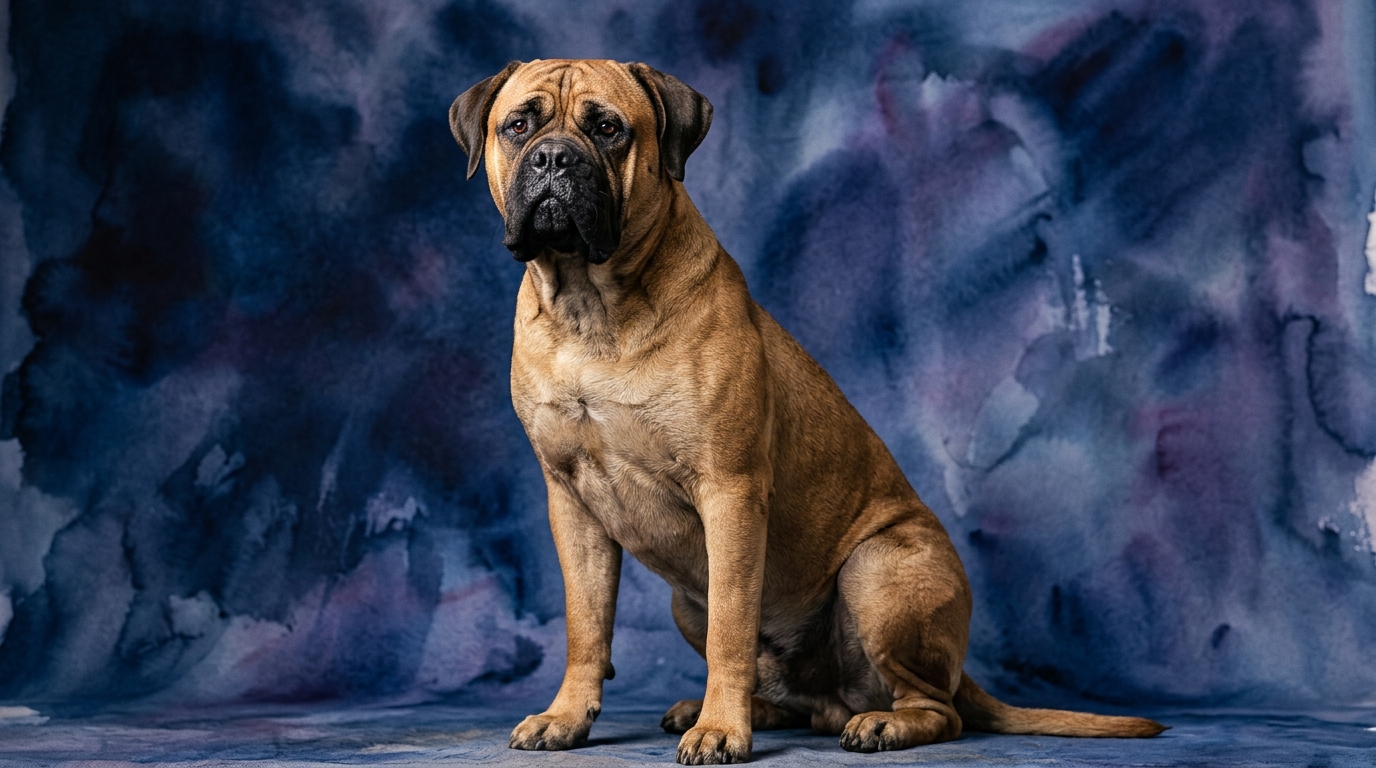
Side-by-Side Cognitive Profile: Pug vs. Bullmastiff
At The Cosmic Pet Pet IQ Lab, we evaluate canine intelligence across five key dimensions, providing a nuanced understanding beyond simple rankings. The Pug, with a Coren rank of #57, and the Bullmastiff, ranked #69, offer distinct cognitive blueprints.
The Pug's profile shows a Problem Solving score of 2/5, indicating a tendency to prefer human intervention over independent problem-solving. Their Training Speed is also 2/5, suggesting they may take longer to grasp new commands. However, their Social Intelligence shines at 5/5, making them exceptionally attuned to human emotion and interaction. Instinctive Drive is low at 2/5, meaning they typically lack strong natural urges for independent tasks, while their Memory is an average 3/5, allowing for decent retention of routines and familiar cues.
In contrast, the Bullmastiff's cognitive makeup presents a Problem Solving score of 3/5, suggesting a moderate capacity for independent thought and navigating novel situations. Their Training Speed is 3/5, indicating a steady learning pace for new commands. Social Intelligence for the Bullmastiff is 3/5; while they form strong bonds, their expression of social cues is less overt than a Pug's. Instinctive Drive stands at 3/5, often channeled into protective or companionable behaviors, and their Memory is also 3/5, similar to the Pug in its average retention of experiences and instructions.
Where the Pug Excels Cognitively
The Pug’s primary cognitive strength lies unequivocally in their exceptional Social Intelligence, scoring a perfect 5/5. This isn't merely about being friendly; it signifies a profound ability to read and interpret human non-verbal cues, emotional states, and subtle shifts in tone. Pugs are masters of empathetic connection, often anticipating their human companions' needs for comfort or attention before a word is spoken. Their neurological architecture seems particularly wired for companionship, allowing them to form incredibly strong, intuitive bonds. This high social acumen means they thrive on interaction, making them unparalleled companions for those seeking a dog deeply attuned to family dynamics. While they may not be solving complex puzzles, their talent for emotional resonance is a sophisticated form of intelligence, demonstrating a unique adaptive strategy centered on social harmony and devotion.
Where the Bullmastiff Demonstrates Cognitive Prowess
The Bullmastiff's cognitive strengths are evident in its more balanced scores across several dimensions, particularly in Problem Solving (3/5), Training Speed (3/5), and Instinctive Drive (3/5). Their 3/5 problem-solving score indicates a practical intelligence, allowing them to navigate their environment with more independent thought than a Pug. This might manifest as figuring out how to open a gate or strategically position themselves for comfort. Their 3/5 training speed suggests a more efficient learning curve for new commands and routines, absorbing information at a steady, reliable pace. This means they are often more receptive to structured training sessions and can internalize expectations with fewer repetitions. Furthermore, their 3/5 instinctive drive, often expressed as a protective nature or a desire to be a steadfast companion, provides an inherent motivation that can be harnessed in training and daily life. This drive translates into a sense of purpose, contributing to their overall cognitive engagement and reliability in tasks that align with their natural predispositions.
Training Dynamics: Pug vs. Bullmastiff
When it comes to ease of training, the Bullmastiff generally offers a more straightforward experience than the Pug. The Bullmastiff's 3/5 training speed means they tend to grasp commands and understand expectations with a steadier pace, making the initial stages of obedience training potentially smoother. Their 3/5 problem-solving ability allows them to connect actions with outcomes more efficiently, reducing the need for excessive repetition. Their moderate instinctive drive, which can be channeled into tasks, also provides a foundational motivation for learning, especially when training incorporates elements of guarding or companionship that appeal to their nature.
Pugs, while deeply desirous of human affection due to their 5/5 social intelligence, can sometimes present a training challenge. Their 2/5 training speed and 2/5 problem-solving scores mean they may require more patience, consistency, and creative motivation to internalize commands. They are less inclined to independently figure out solutions to training puzzles and might be perceived as stubborn if their human isn't leveraging their strong social bond. For a Pug, training success often hinges on making the process a positive, interactive social experience, heavily reliant on praise and rewards that reinforce their desire for human approval, rather than relying on an inherent drive for task completion. Behavioral differences often include a Pug's tendency to get distracted if not fully engaged socially, whereas a Bullmastiff might be more focused on the task at hand once its purpose is understood.
Matching Cognitive Profiles to Lifestyles
The cognitive profiles of the Pug and Bullmastiff lend themselves to vastly different owner lifestyles. The Bullmastiff, with its moderate problem-solving and instinctive drive, is well-suited for owners who appreciate a dog with a sense of purpose and are willing to engage in consistent, structured mental stimulation. While not requiring extreme physical activity, they thrive with owners who provide regular training, puzzle toys, and perhaps even light 'work' like carrying a pack on a walk, appealing to their inherent drive and practical intelligence. Their steady learning pace aligns with owners who enjoy the process of teaching and refining behaviors, offering a rewarding partnership built on mutual understanding and clear expectations.
Conversely, the Pug, with its low problem-solving and instinctive drive, but exceptionally high social intelligence, is the quintessential companion for relaxed owners. Their cognitive joy comes from close proximity and constant, affectionate interaction with their humans rather than strenuous physical or mental tasks. They are content with short, leisurely strolls, ample cuddle time on the sofa, and simply being an integral, cherished part of family life. This makes them ideal for individuals or families seeking a devoted, low-maintenance cognitive companion whose primary contribution is unwavering affection and a deep, intuitive understanding of their human's emotional landscape. Owners who prefer a less task-oriented dog and prioritize warmth and companionship will find a Pug's cognitive makeup perfectly aligned with their lifestyle.
The Verdict
Choose a Pug if your lifestyle prioritizes an exceptionally affectionate, highly socially intelligent companion who thrives on close human interaction and requires minimal structured mental or physical exertion.
Opt for a Bullmastiff if you appreciate a dog with a steady learning pace, moderate problem-solving skills, and a purposeful, protective demeanor, suitable for owners who enjoy consistent training and providing a sense of 'job' or routine.
🧠 Find Your Pet's IQ Score
Our Pet IQ Lab assessment covers 25+ tests across 5 cognitive dimensions — personalized to your breed.
Take the Full IQ Test →Frequently Asked Questions
Do Pugs understand human emotions better than Bullmastiffs?
Yes, Pugs score 5/5 in social intelligence, indicating a superior ability to read and respond to human emotions and cues, making them exceptionally empathetic companions compared to the Bullmastiff's 3/5 score in this dimension.
Which breed is more independent in thought, Pug or Bullmastiff?
The Bullmastiff, with its 3/5 problem-solving score, exhibits a greater capacity for independent thought and practical decision-making in its environment than the Pug, which scores 2/5 in this cognitive dimension.
Can a Pug be trained for complex tasks like a Bullmastiff?
While Pugs can learn commands, their 2/5 training speed and problem-solving scores suggest they may struggle with complex tasks that a Bullmastiff, with its 3/5 scores in both areas, might pick up more readily, particularly if the tasks lack a strong social reinforcement component.