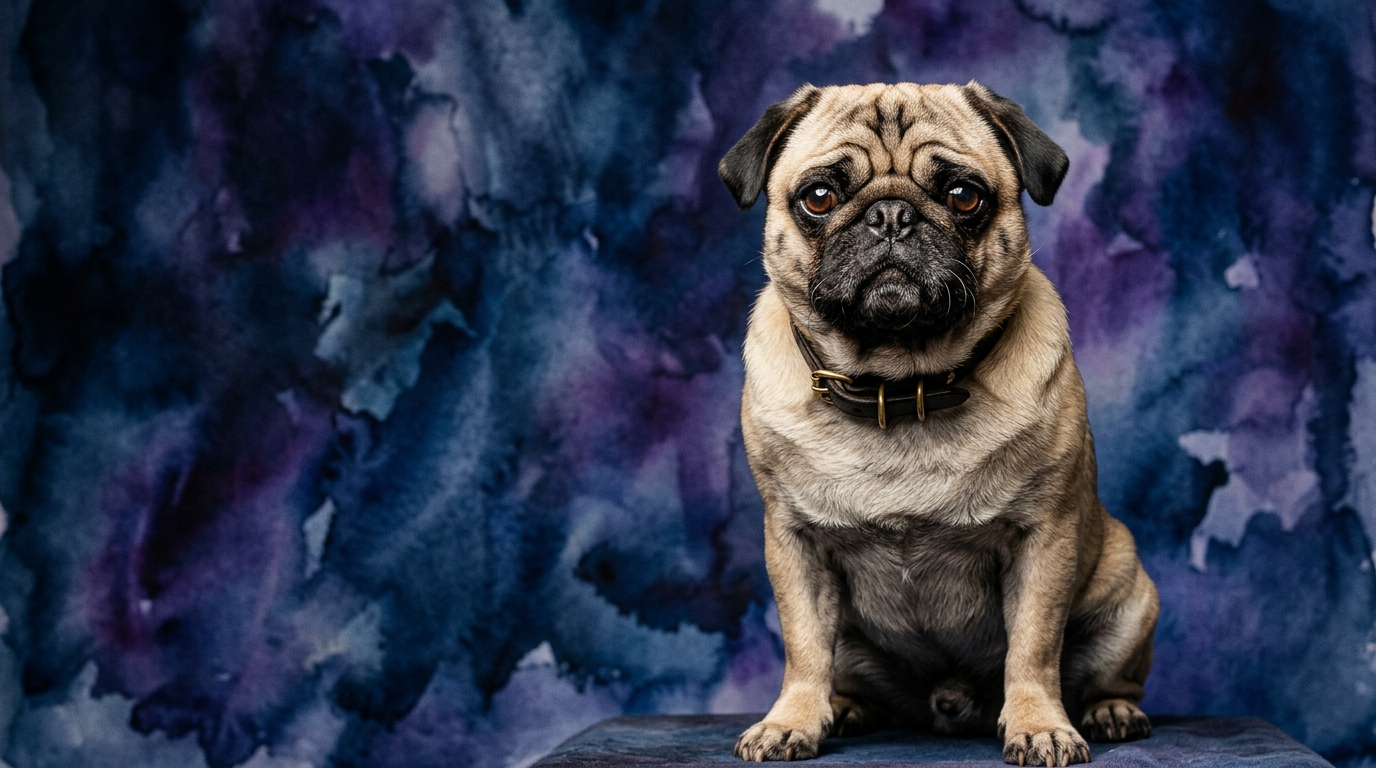
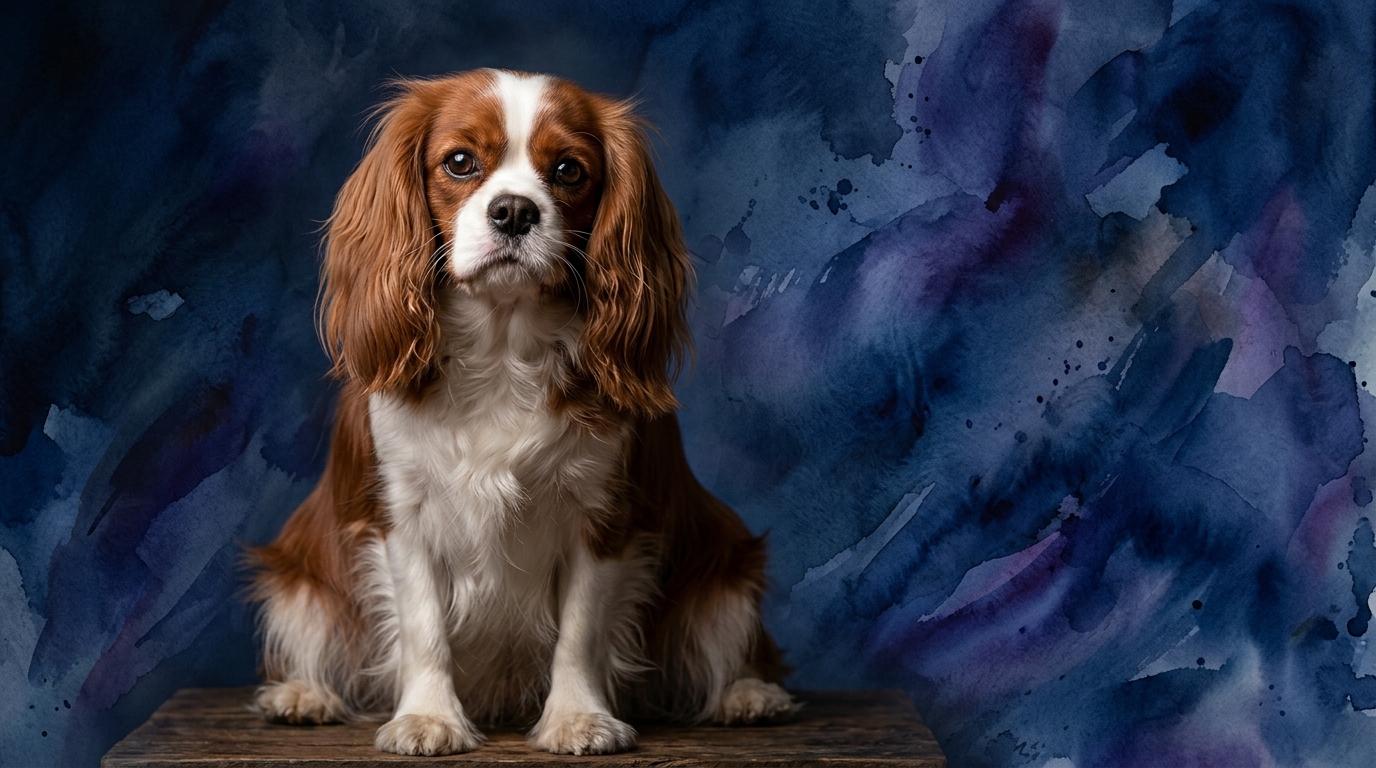
Side-by-Side Cognitive Profiles
The Cosmic Pet Pet IQ Lab provides a unique lens through which to compare the Pug and the Cavalier King Charles Spaniel. The Pug, ranked #57 by Coren, demonstrates a cognitive profile deeply rooted in social connection, scoring 2/5 for Problem Solving, 2/5 for Training Speed, an exceptional 5/5 for Social Intelligence, 2/5 for Instinctive Drive, and 3/5 for Memory. This suggests a dog less inclined towards complex independent thought or rapid skill acquisition, but profoundly attuned to human interaction.
In contrast, the Cavalier King Charles Spaniel, with a Coren rank of #44, presents a slightly more versatile cognitive toolkit. Their profile includes 3/5 for Problem Solving, 3/5 for Training Speed, a matching 5/5 for Social Intelligence, 3/5 for Instinctive Drive, and 3/5 for Memory. These scores indicate a breed with a moderate capacity for navigating novel situations and learning new behaviors, combined with an equally strong social aptitude and a slightly more pronounced, though still mild, inherent drive.
Where the Pug's Cognition Shines
While the Pug doesn't outscore the Cavalier in raw numerical terms across all cognitive dimensions, its profile highlights a specific kind of intellectual strength: an unparalleled dedication to social processing. Their 5/5 Social Intelligence isn't merely about being friendly; it reflects a deep cognitive attunement to human emotional states, routines, and desires. Pugs often seem to anticipate their owner's moods and needs, integrating themselves seamlessly into the family unit as highly perceptive companions.
Furthermore, the Pug's lower Instinctive Drive (2/5) can be a cognitive advantage in a domestic setting. This means less mental energy is diverted towards independent exploration, hunting, or territorial guarding. Cognitively, a Pug is often content to simply 'be' with its people, rather than constantly seeking out environmental stimulation or challenges. This focus on companionship over independent action makes them wonderfully uncomplicated pets, whose cognitive priorities are clear: connection and comfort.
Where the Cavalier King Charles Spaniel Excels Cognitively
The Cavalier King Charles Spaniel's cognitive strengths lie in its balanced and slightly elevated scores across several practical domains. With a 3/5 in Problem Solving, Cavaliers demonstrate a greater capacity for independent thought when faced with novel situations or minor obstacles. This means they are more likely to figure out how to retrieve a dropped toy from under furniture or navigate a slightly complex environment without constant human intervention, reflecting a more adaptable cognitive approach.
Their 3/5 in Training Speed also signifies a quicker grasp of new commands and routines compared to the Pug. This isn't just about obedience; it speaks to a cognitive flexibility that allows them to form associations between cues and actions more readily. Combined with a 3/5 in Instinctive Drive, Cavaliers possess a moderate internal motivation that can be channeled effectively into training or engaging activities, making them responsive and enthusiastic participants in learning tasks.
Training Dynamics: Pug vs. Cavalier
When it comes to training, the cognitive profiles of these two breeds lead to distinct experiences. The Cavalier King Charles Spaniel, with its 3/5 Training Speed and 3/5 Problem Solving, generally presents an easier and more fluid training journey. They tend to pick up new commands with moderate repetition and are more inclined to understand the 'why' behind a request, making them responsive to positive reinforcement and varied training approaches. Their slightly higher instinctive drive also means they can be motivated by toys or short bursts of activity, adding another dimension to their trainability.
The Pug, scoring 2/5 in both Training Speed and Problem Solving, requires a more patient and consistent approach. Their cognitive processing for learning new commands is slower, meaning owners must be prepared for more repetition and shorter, engaging sessions to maintain focus. While they are eager to please their beloved humans (thanks to their 5/5 Social Intelligence), their cognitive architecture means they may not always grasp complex sequences or generalize commands quickly. Owners should focus on clear, simple instructions and celebrate small successes to build confidence, understanding that their cognitive strengths lie elsewhere than rapid skill acquisition.
Matching Cognitive Profiles to Lifestyles
The nuanced cognitive differences between Pugs and Cavalier King Charles Spaniels directly influence which breed might better suit an owner's lifestyle. For those seeking a deeply relaxed, devoted companion whose primary cognitive focus is on human connection, the Pug is an ideal match. Their lower Instinctive Drive and Problem Solving scores mean they are less likely to seek out independent adventure or complex mental challenges, making them content with a comfortable home life and ample snuggle time. They thrive with owners who appreciate a dog whose cognitive world revolves around affection and shared quiet moments, rather than demanding intricate engagement.
Conversely, the Cavalier King Charles Spaniel's slightly elevated Problem Solving, Training Speed, and Instinctive Drive make them suitable for owners who enjoy a bit more interactive engagement. While still supremely affectionate, Cavaliers possess a cognitive spark that appreciates moderate mental stimulation, whether through learning new tricks, participating in gentle dog sports like rally obedience, or exploring new environments. They are a wonderful choice for those who desire a companion capable of more varied activities and quicker learning, but without the intense demands of high-drive working breeds. Their cognitive profile offers a lovely balance of trainability and calm companionship.
The Verdict
Choose a Pug if you prioritize an intensely affectionate companion whose cognitive strengths lie in profound social connection and a relaxed, low-maintenance mental life. They are perfect for owners seeking a devoted shadow who thrives on companionship above all else.
Opt for a Cavalier King Charles Spaniel if you desire a highly social dog with a bit more cognitive versatility, capable of quicker learning and enjoying moderate mental engagement. They are an excellent fit for owners who appreciate an adaptable companion willing to participate in varied, gentle activities.
🧠 Find Your Pet's IQ Score
Our Pet IQ Lab assessment covers 25+ tests across 5 cognitive dimensions — personalized to your breed.
Take the Full IQ Test →Frequently Asked Questions
Are Pugs difficult to train due to their cognitive profile?
Pugs are not inherently difficult, but their 2/5 Training Speed and Problem Solving scores mean they require patience and consistency. They learn best with short, positive reinforcement sessions, focusing on simple commands. Their strong desire to please, stemming from 5/5 Social Intelligence, can be a powerful motivator if tapped into correctly.
Do Cavalier King Charles Spaniels need a lot of mental stimulation?
Cavaliers, with 3/5 Problem Solving and Instinctive Drive, appreciate moderate mental stimulation, but not to an extreme degree. They enjoy learning new things, puzzle toys, and exploring new places, but are equally content with quiet time with their family. Their needs are balanced, making them adaptable to various activity levels.
How does social intelligence manifest differently in Pugs and Cavaliers if both score 5/5?
While both score 5/5, their social intelligence manifests with subtle differences; Pugs often use it to anticipate and mirror human emotions, becoming deeply empathetic companions. Cavaliers leverage their social intelligence for harmonious interaction within a broader social circle, displaying a friendly demeanor towards strangers and other pets, making them widely adaptable and amiable.