Side-by-Side IQ Profile: Pug vs. Chesapeake Bay Retriever
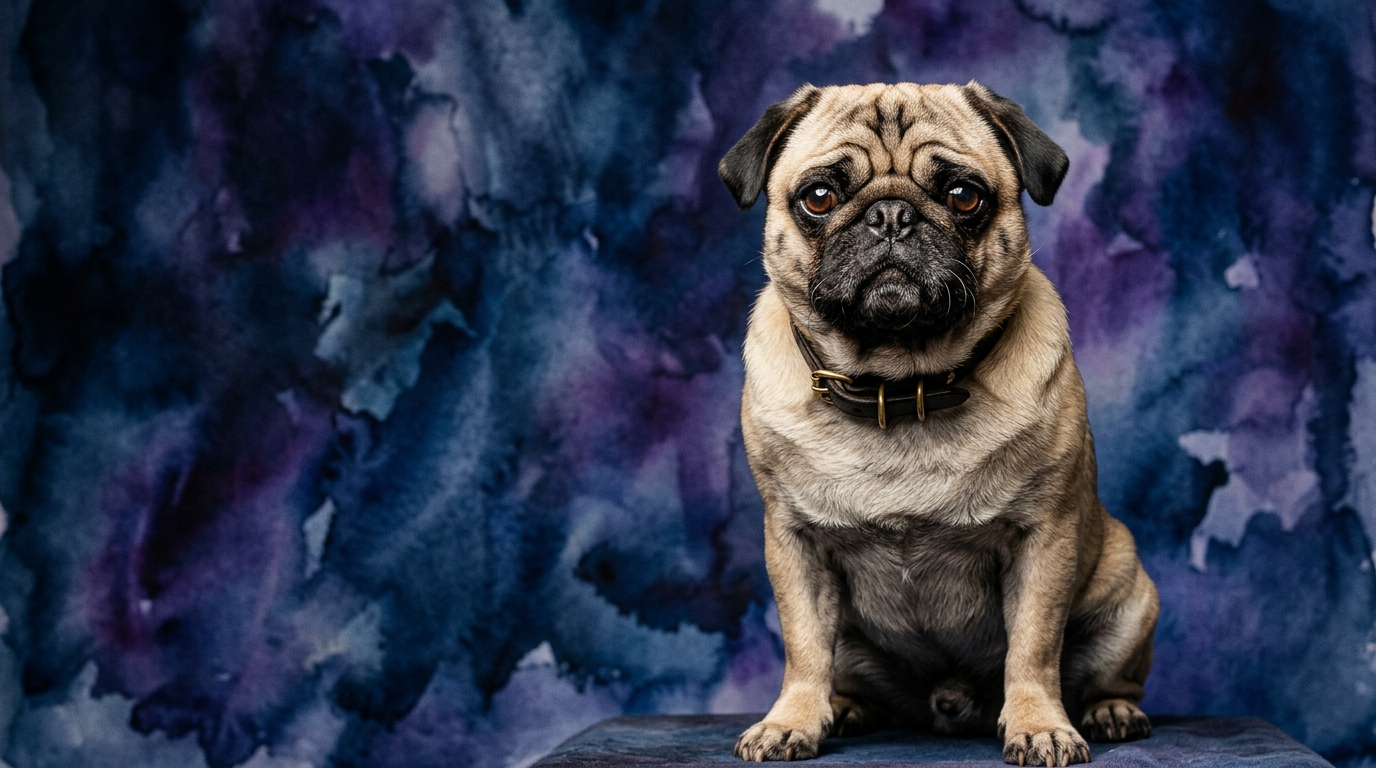
At The Cosmic Pet Pet IQ Lab, we evaluate canine intelligence across five key dimensions. For the Pug, a Toy breed with a Coren rank of #57, their cognitive blueprint looks like this: Problem Solving 2/5, Training Speed 2/5, Social Intelligence 5/5, Instinctive Drive 2/5, and Memory 3/5. This profile suggests a dog whose strengths lie primarily in companionship and emotional connection, rather than complex task mastery.
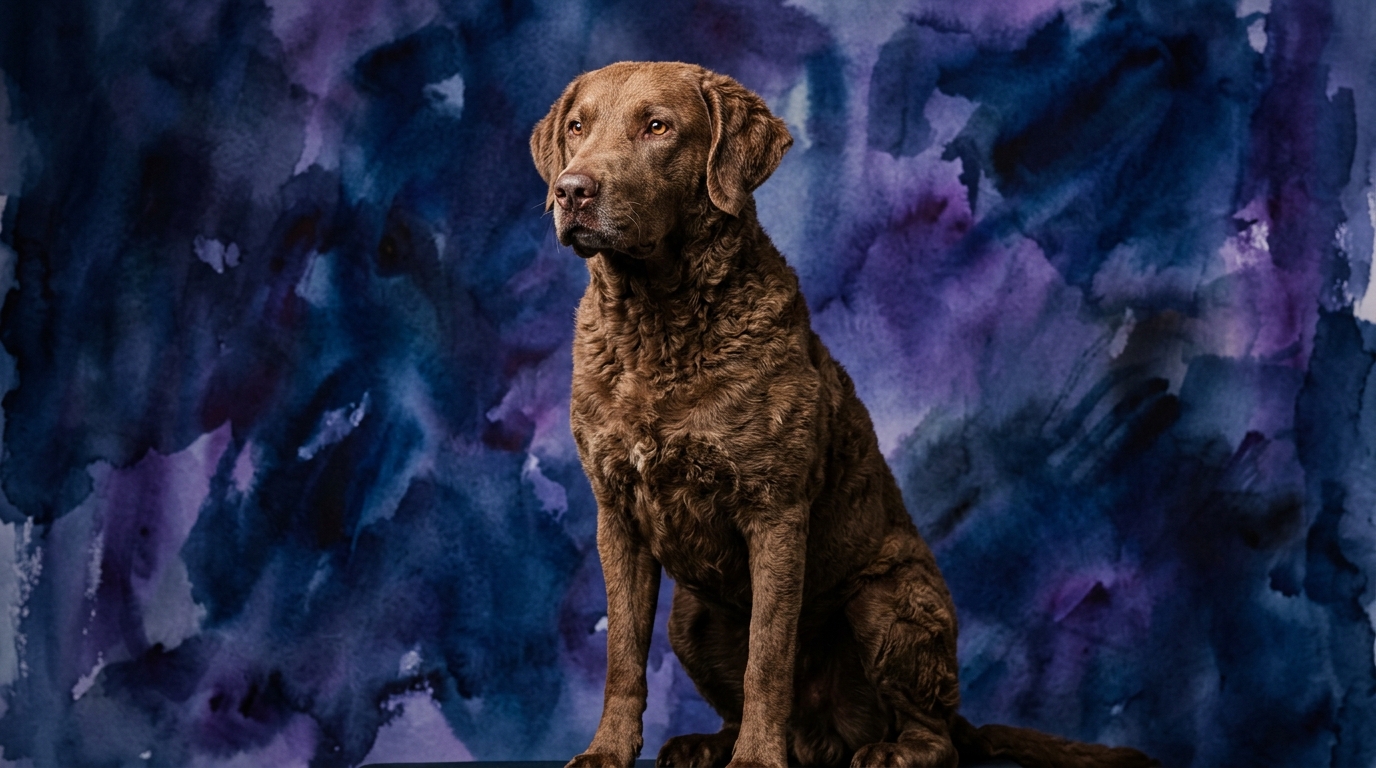
The Chesapeake Bay Retriever, a Sporting breed ranked #27 by Coren, presents a different cognitive landscape: Problem Solving 4/5, Training Speed 4/5, Social Intelligence 3/5, Instinctive Drive 3/5, and Memory 4/5. This indicates a canine built for purpose and engagement, demonstrating a robust capacity for learning, problem-solving, and retaining information relevant to working roles.
Where the Pug Excels Cognitively
The Pug's cognitive strengths lie almost entirely within the realm of social interaction and emotional connection. Their 5/5 social intelligence score is unparalleled in this comparison, indicating a profound ability to read and respond to human moods. A Pug might not figure out how to open a complex puzzle toy, but they excel at understanding when their owner needs comfort, offering an empathetic presence without prompting. They can subtly influence human behavior through charming gazes or gentle nudges, not out of malice, but from an innate understanding of social dynamics that secures their place close to their human companions.
This profound social attunement allows them to integrate seamlessly into family life, often becoming the emotional barometer of the household. Their memory, while not top-tier at 3/5, is perfectly suited for remembering preferred lap spots, treat locations, and the specific routines of their human family members, reinforcing their role as beloved companions who prioritize comfort and connection.
Where the Chesapeake Bay Retriever Excels Cognitively
The Chesapeake Bay Retriever (Chessie) demonstrates a broader spectrum of practical cognitive abilities. Their 4/5 problem-solving skill means they are more likely to independently assess a situation, such as how to retrieve a toy from a tricky spot or navigate an unfamiliar trail, and execute a viable solution. This is evident in their historical role as waterfowl retrievers, where they had to think on their feet in challenging and dynamic environments.
Their training speed, also rated 4/5, allows them to absorb complex commands and sequences rapidly, making them adept at various canine sports and working roles. This quick learning is bolstered by their 4/5 memory, enabling them to retain intricate instructions and recall them even after extended periods. While their social intelligence is a respectable 3/5, it's their combination of keen problem-solving, rapid learning, and robust memory that makes them capable of mastering diverse tasks and adapting to varied working scenarios. Their moderate instinctive drive (3/5) provides the underlying motivation to apply these cognitive skills purposefully.
Training Dynamics: Which is Easier to Train and Why?
When considering ease of formal training, the Chesapeake Bay Retriever holds a distinct advantage due to its higher scores in training speed (4/5), problem-solving (4/5), and memory (4/5), coupled with a respectable instinctive drive (3/5). Chessies typically possess a strong desire to work alongside their human partners and a greater aptitude for understanding complex commands. Their ability to quickly grasp new concepts and retain them makes them responsive to consistent instruction, often thriving on the challenge of learning new skills. For example, a Chessie can be taught intricate retrieving patterns or advanced obedience routines with relative efficiency because they process and remember sequences of actions well. Their drive means they are often motivated by tasks and have a natural inclination to follow through.
In contrast, the Pug, with lower scores in training speed (2/5) and problem-solving (2/5), and a lower instinctive drive (2/5), can present more challenges in formal training contexts. Pugs are not lacking in capacity, but their motivation often stems from comfort and social interaction rather than a desire for task completion. They might learn commands, but their focus can wander quickly, and they may require significantly more repetition and positive reinforcement to solidify behaviors. For instance, teaching a Pug a reliable recall in a distracting environment might be a lengthy endeavor, as their attention is more easily diverted by interesting smells or the desire to return to a cozy spot. Their cognitive strength lies in understanding social cues, which they might use to charm their way out of a demanding training session rather than engaging with the task itself. Training a Pug requires immense patience, creativity, and an understanding that their primary cognitive function is companionship, not rigorous task execution.
Matching Breeds to Lifestyles: Active vs. Relaxed Owners
The choice between these two breeds for active versus relaxed owners boils down to their core cognitive profiles and associated behavioral needs. The Chesapeake Bay Retriever, with its higher problem-solving, training speed, memory, and moderate instinctive drive, is an ideal match for active owners. These dogs thrive on purpose and engagement; their minds and bodies are built for activity. An active owner who enjoys hiking, swimming, dog sports, or even just long, stimulating walks will find the Chessie to be an enthusiastic and capable partner. Their cognitive abilities mean they benefit greatly from mental challenges like advanced obedience, scent work, or agility, which prevents boredom and channels their drive constructively. A Chessie would quickly become restless and potentially destructive if left with insufficient mental and physical outlets, as their cognitive makeup demands engagement beyond simple daily routines.
Conversely, the Pug is perfectly suited for relaxed owners. Their low instinctive drive, coupled with their exceptional social intelligence, means their primary needs revolve around companionship and comfort rather than demanding physical or mental tasks. A Pug's idea of a perfect day often involves napping on a lap, short strolls around the block to greet neighbors, and being an integral part of family life. They do not require complex problem-solving games or intense training sessions to feel fulfilled; their cognitive satisfaction comes from being attuned to their human's emotional state and providing affectionate presence. While they enjoy play, it's typically in short bursts rather than sustained, vigorous activity. A relaxed owner who values a devoted, low-key companion that excels at emotional support and cozy living will find the Pug's cognitive and behavioral traits to be a perfect fit.
The Verdict
Choose a Pug if your lifestyle prioritizes an emotionally intuitive companion who excels at social bonding and provides constant, affectionate presence, and if you are prepared for a training journey that emphasizes patience and positive reinforcement over rapid skill acquisition.
Opt for a Chesapeake Bay Retriever if you are an active individual or family seeking a capable, mentally engaged partner for outdoor adventures, dog sports, or working tasks, and if you appreciate a dog that learns quickly and thrives on purposeful activity.
🧠 Find Your Pet's IQ Score
Our Pet IQ Lab assessment covers 25+ tests across 5 cognitive dimensions — personalized to your breed.
Take the Full IQ Test →Frequently Asked Questions
Are Pugs difficult to train because of their intelligence scores?
Pugs aren't 'difficult' in the sense of lacking capacity, but their training speed and instinctive drive are lower, meaning they require more patience and motivation methods focused on positive reinforcement and comfort. Their social intelligence means they respond well to gentle, consistent guidance from their trusted human.
Do Chesapeake Bay Retrievers need a lot of mental stimulation?
Yes, Chesapeake Bay Retrievers truly thrive with mental stimulation due to their high problem-solving and memory scores, alongside a moderate drive. Activities like advanced training, puzzle toys, and engaging in canine sports are crucial to keep their minds occupied and prevent boredom.
How does social intelligence differ between these two breeds?
The Pug's social intelligence (5/5) means they are profoundly attuned to human emotions and social cues, often acting as emotional barometers and seeking close physical connection. The Chesapeake Bay Retriever's social intelligence (3/5) is good for forming strong bonds, but they tend to be more independent and less overtly focused on mirroring human emotional states, preferring a partnership in activity.