Side-by-Side IQ Profile: Pug vs. Curly-Coated Retriever
At The Cosmic Pet Pet IQ Lab, we analyze canine intelligence across five key dimensions, providing a nuanced view of each breed’s unique cognitive strengths. Let’s break down how the Pug and the Curly-Coated Retriever measure up.
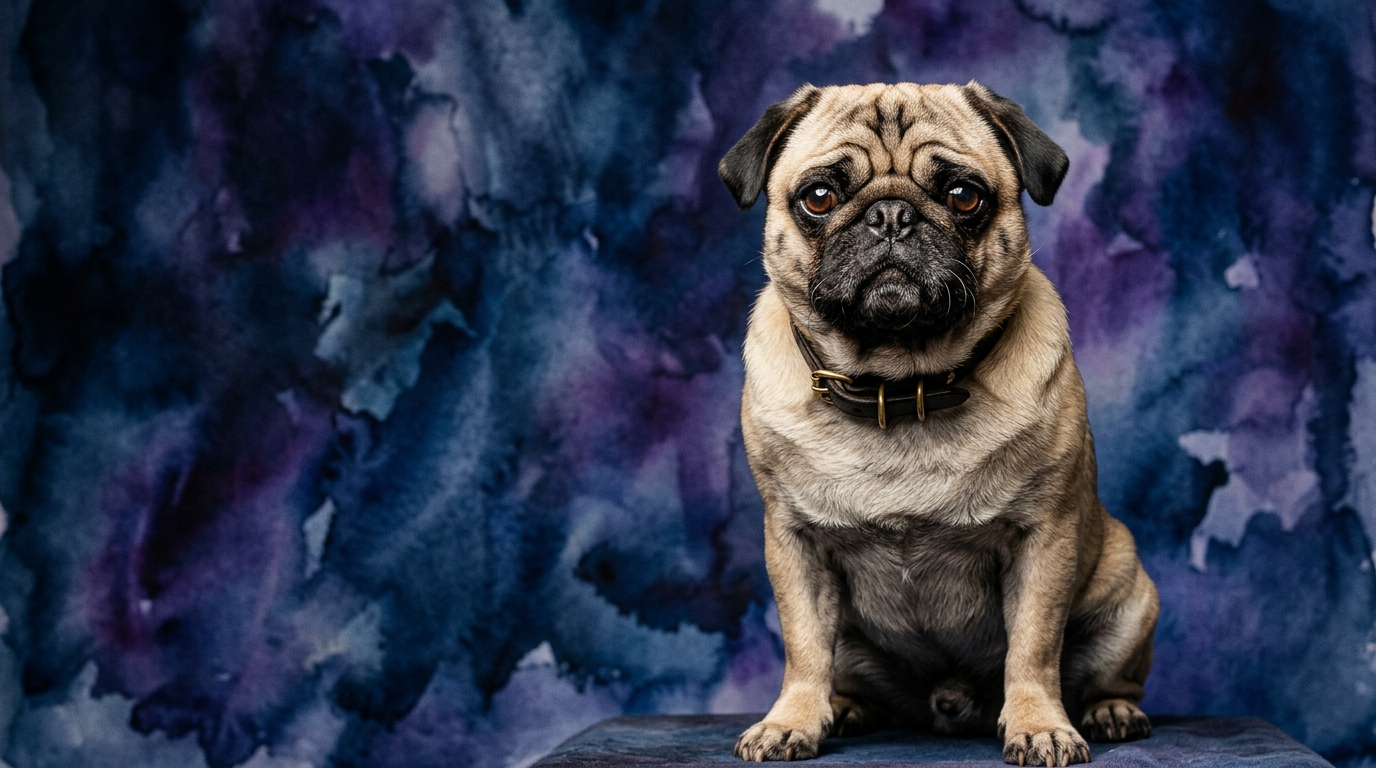
The Pug, a cherished Toy breed, ranks #57 on the Coren scale, reflecting its specialized cognitive profile. Its Problem Solving is rated 2/5, indicating Pugs typically exhibit a modest aptitude for independent problem-solving, preferring simpler solutions or relying on human intervention. Their cognitive approach leans less towards intricate, multi-step challenges like complex latches, focusing instead on immediate comfort or easy access to rewards. For Training Speed, Pugs score 2/5, meaning learning new commands often requires considerable patience and repetition. They can be easily distracted or stubborn, prioritizing comfort over compliance, so consistent positive reinforcement is crucial for mastering new routines. In Social Intelligence, the Pug truly shines with a perfect 5/5 score. They are masters at reading human emotions and intentions, adapting their behavior to charm and solicit attention, making them profoundly attuned to social cues. Reflecting their companion evolution, Pugs have notably low Instinctive Drive at 2/5. Their primary motivation is centered on comfort, food, and close human proximity, not tasks requiring sustained physical exertion or focused external stimuli. Finally, their Memory is rated 3/5; Pugs possess a functional memory for routines, people, and basic commands. While not exceptional for complex sequences, they effectively retain positive and negative associations within their familiar environment.
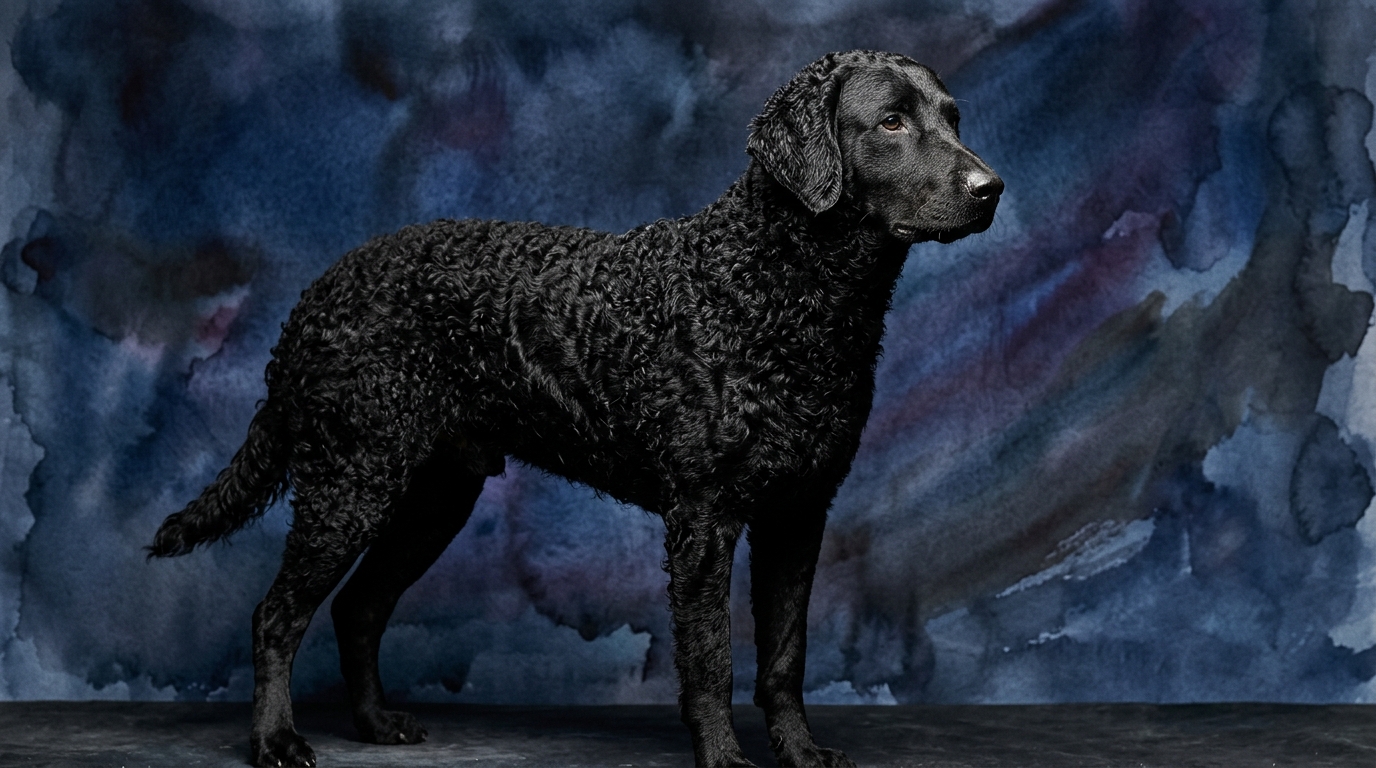
The Curly-Coated Retriever, a Sporting breed, holds a Coren rank of #41, showcasing a different set of cognitive strengths. Its Problem Solving is 3/5, demonstrating moderate aptitude for practical challenges like figuring out how to open gates or navigating obstacles. They can apply learned concepts to new situations, showcasing adaptable cognitive skills. For Training Speed, Curly-Coated Retrievers score 3/5, meaning they learn new commands at an average pace, responding well to clear instructions and motivation. Engagement is key to prevent boredom and maintain focus during training sessions. Their Social Intelligence is 3/5; these retrievers understand human moods and respond appropriately, forming strong bonds. They are attuned to their companions but less overtly expressive or 'manipulative' than a Pug. As a sporting breed, they possess a moderate Instinctive Drive of 3/5, particularly for retrieving and other activities that engage their physical and mental capacities, like fetching or scent work. A strong Memory is a hallmark of the Curly, earning a 4/5 score, allowing them to recall complex commands, routes, and retain training over long periods, which is invaluable for working roles.
Where the Pug Wins Cognitively
The Pug’s primary cognitive advantage lies in its unparalleled social intelligence. While other breeds might excel at complex problem-solving or rapid obedience, the Pug masters the art of human connection. Their 5/5 social intelligence score means they are exceptionally adept at reading subtle shifts in human mood, tone, and body language, often anticipating needs or desires before they are verbally expressed. This isn't just about 'being affectionate'; it's a sophisticated form of emotional perception that allows them to seamlessly integrate into family dynamics, offering comfort, soliciting attention, and generally influencing their environment through charm and nuanced interaction. A Pug's cognitive strength is in understanding the social landscape and leveraging it for companionship and comfort, making them incredibly intuitive emotional support animals. They excel at 'training' their humans to provide optimal conditions for their well-being through subtle cues and irresistible appeals, a cognitive feat distinct from command-based learning.
Where the Curly-Coated Retriever Wins Cognitively
The Curly-Coated Retriever’s cognitive strengths are rooted in practical application and sustained engagement, particularly in tasks requiring memory and an instinctive drive. With a 4/5 memory score, they significantly outperform the Pug in retaining complex sequences of commands and applying past learning to novel situations. This robust memory is crucial for multi-stage retrieving tasks or navigating intricate agility courses, where remembering a series of actions is paramount. Their moderate problem-solving (3/5) combined with a moderate instinctive drive (3/5) means they are more inclined to independently tackle challenges and persist in tasks that align with their working heritage. For instance, a Curly is more likely to methodically figure out how to retrieve a toy from a difficult spot or learn a complex scent discrimination exercise, demonstrating a purposeful, task-oriented intelligence that contrasts with the Pug's social focus. Their cognitive victories are in their ability to learn, remember, and execute functional behaviors reliably.
Which is Easier to Train and Why?
When considering ease of training, the Curly-Coated Retriever generally presents a more straightforward experience for most owners, despite neither breed being at the top of the Coren ranking. The Curly’s training speed of 3/5, coupled with its 4/5 memory and 3/5 instinctive drive, means it is typically more receptive to learning new commands and retaining them over time. They often find purpose in structured activities and are motivated by engaging tasks, making them willing partners in obedience, agility, or field work. Their drive to perform and remember sequences means that once a command is learned, it’s likely to stick, and they’ll apply it consistently.
The Pug, with its 2/5 training speed, presents a different challenge. Their primary motivation is often comfort, food, or social interaction, not necessarily the inherent satisfaction of completing a task. While Pugs can be trained, it requires immense patience, creativity, and a consistent positive reinforcement approach. They are prone to distraction and can exhibit a stubborn streak when something more appealing (like a nap or a snack) presents itself. Their high social intelligence might mean they learn how to get what they want from you rather than strictly adhering to commands, making training feel like a negotiation. For instance, a Pug might 'forget' a command if it means getting more attention or a treat for trying again, whereas a Curly is more likely to execute the command directly.
Which Suits Active Owners vs. Relaxed Owners?
The choice between these two breeds heavily depends on an owner's lifestyle and their capacity to provide mental and physical engagement. For the active owner, the Curly-Coated Retriever is the clear choice. With its 3/5 instinctive drive and moderate problem-solving abilities, a Curly thrives on regular physical exercise and mental stimulation. They excel in activities like long hikes, swimming, retrieving games, agility, or obedience trials, which tap into their natural athleticism and desire to work. An owner who enjoys spending significant time outdoors, engaging in structured training, or participating in dog sports will find a fulfilling partnership with a Curly, as these activities cater directly to their cognitive and physical needs.
Conversely, the Pug is an ideal companion for a more relaxed owner. Their low instinctive drive (2/5) and preference for comfort mean they require minimal strenuous exercise. Short walks and indoor play are usually sufficient to meet their physical needs. Their exceptional social intelligence (5/5) means their primary requirement is close companionship and emotional connection, thriving on lap time, cuddling, and simply being near their human family. Owners who prefer a less demanding activity schedule and prioritize a deeply intertwined, affectionate bond will find the Pug perfectly suited to their laid-back lifestyle, where cognitive engagement is more about social interaction than complex tasks.
The Verdict
Choose a Pug if your priority is an emotionally intuitive companion who excels at social bonding and thrives on close, comfortable companionship, requiring minimal strenuous activity.
Choose a Curly-Coated Retriever if you seek a capable, task-oriented partner who enjoys learning, remembers complex sequences, and thrives on regular physical and mental engagement in activities like sports or field work.
🧠 Find Your Pet's IQ Score
Our Pet IQ Lab assessment covers 25+ tests across 5 cognitive dimensions — personalized to your breed.
Take the Full IQ Test →Frequently Asked Questions
Is a Pug difficult to train?
Pugs can be challenging to train due to their lower training speed and tendency towards distraction or stubbornness; they require patience, consistency, and highly motivating positive reinforcement to learn effectively.
Do Curly-Coated Retrievers need a lot of exercise?
Yes, Curly-Coated Retrievers are an active sporting breed with a moderate instinctive drive, requiring consistent physical exercise and mental stimulation to prevent boredom and maintain their well-being.
Which breed is better with children?
Both breeds can be good with children, but their approaches differ; Pugs offer gentle, socially intelligent companionship, while Curly-Coated Retrievers provide a more robust, playful energy suitable for active families.