Side-by-Side Cognitive Profiles
At The Cosmic Pet Pet IQ Lab, we analyze canine cognition across five key dimensions, revealing the unique mental architecture of each breed. The Pug, holding a Coren rank of #57, and the Giant Schnauzer, ranked #28, present a compelling contrast in their cognitive strengths and approaches to the world.
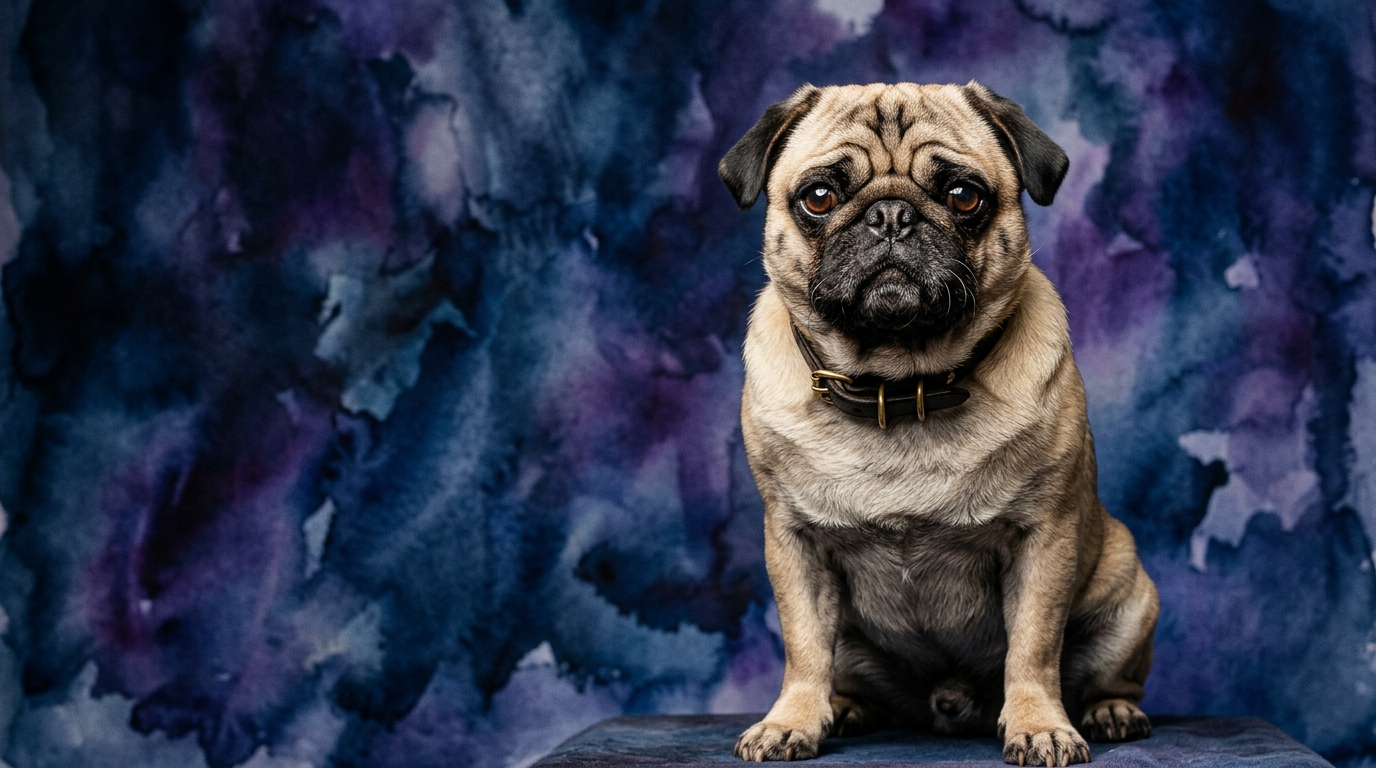
For the **Pug (Coren Rank #57)**, their cognitive breakdown is as follows:
**Problem Solving (2/5):** Pugs typically approach environmental challenges with less emphasis on complex strategic thinking. Their method often involves charming their human companions or persistent, simpler attempts rather than intricate solutions.
**Training Speed (2/5):** Learning new commands can be a gradual process for Pugs. Their independent, comfort-seeking nature means that consistent, positive reinforcement is crucial, and progress in structured obedience may not be rapid.
**Social Intelligence (5/5):** This is the Pug's undeniable cognitive forte. They possess an exceptional ability to read human emotions, adapt to social cues, and form deep, affectionate bonds. Their primary drive is often to be a cherished family member, effortlessly integrating into household dynamics.
**Instinctive Drive (2/5):** Bred primarily for companionship, Pugs exhibit low levels of instinctual behaviors like herding, guarding, or retrieving. Their drives are largely centered on comfort, food, and social interaction within their human group.
**Memory (3/5):** Pugs demonstrate a moderate capacity for memory, retaining familiar routines, people, and places quite well. While they might not recall every specific training session with precision, their long-term memory for positive experiences and beloved family members is solid.
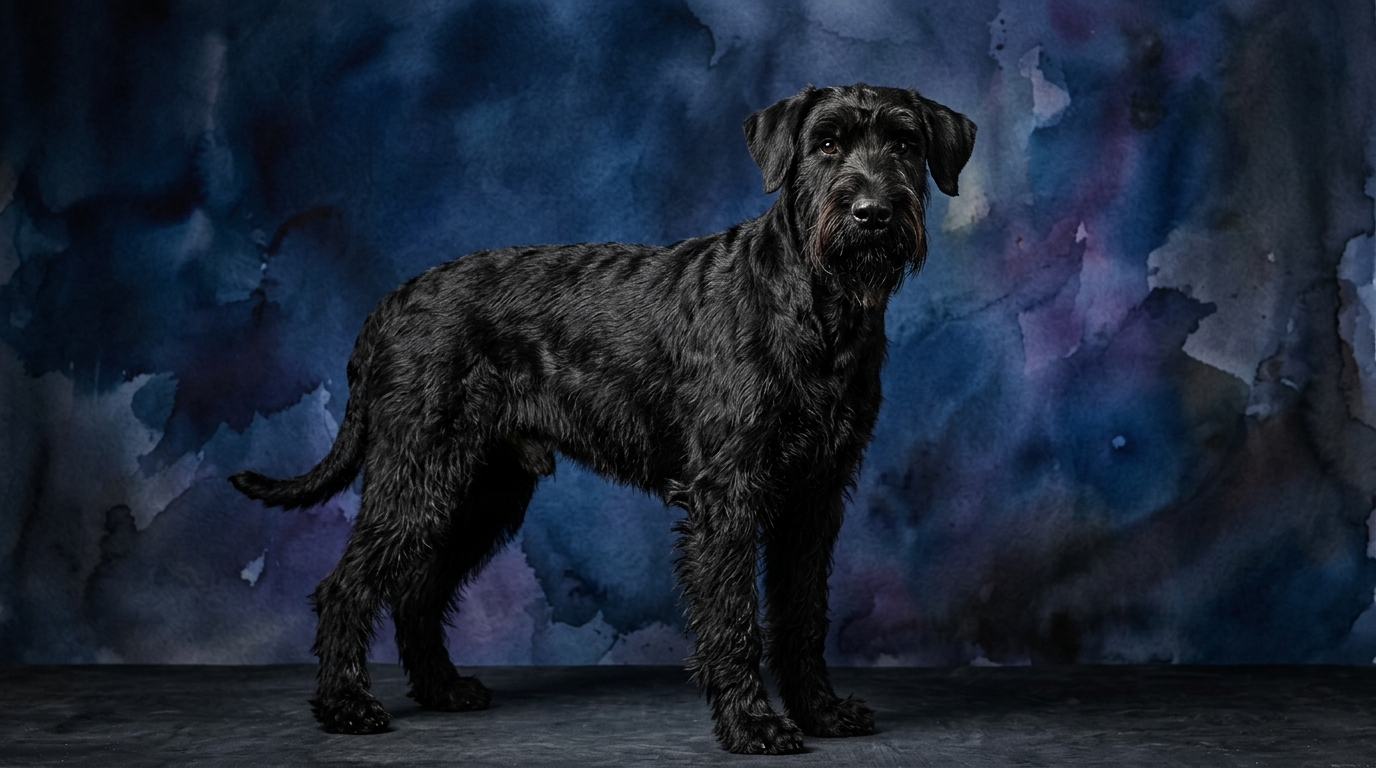
Now, let's examine the cognitive profile of the **Giant Schnauzer (Coren Rank #28)**:
**Problem Solving (4/5):** Giant Schnauzers exhibit robust problem-solving skills, capable of figuring out complex tasks and navigating challenging environments. Their working heritage means they are often adept at strategizing to achieve goals, whether it involves opening a gate or locating a hidden object.
**Training Speed (4/5):** These dogs are quick learners, absorbing new commands and routines with impressive speed. Their desire to work and engage with their handler, combined with their focus, makes them highly receptive to structured training methodologies.
**Social Intelligence (3/5):** Giant Schnauzers possess a strong sense of loyalty and form deep bonds with their families, but their social intelligence is more focused on their immediate pack. They can be reserved with strangers and benefit from early, consistent socialization to navigate broader social settings comfortably.
**Instinctive Drive (3/5):** With a background as cattle drivers and guard dogs, Giant Schnauzers retain significant instinctive drives. They have a natural inclination to protect their family and territory, and their strong prey drive requires thoughtful management and channeling.
**Memory (4/5):** Their memory capacity is notable, allowing them to recall a wide array of commands, training sequences, and past experiences. This strong recall supports their ability to perform complex tasks consistently and adapt to evolving routines over time.
Where the Pug Excels Cognitively
The Pug's standout cognitive strength lies in its exceptional social intelligence, rated a perfect 5/5. They are masters of emotional attunement and group harmony, capable of effortlessly reading the atmosphere of a room. A Pug can sense shifts in human mood and respond with a comforting presence or playful antics, demonstrating a sophisticated understanding of social dynamics. This allows them to integrate seamlessly into diverse family structures and provide unparalleled emotional support.
Their cognitive wiring prioritizes connection, making them adept at using subtle cues, body language, and vocalizations to communicate their needs and desires within a social context. They excel at forming strong, reciprocal bonds, often acting as emotional anchors for their human companions. For a Pug, understanding and influencing their social environment is their highest form of cognitive engagement, leading to their profound ability to connect with people.
Where the Giant Schnauzer Excels Cognitively
Conversely, the Giant Schnauzer's cognitive superiority manifests primarily in its robust problem-solving abilities and rapid training speed, both rated 4/5. These dogs are mentally built for active engagement and learning, possessing minds wired to analyze situations, devise solutions, and quickly grasp complex tasks. This makes them proficient in activities requiring focused thought, such as advanced obedience, agility, or working roles where they need to think on their feet.
This isn't just about following commands; it's about understanding the *why* and *how* of a task, allowing them to generalize learning and apply it to new scenarios. Their strong memory (4/5) further supports this, enabling them to retain intricate sequences and build upon past experiences. Where a Pug might charm its way out of a challenge, a Giant Schnauzer is more likely to methodically work through it, demonstrating a keen intellectual drive to master its environment and assigned tasks.
Training Dynamics: Pug vs. Giant Schnauzer
Based on their cognitive profiles, the Giant Schnauzer is generally more straightforward to train in terms of obedience and task-oriented learning. Their 4/5 training speed and 4/5 problem-solving ability indicate a dog eager to learn and capable of quickly understanding complex commands and routines. They possess a strong work ethic and a desire to engage with their handler in structured activities. For instance, teaching a Giant Schnauzer a multi-step retrieve or an agility course sequence will likely see faster progress due to their focus and capacity for retaining information, supported by their 4/5 memory. Their instinctive drive (3/5) also means they respond well to tasks that tap into their natural inclinations for purpose and activity, thriving on having a 'job' to do.
The Pug, with a training speed of 2/5 and problem-solving at 2/5, presents a different training dynamic. While they are certainly capable of learning, their motivation often stems from social connection and comfort rather than a strong drive for obedience for its own sake. A Pug might learn 'sit' perfectly for a treat, but their independent streak means they might choose not to perform if the incentive isn't immediate or if they'd rather be cuddling. Training a Pug requires immense patience, consistent positive reinforcement, and making the learning process feel like a fun social interaction. Their high social intelligence (5/5) means they respond best to training that strengthens their bond with their owner, rather than rote drills, demonstrating a preference for cooperation over strict command adherence.
Matching Breeds to Lifestyles: Active vs. Relaxed Owners
The Giant Schnauzer is undeniably suited for active owners who relish mental and physical engagement with their canine companion. Their robust problem-solving skills, rapid training speed, and moderate instinctive drives mean they thrive on purpose-driven activities. Owners who enjoy dog sports like agility, obedience trials, protection work, or even just long, challenging hikes will find a Giant Schnauzer an enthusiastic and capable partner. These dogs require consistent mental stimulation and physical exercise to prevent boredom and channel their considerable energy positively. An owner who can provide structured training, varied activities, and a clear leadership role will see a Giant Schnauzer flourish, becoming a devoted and well-adjusted member of the family.
In contrast, the Pug is an ideal match for more relaxed owners who prioritize companionship and emotional connection over strenuous activities. Their lower instinctive drives and moderate physical needs make them content with shorter walks, indoor play, and ample cuddle time. The Pug's exceptional social intelligence means they excel in roles where their primary 'job' is to provide comfort and affection. Owners who appreciate a dog that is deeply attuned to their emotions, enjoys being part of daily routines without demanding constant action, and offers a charming, often comical, presence will find immense joy in a Pug. Their cognitive strengths lie in their ability to be present, to connect, and to enrich the home environment with their amiable personality, making them perfect for those seeking a devoted, low-key companion.
The Verdict
Choose a Pug if your lifestyle is relaxed and you seek a deeply affectionate, socially astute companion who thrives on emotional connection and provides comforting presence.
Opt for a Giant Schnauzer if you are an active owner prepared to provide extensive mental stimulation, structured training, and purpose-driven activities for a devoted working dog.
🧠 Find Your Pet's IQ Score
Our Pet IQ Lab assessment covers 25+ tests across 5 cognitive dimensions — personalized to your breed.
Take the Full IQ Test →Frequently Asked Questions
Do Pugs understand human emotions better than Giant Schnauzers?
Yes, Pugs exhibit superior social intelligence (5/5) compared to Giant Schnauzers (3/5). They are exceptionally adept at reading human emotions, adapting to social cues, and forming profound emotional bonds, making them highly empathetic companions within a family setting.
Can a Pug perform complex tricks like a Giant Schnauzer?
While Pugs can certainly learn tricks, their problem-solving (2/5) and training speed (2/5) are lower than a Giant Schnauzer's (4/5 for both). A Giant Schnauzer is generally more inclined and quicker to master complex, multi-step tasks due to its working dog cognitive profile and drive for engagement.
Which breed requires more mental exercise?
The Giant Schnauzer requires significantly more mental exercise due to its higher problem-solving (4/5), training speed (4/5), and instinctive drives (3/5). Pugs, with lower scores in these areas, are generally content with less structured mental stimulation and prefer social interaction and comfort-based activities.