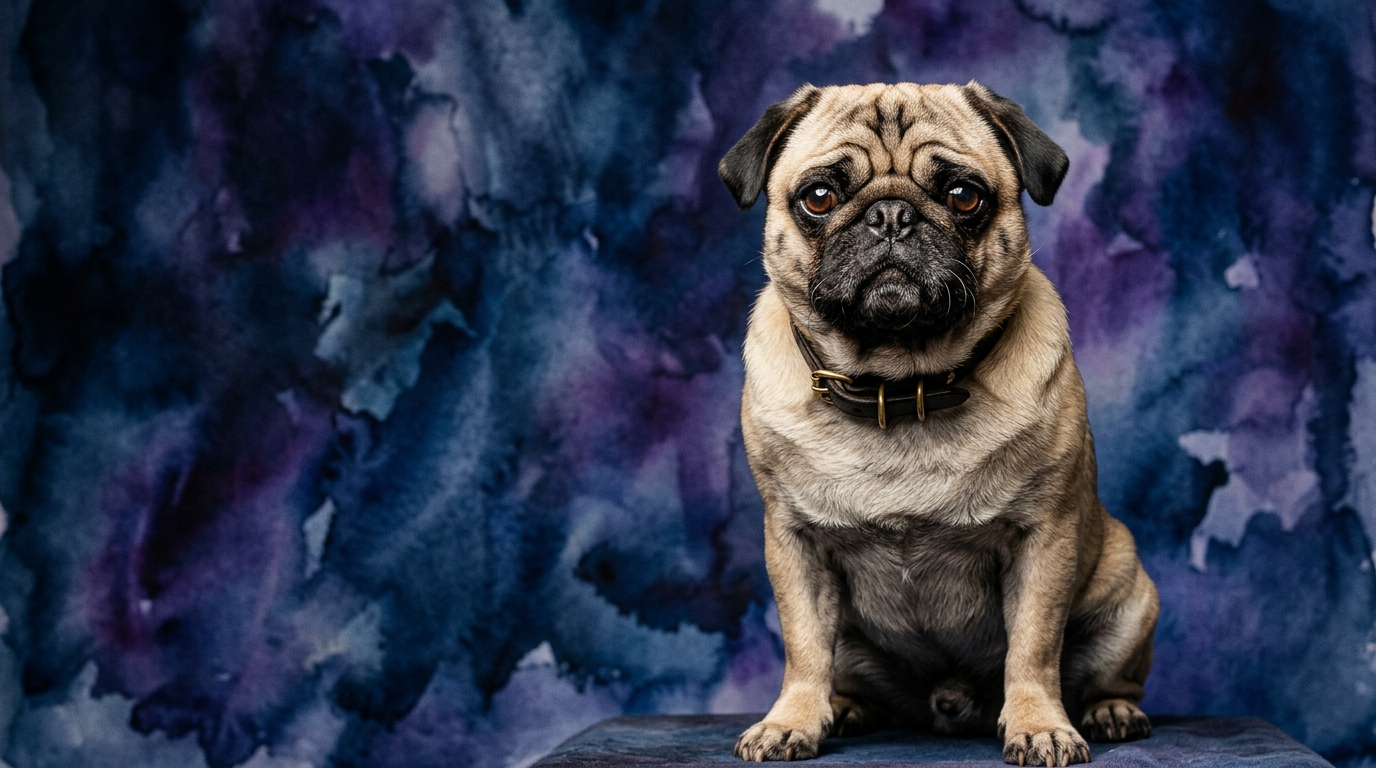
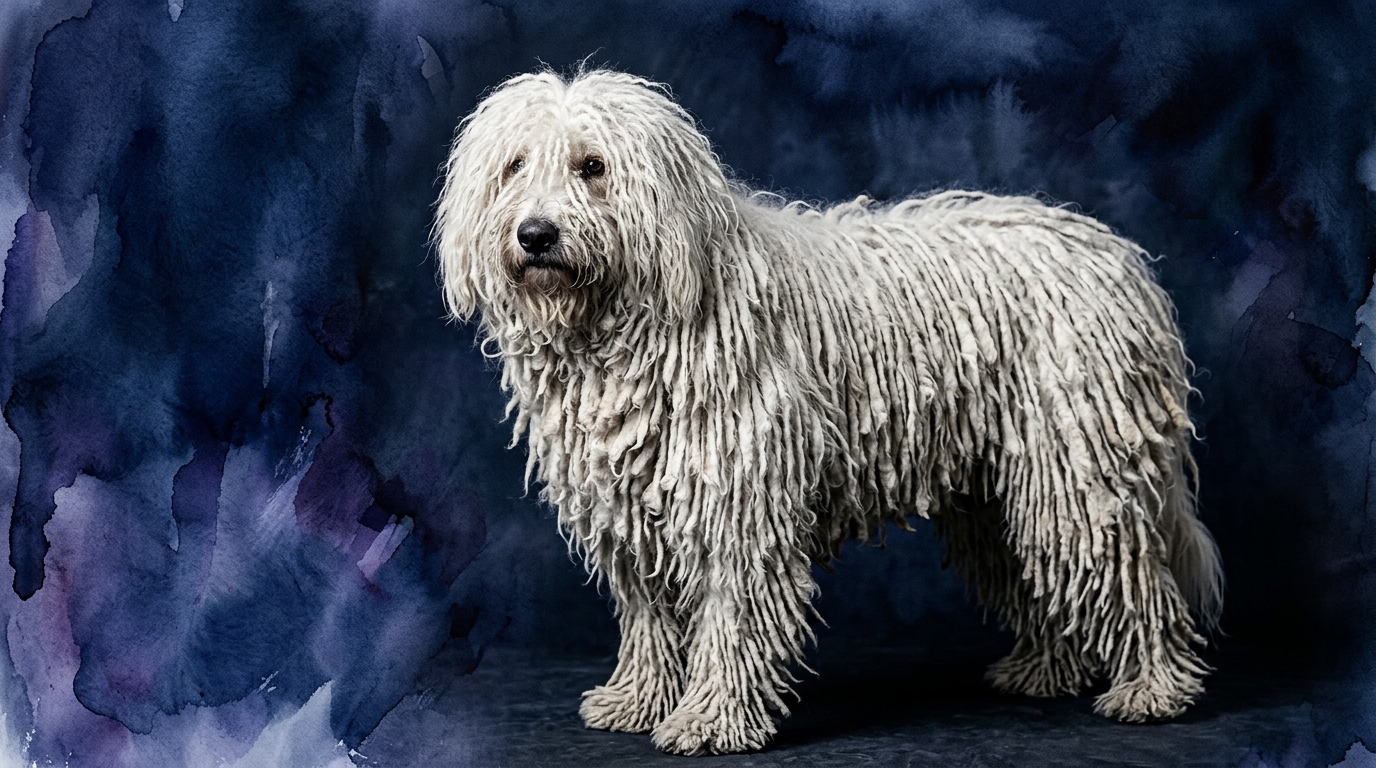
Side-by-Side IQ Profile: Pug vs. Komondor
The Cosmic Pet Pet IQ Lab evaluates canine cognition across five distinct dimensions, offering a nuanced view beyond a single 'intelligence' metric. For the Pug, a Toy group dog with a Coren rank of #57, its cognitive blueprint is heavily weighted towards social interaction. It scores a modest 2/5 in Problem Solving, suggesting it’s not inclined to independently strategize or navigate complex environmental puzzles. Its Training Speed also sits at 2/5, indicating that new commands and behaviors require consistent, patient repetition to solidify.
Where the Pug truly shines is in Social Intelligence, earning a perfect 5/5. This reflects an exceptional capacity to understand and respond to human emotions and social cues, forming deep, intuitive bonds. Its Instinctive Drive is low at 2/5, meaning it possesses minimal prey drive or guarding tendencies, aligning with its role as a devoted companion. Finally, the Pug's Memory is rated at 3/5, an average capacity for retaining learned information and experiences.
Shifting our focus to the Komondor, a Working group dog with a Coren rank of #67, we see a cognitive profile tailored for independence and protection. This breed scores a respectable 3/5 in Problem Solving, demonstrating a capacity for autonomous decision-making and navigating challenging situations. Its Training Speed is also rated at 3/5, suggesting a moderate pace of learning, though often requiring a clear purpose and motivation.
The Komondor's Social Intelligence comes in at 3/5. While capable of forming strong bonds with its family, it tends to be more reserved and discerning with strangers, reflecting its guardian nature rather than an all-enencompassing desire for social engagement. Its Instinctive Drive is a solid 3/5, encompassing strong protective instincts and territorial awareness, crucial for its historical role. Like the Pug, the Komondor's Memory is rated at 3/5, indicating an average ability to recall past events and learned behaviors.
Where the Pug Wins Cognitively
The Pug's undisputed cognitive strength lies in its exceptional Social Intelligence, scoring a rare 5/5. This isn't merely about being 'friendly'; it signifies a profound ability to read and interpret human emotional states, body language, and subtle vocal cues. A Pug can often sense a shift in its owner's mood, offering comfort or seeking attention with uncanny timing.
This high social intelligence translates into an unparalleled capacity for emotional bonding and companionship. Pugs excel at integrating into family dynamics, adapting their behavior to fit the household's rhythm, and consistently seeking close physical and emotional proximity. Their communication, while not always verbal, is highly effective in conveying their needs and desires, making them remarkably intuitive companions.
Where the Komondor Wins Cognitively
The Komondor's cognitive advantages are rooted in its historical purpose as an independent livestock guardian. Its 3/5 score in Problem Solving is a significant win, indicating a capacity for autonomous thought and decision-making without constant human direction. This breed was bred to assess threats, strategize defensive actions, and protect its flock in isolation, a task requiring genuine cognitive flexibility and initiative.
Furthermore, the Komondor's 3/5 Instinctive Drive is a clear cognitive strength within its domain. This isn't just a physical trait; it's a hardwired mental framework for vigilance, territoriality, and protection. Their minds are constantly processing environmental stimuli for potential threats, and they possess an innate understanding of their role as sentinels. This drive means they possess a natural predisposition for duties that require discernment and protectiveness, which is a complex cognitive function.
Which is Easier to Train and Why?
Determining which breed is 'easier' to train is complex, as their cognitive profiles present different challenges and opportunities. The Komondor, with a Training Speed of 3/5, technically learns new commands faster than the Pug (2/5). Their higher problem-solving ability (3/5) also means they might grasp the 'why' behind a command more readily, especially if it aligns with their perceived duties or benefits. However, their independent nature and lower social intelligence (3/5) mean they are less inherently motivated by human approval and might require more compelling reasons or consistent, firm guidance to comply.
The Pug, despite its slower Training Speed, possesses a powerful asset in its 5/5 Social Intelligence. While it may take more repetitions for a Pug to grasp a new trick, its deep desire to please its human and its sensitivity to social cues can make it highly responsive to positive reinforcement and emotionally-driven training methods. Pugs are more likely to engage enthusiastically in training sessions that feel like bonding experiences, whereas a Komondor might view training as a task to be completed efficiently before returning to its own agenda. Therefore, for an owner who prioritizes bond-based training and patience, the Pug might feel more 'amenable,' but for sheer speed of command acquisition, the Komondor has an edge, provided the trainer understands its independent spirit.
Suitability for Active vs. Relaxed Owners
The Pug is an ideal match for relaxed owners who appreciate a low-key, affectionate companion. Its minimal Instinctive Drive (2/5) means it has little inclination for strenuous activities or complex 'jobs.' Pugs are content to be close to their humans, whether lounging on the couch, enjoying short strolls, or simply observing household activities. Their high Social Intelligence makes them naturally attuned to a calm home environment, seeking comfort and connection rather than constant stimulation. They thrive on human presence and thrive in a life where their primary 'job' is to be a cherished family member.
Conversely, the Komondor is better suited for active owners, though 'active' in this context refers more to mental and managerial engagement than purely physical exercise. While Komondors appreciate space to patrol, their working background means they require an owner who can consistently manage their strong Instinctive Drive (3/5) and independent Problem Solving (3/5) capabilities. These dogs need clear boundaries, extensive socialization from a young age, and an owner prepared to be a confident leader who respects their guardian instincts while channeling them appropriately. An active owner for a Komondor is someone who actively engages in consistent training, provides mental challenges, and understands the responsibilities of owning a dog with a powerful protective drive, ensuring it integrates safely into a modern home environment.
The Verdict
Choose a Pug if you seek an exceptionally empathetic, deeply bonded companion who thrives on social connection and a relaxed home environment, prioritizing emotional attunement over complex tasks.
Opt for a Komondor if you are an experienced owner who values an independent, protective guardian capable of autonomous problem-solving, and are committed to consistent training to manage its strong instinctive drives.
🧠 Find Your Pet's IQ Score
Our Pet IQ Lab assessment covers 25+ tests across 5 cognitive dimensions — personalized to your breed.
Take the Full IQ Test →Frequently Asked Questions
Are Pugs truly 'stubborn' during training, given their low training speed?
While Pugs have a 2/5 training speed, meaning they require more repetition, their high social intelligence (5/5) often makes them eager to please their owners. Their 'stubbornness' might be better understood as requiring patience and positive, bond-focused reinforcement rather than outright defiance.
Do Komondors require a lot of physical exercise to be happy?
Komondors do not necessarily need intense physical exercise like some other working breeds. Their 'active owner' suitability refers more to the need for mental engagement, consistent training, and managing their strong guardian instincts, rather than long runs or high-impact sports.
How does a dog's Coren rank relate to its specific Cosmic Pet IQ Lab scores?
A Coren rank provides a general measure of a breed's working and obedience intelligence, while Cosmic Pet IQ Lab scores offer a granular breakdown of five distinct cognitive dimensions. A breed might have an average Coren rank but excel in specific IQ areas like social intelligence or problem-solving, providing a more detailed understanding of its mental strengths.