Side-by-Side Cognitive Profiles: Pug vs. Parson Russell Terrier
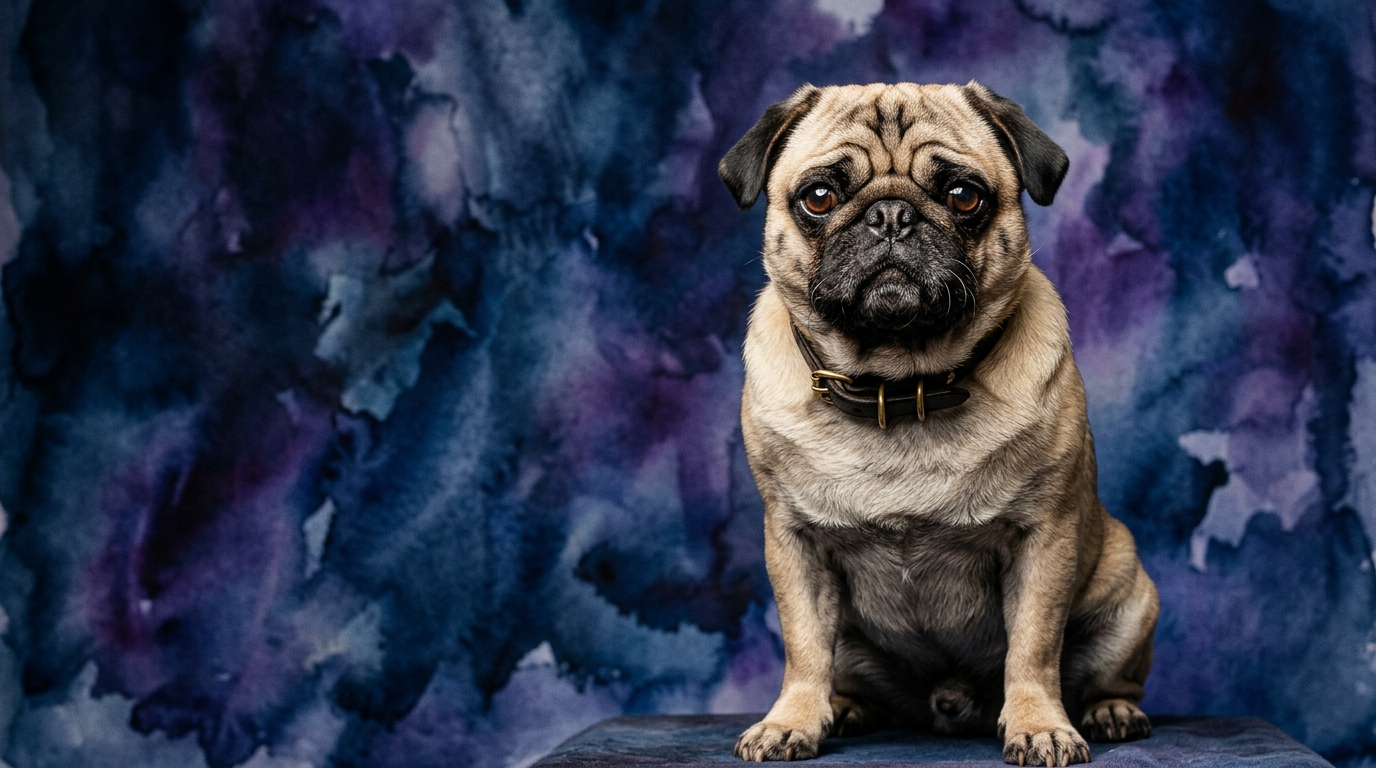
The Pug, a cherished companion breed, presents a distinct cognitive profile according to The Cosmic Pet Pet IQ Lab's assessments. With a Coren rank of #57, indicating a moderate capacity for understanding new commands, their intelligence shines brightest in social contexts. Their Problem Solving score of 2/5 suggests they are not naturally inclined to independently dissect complex environmental challenges, often preferring to observe or seek human assistance rather than devise intricate solutions on their own. Similarly, their Training Speed, also at 2/5, means that acquiring new behaviors or commands requires consistent repetition and a patient, positive approach from their human partners. However, the Pug's exceptional Social Intelligence, rated 5/5, marks them as masters of emotional attunement; they possess an unparalleled ability to interpret human moods, subtle gestures, and household dynamics, making them incredibly empathetic companions. Their Instinctive Drive, a modest 2/5, reflects their primary purpose as lapdogs rather than working animals, while their Memory at 3/5 indicates a solid, average capacity for recalling routines and learned experiences.
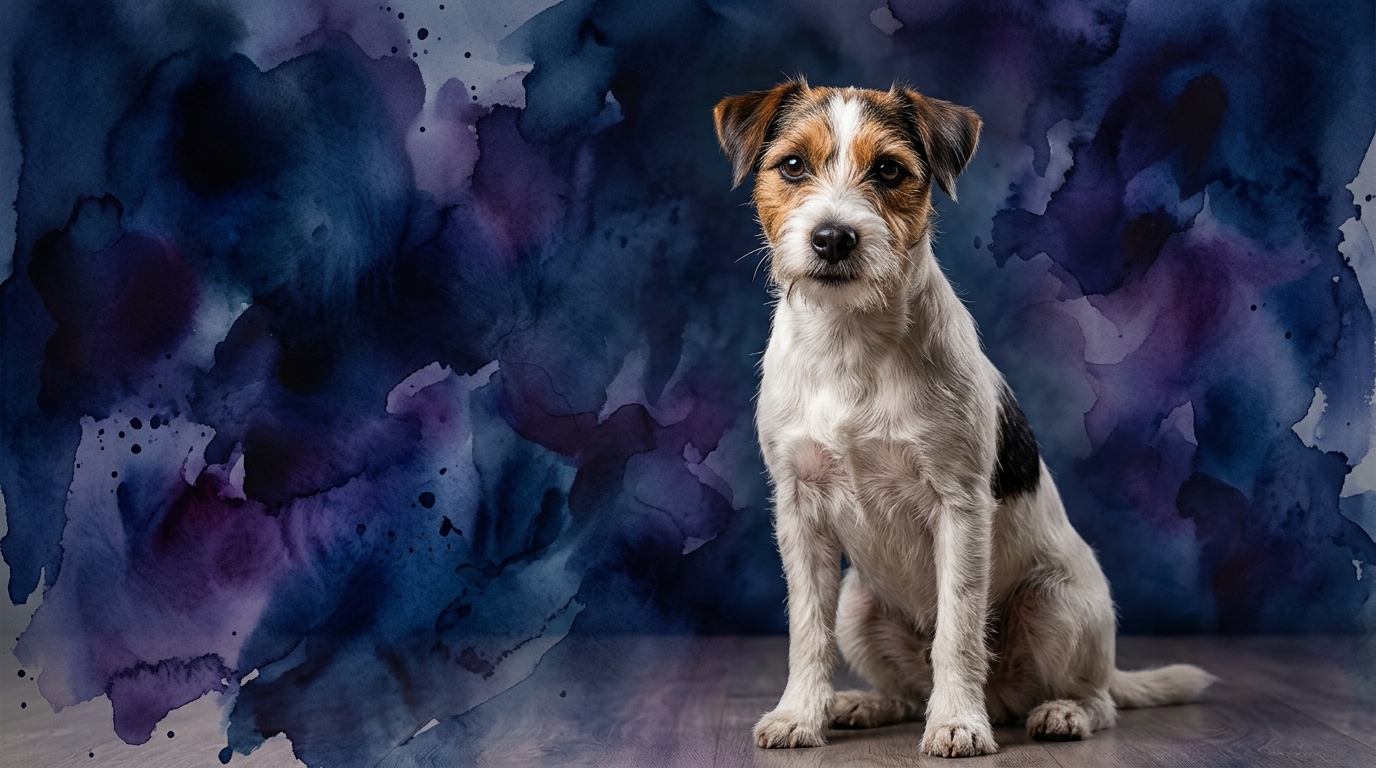
In stark contrast, the Parson Russell Terrier, a breed bred for tenacious fieldwork, exhibits a different set of cognitive strengths. While not holding a specific Coren rank, their overall IQ scores paint a picture of a more independent and task-oriented mind. Their Problem Solving ability rates at 3/5, suggesting a moderate aptitude for figuring out puzzles, navigating obstacles, and adapting to novel situations with a degree of resourcefulness. This breed's Training Speed is also 3/5, indicating they can grasp new concepts at a reasonable pace, though their independent spirit might sometimes necessitate engaging methods to maintain focus. The Parson Russell Terrier's Social Intelligence stands at 3/5; while they form strong bonds with their families, their focus is often more on activity and engagement rather than purely emotional reciprocity, making them responsive but perhaps less overtly empathetic than a Pug. Their Instinctive Drive, also 3/5, is a clear nod to their heritage, manifesting as a strong urge to explore, chase, and dig, reflecting their historical role in vermin control. Like the Pug, their Memory is rated 3/5, allowing them to retain training and environmental information effectively.
Where the Pug's Mind Excels
The Pug undeniably holds the cognitive advantage in the realm of Social Intelligence, where their score of 5/5 outshines the Parson Russell Terrier's 3/5. This isn't just about being friendly; it signifies a profound capacity for emotional understanding and attunement. Pugs excel at reading their human companions' moods, often anticipating needs or offering comfort without explicit prompts. They can discern subtle shifts in tone of voice, body language, and facial expressions, adjusting their demeanor to match the social climate. This makes them incredibly intuitive companions, often seeming to 'know' what their owners are feeling, and they thrive on reciprocal emotional connection within their family unit, making them exceptionally empathetic and perceptive within a domestic setting.
Where the Parson Russell Terrier's Mind Shines
The Parson Russell Terrier demonstrates a clear cognitive superiority in areas requiring independent thought, rapid learning, and intrinsic motivation. Their Problem Solving score of 3/5 indicates a greater aptitude for navigating novel situations and figuring out how to achieve desired outcomes, whether it's opening a cabinet or finding a hidden toy, compared to the Pug's 2/5. This breed also boasts a quicker Training Speed (3/5 vs. 2/5), meaning they are generally faster to grasp new commands and complex sequences, provided their independent nature is appropriately channeled. Furthermore, their higher Instinctive Drive (3/5 vs. 2/5) equips them with a stronger internal motivation to explore, chase, and engage with their environment, making them more resilient and persistent in tasks requiring a natural working inclination. These combined strengths make the Parson Russell Terrier a more self-reliant and adaptable problem-solver in practical, real-world scenarios.
Training Dynamics: Which Breed is 'Easier'?
When evaluating ease of training, it's crucial to consider both the speed of acquisition and the motivation behind learning. The Parson Russell Terrier, with its 3/5 Training Speed, generally picks up new commands at a quicker pace than the Pug's 2/5. Their moderate Problem Solving ability also aids in understanding the mechanics of a task more readily. However, their 3/5 Instinctive Drive can be a double-edged sword; while it fuels their enthusiasm for engaging activities, it also means they can be more easily distracted by environmental stimuli like scents or movement, requiring focused and consistent training to maintain their attention.
Conversely, the Pug, despite a slower Training Speed, often presents a different kind of 'trainability' due to their exceptional 5/5 Social Intelligence. Pugs are deeply motivated by pleasing their human companions and receiving affection and praise. While it might take more repetitions for a Pug to solidify a new command, their strong desire for social connection makes them highly responsive to positive reinforcement and eager to cooperate once they understand what is expected. Therefore, an owner seeking a dog that responds primarily to emotional cues and positive social feedback might find the Pug's willingness to engage, despite slower learning, more 'easy' in a relational sense, whereas the Parson Russell Terrier demands a more structured, stimulating, and often physical approach to training to harness their independent spirit effectively.
Matching Cognitive Profiles to Lifestyles
The cognitive profiles of these two breeds offer clear indicators for suitability with different lifestyles. Active owners who enjoy outdoor adventures, engaging in dog sports, or embarking on regular, stimulating walks will find the Parson Russell Terrier a more compatible partner. Their 3/5 Instinctive Drive and 3/5 Problem Solving aptitude mean they thrive on purposeful activity, mental challenges, and opportunities to explore. They possess the mental resilience and physical stamina to participate in agility, earthdog trials, or extended hikes, requiring an owner who can consistently provide outlets for their energetic and inquisitive minds. A Parson Russell Terrier without sufficient mental and physical engagement can become bored and potentially destructive, channeling their drives into unwanted behaviors.
In contrast, the Pug is an ideal match for more relaxed owners who prioritize companionship and quiet domesticity. Their lower 2/5 Instinctive Drive and 2/5 Problem Solving scores mean they have less innate need for intense physical exertion or complex mental tasks. Instead, their unparalleled 5/5 Social Intelligence means they are most content when nestled close to their human family, observing household activities, or enjoying gentle strolls. They are perfectly suited for apartment living or homes with smaller yards, requiring moderate exercise that satisfies their physical needs without overtaxing their brachycephalic physiology. A Pug's happiness is intrinsically linked to their social environment and the quality of their human interactions, making them the quintessential lapdog for a serene lifestyle.
The Verdict
Choose a Pug if you prioritize an exceptionally empathetic companion who thrives on close social connection and a relaxed domestic life, valuing emotional reciprocity over task-oriented engagement.
Opt for a Parson Russell Terrier if you seek an active, resourceful partner for adventures and mental challenges, appreciating an independent spirit that excels in purposeful activities.
🧠 Find Your Pet's IQ Score
Our Pet IQ Lab assessment covers 25+ tests across 5 cognitive dimensions — personalized to your breed.
Take the Full IQ Test →Frequently Asked Questions
Are Pugs truly difficult to train?
Pugs are not inherently difficult, but their Training Speed of 2/5 means they learn at a slower pace. Their high Social Intelligence makes them eager to please, so consistent, positive reinforcement and patience, focusing on social rewards, are key to successful training.
Do Parson Russell Terriers require a lot of mental stimulation?
Absolutely. With a 3/5 in Problem Solving and Instinctive Drive, Parson Russell Terriers need regular mental challenges to prevent boredom. Puzzle toys, training sessions, and varied exploration opportunities are essential for their well-being.
How does social intelligence impact daily life with these breeds?
A Pug's 5/5 Social Intelligence means they are highly attuned to family dynamics and human emotions, making them sensitive, comforting companions. A Parson Russell Terrier's 3/5 Social Intelligence means they are affectionate but often more focused on active engagement and independent exploration than subtle emotional mirroring.