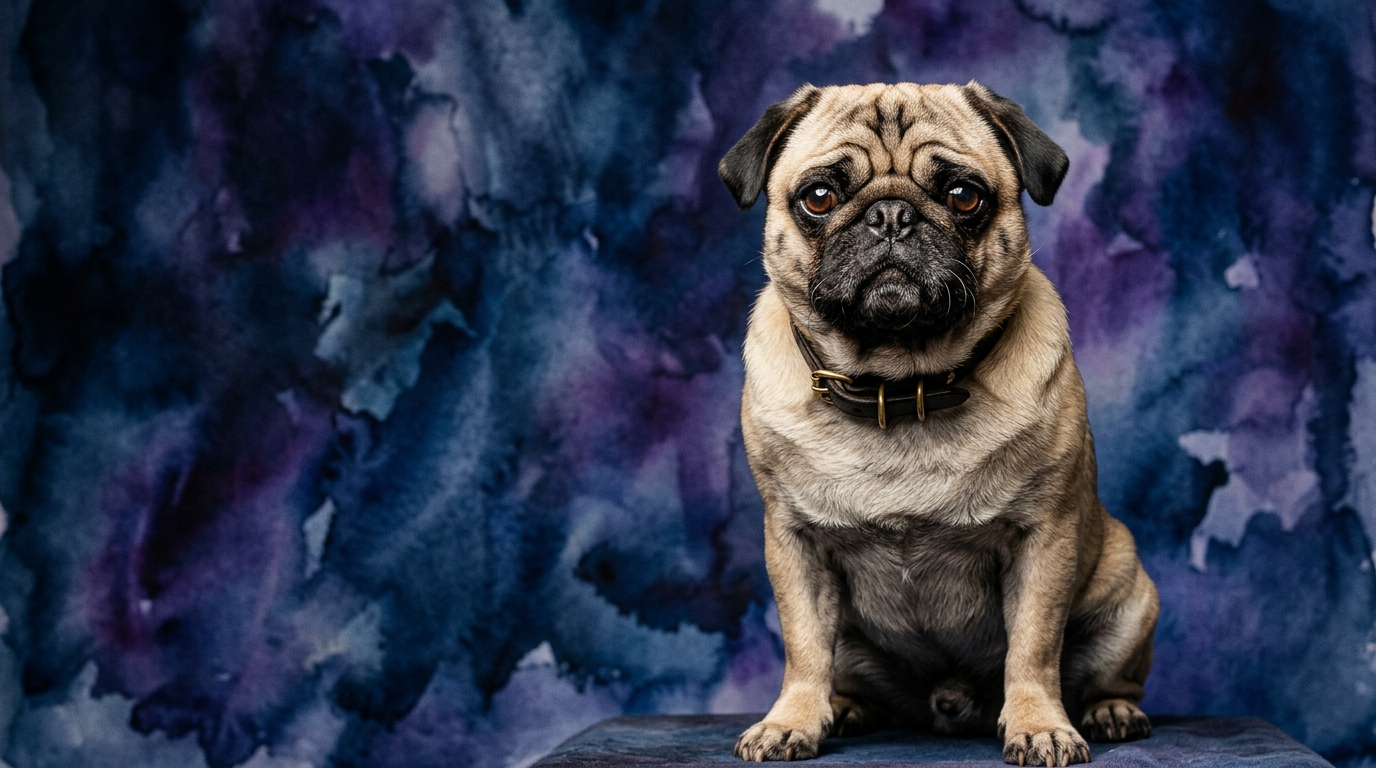
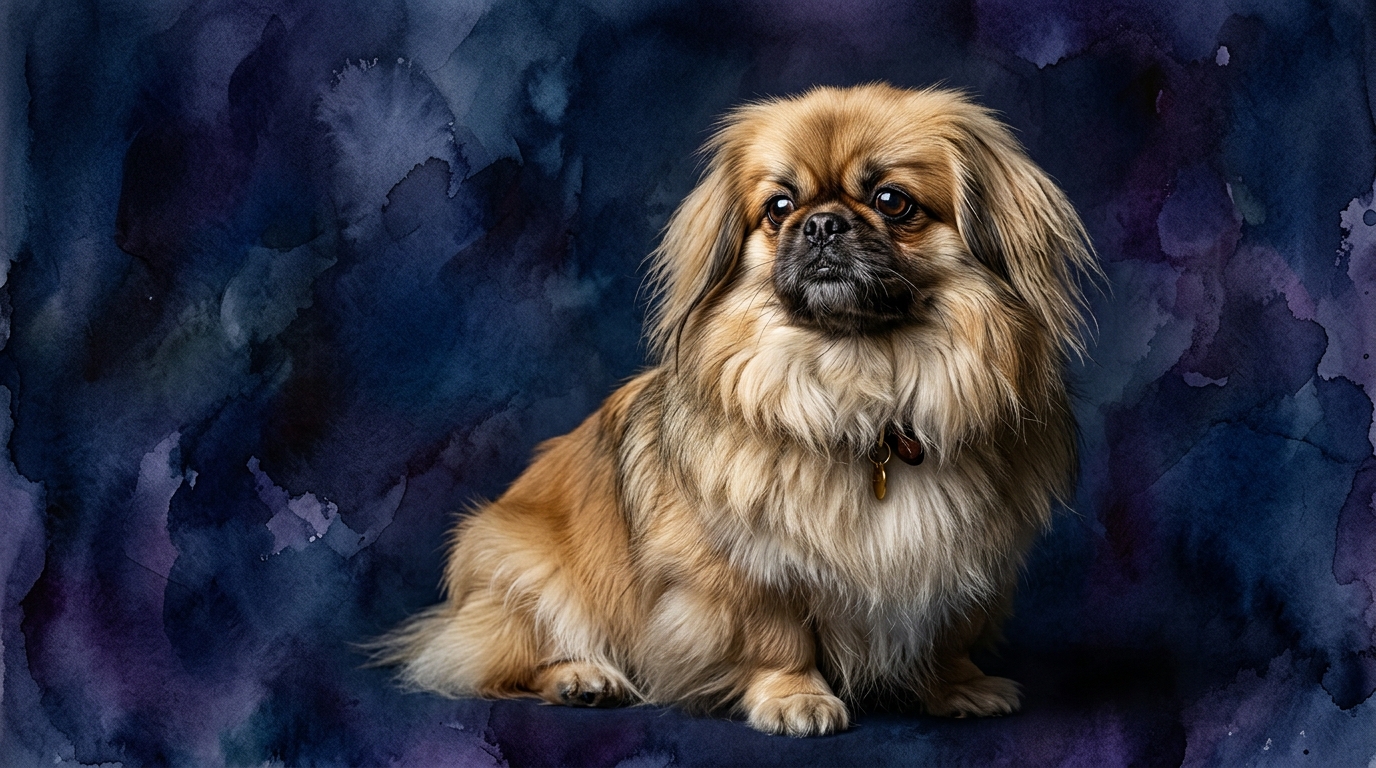
Pug vs Pekingese: A Side-by-Side IQ Profile
The Cosmic Pet Pet IQ Lab employs five key dimensions to map a breed's cognitive architecture, moving beyond superficial observations to reveal true intellectual aptitudes. For the Pug, classified as a Toy breed with a Coren rank of #57, its cognitive profile paints a picture of a companion deeply attuned to human connection. Its Problem Solving ability is rated at 2/5, indicating a tendency to rely on established routines or human guidance rather than devising novel solutions independently. Training Speed, also at 2/5, suggests that Pugs require patience and consistent repetition to grasp new commands, often preferring comfort over rigorous mental exertion. However, where the Pug truly shines is in Social Intelligence, achieving a perfect 5/5. This remarkable capacity allows them to read and respond to human emotions with exceptional empathy, making them intuitive and responsive companions. Its Instinctive Drive is low at 2/5, reflecting its centuries-long role as solely a companion animal, with minimal inclination towards working tasks or prey pursuit. Memory stands at an average 3/5, meaning Pugs generally retain routines and familiar faces well, but aren't noted for exceptional recall of complex sequences.
In contrast, the Pekingese, another dignified Toy breed with a Coren rank of #77, presents a different cognitive blueprint. Its Problem Solving score of 3/5 indicates a slightly greater capacity for independent thought and figuring out simple environmental challenges, perhaps showing a touch more ingenuity than the Pug. Training Speed mirrors this slight advantage at 3/5; while still requiring consistent effort, Pekingese can generally process and retain new commands at a moderate pace, though their independent spirit can sometimes be perceived as stubbornness. Social Intelligence for the Pekingese is rated 3/5. While deeply loyal and affectionate with their chosen family, they tend to be more reserved with strangers and less universally eager to engage socially than a Pug, preferring a select inner circle. Their Instinctive Drive is moderate at 3/5, suggesting a slightly more pronounced sense of awareness and perhaps a guarding instinct stemming from their historical role as royal watchdogs. Finally, their Memory is rated 3/5, akin to the Pug, indicating a solid ability to recall routines and learned information with consistent reinforcement.
Where the Pug Excels Cognitively
The Pug's most pronounced cognitive strength lies unequivocally in its Social Intelligence, earning a perfect 5/5. This isn't merely about being affectionate; it's a sophisticated ability to perceive, interpret, and respond to human emotional states and social cues. A Pug often acts as an emotional barometer, intuitively sensing an owner's mood and adjusting its behavior accordingly – offering a comforting nudge during distress or a playful invitation during joy. Their exceptional attunement allows them to integrate seamlessly into a family's emotional rhythm, fostering deep, reciprocal bonds. This high social aptitude means Pugs are masters at eliciting human attention and affection, often through subtle, intentional gestures, demonstrating a profound understanding of social dynamics. They thrive on interaction and are unparalleled in their capacity to provide empathetic companionship, making them profoundly responsive and intuitive partners in daily life.
Where the Pekingese Shows Cognitive Advantage
The Pekingese demonstrates cognitive advantages in areas requiring a degree of independent thought and processing efficiency. With a Problem Solving score of 3/5, the Pekingese shows a greater propensity to analyze and navigate minor environmental obstacles or figure out simple puzzles. Unlike the Pug, which might wait for human intervention, a Pekingese could more readily devise a strategy to retrieve a toy from a tight spot or understand how to manipulate a latch. This slightly higher cognitive flexibility is complemented by its 3/5 Training Speed, indicating it can process and retain new commands at a moderately faster rate. While not exceptional, this quicker learning curve, paired with its moderate 3/5 Instinctive Drive, suggests a breed with a bit more innate curiosity and a capacity for self-directed engagement, allowing it to explore its environment with a slightly more discerning and independent mindset compared to the Pug.
Trainability: Pug vs. Pekingese
When assessing trainability, the interplay of various IQ dimensions creates a nuanced picture for both breeds. The Pug, despite its lower Training Speed (2/5), often presents as an eager student due to its exceptional Social Intelligence (5/5). They possess an inherent desire to please their human companions and are highly responsive to positive reinforcement, praise, and emotional connection. This strong social drive means Pugs are often motivated by the bond they share, making them willing participants in training, even if their comprehension takes longer. However, their short attention spans and tendency towards comfort can necessitate frequent, short, and engaging training sessions, focusing on positive reinforcement to maintain their enthusiasm. They might struggle with complex, multi-step commands but excel in foundational obedience taught with patience and affection.
The Pekingese, with its higher Training Speed (3/5), theoretically can grasp commands more quickly. However, its lower Social Intelligence (3/5) and pronounced independent streak mean that motivation is key. A Pekingese needs to understand the 'why' behind a command or perceive a clear benefit for itself. They are less inherently driven to simply 'please' their human and can be selective about when and how they choose to comply. This independence, while not stubbornness in a malicious sense, means that training a Pekingese requires consistency, clear communication, and finding high-value rewards that resonate with them. While they might learn a trick faster once engaged, maintaining that engagement and overcoming their self-possessed nature can be a unique challenge for trainers. Therefore, for an owner prioritizing a dog that naturally seeks to cooperate and thrives on emotional encouragement, the Pug might feel 'easier' to train in terms of overall interaction, despite its slower learning pace for specific tasks. For an owner who values a dog that can learn skills more efficiently when the right motivators are applied, the Pekingese might be more capable, provided their independent spirit is understood and respected.
Ideal Lifestyles: Active vs. Relaxed Owners
Considering their distinct cognitive and physical profiles, both the Pug and the Pekingese are generally better suited for owners who lead a more relaxed lifestyle, though for slightly different reasons. The Pug, with its low Instinctive Drive (2/5) and physical limitations due to its brachycephalic nature, is not built for strenuous activity. Short, leisurely walks and indoor play are typically sufficient to meet their exercise needs. Their profound Social Intelligence (5/5) means they thrive on constant companionship and being an integral, often cuddly, part of the family's daily rhythm. They are ideal for individuals or families seeking an emotionally responsive, affectionate presence that is content with a calm, comfortable home environment.
The Pekingese also aligns well with relaxed owners, but offers a touch more self-sufficiency. Its moderate Instinctive Drive (3/5) and slightly higher Problem Solving (3/5) mean it appreciates short, exploratory outings and some mental engagement, but is far from a high-energy athlete. They are content with periods of quiet observation or independent lounging, not always requiring constant human interaction like a Pug. Their regal and discerning nature means they can be wonderfully affectionate but also appreciate their personal space. Owners who enjoy a dog with a dignified presence, capable of self-amusement, and who appreciate a balance of companionship and independent leisure, will find a Pekingese a fitting match. Neither breed is suited for highly active individuals seeking a jogging partner or a dog for rigorous outdoor adventures.
The Verdict
Choose a Pug if you seek an emotionally intuitive, profoundly social companion who thrives on close interaction, offers unwavering affection, and you prioritize connection and empathy over rapid obedience mastery.
Opt for a Pekingese if you appreciate a more independent, discerning companion with a regal demeanor, who can learn commands efficiently with consistent, well-motivated training, and offers a balance of deep loyalty and self-sufficient grace.
🧠 Find Your Pet's IQ Score
Our Pet IQ Lab assessment covers 25+ tests across 5 cognitive dimensions — personalized to your breed.
Take the Full IQ Test →Frequently Asked Questions
Are Pugs difficult to train?
Pugs are not inherently difficult, but their Training Speed of 2/5 means they require patience and consistency. Their high social intelligence makes them eager to please, responding best to positive reinforcement, short sessions, and a strong emotional bond, rather than rote drills.
Do Pekingese dogs enjoy mental challenges?
With a Problem Solving score of 3/5, Pekingese dogs do appreciate some mental engagement, such as simple puzzle toys or exploring new environments. This provides a healthy outlet for their slightly more independent and curious nature, keeping them stimulated without being overly demanding.
Which breed is more affectionate, Pug or Pekingese?
The Pug, with its 5/5 Social Intelligence, is generally more overtly and universally affectionate, thriving on constant human interaction and expressing its devotion readily. The Pekingese (3/5 Social Intelligence) is deeply loyal to its chosen family but tends to be more reserved and discerning with its affection, often preferring a more dignified display of companionship.