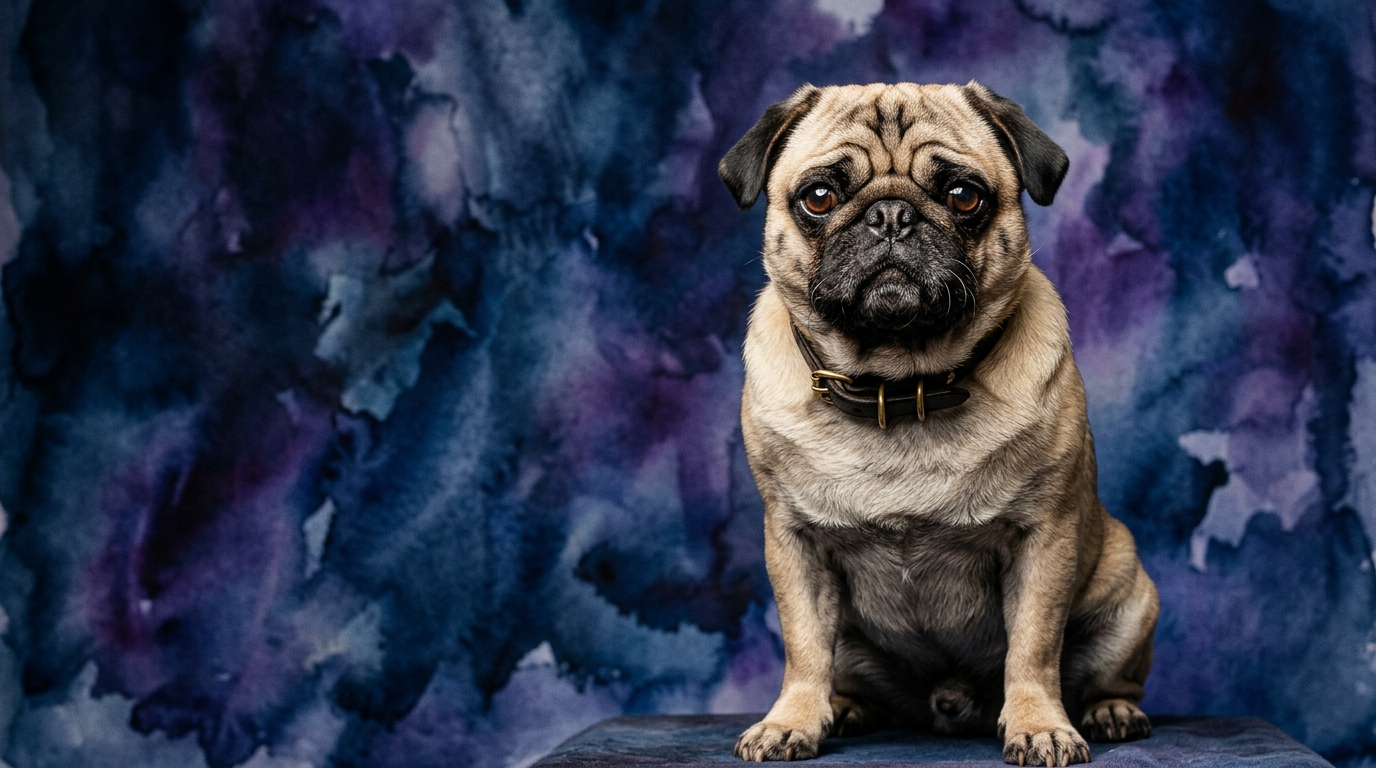
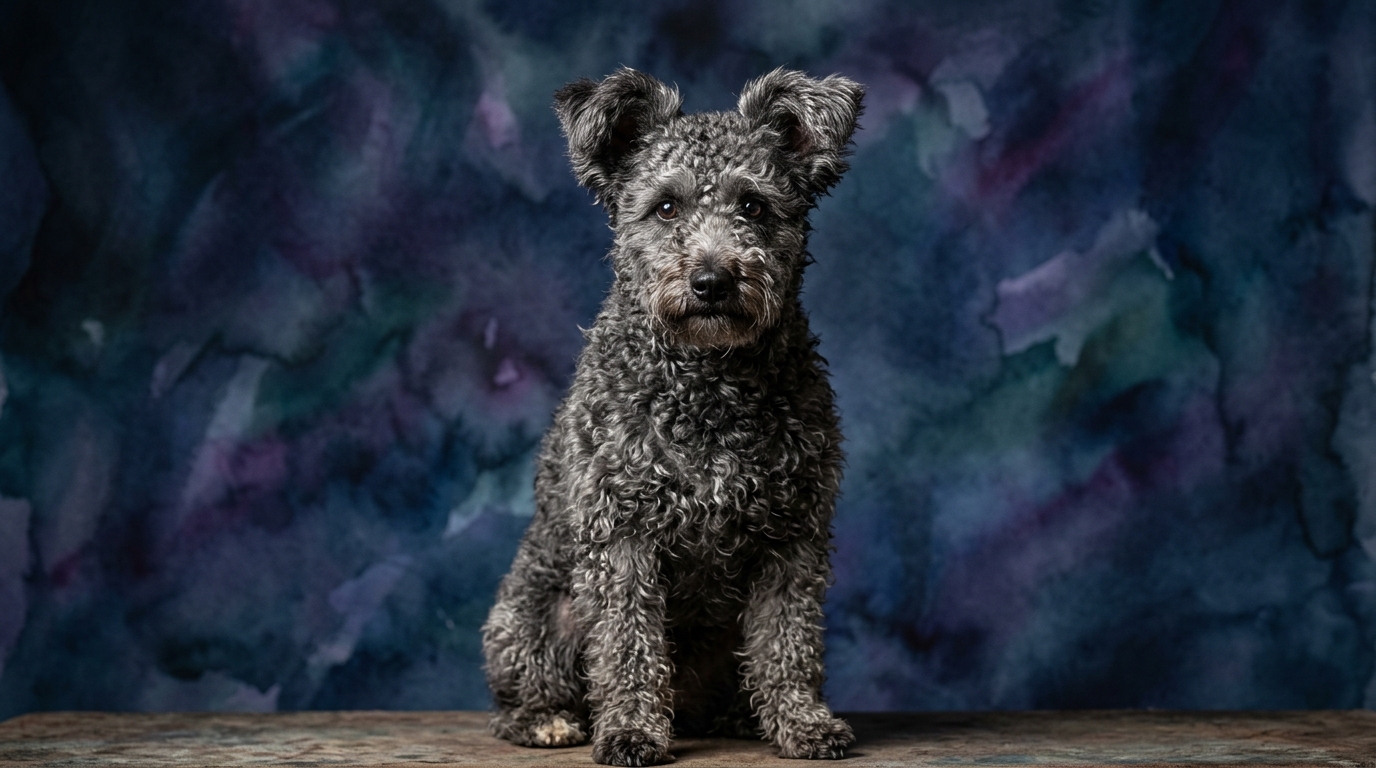
Side-by-Side Cognitive Profile: Pug vs. Pumi
The Pug, a member of the Toy group and Coren rank #57, presents a cognitive profile optimized for companionship. Its Problem Solving ability is rated at 2/5, indicating a moderate aptitude for navigating novel situations independently, often preferring human intervention or simple solutions. Training Speed also sits at 2/5, suggesting that Pugs require patient, consistent reinforcement to grasp new commands, sometimes needing more repetitions than other breeds. Where the Pug truly shines is in Social Intelligence, scoring a perfect 5/5; this reflects an exceptional capacity for understanding human emotions, communication cues, and integrating seamlessly into family dynamics. Its Instinctive Drive, at 2/5, is relatively low, meaning a reduced inclination for independent work or complex tasks, while Memory at 3/5 allows for retention of routines and familiar commands.
In contrast, the Pumi, a Herding breed not ranked by Coren, demonstrates a more generalized cognitive balance across categories, reflective of its working origins. Its Problem Solving skill is rated 3/5, indicating a moderate-to-good ability to figure out solutions to environmental challenges or tasks, often showing initiative. Training Speed also scores 3/5, suggesting a reasonable pace for learning and retaining new commands, though still benefiting from clear, engaging methods. Social Intelligence for the Pumi is 3/5, meaning it can form strong bonds and understand human cues, but perhaps with less overt emotional sensitivity than a Pug, focusing more on partnership in tasks. Its Instinctive Drive is 3/5, reflecting a moderate inherent desire to work, chase, or herd, which needs appropriate outlets. Memory, like the Pug, is rated 3/5, enabling it to recall training and experiences effectively.
Where the Pug Wins Cognitively
The Pug's distinct cognitive advantage lies squarely in its extraordinary Social Intelligence, rated at an impressive 5/5. This isn't merely about friendliness; it signifies a profound capacity for emotional attunement and empathetic connection. A Pug excels at reading subtle human body language, vocal inflections, and even moods, often anticipating needs or offering comfort without explicit prompting. This makes them unparalleled emotional support companions, capable of forming deep, intuitive bonds with their human families. Their cognitive wiring prioritizes relational harmony and social cohesion, making them masters of integration into the human social sphere. While other breeds might impress with complex tricks, the Pug impresses with its innate ability to be a truly understanding and responsive friend, a specific cognitive strength that few breeds match.
This high social IQ translates into an exceptional aptitude for coexisting peacefully and adapting to the rhythms of human household life. They are adept at understanding the unspoken rules of a home, quickly learning what behaviors elicit positive attention and how to subtly manipulate situations to their advantage through charm. Their cognitive processes are geared towards observing, interpreting, and reacting to human social cues, making them highly effective at their primary role: being a beloved and emotionally responsive companion. This isn't about solving puzzles, but about solving the intricate puzzle of human-animal bonding.
Where the Pumi Wins Cognitively
The Pumi’s cognitive strengths are rooted in its heritage as a versatile herding dog, manifesting prominently in its Problem Solving (3/5), Training Speed (3/5), and Instinctive Drive (3/5). Unlike the Pug, whose cognitive focus is relational, the Pumi’s intellect is geared towards action and task completion. Its problem-solving ability allows it to quickly assess and react to dynamic situations, a crucial trait for managing livestock. This manifests as an eagerness to figure things out, whether it's navigating an obstacle course or learning a complex sequence of commands. They don't just wait for instructions; they often anticipate and initiate, showing a proactive cognitive engagement.
Furthermore, the Pumi's superior Training Speed means it generally grasps new concepts and commands more quickly than a Pug, often requiring fewer repetitions. This efficiency in learning is coupled with a robust Instinctive Drive, which fuels a desire for purpose and activity. This drive isn't just about physical energy; it's a cognitive inclination to engage with tasks, to work alongside a handler, and to find satisfaction in meaningful engagement. This combination of quicker learning and inherent motivation makes the Pumi highly adaptable to various dog sports, complex obedience, and even intricate trick training, showcasing a cognitive architecture built for active partnership and intellectual challenge.
Training Dynamics: Pug vs. Pumi
Training a Pug, with its Training Speed of 2/5, often requires a nuanced approach built on patience and positive reinforcement, rather than expecting rapid comprehension. Pugs are not inherently driven by a desire to please through obedience; instead, their cognitive process often asks, 'What's in it for me?' This independent streak, combined with a preference for comfort, means that training sessions need to be short, fun, and highly rewarding, often involving favorite treats or beloved toys. They can be prone to selective hearing when bored or unmotivated, reflecting a behavioral difference where compliance is often weighed against perceived effort. Owners must make training feel like a game or a delightful interaction, rather than a demanding task, to fully engage their cognitive capacity for learning.
The Pumi, scoring 3/5 in Training Speed, generally exhibits a more eager and responsive attitude towards training, driven by its working dog instincts. Their cognitive makeup includes a stronger desire for engagement and a natural biddability, meaning they are often quicker to connect an action with a command and its reward. Training a Pumi benefits from consistency, clarity, and mental stimulation, as they thrive on having a 'job' to do. Unlike the Pug's potential for stubbornness, the Pumi's behavioral differences include a greater focus and persistence in learning, though they still require an experienced hand to channel their energetic drive. For the Pumi, training is less about convincing and more about directing their inherent desire to interact and achieve.
Lifestyle Compatibility: Active vs. Relaxed Owners
For owners seeking a relaxed and emotionally attuned companion, the Pug is an ideal match. Its lower Instinctive Drive (2/5) and moderate energy levels mean it thrives in environments that prioritize comfort, companionship, and short bursts of activity. A Pug is perfectly content with leisurely strolls around the block, followed by extensive cuddle sessions on the sofa. Their high Social Intelligence ensures they are deeply integrated into the family's daily life, finding contentment in simply being near their humans. They are less demanding of strenuous physical or mental challenges, making them suitable for individuals or families with a less active lifestyle, or those living in smaller spaces like apartments where intense exercise isn't always feasible.
Conversely, the Pumi is best suited for active owners who can provide consistent mental and physical outlets for its higher Instinctive Drive (3/5) and problem-solving capabilities. This breed flourishes when given tasks, whether it's participating in agility, obedience, flyball, or even mock herding activities. A Pumi needs more than just a walk; it requires structured engagement that challenges its quick mind and energetic body. Owners who enjoy outdoor adventures, dog sports, or who are willing to dedicate time to advanced training will find the Pumi an enthusiastic and capable partner. Without adequate stimulation, a Pumi's cognitive drive and energy can lead to boredom and potentially destructive behaviors, emphasizing the need for a truly active and engaging partnership.
The Verdict
Choose the Pug if you prioritize an unparalleled emotional bond and a deeply affectionate companion for a relaxed, less demanding lifestyle.
Opt for the Pumi if you desire an agile, engaged, and mentally keen partner for an active lifestyle, thriving on challenges and purposeful activity.
🧠 Find Your Pet's IQ Score
Our Pet IQ Lab assessment covers 25+ tests across 5 cognitive dimensions — personalized to your breed.
Take the Full IQ Test →Frequently Asked Questions
Is a Pug difficult to train?
Pugs are not inherently difficult, but their training speed of 2/5 means they learn at a slower pace. Success comes with patience, making training fun, and using high-value rewards to motivate their independent cognitive style.
What kind of mental stimulation does a Pumi need?
A Pumi needs consistent mental challenges, reflecting its 3/5 problem-solving and instinctive drive. This can include learning complex tricks, participating in dog sports like agility or obedience, or puzzle toys that require thought to solve.
Which dog is better for apartment living?
The Pug is generally better suited for apartment living due to its lower instinctive drive and moderate energy levels, thriving on companionship rather than vast space. A Pumi can adapt to an apartment, but only if its owners are committed to providing substantial daily physical exercise and mental engagement outside the home.