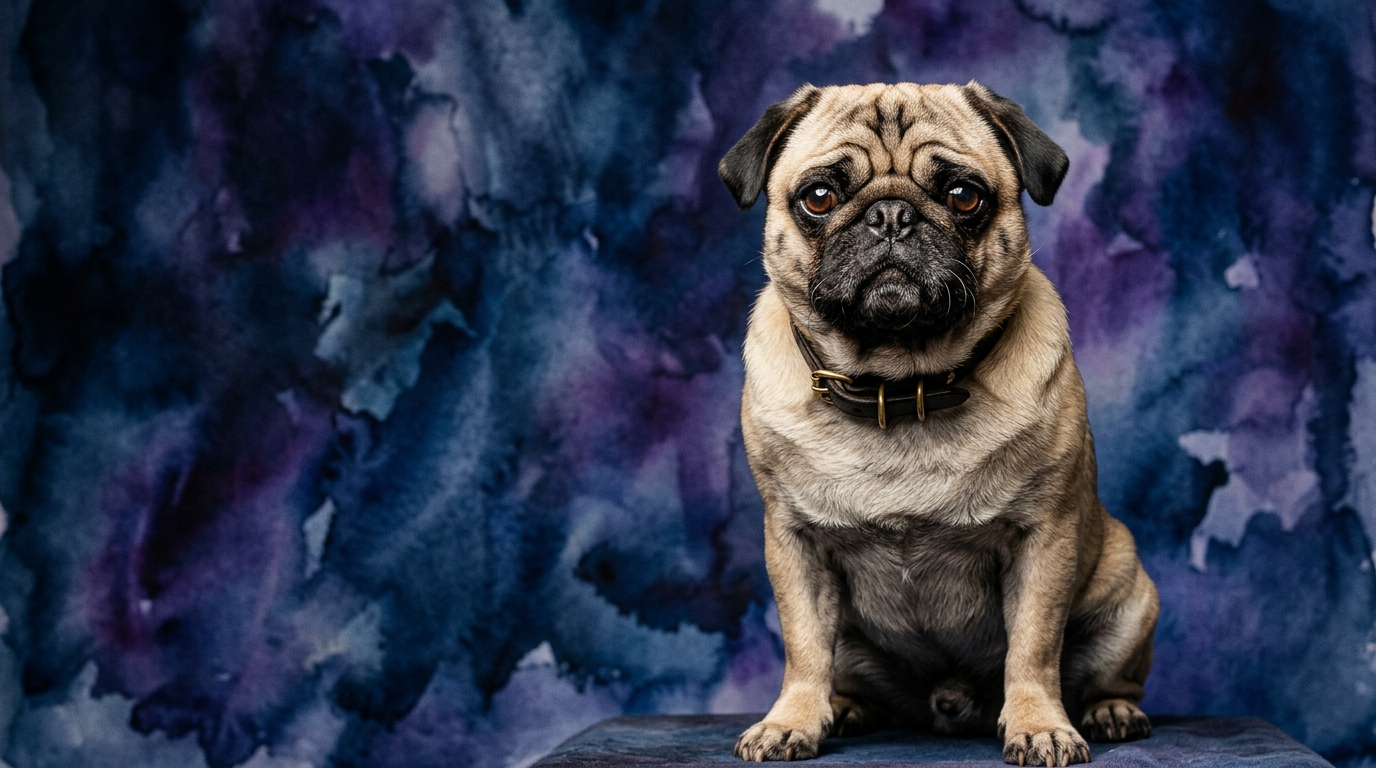
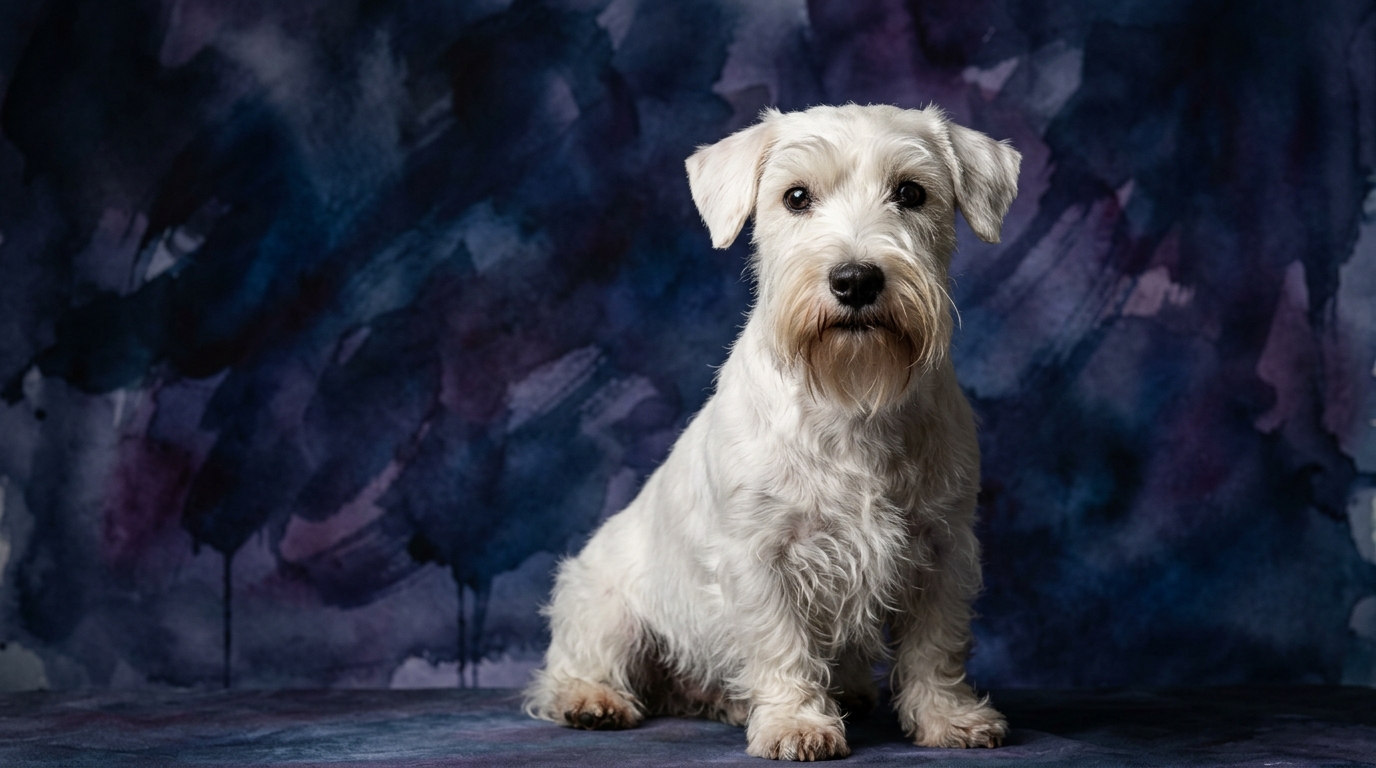
Side-by-Side Cognitive Profiles
At The Cosmic Pet Pet IQ Lab, we evaluate canine intelligence across five key dimensions to provide a nuanced understanding of each breed's mental landscape. For the Pug, a Toy breed ranked #57 by Coren, and the Sealyham Terrier, a Terrier breed without a Coren ranking, their scores reveal distinct cognitive strengths and approaches to the world.
The Pug's profile shows a Problem Solving score of 2/5, indicating they might not be the quickest to figure out complex puzzle toys or new environmental challenges independently, often relying more on seeking human assistance or trying simpler, repeated actions rather than intricate strategizing. Their Training Speed is 2/5, meaning Pugs typically require more repetitions and consistent reinforcement to master new commands, as their focus can be easily diverted, and sustained concentration for rapid acquisition might not be their primary strength. Where the Pug truly shines is in Social Intelligence, scoring a perfect 5/5; they possess an exceptional capacity to read human emotions, understand social cues, and integrate seamlessly into family dynamics, often anticipating needs or offering comfort without direct prompting. Their Instinctive Drive is 2/5, reflecting a relatively low ancestral urge for independent exploration, chasing, or territorial behaviors, as their primary purpose was companionship. Finally, their Memory score is 3/5, demonstrating an average capacity to reliably recall learned commands, routines, specific people and places, and retaining positive or negative associations sufficient for effective daily living.
The Sealyham Terrier presents a different set of cognitive attributes. Their Problem Solving score of 3/5 indicates a moderate capacity for independent thinking and resourcefulness, making them more inclined to experiment with different approaches when faced with a barrier or novel situation. In Training Speed, they score 3/5, meaning Sealyhams learn at a moderate pace, grasping new commands and routines with reasonable consistency, though their independent terrier spirit sometimes requires more engaging and varied training methods to maintain focus. Their Social Intelligence is 3/5; Sealyham Terriers form strong bonds with their family and understand human intentions within their established social circle, albeit often with a touch more independence than a Pug. As a terrier breed, their Instinctive Drive is 3/5, retaining a moderate ancestral drive, particularly related to hunting, which manifests as an interest in digging, a keen sense of smell, and a propensity to chase small, fast-moving objects. Like the Pug, their Memory score is 3/5, enabling them to remember commands, routines, and the locations of favored items, serving them well in navigating daily life and maintaining training consistency.
Where the Pug Wins Cognitively
The Pug's most striking cognitive advantage lies in its extraordinary social intelligence, scoring a perfect 5/5. Pugs possess an almost uncanny ability to interpret human emotions, body language, and vocal inflections, going beyond merely recognizing a command to understanding the nuances of a sigh, a smile, or a shift in posture. A Pug might intuitively offer comfort when their owner is upset, or subtly nudge for attention when they sense a moment of receptivity, demonstrating a profound social attunement that allows them to integrate deeply into human families and often anticipate their owners' needs and moods, fostering an incredibly strong emotional bond. This pervasive social awareness is a key cognitive strength, making them intuitive and empathetic companions.
Where the Sealyham Terrier Wins Cognitively
The Sealyham Terrier demonstrates a clear cognitive edge in areas demanding independent thought and proactive engagement with their environment. With a 3/5 in problem-solving, they are more inclined to experiment and strategize when faced with a challenge, such as figuring out how to open a cabinet or navigate an obstacle course, a resourcefulness stemming from their historical role. Their 3/5 in training speed reflects a quicker grasp of new concepts than the Pug, especially when the task aligns with their inherent drives. Furthermore, their 3/5 instinctive drive, a legacy of their vermin-hunting past, provides them with a focused tenacity and a keen interest in exploration and engagement with their surroundings, contrasting with the Pug's more relaxed, human-centric focus. This combination of moderate problem-solving and drive means they are often more engaged with their physical environment and less reliant on human intervention for mental stimulation.
Which Is Easier to Train and Why
When evaluating ease of training, the Sealyham Terrier generally holds a slight advantage, though both breeds present unique considerations. The Sealyham's 3/5 training speed and 3/5 problem-solving ability mean they often pick up new commands and routines more readily than a Pug, who scores 2/5 in both areas. Sealyhams, with their moderate instinctive drive, can be motivated by tasks that engage their natural curiosity and desire to 'work' for a reward, whether it's tracking a scent or retrieving an object. However, their independent terrier spirit means they can also be stubborn, requiring consistent, positive reinforcement and varied training approaches to maintain engagement.
Pugs, while slower to learn new commands, are incredibly motivated by social interaction and praise due to their 5/5 social intelligence. This means that while repetition is key, their desire to please their human can be a powerful training tool, especially for basic obedience and house manners. The difference lies in *how* they are trained: Sealyhams respond to task-oriented engagement and clear expectations, while Pugs thrive on patient, socially reinforcing methods that capitalize on their bond with their owner. A Sealyham might learn a trick faster, but a Pug might be more consistently compliant if the reward is human affection.
Which Suits Active Owners vs. Relaxed Owners
The cognitive profiles of the Pug and Sealyham Terrier naturally align with different owner lifestyles. The Pug, with its lower instinctive drive (2/5) and exceptional social intelligence (5/5), is an ideal companion for relaxed owners who prioritize companionship and gentle interaction over strenuous activity. Their contentedness with moderate daily walks and a preference for indoor lounging makes them well-suited for apartment living or less active households, thriving on being a constant, affectionate presence. They are satisfied with being close to their human, absorbing the atmosphere and offering quiet, intuitive companionship.
Conversely, the Sealyham Terrier, with its moderate instinctive drive (3/5) and problem-solving capacity (3/5), is better suited for more active owners. While not requiring marathon runs, they benefit from regular mental and physical engagement, such as structured play, short training sessions, or exploring secure outdoor environments. Their terrier spirit means they appreciate having a 'job' to do, even if it's just a vigorous game of fetch or a puzzle toy, making them a better fit for individuals or families who enjoy consistent, interactive engagement and can provide outlets for their natural curiosity and drive.
The Verdict
Choose a Pug if you seek an exceptionally socially intelligent companion who prioritizes emotional connection and thrives in a relaxed, family-centric environment, valuing gentle interaction over complex tasks.
Opt for a Sealyham Terrier if you appreciate a moderately independent, resourceful canine with a zest for exploration and moderate activity, and you are prepared for consistent, engaging training methods.
🧠 Find Your Pet's IQ Score
Our Pet IQ Lab assessment covers 25+ tests across 5 cognitive dimensions — personalized to your breed.
Take the Full IQ Test →Frequently Asked Questions
Are Pugs difficult to train compared to Sealyham Terriers?
Pugs typically require more repetitions and patience due to their 2/5 training speed, while Sealyham Terriers, with a 3/5, can grasp concepts more readily. However, Pugs' high social intelligence makes them highly motivated by owner praise and interaction, which can be leveraged effectively in training.
Which breed is better at figuring out new situations or puzzles?
The Sealyham Terrier, with a 3/5 in problem-solving, generally shows more independent initiative and resourcefulness in new situations or with puzzle toys. Pugs, scoring 2/5, are less inclined to strategize independently and often prefer to seek human help, relying on their social intelligence.
Do Sealyham Terriers have a higher prey drive than Pugs?
Yes, Sealyham Terriers possess a moderate instinctive drive (3/5) stemming from their terrier heritage, which includes a propensity for chasing and digging. Pugs, with a lower instinctive drive (2/5), exhibit significantly less of these prey-driven behaviors and are generally less inclined towards independent exploration.