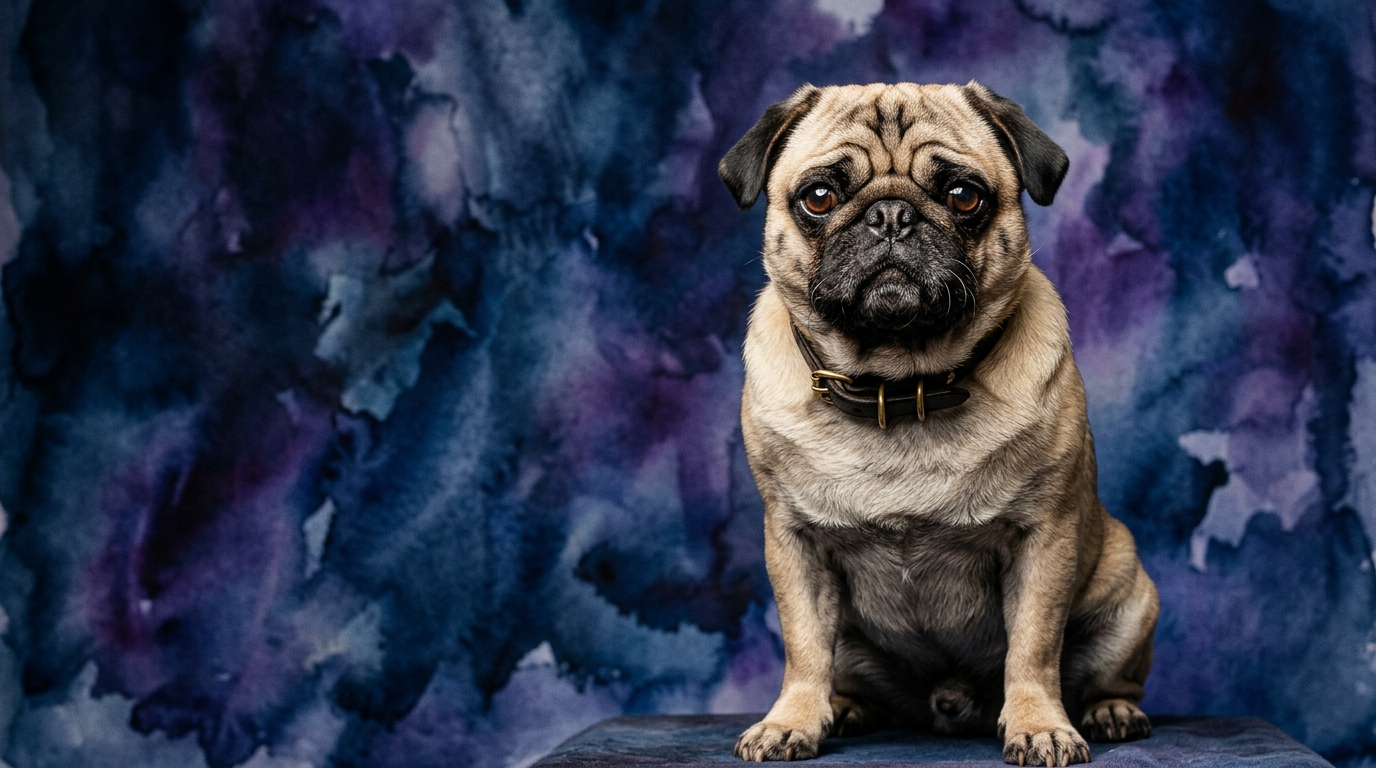
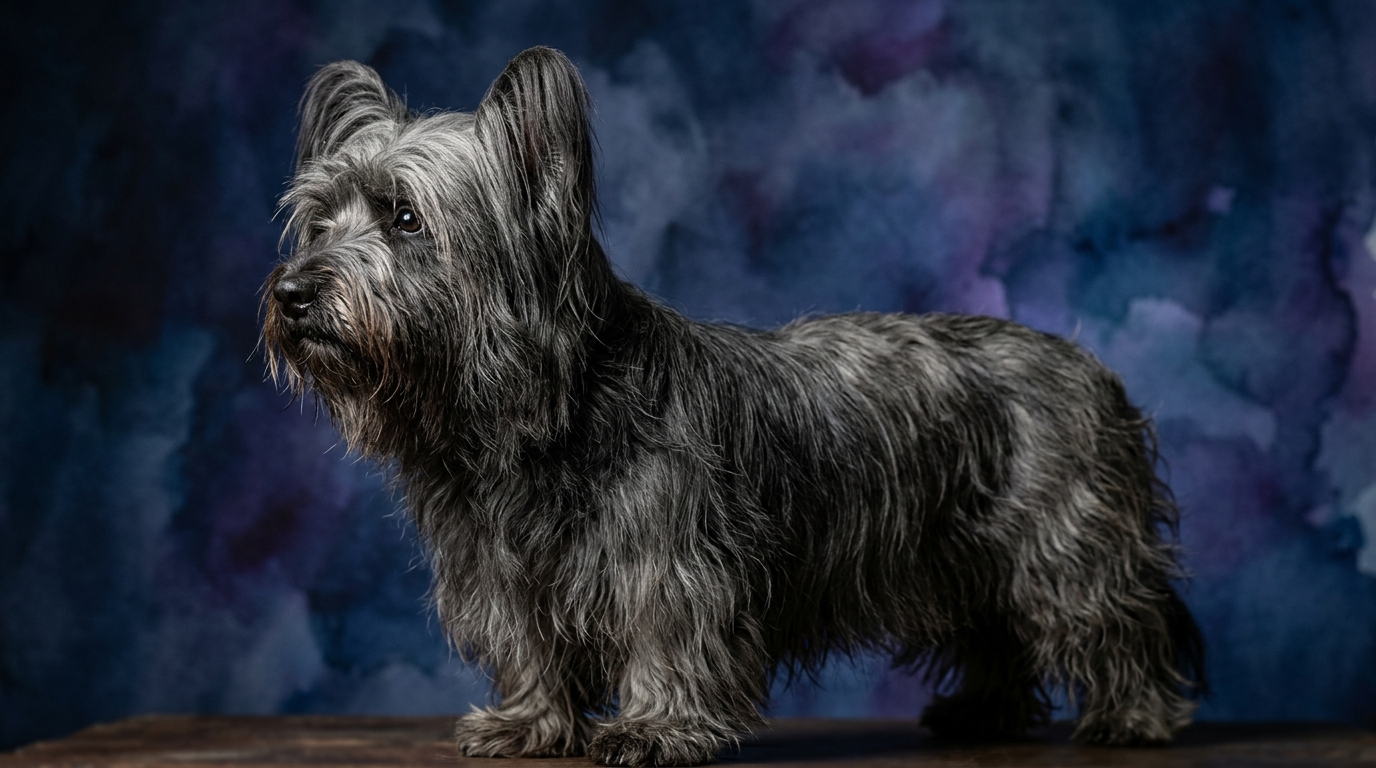
Side-by-Side IQ Profile: Pug vs. Skye Terrier
The Cosmic Pet Pet IQ Lab provides a comprehensive framework to understand canine cognition, evaluating breeds across five key dimensions. Let's explore how the Pug and Skye Terrier measure up.
For the **Pug (Toy Group)**, a breed cherished for companionship, their cognitive profile reflects this role. Their **Problem Solving** scores 2/5, indicating they typically prefer routine and may not be the first to independently unravel complex puzzles, often relying on human assistance. **Training Speed** is rated 2/5; while capable, Pugs often require consistent, patient repetition and high motivation, as their engagement might prioritize comfort over task mastery. Their **Social Intelligence** is exceptional at 5/5, showcasing a remarkable ability to read and respond to human emotions and social cues, forming deep, intuitive bonds. **Instinctive Drive** is low at 2/5, meaning they exhibit minimal prey drive, digging, or guarding behaviors, aligning with their companion role. Finally, their **Memory** is moderate at 3/5, allowing them to recall routines and learned commands effectively.
The **Skye Terrier (Terrier Group)**, a breed with a history of working tasks, presents a different cognitive landscape. Their **Problem Solving** is moderate at 3/5, suggesting a greater inclination to independently assess situations and devise strategies to achieve goals. **Training Speed** also scores 3/5; Skye Terriers typically learn new commands at a moderate pace, responding well to clear, consistent methods, though their terrier independence can require a firm but fair approach. Their **Social Intelligence** is 3/5, indicating strong bonds with family but potentially more reserved interactions with strangers compared to the Pug. **Instinctive Drive** is moderate at 3/5, reflecting a natural propensity for activities like digging or chasing small animals, characteristic of their terrier heritage. Their **Memory** is also moderate at 3/5, enabling them to retain training and adapt to their environment effectively.
Where the Pug Wins Cognitively
The Pug's undisputed cognitive strength lies in its exceptional social intelligence, scoring a perfect 5/5. This means a Pug is remarkably adept at understanding and responding to human emotions and social dynamics. They excel at sensing when their owner is upset or happy, often offering comfort or mirroring the mood with surprising accuracy. This profound attunement allows them to integrate seamlessly into family life, becoming intuitive companions who anticipate needs and respond with affection. Their social prowess extends to navigating complex household interactions, often acting as a unifying presence and adapting gracefully to various personalities within a family. For an owner seeking a dog that truly 'gets' them on an emotional level, the Pug's cognitive profile in this dimension is unparalleled, making them masters of empathetic companionship.
Where the Skye Terrier Wins Cognitively
The Skye Terrier demonstrates a broader cognitive advantage across several key areas, notably in problem-solving (3/5), training speed (3/5), and instinctive drive (3/5). Unlike the Pug, a Skye Terrier is more likely to engage with and figure out environmental challenges independently. This could manifest as cleverly navigating obstacles to reach a favorite toy, or persistently working at a puzzle feeder until a treat is retrieved. Their moderate training speed suggests they absorb new commands and routines more readily, making them potentially more versatile for learning a wider array of tasks or participating in foundational dog sports. Furthermore, their instinctive drive, though moderate, means they possess a natural inclination for engagement and purpose, whether it's exploring scents on a walk or engaging in a focused play session that taps into their terrier tenacity. This combination allows for a more active, task-oriented cognitive engagement with their world, valuing purpose and mental challenge.
Which is Easier to Train and Why
When considering ease of training, the Skye Terrier (Training Speed 3/5) generally holds an edge over the Pug (Training Speed 2/5). The Skye Terrier's moderate training speed indicates a quicker grasp of new commands and a greater willingness to engage with structured learning. Their terrier nature, while sometimes perceived as stubbornness, often translates into a focused determination when motivated correctly. They respond well to consistent, positive reinforcement and can excel in obedience training, especially when tasks appeal to their natural drive for purpose, such as scent work or agility basics. Owners might find them more receptive to varied training methods and longer sessions.
In contrast, the Pug's slower training speed means they require more patience and repetition. Their primary motivation often isn't task mastery itself but rather comfort and social bonding, so training sessions need to be kept engaging, short, and highly rewarding, often involving high-value food or abundant affection. Pugs might also have a lower tolerance for repetitive drills, potentially leading to disinterest if sessions are too long or demanding. While Pugs are certainly trainable for basic obedience, their learning curve for complex behaviors might be longer, and they might show less intrinsic enthusiasm for drills, making the Skye Terrier's journey through basic and advanced obedience potentially smoother and more varied for many owners.
Which Suits Active Owners vs. Relaxed Owners
The cognitive profiles of these two breeds clearly delineate their suitability for different owner lifestyles. The Pug, with its high social intelligence and lower scores in problem-solving, training speed, and instinctive drive, is an ideal match for relaxed owners. Their contentment stems from close companionship and comfort rather than demanding physical or mental tasks. They thrive in environments where they can be a constant, affectionate presence, enjoying leisurely strolls and ample cuddle time on the sofa. An owner seeking a low-key, emotionally attuned companion who isn't constantly seeking a 'job' will find the Pug's disposition perfectly aligned with their desire for a mellow, devoted partner.
Conversely, the Skye Terrier, with its moderate scores across problem-solving, training speed, and instinctive drive, is better suited for owners who enjoy a more active and engaging lifestyle. While not requiring extreme athleticism, a Skye Terrier benefits from regular mental stimulation and opportunities to exercise their natural curiosity and tenacity. Owners who enjoy teaching new tricks, engaging in moderate walks with opportunities for exploration, or even participating in foundational dog sports will find the Skye Terrier's cognitive makeup more rewarding. Their independent streak and moderate drive mean they appreciate purposeful activity and consistent, stimulating interaction that goes beyond simple companionship, thriving on a routine that includes both physical and mental engagement.
The Verdict
Choose a Pug if your priority is an exceptionally socially intelligent companion who excels at emotional connection, thrives on comfort, and requires less structured mental or physical exertion.
Choose a Skye Terrier if you appreciate a dog with moderate problem-solving abilities and training aptitude, a degree of independent thought, and a natural drive for engaging activities, making them a rewarding partner for consistent, stimulating interaction.
🧠 Find Your Pet's IQ Score
Our Pet IQ Lab assessment covers 25+ tests across 5 cognitive dimensions — personalized to your breed.
Take the Full IQ Test →Frequently Asked Questions
Does a Pug's low problem-solving score mean they can't learn anything?
Not at all. A Pug's 2/5 in problem-solving simply indicates they prefer routine and may rely on human cues rather than independently figuring out complex tasks. They are certainly capable of learning commands and routines, especially those that lead to comfort or social interaction, but might not actively seek out new intellectual challenges.
Is the Skye Terrier's instinctive drive difficult to manage for a new owner?
The Skye Terrier's moderate instinctive drive (3/5) means they have natural inclinations like chasing or digging, but it's generally manageable with consistent training and appropriate outlets. Providing engaging toys, supervised outdoor time, and mental stimulation can channel this drive positively, making them a well-adjusted companion even for a new owner committed to engagement.
How does social intelligence impact daily life with these breeds?
A Pug's high social intelligence means they are often highly attuned to family dynamics and emotions, making them sensitive and empathetic companions who readily integrate into household routines and offer comfort. A Skye Terrier's moderate social intelligence means they form strong bonds but might be more reserved with strangers and show their affection in a more discerning, less overtly demonstrative way, preferring deeper connections with their chosen few.