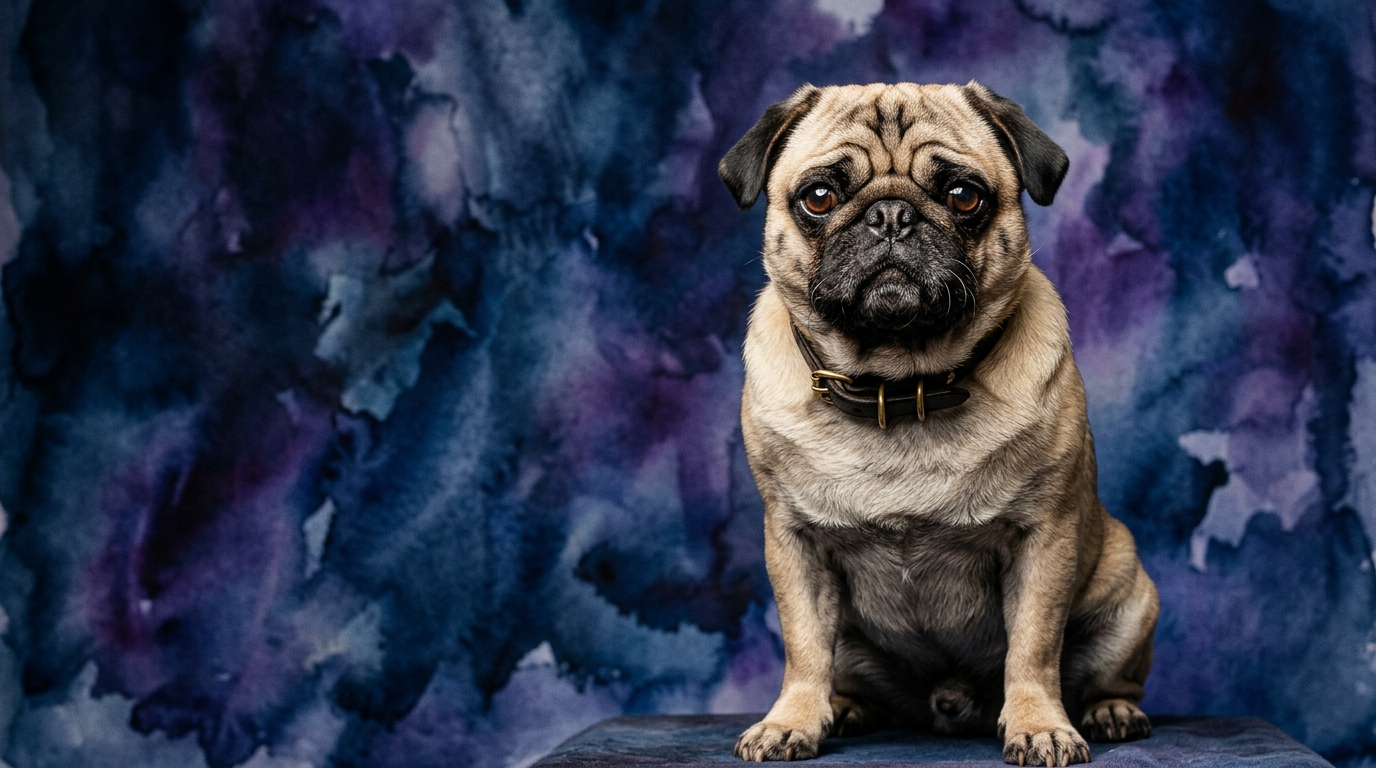
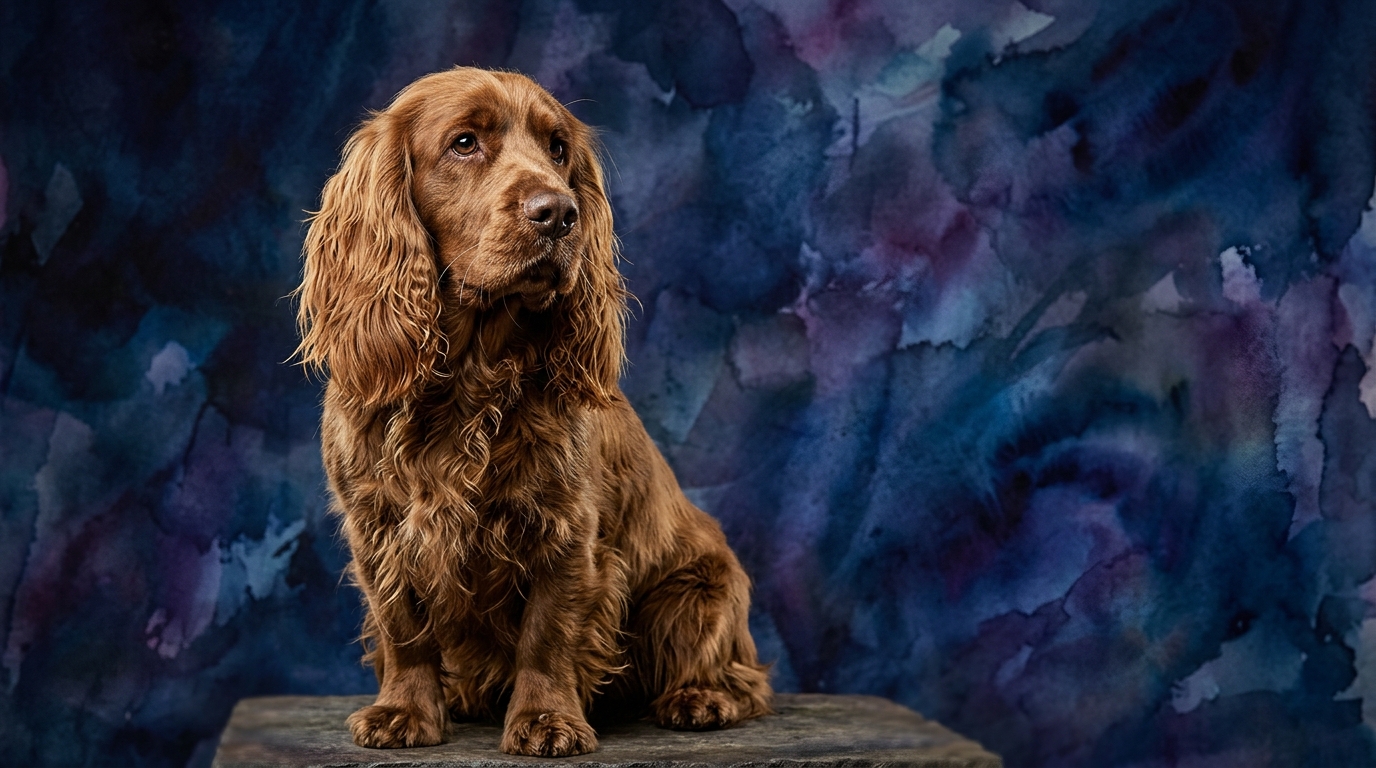
Side-by-Side IQ Profile: Pug vs. Sussex Spaniel
To understand the cognitive landscape of these two breeds, The Cosmic Pet Pet IQ Lab employs a five-dimensional framework, allowing for a nuanced look beyond general descriptors. The Pug, a Toy group dog with a Coren rank of #57, and the Sussex Spaniel, a Sporting group dog ranked #62, each present a distinct cognitive blueprint.
For the **Pug**:
**Problem Solving (2/5)**: Pugs typically approach new challenges with less analytical fervor. They are not dogs that will painstakingly figure out complex puzzle toys or intricate escape routes; their method is often more trial-and-error, or simply waiting for human intervention. This score indicates they prefer straightforward situations and may struggle with abstract reasoning tasks.
**Training Speed (2/5)**: Learning new commands can be a gradual process for a Pug. They require consistent, positive reinforcement and multiple repetitions to solidify new behaviors. Their focus can be easily diverted, meaning training sessions need to be engaging and relatively short to maintain their interest.
**Social Intelligence (5/5)**: This is where the Pug truly shines. They possess an exceptional ability to read human emotions, body language, and vocal cues. Their capacity for empathy and understanding social dynamics allows them to integrate seamlessly into family life, often anticipating needs and offering comfort. They thrive on connection and interaction.
**Instinctive Drive (2/5)**: As a breed primarily developed for companionship, Pugs exhibit a low instinctive drive. They have minimal prey drive and are not typically motivated by tasks requiring sustained focus on hunting, tracking, or retrieving. Their inclination is towards comfort and proximity to their human companions rather than independent work.
**Memory (3/5)**: Pugs possess an average memory. They can retain learned commands and routines, especially those associated with positive experiences, but they are unlikely to recall intricate sequences or long-past events with exceptional detail. Consistency in their environment and training helps reinforce their recall.
For the **Sussex Spaniel**:
**Problem Solving (3/5)**: Sussex Spaniels demonstrate a moderate aptitude for problem-solving. While not master strategists, they are more inclined than Pugs to work through a challenge, such as figuring out how to open a gate or retrieve a toy from a tricky spot. Their sporting background imbues them with a certain persistence when faced with a task.
**Training Speed (3/5)**: This breed learns at an average pace. They are generally responsive to training and can pick up new commands and routines with moderate repetition. Their desire to work and please their handler contributes to their willingness to engage in learning, making them a cooperative student.
**Social Intelligence (3/5)**: Sussex Spaniels exhibit a solid but not exceptional level of social intelligence. They are affectionate and form strong bonds with their families, understanding human cues adequately. However, their focus is often balanced between interacting with people and exploring their environment, rather than solely fixating on human social signals like a Pug.
**Instinctive Drive (3/5)**: Reflecting their sporting heritage, Sussex Spaniels possess a moderate instinctive drive. They enjoy activities like scent work, retrieving, and exploring, and can be motivated by tasks that tap into these natural inclinations. This drive makes them more task-oriented than Pugs and can be harnessed in training.
**Memory (3/5)**: Similar to Pugs, Sussex Spaniels have an average memory. They are capable of remembering commands, routines, and the whereabouts of favorite objects or people. Their recall is reliable for practical purposes, supporting their training and daily interactions without being exceptionally photographic.
Where the Pug Wins Cognitively
The Pug's undisputed cognitive strength lies in their extraordinary social intelligence, scoring a perfect 5/5. This isn't merely about being friendly; it signifies a profound capacity to read and respond to human emotions and social cues with remarkable precision. A Pug is exquisitely attuned to the subtle shifts in your tone of voice, your body language, and even your mood, often reacting with comforting nudges or playful antics to lighten the atmosphere.
They excel at establishing deep emotional connections, making them highly empathetic companions who seem to understand their human counterparts on an intuitive level. This high social intelligence means they are adept at adapting to family routines and social structures, learning who is in charge and how to gently manipulate situations for attention or comfort. Their world revolves around their human family, and their cognitive processes are finely tuned to optimize this bond, making them masters of companionship and emotional support. They remember the nuances of human interaction, not just commands, which fosters a rich, dynamic relationship.
Where the Sussex Spaniel Wins Cognitively
The Sussex Spaniel demonstrates superior cognitive abilities in areas that reflect their working heritage, particularly in problem-solving (3/5), training speed (3/5), and instinctive drive (3/5). While their social intelligence is solid, their mental focus is more balanced between human interaction and engaging with their environment through tasks. Their moderate problem-solving score suggests a greater inclination to independently figure out simple puzzles or navigate obstacles, demonstrating a persistent curiosity when faced with a novel situation.
This contrasts with the Pug's tendency to rely more on human assistance. The Sussex Spaniel's training speed, also at 3/5, indicates they are generally quicker to grasp new commands and sequences, often motivated by the inherent satisfaction of completing a task or the reward of a successful retrieve. Their instinctive drive, also rated 3/5, means they possess a natural inclination for activities like scent work, tracking, or retrieving. This drive is a powerful cognitive asset, as it provides an intrinsic motivation for learning and engagement in structured activities, making them more amenable to complex training protocols beyond basic obedience. They are more likely to enjoy and excel in dog sports that require focused attention and a working mindset.
Which is Easier to Train and Why
When considering ease of training, the Sussex Spaniel generally presents a more straightforward experience due to its higher scores in training speed (3/5) and instinctive drive (3/5). A Sussex Spaniel often approaches training with a willing attitude, finding satisfaction in the work itself and responding well to task-oriented reinforcement. Their moderate instinctive drive means they can be effectively motivated by activities like fetching or scent games, which naturally align with their cognitive predispositions. They grasp new concepts and commands at an average pace, requiring consistent but not excessive repetition.
In contrast, the Pug, with a training speed of 2/5 and instinctive drive of 2/5, can be more challenging. Pugs are less intrinsically motivated by "work" and may require more creative and highly rewarding incentives, often preferring comfort over performing tasks. Their focus can waver, and they might display a stubborn streak if they don't see the immediate benefit or if the training isn't fun. While Pugs are certainly trainable, their process often demands greater patience, more frequent short sessions, and a deep understanding of their unique social motivations rather than relying on a strong desire to perform. For instance, a Sussex Spaniel might diligently work to retrieve a hidden toy, whereas a Pug might prefer to charm you into retrieving it for them.
Which Suits Active Owners vs. Relaxed Owners
The choice between a Pug and a Sussex Spaniel largely depends on an owner's lifestyle and their preferred level of activity. For relaxed owners seeking a devoted lap companion whose cognitive world revolves around human interaction and comfort, the Pug is an ideal match. Their low instinctive drive and moderate energy levels mean they are content with shorter strolls, indoor play, and extended periods of cuddling. Their high social intelligence means they thrive on simply being near their people, offering quiet companionship and emotional support without demanding constant mental stimulation through complex tasks.
Conversely, active owners who enjoy engaging their dogs in more structured activities, outdoor adventures, or even dog sports will find the Sussex Spaniel a more fitting partner. Their moderate instinctive drive and problem-solving abilities mean they benefit from regular mental and physical challenges, such as scent work, hiking, or retrieving games. While not requiring extreme athleticism, they appreciate purposeful activity and the opportunity to use their nose and mind, making them better suited for owners who can provide consistent engagement beyond basic walks.
The Verdict
Choose a Pug if you prioritize unparalleled social connection, a dog exquisitely tuned to your emotions, and a relaxed companion content with a comfortable home life and gentle mental engagement.
Opt for a Sussex Spaniel if you desire a capable, moderately active partner who enjoys engaging in tasks, learns readily, and appreciates purposeful outdoor activities alongside their family.
🧠 Find Your Pet's IQ Score
Our Pet IQ Lab assessment covers 25+ tests across 5 cognitive dimensions — personalized to your breed.
Take the Full IQ Test →Frequently Asked Questions
Can Pugs learn complex tricks despite their training speed score?
Yes, Pugs can learn complex tricks, but it requires significant patience, consistent positive reinforcement, and breaking tasks into very small, manageable steps. Their social intelligence can be leveraged, as they often enjoy the attention and connection that trick training provides, even if the learning curve is slower.
Do Sussex Spaniels have a strong prey drive that makes them difficult with small pets?
Sussex Spaniels have a moderate instinctive drive, which includes some prey drive due to their sporting heritage. While not as intense as some other hunting breeds, proper socialization from a young age is crucial to ensure they coexist peacefully with smaller pets. Their drive can be redirected through structured play and training.
How do these breeds handle being left alone, considering their social intelligence differences?
Pugs, with their high social intelligence, often form very strong attachments and can be more prone to separation distress if left alone for extended periods without proper training. Sussex Spaniels, while affectionate, are generally more independent and can cope better with moderate alone time, especially if they've had sufficient exercise and mental stimulation beforehand.