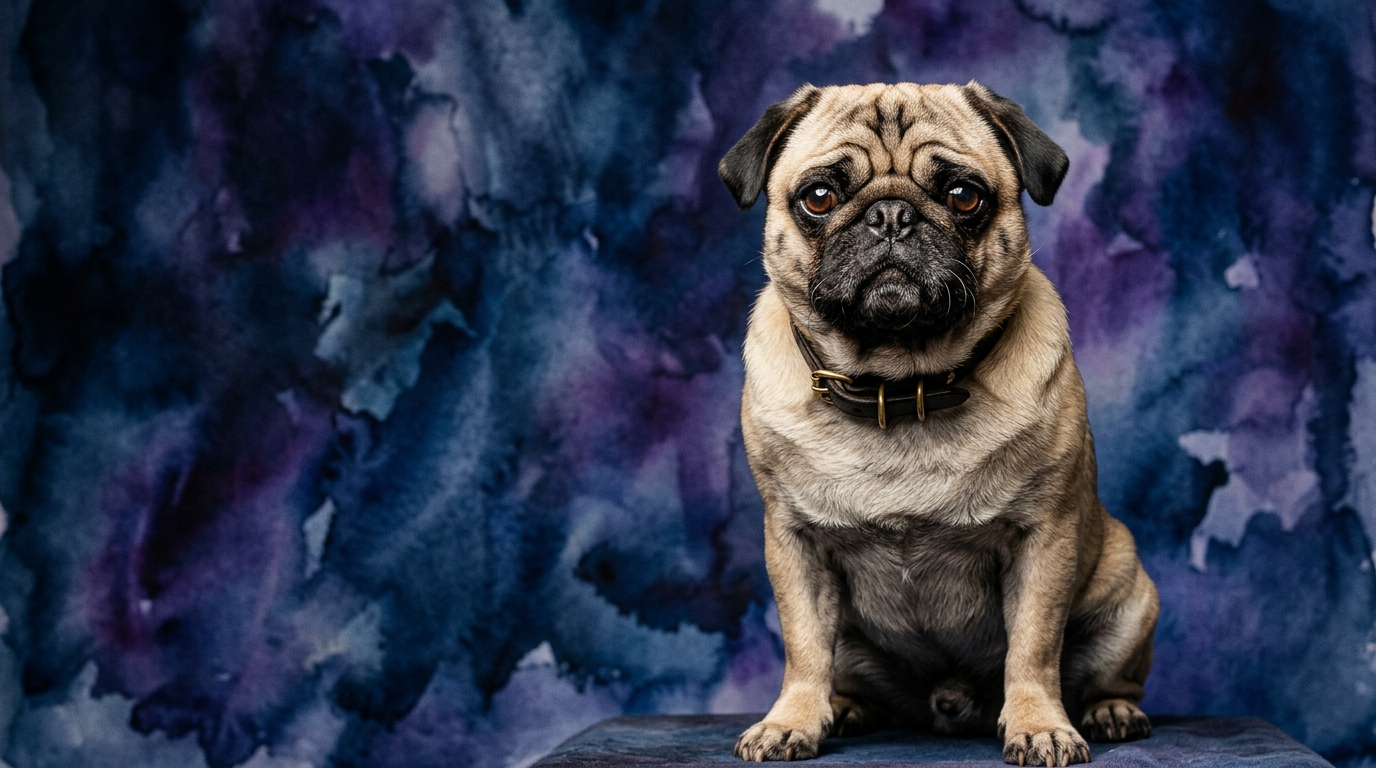
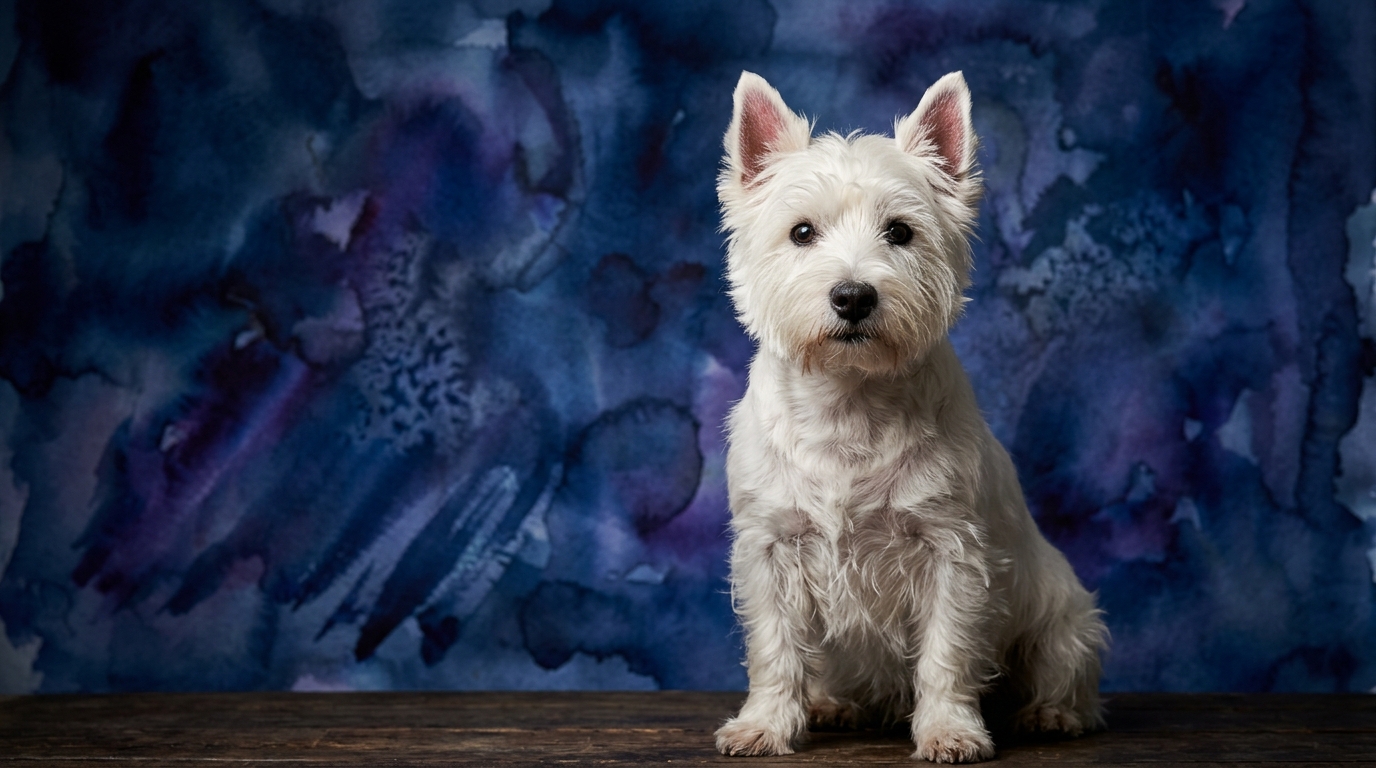
Side-by-Side IQ Profile: Pug vs. West Highland White Terrier
The Cosmic Pet Pet IQ Lab employs a comprehensive five-dimensional framework to assess canine intelligence, moving beyond simple obedience to understand the nuances of each breed's cognitive strengths and inclinations. Let's break down how the Pug and the West Highland White Terrier measure up.
**Pug (Dog, Toy, Coren rank #57):**
* **Problem Solving (2/5):** Pugs typically approach novel challenges by seeking human assistance rather than through persistent, independent experimentation. Their default strategy leans towards charm over complex analytical thought when faced with an obstruction, often waiting for their human to resolve the issue.
* **Training Speed (2/5):** While capable of learning, Pugs demonstrate a slower acquisition rate for new commands or behaviors. Sustaining their focus for repetitive drills can be challenging, requiring consistent patience and creative engagement, often food-motivated, from their trainers.
* **Social Intelligence (5/5):** This is where the Pug truly shines. They possess an exceptional ability to understand and respond to human emotions, body language, and social cues. Their capacity for empathy and connection is profound, making them highly attuned companions who thrive on interaction.
* **Instinctive Drive (2/5):** Generally low, their primary instinct is often to seek comfort, companionship, and food. This low drive contributes to their relaxed demeanor and makes them less prone to strong predatory or territorial urges, preferring a cozy lap to a hunt.
* **Memory (3/5):** Pugs exhibit a moderate capacity for memory, retaining learned commands and routines over time, especially when consistently reinforced. They generally remember faces, places, and established household rules, though intricate sequences might be a stretch.
**West Highland White Terrier (Dog, Terrier, Coren rank #47):**
* **Problem Solving (3/5):** Westies display a moderate aptitude for problem-solving. Their terrier heritage imbues them with a degree of persistence and independent thought, often prompting them to try various approaches to overcome an obstacle, enjoying a good mental challenge.
* **Training Speed (3/5):** Westies learn at a moderate pace. They are capable of picking up new commands and tricks with reasonable repetition. Their independent streak benefits from engaging, game-like training that stimulates their curiosity rather than rote memorization.
* **Social Intelligence (3/5):** Westies possess a moderate level of social intelligence. They form strong bonds with their families but are generally less overtly expressive of empathy than Pugs. They understand social hierarchies and cues but might be more independent in their social interactions.
* **Instinctive Drive (3/5):** True to their terrier roots, Westies have a moderate level of instinctive drive, particularly related to hunting small prey. This manifests as an interest in digging, chasing, and exploring, requiring appropriate outlets to prevent boredom.
* **Memory (4/5):** Westies demonstrate a good memory. They can remember commands, routines, and even specific experiences for extended periods. This contributes to their ability to learn and adapt, making them reliable in recalling boundaries and previously learned tasks.
Where the Pug Wins Cognitively
The Pug's standout cognitive strength lies unequivocally in its **Social Intelligence (5/5)**. No other dimension for either breed reaches this peak. Pugs are masters of emotional connection, possessing an innate ability to read and respond to human moods with remarkable precision. This translates to a dog that anticipates your needs for comfort, offers silent companionship during quiet moments, and readily participates in family gatherings, often serving as a charming, empathetic presence. Their cognitive processing is heavily geared towards understanding and fostering social bonds, making them exceptionally attuned companions who thrive on interaction and reciprocated affection.
Where the West Highland White Terrier Wins Cognitively
The West Highland White Terrier's cognitive edge is most apparent in its **Memory (4/5)**. While the Pug has a moderate memory, the Westie's superior recall means it's generally more reliable in remembering learned commands, household rules, and even the consequences of past actions. This stronger memory underpins their moderate **Problem Solving (3/5)** and **Training Speed (3/5)**, allowing them to build upon past experiences and learn from trial and error more effectively. Their capacity to retain information over time makes them more adaptable to complex routines and potentially more consistent in their responses once a behavior is established.
Training Dynamics: Which is Easier to Guide?
When considering ease of training, the West Highland White Terrier generally presents a more straightforward path, thanks to its superior **Training Speed (3/5)** and stronger **Memory (4/5)** compared to the Pug’s 2/5 and 3/5 respectively. Westies, though independent, are often motivated by engaging challenges and grasp new commands with reasonable repetition. Their better memory means they retain what they've learned more consistently, reducing the need for constant re-teaching and aiding in generalizing commands across contexts. For instance, teaching a multi-step routine might stick more readily with a Westie due to their robust recall.
Conversely, the Pug's slower **Training Speed (2/5)** demands more patience and repetition. Their lower **Problem Solving (2/5)** might lead them to give up or seek human intervention rather than independently figuring out a task. While Pugs are eager to please their humans (a facet of their high social intelligence), their attention spans can be shorter, requiring consistent, high-value motivation. A Pug might understand 'sit' in one context but struggle to generalize it to another without extensive practice, whereas a Westie's better memory aids in this generalization. An owner seeking quicker, more consistent training results might find the Westie less challenging, provided they can channel its independent spirit effectively.
Lifestyle Match: Active vs. Relaxed Owners
For the truly relaxed owner, one who cherishes quiet companionship and minimal physical demands, the **Pug** stands out as the ideal choice. Their low **Instinctive Drive (2/5)** means they are content with shorter strolls, prefer napping on the couch, and have little urge to dig, chase, or explore extensively. Their exceptional **Social Intelligence (5/5)** makes them perfect lapdogs, finding immense satisfaction in simply being near their human. They are perfectly suited to apartment living and owners whose lifestyle leans towards indoor activities, offering an unparalleled level of affectionate, low-energy presence.
Conversely, the **West Highland White Terrier** is better suited for owners who appreciate a moderate level of activity and engagement. Their moderate **Instinctive Drive (3/5)** means they enjoy regular walks, playtime, and opportunities to sniff and explore. While they aren't marathon runners, they thrive on mental stimulation and physical exercise that allows them to express their terrier nature, such as a vigorous game of fetch or exploring a fenced yard. An active owner who enjoys daily walks and can provide consistent mental enrichment will find the Westie a spirited and rewarding companion, one that needs more than just a couch to be content.
The Verdict
If your primary desire is an unparalleled, empathetic companion who thrives on close human connection and requires minimal physical exertion, the Pug is the ideal match. Their exceptional social intelligence makes them devoted, intuitive companions for relaxed households.
However, if you appreciate a dog with a stronger independent streak, a more robust memory for training, and a moderate zest for exploration and mental challenges, the West Highland White Terrier will be more rewarding. They suit owners who can provide consistent training and enjoy moderate daily activity, cherishing a spirited, tenacious companion.
🧠 Find Your Pet's IQ Score
Our Pet IQ Lab assessment covers 25+ tests across 5 cognitive dimensions — personalized to your breed.
Take the Full IQ Test →Frequently Asked Questions
Are Pugs difficult to train because of their lower training speed?
Pugs are not inherently difficult, but they do require more patience and consistent, positive reinforcement due to their 2/5 training speed. Their high social intelligence means they are motivated by pleasing their humans, but their attention span and problem-solving approach differ from breeds with higher training speeds.
Do Westies need a lot of exercise due to their instinctive drives?
Westies have a moderate instinctive drive (3/5), meaning they benefit from regular, moderate exercise. This isn't necessarily intense endurance, but rather daily walks, playtime, and opportunities to satisfy their natural curiosity and desire to explore or dig in appropriate areas.
Which breed is better for first-time dog owners?
Both breeds can suit first-time owners, but their needs differ. A Pug's lower exercise requirements and high social intelligence can make them seem easier, provided their owner understands their training approach. A Westie's moderate training speed and memory are beneficial, but their independent terrier nature requires consistent guidance from the start.