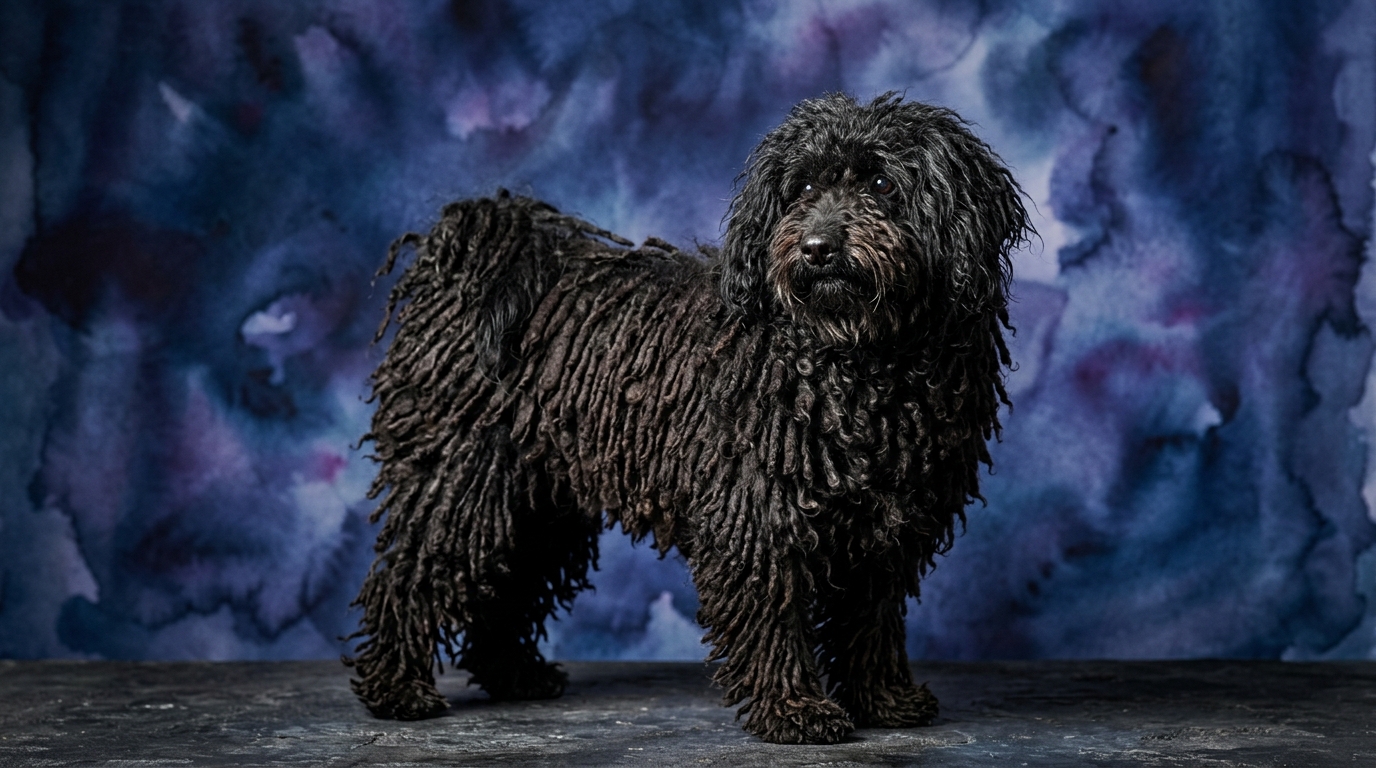
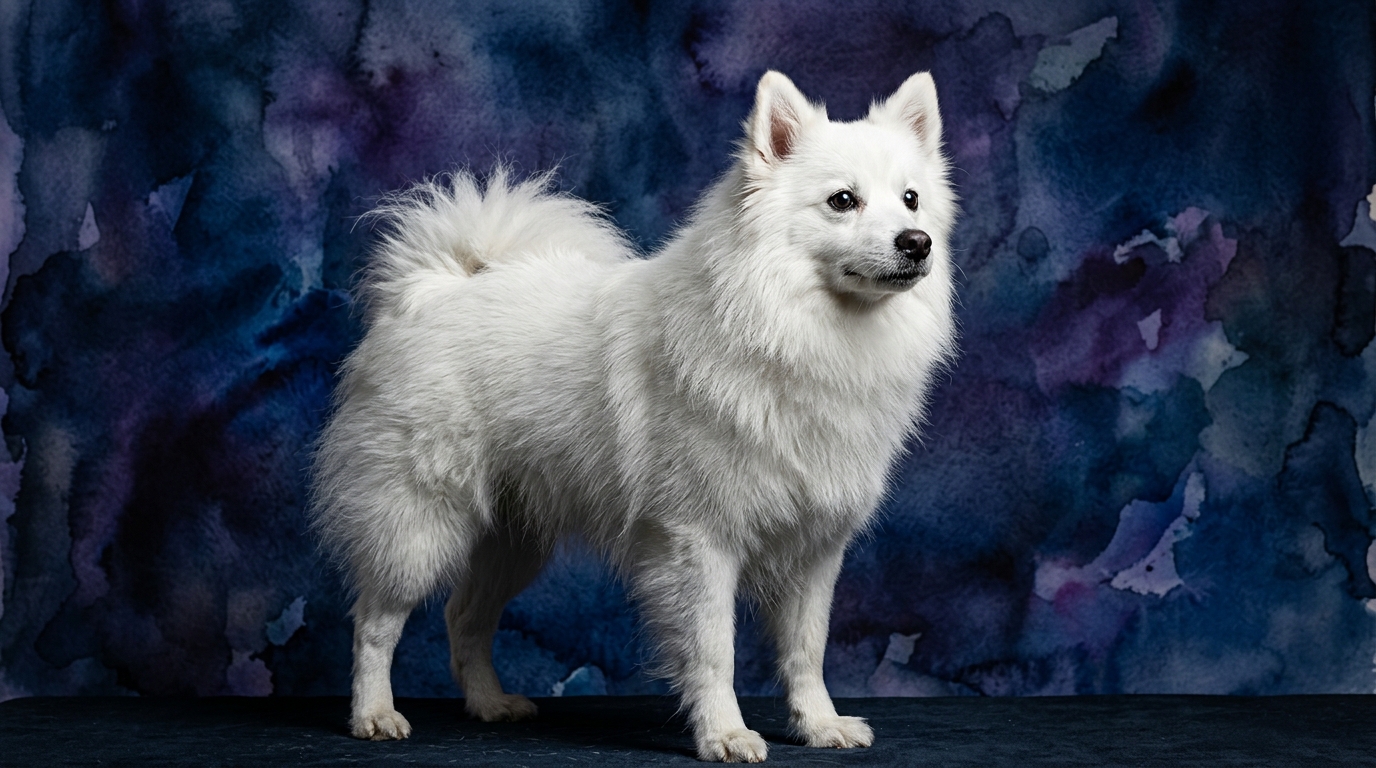
Side-by-Side IQ Profiles: Puli vs. American Eskimo Dog
The Puli, a Hungarian herding dog, boasts a Coren rank of #25, placing it among breeds that demonstrate quick command comprehension and execution. Our Cosmic Pet IQ Lab data assigns the Puli a 4/5 in Problem Solving, indicating a strong capacity for independent thought and strategic action in complex scenarios. Their Training Speed also rates at 4/5, suggesting a rapid uptake of new commands and behaviors with minimal repetition. In Social Intelligence, the Puli scores 3/5, reflecting a solid understanding of human cues and a capacity for deep bonds, though perhaps not with the same overt emotional attunement as some companion breeds. Their Instinctive Drive is rated 3/5, embodying a manageable yet present herding impulse, and their Memory is a robust 4/5, enabling them to retain complex information and sequences over time.
The American Eskimo Dog, a charming companion breed, is not Coren-ranked, indicating their cognitive strengths are often geared towards different forms of engagement than traditional working intelligence metrics. Our IQ Lab assessment gives the American Eskimo Dog a consistent 3/5 across all five dimensions: Problem Solving, Training Speed, Social Intelligence, Instinctive Drive, and Memory. This balanced profile suggests a good, adaptable intelligence; they possess a solid capacity for navigating everyday challenges, learning new behaviors at a steady pace, and forming perceptive social connections. Their moderate instinctive drive often manifests as a desire for companionship and play, and their memory is sufficient for retaining routines and basic commands, making them well-rounded family members.
Where the Puli Excels Cognitively
The Puli consistently demonstrates a cognitive advantage in areas demanding strategic thinking and efficient learning. Their 4/5 Problem Solving score, compared to the American Eskimo Dog's 3/5, highlights a superior ability to independently analyze situations and devise solutions, a crucial trait for a herding dog managing livestock. This translates to a dog that might more readily figure out how to open a child-proof gate or navigate an intricate puzzle toy without much human intervention. Furthermore, the Puli's 4/5 Training Speed and its Coren rank of #25 underscore its remarkable capacity for rapid command acquisition. They typically require fewer repetitions to master new skills, making them exceptionally efficient learners in structured training environments. This efficiency is further bolstered by their 4/5 Memory, which allows them to retain complex sequences of commands and information over extended periods, leading to more reliable and consistent performance in tasks requiring recall. In essence, the Puli excels in specific, goal-oriented cognitive tasks, showcasing a mental agility honed by centuries of working alongside humans.
Where the American Eskimo Dog Shines Cognitively
While the American Eskimo Dog’s scores are consistently 3/5, these numbers reflect a well-rounded and highly adaptable intelligence particularly suited for a companion role. Their balanced cognitive profile means they aren't predisposed to the intense working drives or complex problem-solving needs that can sometimes challenge owners of herding breeds. The American Eskimo Dog’s 3/5 Social Intelligence, combined with their desire for human interaction, often translates into a keen perceptiveness regarding household dynamics and routines, allowing them to integrate seamlessly into family life. They may not independently devise complex solutions as readily as a Puli, but their cognitive makeup prioritizes adaptability and responsiveness within a social context, making them intuitive and engaging companions. Their moderate instinctive drive means they are often content with social engagement and play rather than constantly seeking a 'job,' which can be a significant cognitive 'win' for owners seeking a less mentally demanding canine partner. Their intelligence shines in their ability to be present, observant, and responsive members of the family unit, thriving on connection and shared experiences.
Training Aptitude: Which is Easier to Train?
Between the two, the Puli generally presents as the easier dog to train, specifically in terms of speed and mastery of complex commands. Their 4/5 Training Speed and Coren rank of #25 directly indicate a pronounced aptitude for learning; they grasp new concepts quickly and require fewer repetitions to achieve proficiency. This efficiency is supported by their 4/5 Problem Solving and Memory, enabling them to apply learned solutions to new contexts and reliably recall commands over time. Pulis thrive on mental engagement and possess an inherent desire for purpose, making them highly motivated in structured training sessions. The American Eskimo Dog, with a 3/5 Training Speed, learns at a steady, respectable pace but typically requires more consistent repetition and patience. While they are eager to please and their 3/5 Social Intelligence aids in responsiveness, they may exhibit occasional independent streaks or get distracted if training isn't consistently engaging. Their training success relies heavily on positive reinforcement and making the process enjoyable and interactive, rather than relying on an inherent drive for complex task mastery.
Matching Canine Cognition to Owner Lifestyles
The Puli is unequivocally better suited for active owners who are prepared to provide substantial mental and physical stimulation. Their higher scores in Problem Solving, Training Speed, and Memory mean they require consistent mental challenges, such as advanced obedience, agility, or scent work, to prevent boredom and potential behavioral issues. Their underlying instinctive drive, even at 3/5, needs appropriate outlets, channeling their herding tendencies into constructive activities. Owners who enjoy dog sports, intricate training, or regular adventurous outings will find a Puli to be a highly engaged and rewarding partner. The American Eskimo Dog, with its consistent 3/5 scores, aligns well with owners seeking a more balanced approach to activity. While they are not sedentary, their needs are generally met with regular walks, interactive play, and consistent social interaction. They thrive in environments where they are integral family members, appreciating routines and moderate engagement without the constant demand for a 'job.' They can adapt to moderately active lifestyles, making them a good fit for individuals or families who enjoy daily activity but don't necessarily pursue competitive dog sports or intensive training regimens.
The Verdict
Choose a Puli if you are an active owner seeking a highly engaged canine partner who thrives on complex mental challenges, excels in advanced training, and genuinely enjoys having a 'job' to do, potentially in dog sports or intricate obedience. Their cognitive makeup is geared towards efficiency and strategic thinking.
Opt for an American Eskimo Dog if you desire a perceptive, adaptable, and affectionate companion content with consistent social interaction, moderate activity, and a balanced approach to mental stimulation. Their intelligence shines in their ability to be a well-integrated and responsive family member.
🧠 Find Your Pet's IQ Score
Our Pet IQ Lab assessment covers 25+ tests across 5 cognitive dimensions — personalized to your breed.
Take the Full IQ Test →Frequently Asked Questions
Are Pulis good family dogs despite their working background?
Yes, with proper socialization and consistent mental and physical outlets, Pulis can be devoted and protective family members. Their intelligence means they thrive on being included in family activities and given a sense of purpose.
Do American Eskimo Dogs bark a lot due to their vigilance?
American Eskimo Dogs can be vocal, often using their bark to alert their owners to new sights or sounds, a trait stemming from their companion history. Consistent training and addressing the underlying cause can help manage excessive barking effectively.
What kind of enrichment does a Puli need to stay mentally satisfied?
Pulis require a variety of mental enrichment, including puzzle toys, scent work, advanced obedience training, agility courses, and even herding games. Engaging their problem-solving and memory skills through novel challenges is key to their well-being.