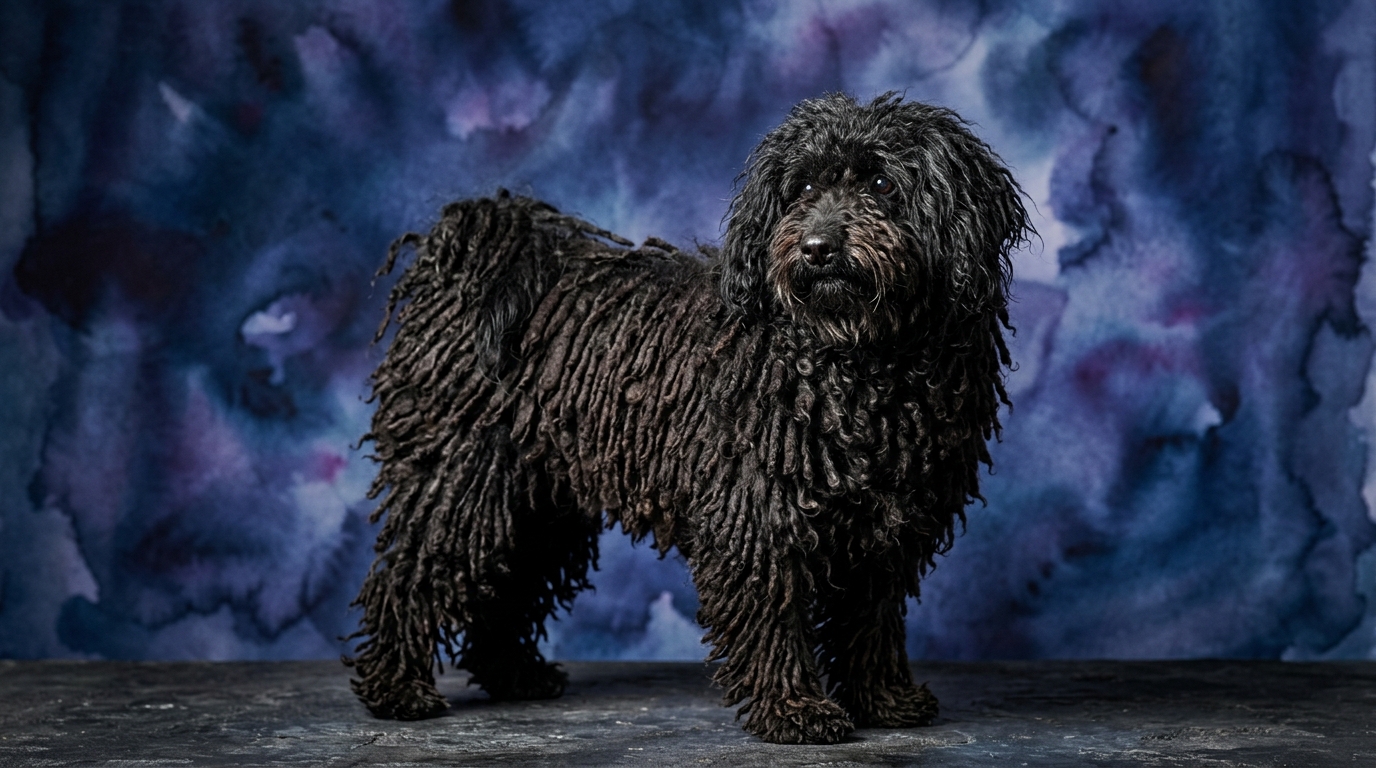
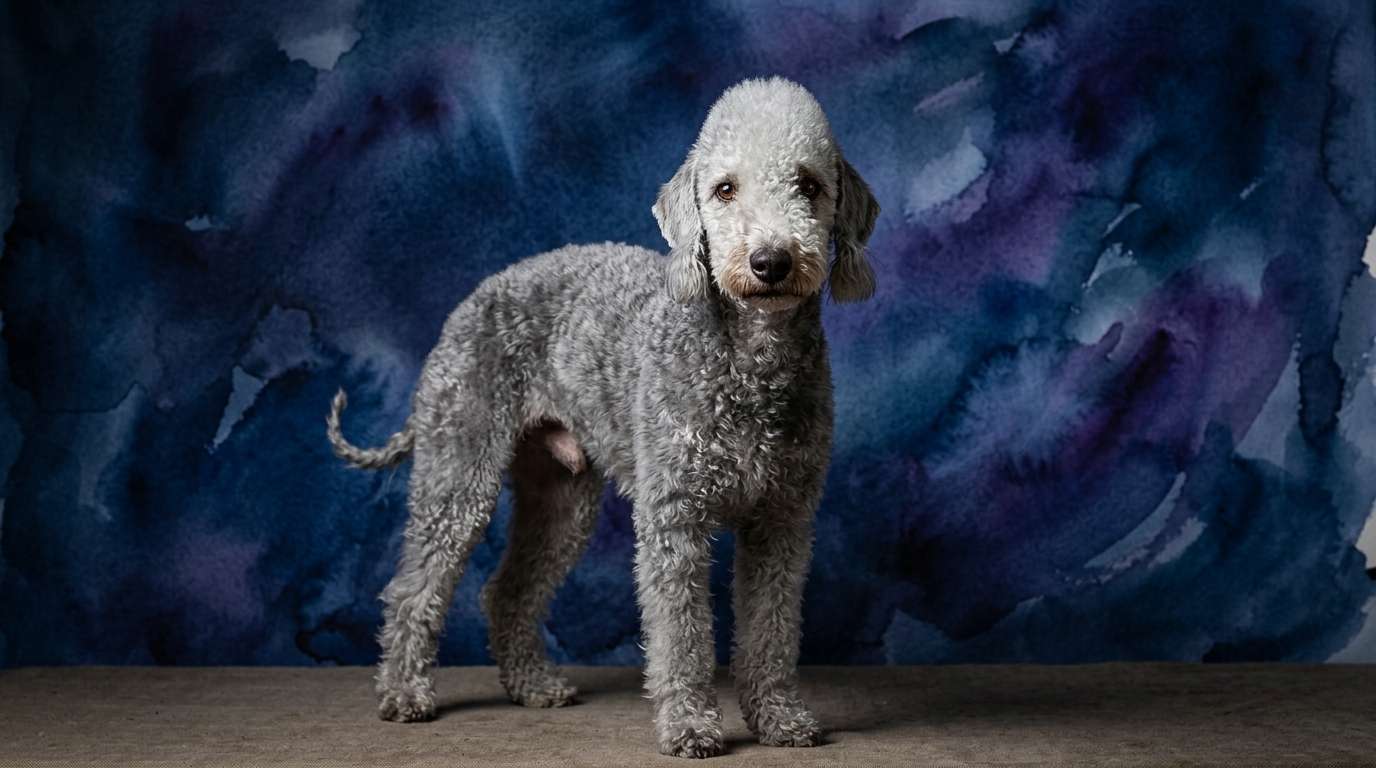
Side-by-Side Cognitive Profiles
At The Cosmic Pet Pet IQ Lab, we evaluate canine intelligence across five key dimensions: Problem Solving, Training Speed, Social Intelligence, Instinctive Drive, and Memory. These dimensions offer a comprehensive look at how a dog processes information, learns, interacts, and responds to its environment. The Puli, a Hungarian herding dog, holds a respectable Coren rank of #25, reflecting a significant capacity for learning and adaptation. Its cognitive profile includes a Problem Solving score of 4/5, indicating a strong ability to navigate complex situations and figure things out independently. Its Training Speed is also high at 4/5, meaning it picks up new commands and routines with efficiency. Social Intelligence stands at 3/5, suggesting a reasonable understanding of human cues and interactions, while its Instinctive Drive, rooted in its herding heritage, is 3/5. The Puli's Memory is particularly strong at 4/5, allowing it to retain learned behaviors and experiences over time.
The Bedlington Terrier, a distinctive breed with a lamb-like appearance, is not Coren-ranked, but our lab's assessment provides a clear picture of its cognitive abilities. This terrier typically scores 3/5 in Problem Solving, demonstrating a moderate capacity for independent thought and overcoming obstacles. Its Training Speed is also 3/5, indicating it learns at a steady, consistent pace. Social Intelligence for the Bedlington Terrier is 3/5, similar to the Puli, showing an average aptitude for understanding social dynamics. Its Instinctive Drive, characteristic of its terrier lineage, is 3/5, typically manifesting as a strong prey drive. Finally, the Bedlington Terrier’s Memory is rated at 3/5, meaning it retains information adequately but perhaps not with the same depth or speed as breeds with higher scores.
Where the Puli Excels Cognitively
The Puli exhibits clear cognitive advantages in several areas, particularly its Problem Solving and Training Speed, both scoring 4/5. This means a Puli is more adept at independently assessing a situation and devising a solution, whether it's figuring out how to open a gate or navigating a complex obstacle course. Their quick grasp of new commands and routines makes them highly responsive to structured learning environments, often mastering new tasks in fewer repetitions than many other breeds. This superior cognitive processing allows them to adapt rapidly to changing instructions and environments, a crucial trait for a herding dog needing to respond fluidly to livestock movements and handler cues. Furthermore, the Puli’s 4/5 Memory score translates into excellent retention of learned behaviors and experiences. This isn't just about remembering tricks; it means they can recall complex sequences, handler expectations, and environmental layouts, contributing to their overall efficacy in tasks and their ability to generalize learning to new contexts.
Where the Bedlington Terrier Shines Cognitively
While the Bedlington Terrier's numerical scores are generally moderate compared to the Puli's, its cognitive profile offers distinct advantages for certain owners. Its 3/5 in Problem Solving, Training Speed, and Memory indicates a steady, predictable learning curve. This means Bedlingtons are less prone to overthinking or inventing complex strategies that might challenge an owner's control, unlike some more independently minded breeds. Their moderate scores can be a 'win' for owners who prefer a capable companion without the constant need for intricate mental puzzles or the potential for a dog to outsmart them. The Bedlington's 3/5 Instinctive Drive, while presenting as a focused prey drive, is often more predictable in its manifestation than the broad, often complex herding drive of a Puli. This focused drive, when managed appropriately, means their cognitive energy is channeled into specific, often engaging, terrier activities like digging or chasing, rather than constantly scanning for 'flock' to manage. Their social intelligence, also 3/5, suggests they are generally amenable to human interaction without the intense need for constant 'work' or direction that a higher-drive working dog might exhibit.
Trainability: Puli vs. Bedlington Terrier
When it comes to trainability, the Puli generally presents an easier path for owners, primarily due to its 4/5 Training Speed and 4/5 Problem Solving. These traits combine to create a dog that not only picks up new commands quickly but also understands the underlying concepts, allowing for more advanced and nuanced training. A Puli is more likely to generalize a learned behavior to different situations and adapt to variations in commands. For instance, teaching a Puli a multi-step retrieve or a complex agility sequence often requires fewer repetitions and less frustration for the handler. Their strong memory further cements this learning, making consistent, positive reinforcement highly effective.
The Bedlington Terrier, with its 3/5 Training Speed, requires a more consistent and patient approach. While capable of learning a wide range of commands and behaviors, they may take more repetitions to solidify new information. Their 3/5 Problem Solving means they are less likely to independently figure out what you want, necessitating clearer, more structured instruction. Real behavioral differences include the Puli's tendency to anticipate and execute tasks with minimal prompting, while the Bedlington might need more direct guidance and reinforcement through each step. While the Bedlington's terrier tenacity means they can be persistent once they understand a task, their moderate memory and training speed mean owners should prioritize clarity and consistency in their training methods to achieve reliable results. They might also be more easily distracted by their instinctive drive, requiring focused environmental management during training sessions.
Matching Breeds to Lifestyles: Active vs. Relaxed Owners
For active owners seeking a highly engaged and mentally stimulating companion, the Puli is an excellent match. Its herding background and high cognitive scores across Problem Solving, Training Speed, and Memory mean it thrives on having a 'job' to do, whether it's advanced obedience, agility, herding trials, or even complex trick training. Owners who enjoy spending significant time engaging their dog in mental and physical challenges will find the Puli's boundless enthusiasm and quick learning incredibly rewarding. A Puli that isn't sufficiently challenged can become bored, potentially leading to creative, but undesirable, problem-solving behaviors around the home. Their need for consistent mental engagement aligns well with owners who lead dynamic lifestyles and are keen to involve their dog in many activities.
The Bedlington Terrier, with its moderate cognitive scores and terrier-specific instinctive drive, suits owners who are active but perhaps not seeking the same intensity of mental 'work' as a Puli requires. While they possess energy and enjoy activities like brisk walks, digging, and chasing, their cognitive demands are less about complex problem-solving and more about consistent engagement and clear direction. They can adapt well to moderately active households that provide daily exercise and consistent, positive training. Owners who appreciate a dog with a distinctive personality and a strong, but manageable, prey drive – and who are prepared to channel that drive appropriately – will find the Bedlington a loyal and engaging companion. They are not suited for entirely 'relaxed' owners who provide minimal engagement, as their terrier instincts still require outlets, but they may be less demanding of constant, intricate mental exercises than their Puli counterparts.
The Verdict
Choose the Puli if you are an active owner eager for a highly intelligent, quick-learning companion who thrives on complex mental challenges and consistent engagement.
Opt for the Bedlington Terrier if you seek a moderately active, distinctive companion with a steady learning pace and a focused terrier drive, suitable for an owner who appreciates consistency over intense cognitive demands.
🧠 Find Your Pet's IQ Score
Our Pet IQ Lab assessment covers 25+ tests across 5 cognitive dimensions — personalized to your breed.
Take the Full IQ Test →Frequently Asked Questions
Do Pulik require extensive grooming due to their corded coats?
Yes, Pulik require specific grooming to maintain their distinctive corded coats, which can be time-consuming. This involves careful separation of cords as they grow, and thorough drying after baths to prevent matting and skin issues.
Are Bedlington Terriers good with children and other pets?
Bedlington Terriers can be good with children and other pets, especially if socialized from a young age. However, their strong prey drive means careful introductions and supervision are necessary, particularly with smaller animals.
Which breed is more prone to separation anxiety?
Both breeds can develop separation anxiety if not properly socialized or if left alone for excessive periods. Pulik, being a herding breed, can form strong bonds and may exhibit anxiety if their need for companionship and activity isn't met.