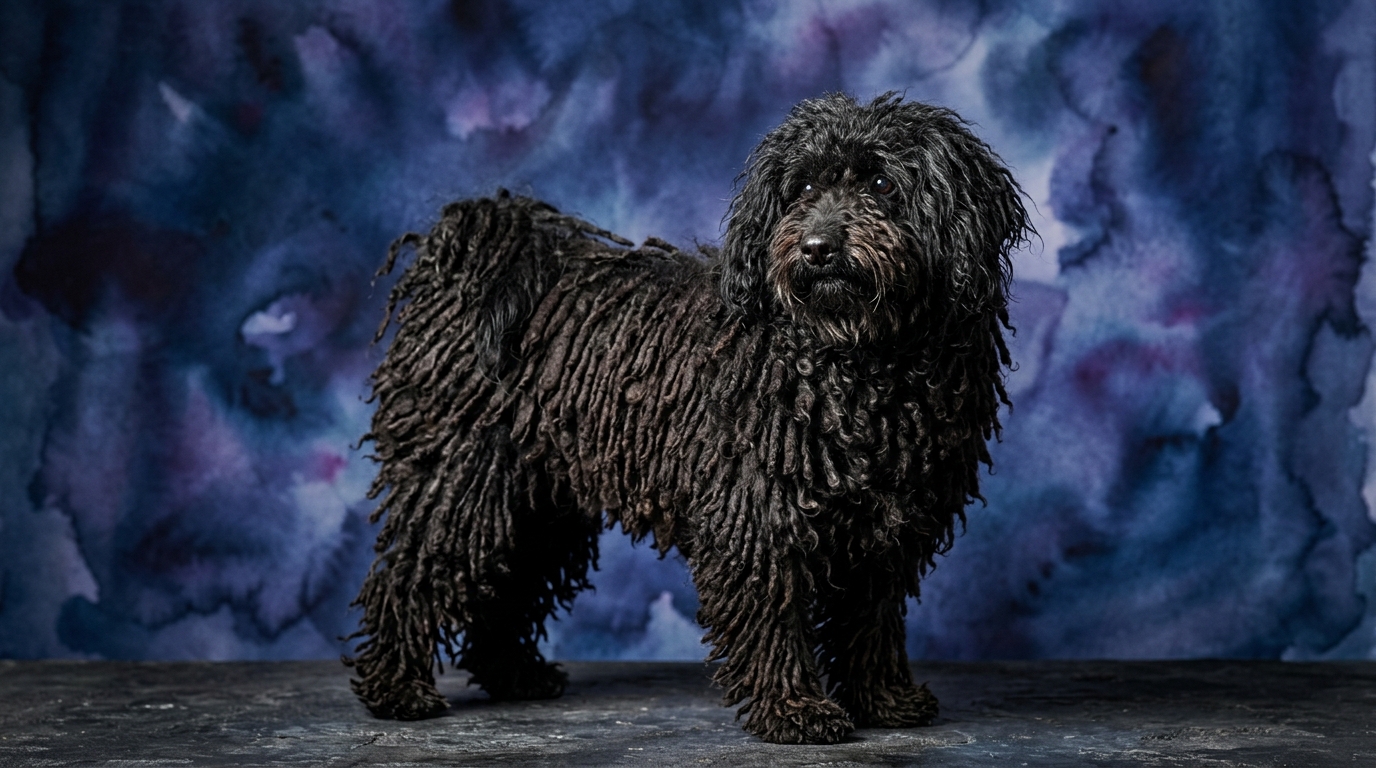
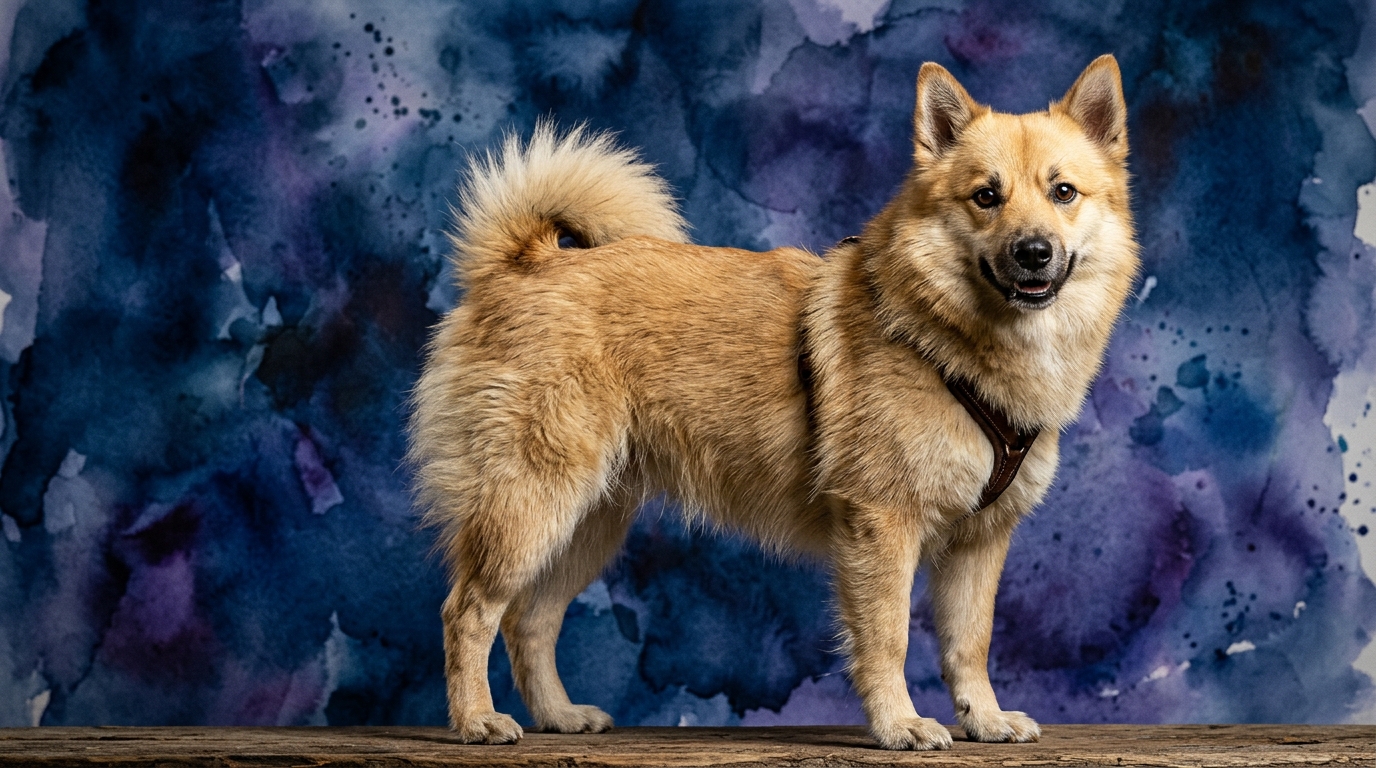
Side-by-Side Cognitive Profiles: Puli vs. Norwegian Buhund
The Cosmic Pet Pet IQ Lab employs a five-dimensional framework to assess canine intelligence, offering a nuanced view beyond simple obedience. For the Puli, a breed recognized for its distinct corded coat and agile herding style, the scores reflect a sharp, adaptable mind. They achieve an impressive 4/5 in Problem Solving, indicating a strong capacity for independent thought and navigating complex scenarios. Their Training Speed also scores 4/5, suggesting a quick grasp of new commands and routines. In Social Intelligence, the Puli registers a steady 3/5, indicating competence in reading cues and interacting within a social structure. Their Instinctive Drive, crucial for their herding lineage, is rated at 3/5, signifying a purposeful, but not overwhelming, urge to work. Finally, their Memory is a notable 4/5, enabling them to retain intricate patterns and learned behaviors effectively. This profile places the Puli at Coren rank #25, a testament to their overall cognitive prowess.
In contrast, the Norwegian Buhund presents a more uniformly balanced cognitive profile, often reflecting its role as a versatile farm dog and guardian of both livestock and family. While not Coren-ranked, their IQ Lab scores paint a picture of consistent, reliable cognitive function. They score 3/5 in Problem Solving, demonstrating a practical ability to address challenges without necessarily seeking the most innovative solutions. Their Training Speed is also 3/5, indicating a solid, steady learning curve that responds well to clear, consistent instruction. Like the Puli, the Buhund's Social Intelligence is rated 3/5, signifying an adequate capacity for understanding social dynamics and forming strong bonds. Their Instinctive Drive also stands at 3/5, providing a dependable motivation for activity and purpose without the intense focus seen in some specialized herders. Lastly, their Memory score is 3/5, suggesting they retain information sufficiently for daily tasks and routines, though perhaps not with the same intricate recall as their Puli counterparts.
Where the Puli Demonstrates Cognitive Strengths
The Puli's cognitive profile distinctly shines in areas demanding rapid assimilation and complex decision-making, directly reflecting their heritage as agile, highly responsive herders. Their 4/5 score in Problem Solving indicates a pronounced ability to assess novel situations and devise effective strategies, often independently. This translates into a dog that can quickly adapt to changing environments or unexpected challenges, making them adept at various dog sports or complex tasks where quick thinking is paramount. For instance, a Puli might more readily figure out how to open a child-proof gate or navigate an intricate agility course on their first attempt, leveraging their innate analytical capacity.
Furthermore, the Puli's 4/5 in Training Speed is a clear advantage for owners seeking a responsive learner. This isn't just about basic commands; it implies a quicker understanding of abstract concepts, multi-step routines, and nuanced cues. Coupled with their 4/5 Memory, Pulik are excellent candidates for advanced obedience, complex trick training, or even service roles requiring a broad repertoire of learned behaviors. Their ability to remember intricate patterns means less repetition is needed to solidify a command, allowing for faster progression through training levels and the capacity to build upon previously learned skills with greater ease.
Where the Norwegian Buhund Offers Distinct Cognitive Benefits
While the Norwegian Buhund's individual scores might not reach the Puli's peaks, their uniform 3/5 across all cognitive dimensions presents a unique and valuable strength: consistency and dependable competence. This balanced profile suggests a dog that is reliably capable without being overly intense or prone to independent 'scheming.' Their 3/5 in Problem Solving indicates a practical, grounded approach to challenges; they may not invent novel solutions as often as a Puli, but they will consistently apply learned methods effectively, making them predictable and trustworthy in routine situations. This steady cognitive processing means less impulsivity and a more considered response to their environment.
The Buhund's balanced 3/5 scores in Social Intelligence, Instinctive Drive, and Memory also contribute to a highly stable and adaptable companion. Their moderate instinctive drive means they possess a natural desire for purpose but are less likely to become restless or destructive if not constantly engaged in high-octane tasks. Their consistent memory ensures they retain important family rules and routines without requiring constant reinforcement, fostering a calm, well-adjusted household member. For owners seeking a dog whose cognitive abilities are reliably present and not prone to extremes, the Buhund's steady, competent intellect provides a distinct advantage, offering a steadfast partner for everyday life.
Training Dynamics: Puli's Agility vs. Buhund's Steadfastness
When it comes to training, the Puli's 4/5 Training Speed and high Problem Solving score translate into a dog that can pick up new concepts with remarkable alacrity. They often enjoy the mental challenge of learning and can progress quickly through various levels of obedience or specialized tasks. However, this same cognitive independence means a Puli might sometimes question a command or attempt to find a 'better' way, requiring an owner with consistent expectations and a creative approach to engagement. Their quick minds thrive on variety and positive reinforcement, quickly becoming bored with repetitive drills, but excelling when presented with novel puzzles or complex sequences.
The Norwegian Buhund, with its 3/5 Training Speed, offers a different, yet equally rewarding, training experience. They are receptive learners who absorb information steadily and thoroughly. While they may not grasp new concepts as instantaneously as a Puli, their learning is often more deeply ingrained once understood, leading to highly reliable performance. Buhunds generally respond well to clear, fair, and consistent methods, valuing routine and predictable expectations. Their moderate instinctive drive means they are often eager to please and work alongside their human companions, making them excellent partners for owners who appreciate a dog that learns at a comfortable, consistent pace and values partnership over flashiness.
Matching Cognitive Profiles to Owner Lifestyles
For active owners seeking a canine partner for demanding activities, the Puli's cognitive profile aligns beautifully. Their high Problem Solving and Memory scores, coupled with strong Training Speed, make them ideal for advanced dog sports like agility, flyball, or competitive obedience, where quick thinking, intricate pattern recall, and rapid execution are essential. These dogs thrive when given a 'job' that engages both their physical agility and their keen intellect. Owners who enjoy puzzle toys, complex training routines, and a dog that actively participates in problem-solving will find the Puli an incredibly rewarding companion, as they require consistent mental stimulation to prevent boredom and channel their sharp minds constructively.
The Norwegian Buhund, with its consistently balanced cognitive scores, is well-suited for active owners who appreciate a competent, reliable, and versatile companion without the need for constant, intense intellectual challenges. Their 3/5 instinctive drive means they are enthusiastic participants in outdoor activities like hiking, jogging, or less competitive dog sports, but are also content with a good walk and engaging playtime. Owners seeking a dog that is adaptable to various family activities, possesses a stable temperament, and learns consistently without demanding constant novelty will find the Buhund a delightful match. They offer a robust blend of loyalty, alertness, and a steady disposition that integrates seamlessly into a moderately active family lifestyle.
The Verdict: When to Choose Each Breed
The Verdict
Choose the Puli if you are an active, experienced owner seeking a highly responsive, quick-thinking partner for advanced training, dog sports, or complex tasks, and are prepared to meet their significant need for mental engagement. Their sharp mind and quick learning make them excel in environments where agility and independent problem-solving are valued.
Choose the Norwegian Buhund if you are an active owner looking for a steadfast, consistently competent companion who learns reliably, integrates well into family life, and possesses a balanced drive for activity without requiring constant, high-level intellectual challenges. Their predictable nature and steady cognitive function make them excellent all-around partners.
🧠 Find Your Pet's IQ Score
Our Pet IQ Lab assessment covers 25+ tests across 5 cognitive dimensions — personalized to your breed.
Take the Full IQ Test →Frequently Asked Questions
Do Puli dogs require more mental stimulation than Norwegian Buhunds?
Yes, the Puli's higher scores in Problem Solving, Training Speed, and Memory suggest a greater need for regular mental challenges and novel learning opportunities to keep their sharp minds engaged and prevent boredom-related behaviors. The Buhund, while still needing stimulation, generally thrives on more consistent routines.
Which breed is generally easier for a first-time dog owner to train?
The Norwegian Buhund might be slightly more manageable for a first-time owner due to their steady 3/5 Training Speed and balanced temperament, which generally responds well to clear, consistent methods. The Puli's quicker, more independent mind (4/5 Problem Solving) might require a more experienced hand to channel their intelligence effectively.
Are both breeds good with children?
Both breeds score 3/5 in Social Intelligence, indicating a competent ability to interact socially, which can extend to children with proper socialization and training. However, the Puli's energetic nature and the Buhund's guardian instincts mean supervision is always recommended, and early positive exposure to children is crucial for both.