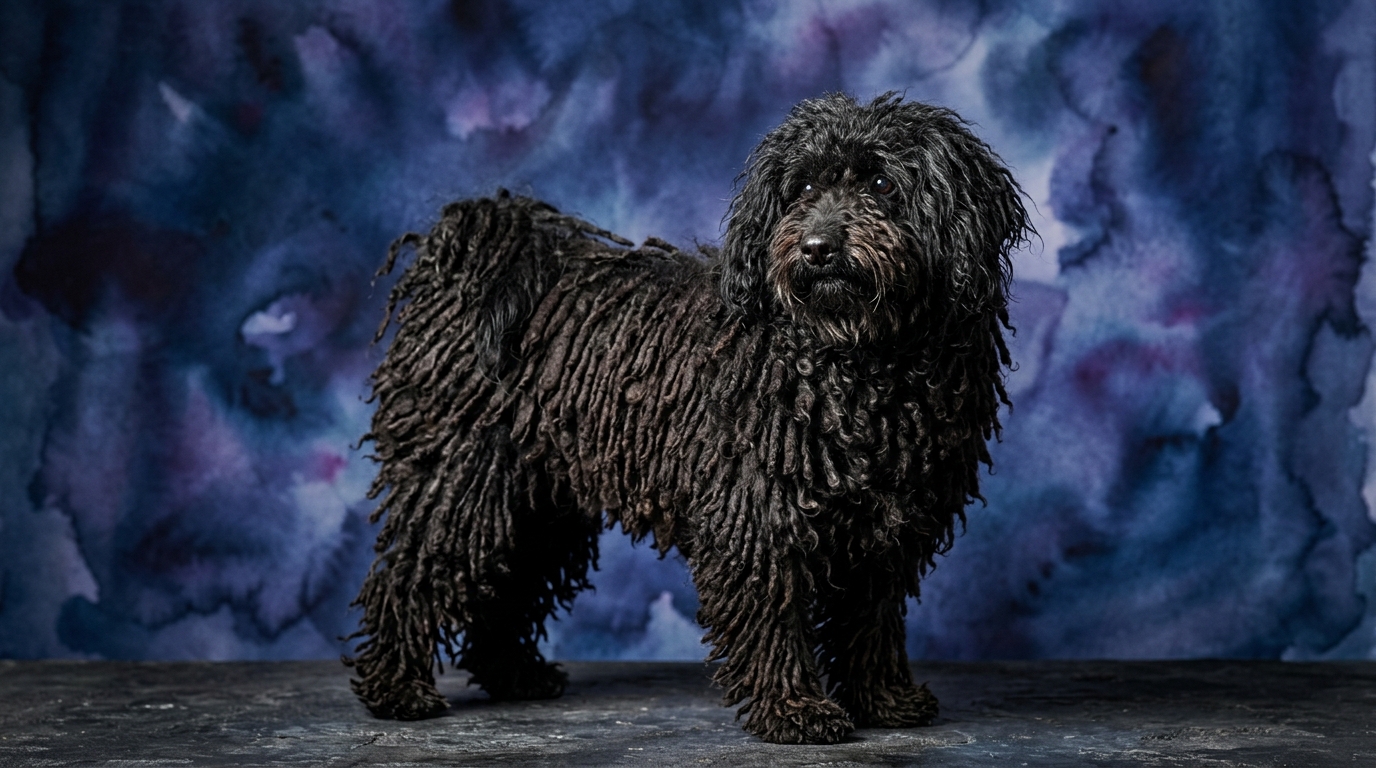
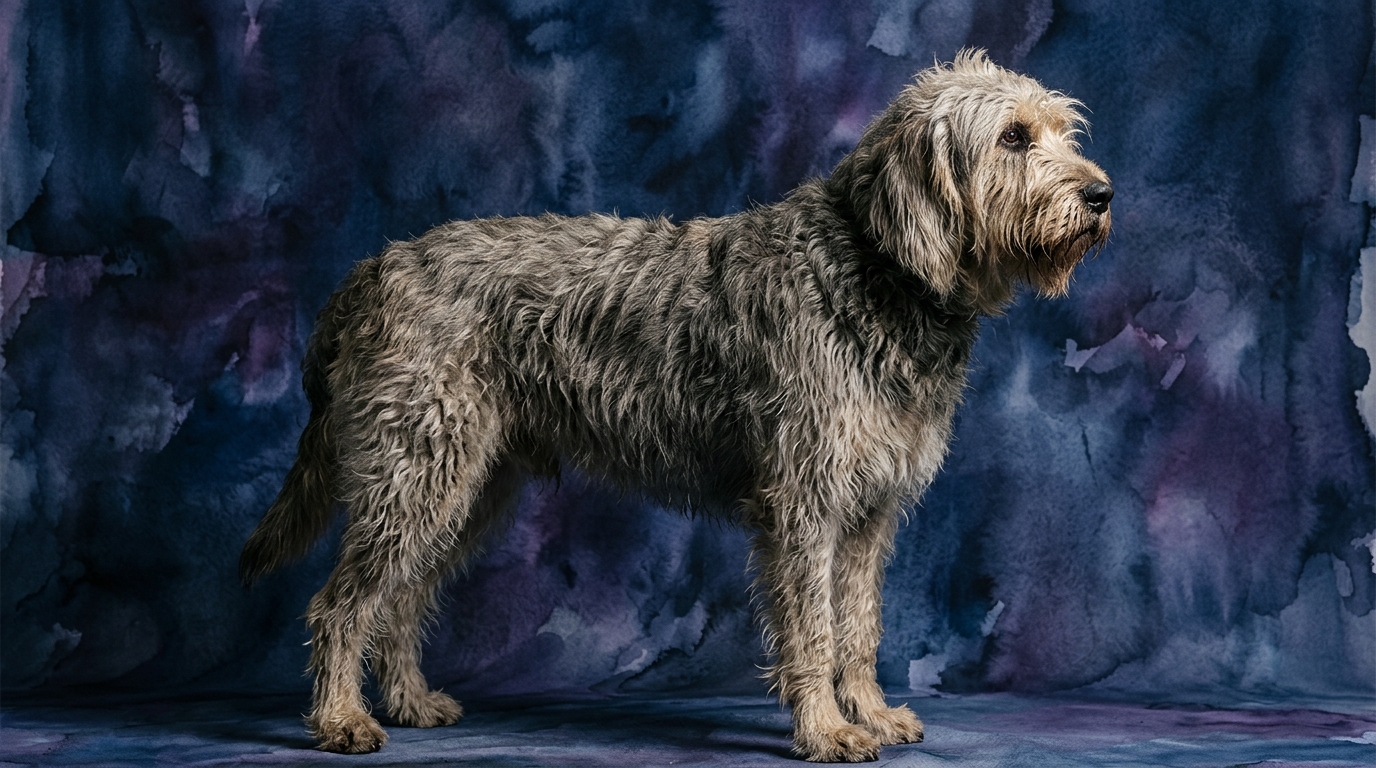
Side-by-Side Cognitive Profile: Puli and Otterhound
The Cosmic Pet Pet IQ Lab employs a multi-dimensional approach to assess canine cognitive abilities, moving beyond simple obedience to understand how different breeds perceive, process, and interact with their world. For the Puli and the Otterhound, this framework reveals distinct strengths and operational styles.
**Puli Cognitive Dimensions:** Originating as a Hungarian herding dog, the Puli exhibits a cognitive profile tailored for complex livestock management. Their Problem Solving score of 4/5 reflects an aptitude for strategizing and adapting to dynamic situations, such as maneuvering a flock. Training Speed, also at 4/5, indicates a readiness and capacity to grasp new commands and routines with efficiency, often showing a keen desire to engage in structured learning. Social Intelligence, at 3/5, suggests they are observant and capable of forming strong bonds, though they might approach new social interactions with a degree of discernment rather than immediate exuberance. Their Instinctive Drive, rated 3/5, is primarily channeled into their herding heritage, manifesting as an inherent desire to gather and control. Finally, a Memory score of 4/5 means the Puli is adept at recalling intricate sequences, commands, and learned patterns over time, crucial for intricate herding tasks.
**Otterhound Cognitive Dimensions:** The Otterhound, a large, shaggy hound bred for hunting otter in England, possesses a cognitive architecture optimized for scent work and endurance. Their Problem Solving is rated 3/5, indicating competence in navigating their environment, though perhaps less focused on abstract, human-directed puzzles than a herding breed. Training Speed, also 3/5, suggests they are trainable but may require more patience and consistency, often motivated by their highly developed olfactory senses rather than a strong desire for human approval alone. Social Intelligence, at 3/5, points to a friendly and amiable nature, typically enjoying companionship but sometimes appearing distracted when a compelling scent arises. The Otterhound's Instinctive Drive, 3/5, is powerfully geared towards tracking and following scent trails with relentless determination. Their Memory, scoring 3/5, is effective for recalling scent patterns and familiar routes, yet it might not be as readily applied to remembering a broad repertoire of complex, arbitrary commands.
Where the Puli's Cognitive Strengths Shine
The Puli's cognitive profile presents clear advantages in scenarios demanding adaptive problem-solving and rapid learning. Their 4/5 in Problem Solving allows them to quickly assess and respond to novel situations, making them adept at agility courses, advanced obedience, or even figuring out how to open a child-proof gate. This capacity for independent thought within a structured context is a hallmark of their herding lineage, where they often needed to make decisions without direct human instruction.
Furthermore, the Puli's combined 4/5 in Training Speed and Memory means they not only absorb new information quickly but also retain it with impressive consistency. This translates into a dog that can master a wide array of commands, tricks, and routines, making them excellent candidates for competitive dog sports where precision and recall are paramount. Their ability to remember complex sequences allows them to excel in activities that require a detailed understanding of patterns, such as freestyle obedience or intricate rally courses, where they can execute a series of actions with minimal prompting after initial learning.
Where the Otterhound's Cognitive Profile Excels
While the Otterhound's scores might appear modest compared to the Puli's in certain areas, their cognitive strengths are profoundly specialized and deeply impressive within their domain. Their 3/5 in Instinctive Drive, when combined with their incredible olfactory capabilities, points to a cognitive superpower: highly refined scent discrimination and sustained tracking. An Otterhound's brain is wired to process an astonishing array of scent data, allowing them to follow a faint trail over vast distances and varied terrain, a complex problem-solving task in itself that is often underestimated by general intelligence metrics.
The Otterhound's cognitive resilience lies in their unwavering focus once a scent is engaged. This single-minded determination, a form of cognitive endurance, means they can maintain concentration on a specific task for extended periods, ignoring distractions that might deter other breeds. Their memory, while rated 3/5, is exceptionally strong for environmental cues, terrain, and, most importantly, the intricate tapestry of scents, enabling them to retrace steps or pick up a lost trail with remarkable accuracy. This specific form of memory is a vital cognitive asset for their historical purpose, allowing them to navigate and operate effectively in their chosen field.
Training Dynamics: Puli's Eagerness vs. Otterhound's Independence
When it comes to training, the Puli generally presents a more straightforward and rewarding experience for owners seeking a responsive partner. Their 4/5 Training Speed and 4/5 Memory mean they are quick to understand and retain commands. A Puli often approaches training sessions with an eager-to-please attitude, enjoying the mental engagement and the opportunity to work collaboratively with their human. They thrive on consistency and positive reinforcement, quickly forming associations between actions and rewards, which makes teaching complex behaviors or chaining commands together a relatively smooth process. Their herding background instills a natural inclination to respond to direction and work in tandem.
The Otterhound, with 3/5 in both Training Speed and Memory, requires a different approach rooted in patience and understanding of their hound nature. While capable of learning, their powerful instinctive drive for scent can often override other motivations. Training an Otterhound means contending with their potential for independent thought and their tendency to follow their nose rather than a verbal command, especially outdoors. Success with an Otterhound often hinges on making training a game that appeals to their natural inclinations, such as scent work, and employing high-value rewards to maintain their focus. Their amiable social intelligence means they enjoy companionship, but their attention during training might be more fleeting than a Puli's, demanding more creative and persistent methods to achieve consistent results.
Matching Canine Cognition to Owner Lifestyles
The distinct cognitive profiles of the Puli and Otterhound naturally lend themselves to different owner lifestyles and expectations. For active owners who relish mental engagement and desire a highly responsive, collaborative canine partner, the Puli is an exceptional match. Owners who enjoy teaching new tricks, participating in dog sports like agility, obedience, or herding trials, and providing consistent mental challenges will find the Puli's quick intellect and problem-solving skills incredibly rewarding. Their need for mental stimulation means they thrive in environments where they are given jobs to do or puzzles to solve, preventing boredom and channeling their cognitive energy constructively. A Puli often seeks out interaction and looks to their owner for direction and engagement.
Conversely, the Otterhound is better suited for owners who appreciate a more independent spirit and are content with a dog whose primary cognitive drive is rooted in exploration through scent. Relaxed owners who enjoy long, rambling walks in varied environments, allowing their dog ample opportunity to engage their powerful nose, will find immense joy in an Otterhound. While they are friendly and enjoy companionship, their contentment often comes from fulfilling their innate desire to track and investigate, rather than constantly seeking complex tasks from their human. Owners should be prepared for a dog that might be more driven by an interesting smell than a recall command, requiring patience and a secure, fenced environment for off-leash exploration. Their lower demand for constant, structured mental tasks makes them suitable for those who prefer a less 'hands-on' approach to cognitive stimulation, instead providing opportunities for naturalistic engagement.
The Verdict: When to Choose Each Breed
Choosing between a Puli and an Otterhound ultimately depends on an owner's lifestyle, training philosophy, and what they seek in a canine companion's cognitive engagement. Both breeds offer unique joys, but their mental operational styles are quite different.
The Puli is ideal for individuals or families who are eager to engage in consistent, structured training and provide abundant mental challenges, valuing a dog that is quick to learn and responsive to direction. They thrive with owners who appreciate a canine partner capable of complex problem-solving and who are prepared to channel their inherent herding drive into productive activities. The Puli's cognitive strengths make them a dynamic and interactive companion for those seeking a dog deeply involved in their daily routines and activities.
The Verdict: When to Choose Each Breed (Continued)
The Otterhound, in contrast, is best suited for owners who cherish a dog's independent spirit and are content to allow their canine friend to primarily engage their world through their extraordinary sense of smell. They are a wonderful choice for those who enjoy long excursions in nature, offering opportunities for their dog to follow intriguing scent trails, and who are patient with a breed that might prioritize a captivating aroma over immediate obedience. An Otterhound fits well with individuals who appreciate a loyal, amiable companion whose contentment often stems from fulfilling their intrinsic drive rather than constant human-directed mental tasks.
The Verdict
Choose a Puli if you seek a highly trainable, mentally agile companion for dog sports, complex tasks, and collaborative learning. They thrive with consistent mental challenges and an owner who enjoys active engagement.
Opt for an Otterhound if you value an independent, scent-driven companion who finds joy in exploring the world through their nose, and you are patient with their hound instincts. They are ideal for owners who enjoy long, meandering walks and appreciate a less demanding approach to structured mental stimulation.
🧠 Find Your Pet's IQ Score
Our Pet IQ Lab assessment covers 25+ tests across 5 cognitive dimensions — personalized to your breed.
Take the Full IQ Test →Frequently Asked Questions
Which breed is better for first-time dog owners?
The Puli's higher training speed and memory can make them a more straightforward choice for first-time owners willing to commit to mental stimulation and consistent training. The Otterhound's independent nature and strong scent drive may present more unique challenges for novice owners, requiring extra patience and understanding of hound behavior.
Do Pulis and Otterhounds get along with other pets?
Both breeds generally possess a social intelligence score of 3/5, indicating they can adapt well to other pets with proper introductions and socialization. Pulis, with their herding instinct, might attempt to 'herd' smaller animals, while Otterhounds are typically amiable but might show more interest in scent-based interactions with other dogs rather than constant play.
What kind of enrichment do these breeds need to stay cognitively satisfied?
Pulis require enrichment that challenges their problem-solving and memory, such as puzzle toys, advanced obedience training, agility, or herding games. Otterhounds benefit most from enrichment that engages their powerful nose, including scent work, tracking games, long walks in varied environments, and toys that dispense treats based on scent detection.