Side-by-Side IQ Profile: Puli vs. Petit Basset Griffon Vendéen
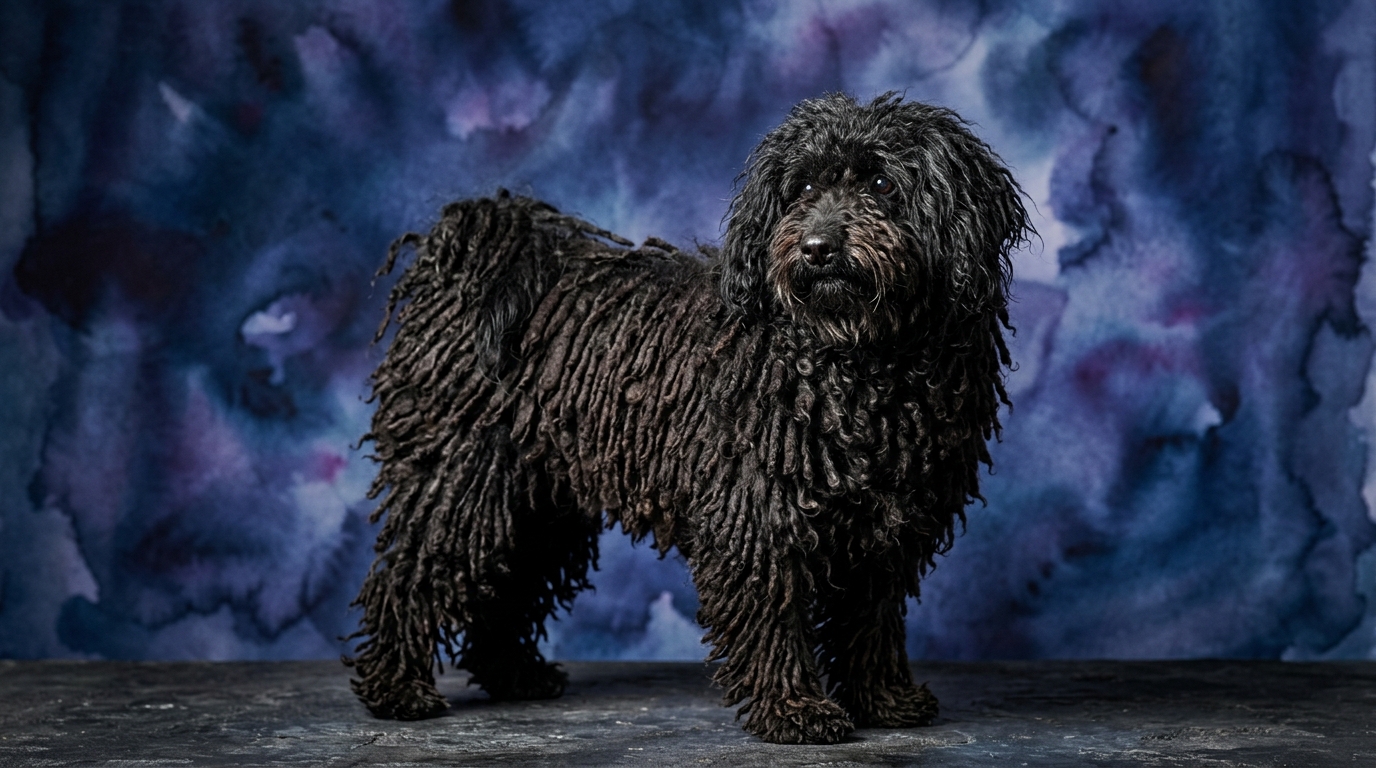
The Cosmic Pet Pet IQ Lab assesses canine cognition across five crucial dimensions, offering a nuanced view beyond simple 'smartness.' For the Puli, a herding breed with a Coren ranking of #25, its profile highlights a robust cognitive architecture. Its Problem Solving is rated 4/5, reflecting an ability to quickly analyze and adapt to dynamic situations, a critical trait for managing livestock. Training Speed also scores 4/5, indicating a capacity for rapid command acquisition and retention, essential for complex herding directives. Social Intelligence stands at 3/5, suggesting a moderate attunement to human cues and social dynamics, while Instinctive Drive is 3/5, focusing on its inherent herding behaviors rather than raw prey drive. Finally, Memory is a strong 4/5, allowing it to recall intricate patterns and sequences over time, vital for its work.
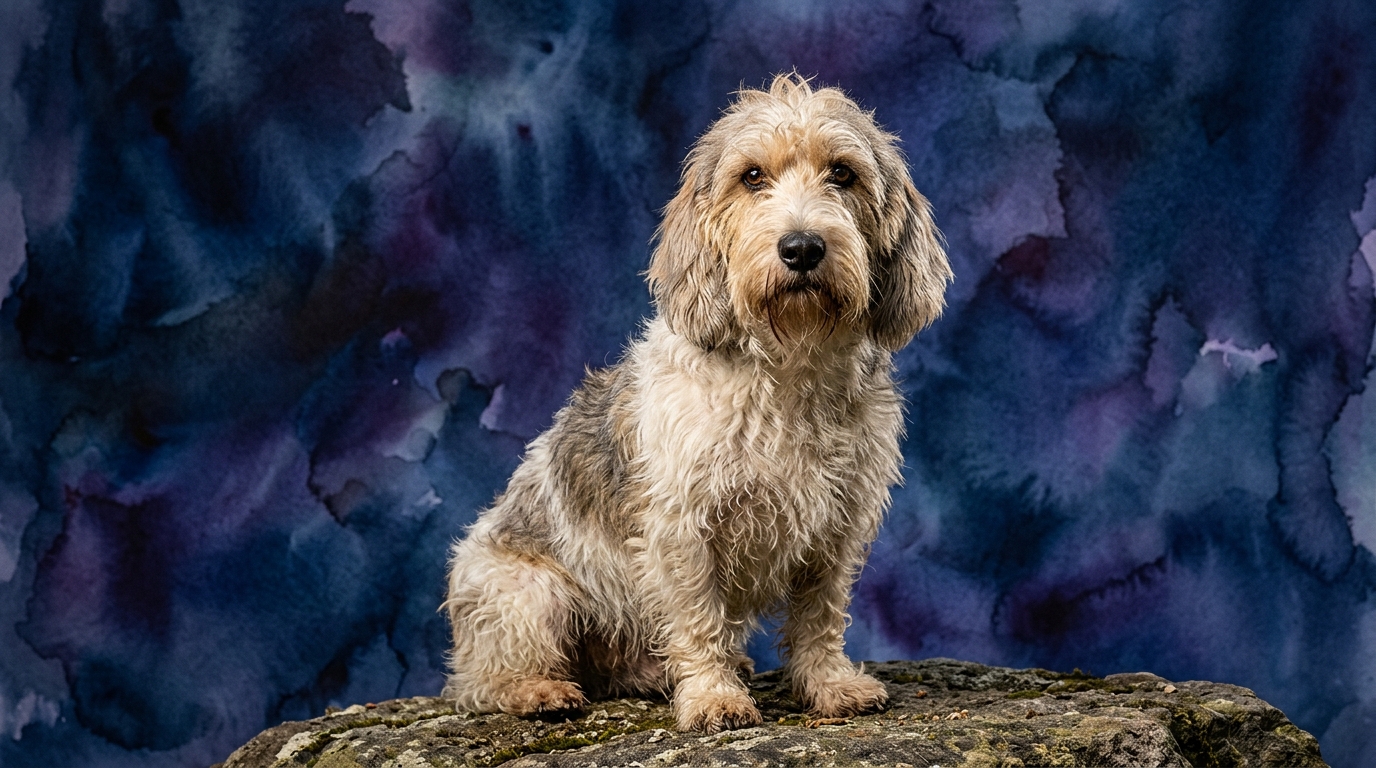
The Petit Basset Griffon Vendéen (PBGV), a Hound breed without a Coren ranking, presents a different cognitive blueprint, tailored to its specialized role as a scent tracker. Its Problem Solving is rated 3/5, indicating a practical, persistent approach to overcoming obstacles in pursuit of a scent rather than abstract reasoning. Training Speed is 3/5, meaning it can learn commands but often requires more repetition and motivation due to its independent nature and powerful olfactory distractions. Social Intelligence is 3/5, reflecting its ability to work cooperatively within a pack and respond to handlers, though often with a mind of its own. Instinctive Drive, at 3/5, is profoundly shaped by its powerful nose and relentless pursuit of scent trails. Memory also scores 3/5, sufficient for remembering trails and basic commands but perhaps less for complex, multi-step routines.
Where the Puli Wins Cognitively
The Puli exhibits clear cognitive advantages in areas demanding quick, adaptive thinking and structured learning. Its Problem Solving score of 4/5, compared to the PBGV's 3/5, means it can more readily strategize and adjust its approach when faced with novel challenges, such as navigating an agility course or outsmarting a stubborn sheep. This isn't just about raw processing power; it's about the Puli's inherent drive to find solutions that maintain order and achieve a specific outcome, a direct legacy of its herding lineage. They are less likely to get bogged down by a single approach if it proves ineffective, instead trying alternatives.
Furthermore, the Puli's superior Training Speed (4/5 vs. 3/5) allows it to grasp and internalize new commands and routines with greater efficiency. This translates into fewer repetitions required during training sessions and a quicker progression through obedience levels or complex tasks. Coupled with its 4/5 Memory, the Puli can recall a vast repertoire of commands and intricate sequences, making it adept at competitive obedience, advanced trick training, or performing complex herding patterns. This robust memory ensures that once a lesson is learned, it is retained, allowing for building upon previously acquired knowledge without constant review.
Where the Petit Basset Griffon Vendéen Wins Cognitively
While its raw scores might appear lower, the Petit Basset Griffon Vendéen excels in specific cognitive domains critical to its purpose, primarily rooted in its extraordinary sensory perception and tenacious drive. Its Instinctive Drive, rated 3/5, is a specialized strength – an unwavering, focused determination to follow a scent trail, often for hours, ignoring distractions that would deter other breeds. This isn't merely an instinct; it's a profound cognitive commitment, requiring sustained attention and an ability to interpret complex olfactory information, piecing together a 'scent picture' that is invisible to humans. This specialized drive defines much of its problem-solving (3/5) in the field.
The PBGV's Problem Solving, while 3/5, is highly effective within its hunting context. It involves persistent, independent decision-making to overcome physical obstacles (like dense underbrush or uneven terrain) to maintain a trail. This isn't about solving an abstract puzzle, but a concrete, sensory-driven challenge requiring spatial awareness, physical endurance, and an unyielding will. Its Social Intelligence (3/5) allows it to coordinate effectively within a hunting pack, communicating through barks and body language, ensuring the collective success of the hunt. While it might not be as handler-focused as a Puli, its ability to collaborate with other hounds showcases a distinct form of social cognition vital for its heritage.
Which is Easier to Train and Why
When considering ease of training, the Puli generally presents a more straightforward experience for most owners. Its Training Speed of 4/5 means it picks up new commands and behaviors quickly, often eager to please and to engage in structured learning. Pulis were bred to work closely with humans, responding to subtle cues and executing complex tasks, which translates into a strong desire for cooperation in a training setting. Their Problem Solving (4/5) and Memory (4/5) further aid this process, allowing them to understand the 'why' behind commands and retain lessons effectively, reducing the need for constant repetition and reinforcement.
The Petit Basset Griffon Vendéen, with a Training Speed of 3/5, demands a different approach. Their independent, scent-driven nature means they are often more interested in exploring the world through their nose than in executing a 'sit' on command. Training a PBGV requires immense patience, consistency, and highly motivating rewards. Their strong Instinctive Drive (3/5) for scent work can make them easily distracted by environmental smells, often 'tuning out' their handler in favor of a captivating aroma. While capable of learning, their problem-solving (3/5) is geared towards independent pursuit, meaning they may challenge commands if they perceive a more interesting, self-directed activity. Owners must learn to work with, rather than against, their hound's natural inclinations, making training a more collaborative and often more protracted endeavor.
Which Suits Active Owners vs. Owners Appreciating Independent Exploration
For owners seeking a partner for structured, mentally engaging activities, the Puli is an ideal match. Its high Problem Solving (4/5) and Training Speed (4/5) mean it thrives on challenges like agility, obedience, herding trials, or even complex trick training. These activities provide the mental stimulation a Puli needs to feel fulfilled, channeling its working dog brain into productive outlets. An active owner for a Puli is someone who enjoys daily exercise but also dedicates time to formal training sessions and brain games, understanding that physical activity alone won't satisfy this breed's cognitive demands. They need a job, even if it's just learning a new routine.
The Petit Basset Griffon Vendéen, while certainly an active breed requiring regular exercise, is better suited for owners who appreciate a dog with a strong sense of independence and a passion for sensory exploration. Their Instinctive Drive (3/5) means they are happiest when given opportunities to use their incredible nose on long, sniffy walks, exploring new environments at their own pace. These owners might not be looking for a dog to compete in advanced obedience but rather a companion for adventurous hikes where the dog can follow a trail. While they need exercise, their 'activity' is often self-directed sensory work, and owners must provide secure environments for this exploration, understanding their tendency to follow a compelling scent wherever it leads. This is not a breed for a truly 'relaxed' owner, but rather one who finds joy in a dog's independent pursuit of scent and doesn't require constant, focused interaction.
The Verdict: When to Choose Each Breed
Deciding between a Puli and a Petit Basset Griffon Vendéen hinges on what kind of canine partnership you seek and what cognitive traits you value most. The Puli is an excellent choice for individuals or families who are prepared to provide consistent, structured mental engagement and training, thriving on a dog that readily learns complex commands and enjoys collaborative problem-solving. They are best suited for active owners who relish participating in dog sports, advanced obedience, or even practical herding activities, finding satisfaction in a highly responsive and intelligent working companion.
Conversely, the Petit Basset Griffon Vendéen will flourish with owners who appreciate an independent, tenacious spirit and are willing to embrace a dog driven primarily by its senses. This breed is ideal for those who enjoy long, exploratory walks where the dog can indulge its powerful nose, and who understand that training will require patience, consistency, and a sense of humor to work with its sometimes stubborn, but always charming, hound nature. They are perfect for owners who value a robust, cheerful companion whose cognitive strengths lie in persistent, sensory-driven investigation rather than strict adherence to human directives.
The Verdict
Choose the Puli if you seek a highly trainable, mentally agile partner for structured activities like obedience or agility, thriving on collaborative problem-solving.
Choose the Petit Basset Griffon Vendéen if you appreciate an independent, scent-driven companion for exploratory adventures, understanding their tenacious, sometimes headstrong nature.
🧠 Find Your Pet's IQ Score
Our Pet IQ Lab assessment covers 25+ tests across 5 cognitive dimensions — personalized to your breed.
Take the Full IQ Test →Frequently Asked Questions
Is the Puli prone to being destructive if not mentally stimulated?
Yes, Pulis with their high problem-solving and memory capabilities require significant mental engagement. Without adequate mental work, they may invent their own 'jobs,' which can manifest as destructive behaviors like excessive barking, digging, or rearranging household items, stemming from boredom and unmet cognitive needs.
Can a Petit Basset Griffon Vendéen be an off-leash dog?
Due to their strong instinctive drive for scent (3/5), PBGVs are generally not reliable off-leash in unsecured areas. Their powerful nose can lead them to ignore commands and pursue a compelling scent trail for long distances, making recall challenging and potentially putting them in danger. A secure, fenced area is crucial for off-leash exercise.
Do Pulis and PBGVs generally get along with other dogs?
Both breeds typically exhibit moderate social intelligence (3/5), suggesting they can coexist well with other dogs, especially if socialized from a young age. Pulis, as herding dogs, might try to 'herd' other pets, while PBGVs, being pack hounds, often enjoy canine company, though their boisterous play style might not suit all companions.